
She asked that we switch to a corner table. Of course, she did. Women like Yvonne always wanted their backs to the wall. I watched her from the lobby, my coat still buttoned, my hands perfectly still. Sixty-six days of waiting had taught me that. Stillness was the only weapon I had left.
I had practiced this walk across a hundred hotel lobbies in my mind. Chin level. Pulse steady. The kind of calm that looks like confidence but is really just fury compressed into something useful. She saw me, and her face did the thing faces do when fear tries to look like nothing.
I sat down. The waiter appeared. I ordered for both of us—black coffee, no sugar —because I already knew how she took it. I knew a great many things about Yvonne that she didn’t know I knew. That was the only advantage I had. I intended to keep it…
I met Gary Whitfield at a conference in Portland, the kind where everyone wears lanyards and pretends the networking doesn’t exhaust them. He was the only person in the room who wasn’t performing. Or so I thought. Later, I would understand that he was simply performing better than everyone else.

He asked me what I actually did, not what my job title was. Nobody asks that. I told him I untangled things—financial audits, compliance reviews, the kind of work that required you to find what people tried to hide. He smiled and said that sounded like a superpower. I believed him.
We dated for fourteen months before he proposed. Fourteen months of weekends in good hotels, of dinners where he always knew the sommelier, of conversations that felt like finally being understood. I was thirty-four and cautious by nature. I told myself I had taken my time. I had been thorough. I had been wrong.

The wedding was small. Gary said he wasn’t close to his family—a father who drank, a mother who left early, a sister somewhere in Ontario he’d lost touch with. I didn’t push. Everyone has things in their past they’d rather not explain. I respected the closed doors. Another mistake I would regret later.
The first year was good. Genuinely good, I think, though now I hold every memory up to the light like a forger checking a bill. We bought the house on Calloway Street. He started his consultancy. I was made a partner at the firm. We were, by every visible measure, exactly what we appeared to be.

He traveled for work. That was woven into the fabric of our relationship so early that it never registered as unusual. Dallas. Singapore. Frankfurt. He always called from the hotel room, always brought something small back—a keychain, a chocolate, once a silk scarf from Zurich that I still own and cannot bring myself to discard.
There were things I loved about him that I love still, which is the most disorienting part. His laugh, which was sudden and unguarded in a way nothing else about him was. The way he remembered small details—my coffee order, my mother’s birthday, the name of my first dog. Attention to details, as I now know, can be a tool.

The first thing I noticed was a silence where there used to be sound. He stopped humming in the kitchen. It was such a small thing that I didn’t register it as a thing at all—just a season, just stress, just the particular quiet of a man with a lot on his mind.
Then the phone. He had always been a man who left his phone face-up on the table, unhidden, unconcerned. One Tuesday in March, I watched him turn it over without thinking, the way you close a door without deciding to. He didn’t look at me when he did it. That was the first real note, though I didn’t really pay attention to it then.

I didn’t snoop. I want to be clear about that—not because snooping would have been wrong, but because I am a person who deals in evidence, not suspicion. I filed the observation. I watched for corroboration. I had trained for exactly this kind of patience in boardrooms and depositions. I simply hadn’t expected to need it at home.
He started going to the gym at six in the morning. Gary had never been a morning person. In eleven years, I had never once seen him rise before seven without complaint. I said nothing. I noted it. I began, quietly, to build a file in my mind the way I build every file—methodically, without emotion, one fact at a time.

The cologne was new. Not dramatically different—just a half-degree shift, the way a compass needle moves before you’ve noticed the terrain has changed. I recognized it as something expensive, but not as something he had chosen for himself. Gary had worn the same cedar and bergamot for a decade. Someone else had picked this one.
What I felt then was not heartbreak. I want to name it accurately because the story deserves accuracy. What I felt was a cold, settling recognition of a number that doesn’t reconcile, a column that won’t balance. Something was wrong in the ledger. I had known this feeling in most audits I’d ever run. Facts, like numbers, never lie.

Because it was my area, I began paying attention to money. Money is where the truth lies when people are lying. Small withdrawals. A credit card I didn’t recognize on a statement I nearly missed. A hotel charge in a city he told me he hadn’t visited since February. He had been there in April.
I said nothing. I took a photograph of the statement with my personal phone and filed it in a folder I labeled, with some dark humor, Housekeeping. Then I made dinner, and when he came home, I asked about his day, listened to his answer, and watched his face while he gave it. He was very, very good, I’ll admit. But I was better.

The name came from an email. I hadn’t touched his personal account, but a forwarded confirmation from a restaurant reservation came on our shared calendar before he could delete it. Table for two at The Meridian on a Thursday when he’d told me he was in Cleveland. The reservation was for G. Harmon. Gary’s middle name was Harold.
G. Harmon. I sat with that name for three days before I pulled the thread. A consultancy registered in Delaware, two years old, with a billing address in Chicago. The sole director was listed as Gerard T. Harmon. Gerard. Not Gary. But the date of birth on the incorporation filing matched my husband’s exactly—down to the day. I kept searching.

There was a third name, which I found later and will get to. But G. Harmon was enough to understand that this was not simply a man having an affair. Affairs are human and terrible, and I had prepared myself, somewhere in the back of my mind, for the possibility. What I had not prepared for was a man with a second, parallel life.
Yvonne Marsh. She appeared first as a LinkedIn connection, second degree, mutual contact in finance, a senior analyst at a private equity firm in Chicago. Her photograph was professional, serious, and dark-haired. She looked, I thought with a strange detachment, like someone I might have been friends with in another version of this story.

Her firm had contracted with G. Harmon Consultancy eighteen months ago—an engagement worth just under four hundred thousand dollars. A number large enough to matter. It explained the new cologne, the morning gym visits, and the unmentioned trips. Yvonne Marsh was a key to something larger—I knew instinctively.
I hired a private investigator for eleven days. I want to be clear. I did not enjoy this. It felt like a violation even though I was the one being violated—like using a scalpel on yourself because the surgeon can’t be trusted. His name was Darnell, was thorough and unbothered. He confirmed what I already knew and added several things I didn’t.
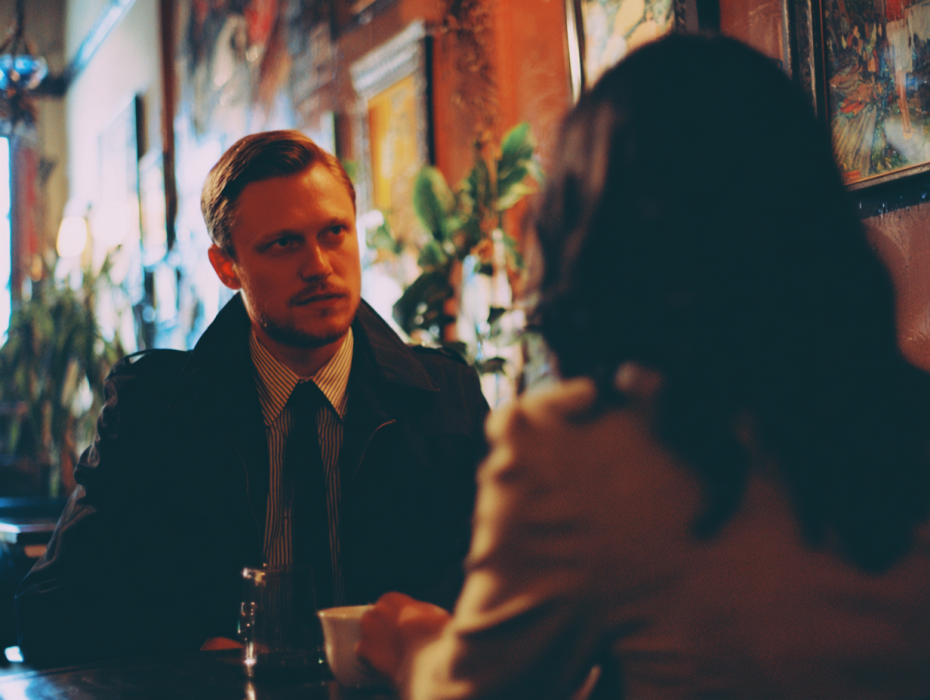
Darnell’s report ran to fourteen pages. I read it once in my car in the parking garage below our office, then locked it in my desk and didn’t touch it for a week. The photographs were the hardest part. I expected them to show a certain way, but Gary was smiling in them. That unguarded smile, the one I thought was only mine.
I would not cry until day forty-five, in the shower, for approximately four minutes. I noted this too. I was not proud of the noting, but I was not capable of stopping it. It was simply how I was built, how I had always processed the world. Categorize. File. Act. Falling apart was a luxury I could not afford until I understood everything.

I made a decision in the kitchen on a Wednesday morning while Gary ate toast and read something on his phone, and did not look up at me once. I would not confront him. I would not leave. Not yet. I would do what I did in every complex audit—I would follow the money to its source before I made a single move. Patience. Procedure. Proof.
The decision to contact Yvonne was not impulsive. I weighed it for two weeks. She was either complicit or being used, and the distinction mattered enormously, both morally and strategically. If she was complicit, I needed to know how much. If she were being used, she might have access to things I didn’t. Either way, I needed her.

I sent her a message from a name she wouldn’t recognize, on a platform Gary didn’t know I used. Nine words: I think we’ve both been working with the same man. I watched the message sit unread for six hours. Then the check mark turned blue. Then, after a very long pause that I spent not breathing, she replied. Two words. I know…
We met nine days after her reply. Neutral ground—the lobby bar of the Ashford Hotel, midweek, midafternoon, when the place would be half-empty and unremarkable. I arrived twenty minutes early and chose a table from which I could see every entrance. Old audit habit. You always want to see the client before they see you.
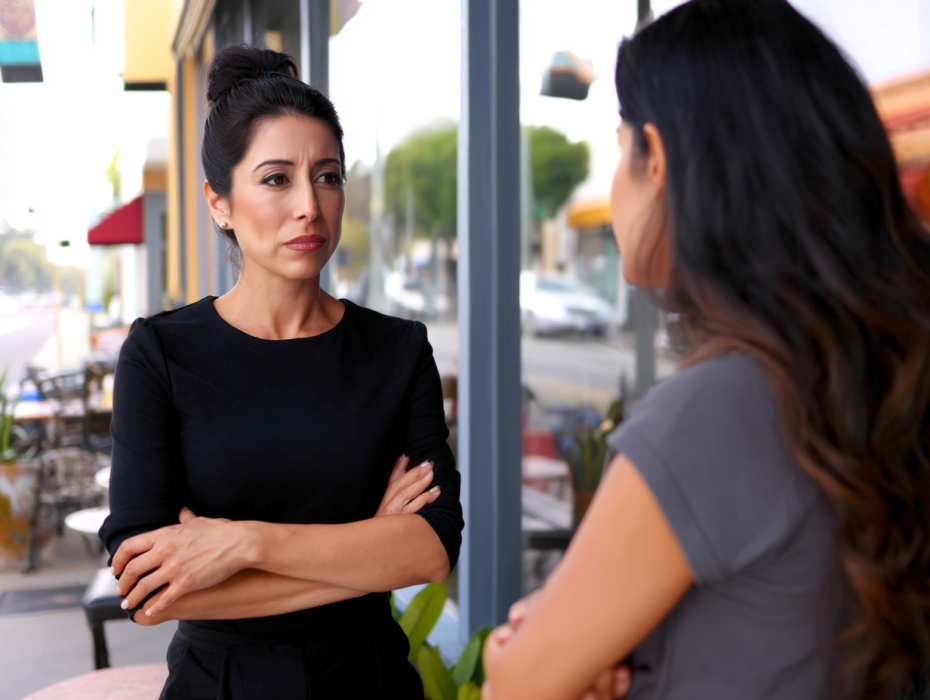
She was punctual, which I noted favorably. She wore no makeup and had clearly not slept well, which I noted differently. Either she was genuinely on edge or performing. I had learned, being married to Gary Whitfield, that performance and sincerity could wear identical masks. I would need more data before I decided which this was.
She sat down and looked at me the way people look at a car accident they caused— guilty, searching, not sure yet how bad the damage is. I let the silence run for a few seconds longer than was comfortable. Silence is pressure. In depositions, it makes people fill the space with things they hadn’t planned to say.
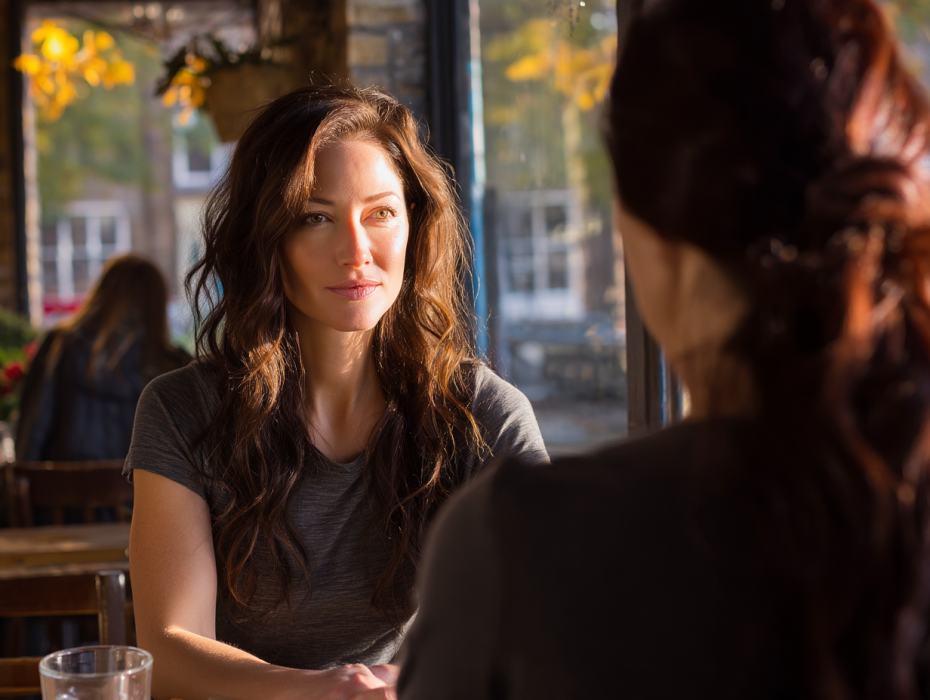
“How long have you known?” she asked. Her voice was steadier than her hands. I respected the effort. “Long enough,” I said. “But I’m not here about that.” She blinked. That was not the opening she had rehearsed. Good. Rehearsed conversations produce rehearsed answers, and I hadn’t come here for anything she’d prepared in advance.
I slid a single sheet of paper across the table. A printout—the G. Harmon incorporation document, Gary’s date of birth circled in red. I watched her face. She wasn’t surprised. Her expression was complicated—recognition, and beneath that, something that looked uncomfortably like relief. She had been waiting for someone to find this.

“He told me his name was Grant,” she said. “Grant Harmon.” She laughed once, a short, bitter sound with no humor in it. “I work in due diligence. For a living. I run background checks on companies for a living.” She stopped. “I didn’t run one on him.”
I understood that particular humiliation—the professional undone in the personal. I had spent fifteen years finding what people hid in balance sheets, and I had not seen what was hiding in my own life. We were, in that specific way, the same. I didn’t say this. But I think she felt it. The air between us shifted, fractionally, toward something workable.

We talked for two hours and fourteen minutes. What I had come in expecting to be an interrogation became something closer to a debrief, with two people comparing notes on the same subject, finding the gaps where their information didn’t overlap. She knew things I didn’t. I knew things she didn’t. Neither of us knew everything. Yet.
Yvonne knew: Grant Harmon had approached her firm with a legitimate-seeming engagement eighteen months ago. The contract was real, the deliverables were real, and the fees were real. But three months in, he was requesting that certain findings be reported differently—not falsified exactly, but framed in ways the data didn’t quite support.
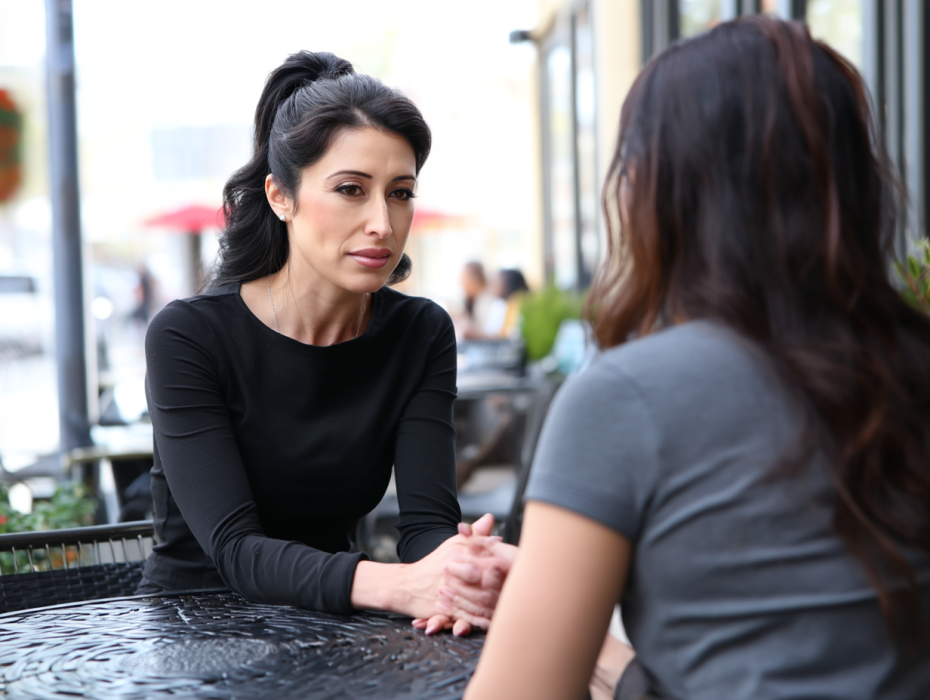
She had pushed back. He had charmed her past it, and then, somewhere in the pushing and charming, something personal had begun. She wasn’t proud of it. She said this, looking directly at me, which I appreciated. “I’m not asking you to forgive me,” she said. “I just want you to know I’m not a person who does this. Except that I did.”
But I knew something she didn’t. G. Harmon Consultancy was billing her firm, but it was also billing four other entities I had traced—two in the Caymans, one in Luxembourg, one in a small private bank in Malta I’d only ever seen used in one other case, a fraud that had ended in a federal conviction. Gary wasn’t just consulting. He was layering.

Layering is money laundering. It is the process of moving money through multiple entities to obscure its origin, like folding a piece of paper so many times that the original crease disappears. Gary had built himself a very elegant origami. It had taken me four weeks to start unfolding it. I still couldn’t see the original shape. But I was getting closer.
I told Yvonne enough. Not everything—I wasn’t ready to trust her with everything—but enough to confirm that what she’d experienced wasn’t a personal failing but a professional deception. He had targeted her, her firm’s contracts, her access, and her credibility. Possibly her feelings, too, though I didn’t say that.
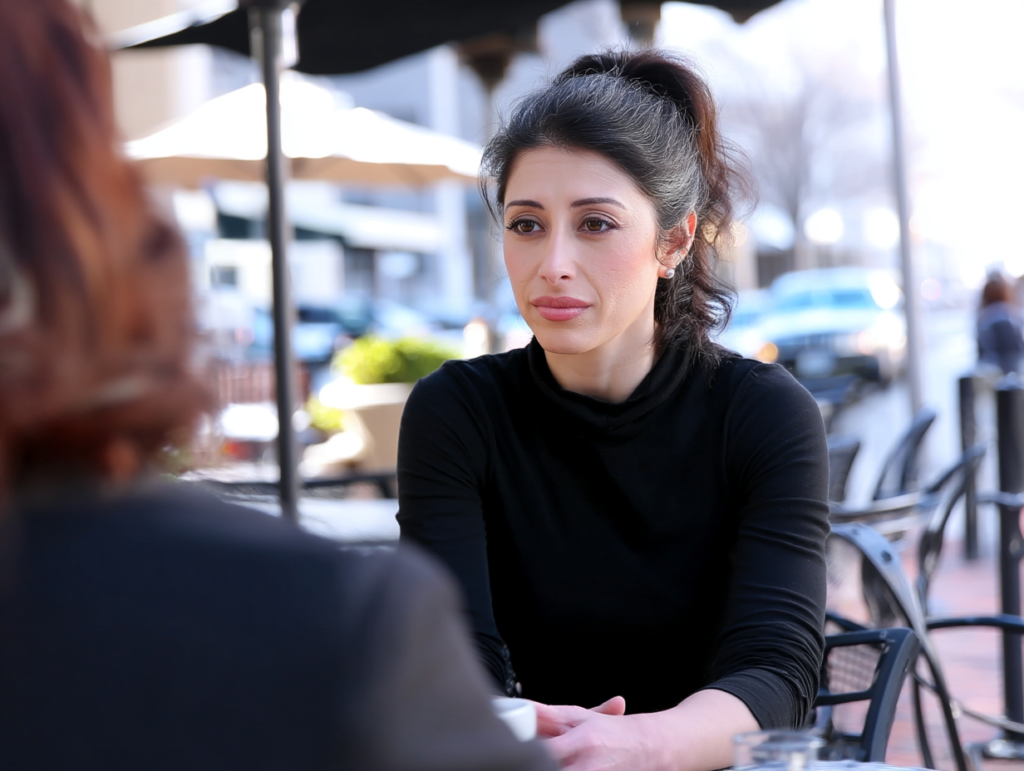
She asked what I was going to do. I told her I didn’t know yet, which was partially true. I knew the destination. I was still mapping the route. “What I need to know,” I said, “is whether you still have access to the Harmon files.” She was quiet for a moment. Then, “Yes. I never closed the engagement. Technically, he’s still a client.”
That was the moment the alliance became real. Not friendship. I wasn’t interested in friendship, not yet, possibly not ever. But alliance, yes. She had access; I didn’t. I had context; she didn’t. Together, we had something that could be useful. I told her to change nothing, flag nothing, and to call me if he contacted her. She agreed.

I drove home, made pasta, opened a bottle of wine, and when Gary came in at seven-fifteen, I handed him a glass and asked about his day. He said Chicago had been brutal, traffic on the I-90, and a client who kept moving goalposts. He was in Chicago on a day I knew via Darnell’s report, in a restaurant twelve blocks from Yvonne’s office. He didn’t blink.
Once you know they’re lying, living with a liar is an exercise in managing your own face. Every dinner, every ordinary exchange became a small performance—mine as much as his. I could not afford a crack. The moment Gary suspected I knew, the variables would shift unpredictably. And Gary, I now understood, was very good with variables.

Yvonne messaged me four days later. He called. Wants a meeting next week. On restructuring the engagement. I read it in the bathroom with the door locked and the tap running—a habit I had picked up unintentionally. I replied: Take notes. Record if you can. Tell him nothing has changed. Three dots appeared, then: Understood. She was learning my language.
She recorded the meeting on her phone, nested inside a notebook app Gary would never think to check. He talked for forty minutes about restructuring fees, a new entity he wanted to route payments through, regulatory environments in the EU, and why certain jurisdictions were more flexible. He was never explicit, but I heard exactly what he meant.

The new entity he mentioned was registered in Cyprus. I found it in six hours—Halcyon Partners Ltd, incorporated three months ago, directorship listed under a name I hadn’t seen before. Not Whitfield. Not Harmon. A third name. Martin Gale. Three names. I thought about the sister in Ontario he’d mentioned once and never again. Fat chance she’d be real.
I called Darnell. Told him I needed more—not just Gary’s movements but his origin. Birth records, education, prior addresses, anything that predated Portland. He called me back in three days, which was faster than I expected and slower than I needed. “Elena,” he said, and something in how he said my name made me put down my coffee and sit very still. “This one’s complicated.”

Gary Whitfield’s social security number had been issued in 1987 to a boy in Akron, Ohio, who died at age nine. At the Portland conference, where we met, where he had seemed so refreshingly unperformed, he had been wearing a dead child’s identity. I had married a man whose first legal name was not a name at all. It was a theft.
I did not fall apart. I note this, not with pride, but with a kind of clinical detachment. I had apparently used up my falling apart in that four-minute shower on day sixty-eight, and what remained was something more functional. I thanked Darnell and transferred his final payment. I sat in my car in the parking garage for a while. Then I went back upstairs and finished my quarterly report.

That evening, I looked at Gary across the dinner table—his particular jaw, his particular hands, the way he tilted his head when he was listening, and I understood I did not know who this person was. I had shared a bed for eleven years with an elaborate, inhabited fiction. And the fiction had no idea I’d figured it out.
I contacted a federal financial crimes investigator—Helene Moyá, whom I had worked with on a compliance matter three years ago. She was discreet and would understand immediately what she was looking at. From an encrypted channel, I sent her the Harmon and Cyprus entities, the recording from Yvonne’s meeting, and Darnell’s report. I waited.

Moyá came back to me in a week. She didn’t say much—federal investigators rarely do, in early stages—but what she said was enough. They had a file. The Cyprus entity had pinged a watchlist but hadn’t risen to the level of active investigation, until now. “Don’t move,” she said. “Don’t tip him. We need sixty days.” I had been doing this for so many. What was sixty more?
Gary noticed something on a Thursday. Not much—just a barometric change. We were watching television, and he turned to look at me in the middle of a scene with no particular reason. He looked at me for three seconds. Then he smiled and turned back. I kept my face completely neutral. It was the hardest thing I had done.

He became warmer. That was the tell. Gary, under suspicion, did not become cold or defensive—he became warmer, more present, more attentive. He brought me flowers on a day for no reason. He suggested we take a weekend away, somewhere we hadn’t been. He looked at me over dinner with an expression I recognized from Portland.
Yvonne messaged me on a Friday night. He asked about you. My stomach tightened. What exactly? Her reply took four minutes, which was three minutes too long. Whether I knew of you or your work. I said I didn’t know you personally. I stared at the screen. He was running checks, verifying his perimeter. We had less time than Moyá had asked for.

I called Moyá the next morning and told her we had a problem. Told her that the window she’d asked for was closing faster than expected. There was a pause on the line. “How solid is your documentation?” she asked. “Solid,” I said. Another pause. “Then we move in thirty days. Can you hold for thirty days?” Gary’s car was already in the driveway. “Yes,” I said, but I wasn’t sure that was true.
Thirty days became twenty-two. Moyá called Tuesday morning while Gary showered. I stood in the kitchen, coat on, keys in hand. “We need to move the timeline,” she said. “Friday.” I set my keys down carefully. It was Tuesday. I had seventy-two hours to be ready for something I’d spent over three months building.

I spent Tuesday at my desk organizing everything — the Harmon incorporation, Cyprus filings, the Martin Gale watchlist flag, Darnell’s report, Yvonne’s recording, the hotel charges, the dead child’s social security number wearing my husband’s face. I pulled it into one encrypted file and labeled it, with the same dark humor I’d carried for months, Housekeeping—Final.
I messaged Yvonne that evening. Friday. Are you ready? Her reply came in under a minute; she’d been waiting. I told her to come to the house on Calloway Street. She didn’t ask why. She had learned, over thirty-one days of careful alliance, to trust the even before seeing the full blueprint. I respected that.

On Wednesday, I was almost caught. Gary came home early. I had the encrypted file open on my personal laptop and closed it in the three seconds between his key in the lock and his footsteps in the hall. He looked at me. I looked back. “Good day?” he asked. “Productive,” I said. We were both telling the truth.
Thursday, he made the lamb dinner—the one from the early years, two hours, the good butcher, candles. He looked at me across the table with something that was either love or a flawless simulation of it. I thought about the boy in Akron, and ate every bite, and told him it was perfect. It was.

Friday morning, he left at eight. I watched his car turn off Calloway Street, then called Moyá. Two agents arrived at nine-fifteen, quiet and efficient, moving through the house like people who had done this before. I made coffee. Nobody touched it. Yvonne arrived at ten and stood in the doorway, taking in the room without flinching.
She had brought her own documentation—the original Harmon engagement files, printed, flagged, organized with the precision of someone who had been building this case in her own mind long before I contacted her. She handed the folder to Moyá without being asked. She was not someone who did things halfway.
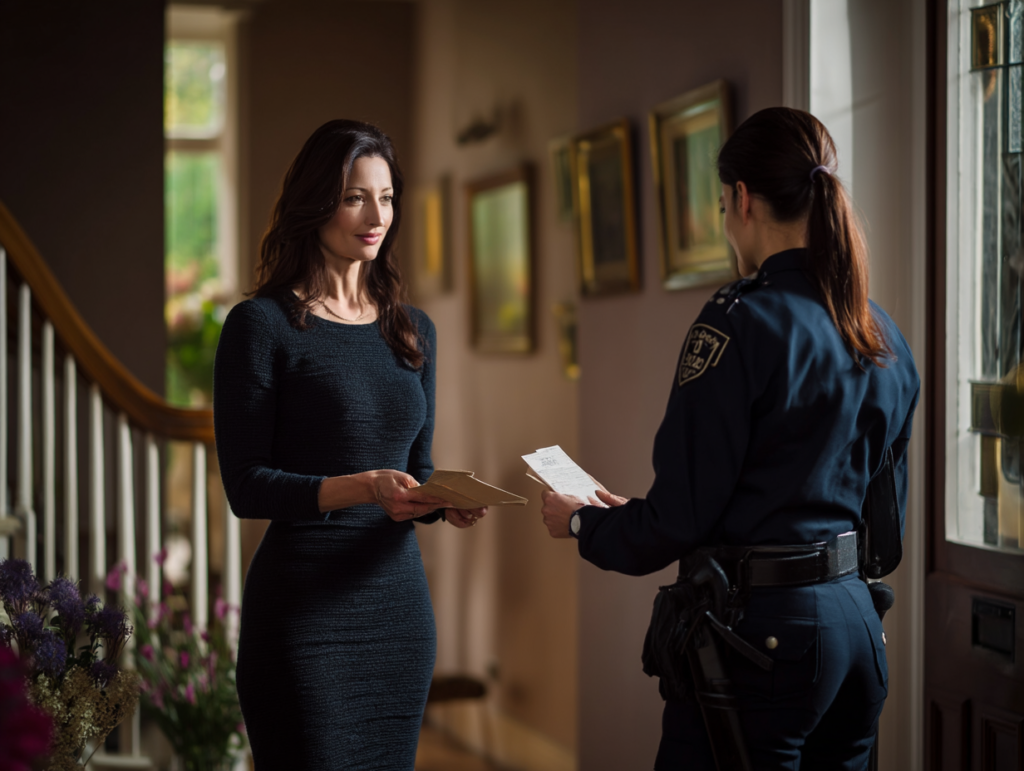
He came home at eleven forty-three—seventeen minutes earlier than we’d planned. I was at the kitchen table. Moyá was visible. Gary opened the door, swept the room in one fast look, and made his calculation in under a second. He chose to perform. He smiled. “Elena,” he said. “What’s going on?”
His voice and hands were steady. Moyá introduced herself, showed credentials, and began formally. Gary listened with practiced confusion—the wrongly accused husband, cooperative and concerned. It was masterful. It would have worked on anyone who hadn’t spent ninety-six days studying his lies.
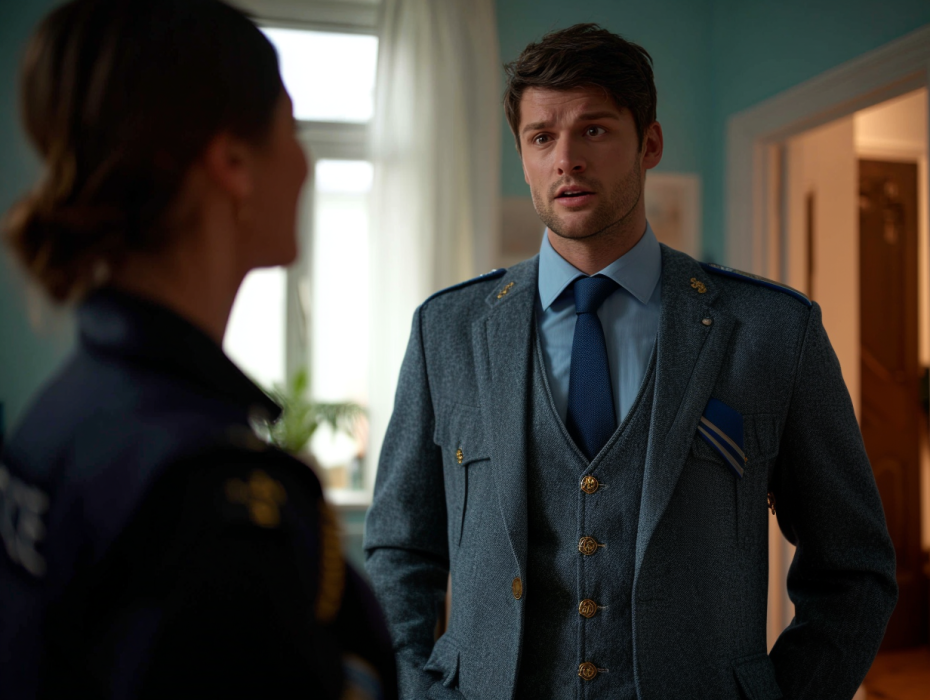
Then Yvonne walked in from the adjacent room. Something crossed Gary’s face—real, unguarded, the first authentic expression I’d seen in months. He was calculating. He looked at her, then at me, and I watched the exact moment he understood. Two women. Separate compartments. What replaced his performance was almost interesting.
I slid the folder across the table. Housekeeping — Final. “Your real name is in there,” I said. “So is Martin Gale, the Cyprus account, and the full Harmon trail. There’s also a recording.” I paused. “I’m a forensic accountant, Gary. I’ve been one for fifteen years.” I watched him understand his single, fatal error. He had chosen me for my precision, but forgotten to account for it.
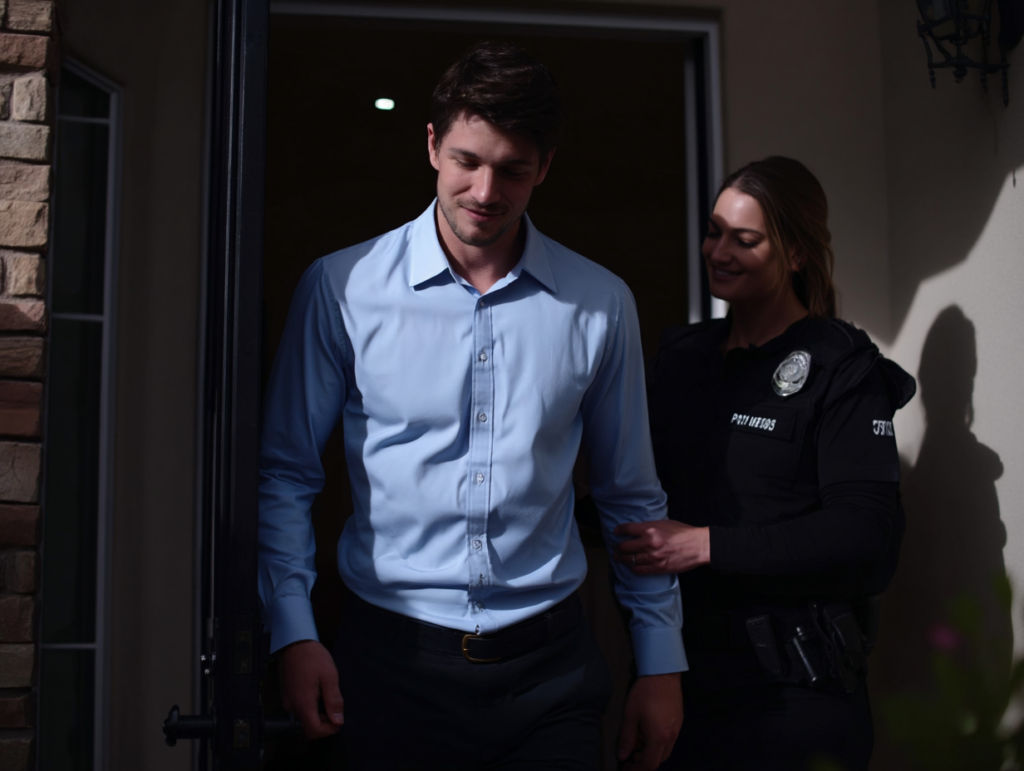
They took him at twelve-seventeen. No handcuffs in the house—Moyá had agreed to that, one small courtesy I had requested and she had honored. He walked out of the front door of the house on Calloway Street under his own composure, which I supposed was the last thing that was entirely his. I watched from the window.
He called from wherever they took him, once, through a lawyer I didn’t recognize. The lawyer left a voicemail using words like misunderstanding, context, and willing to cooperate. I listened to it twice, deleted it, and emailed my own attorney, Pressman, who had been waiting for exactly this call. I had retained her six weeks ago.

The days immediately after were administrative and relentless—affidavits, asset freezes, a deposition that ran four hours and felt like giving evidence about a stranger. In a sense, it was. The man I was describing bore almost no resemblance to the man who had made lamb on Thursday and lit candles and looked at me like I was enough.
Pressman was formidable. The divorce, given the criminal proceedings and the fraudulent identity, moved on a track I hadn’t anticipated—faster, cleaner, with implications for marital assets that tilted decisively in my favor. Gary’s legal team fought but lost ground. Pressman called it a clean sweep. I called it arithmetic.

There were hard weeks. I won’t pretend otherwise. Weeks where the house on Calloway Street felt less like a home I had reclaimed and more like a crime scene I was still living in. I put it on the market in the third month. Packed eleven years into boxes with the efficiency of someone who had learned to separate the evidence from the grief.
Yvonne left Chicago four months after Friday. A position in London—a real one, independent of anything connected to Gary or Harmon or the wreckage of the engagement that had pulled her in. She messaged me the night before her flight. I don’t know how to thank you. I replied, You’ve helped me too. Let’s leave it at that.

Her last message arrived three weeks after she landed. No context, no explanation— just six words: There may be a fourth name. I stared at it and forwarded it to Moyá with a single line of my own. Then I poured a glass of wine and sat by my new window in my new apartment and decided, for tonight, that was someone else’s problem.
The trial date was set for fourteen months out. Moyá kept me informed in the careful, minimal way of someone managing a witness. I was listed as a material witness, not a victim. I had requested that distinction. I had not been passive in this story and refused to be categorized as someone to whom things had merely happened.

I still have the silk scarf from Zurich. I’ve thought about discarding it many times and haven’t. It’s a good scarf. I think about what’s real often now. The lamb was real. The unguarded laugh was real. The dead child’s name and the Cyprus account and the eleven years of careful, deliberate fiction were also real. Both sides are entirely true.
The trial concluded on a wet Thursday in November. Guilty on eleven counts. I sat in the back of the courtroom and listened to the verdict and waited for something dramatic to move through me—relief, triumph, grief, anything cinematic. What came instead was quieter. Just the simple, solid feeling of a ledger that had finally, completely, balanced.

I knew my husband was cheating on me, and I met his mistress in a hotel lobby on a grey Tuesday afternoon, and I did not cry or rage or fall apart. I did what I had always done. I followed the evidence to its source. The difference was that this time, at the end of the trail, I found myself. Waiting. Ready. Undefeated.