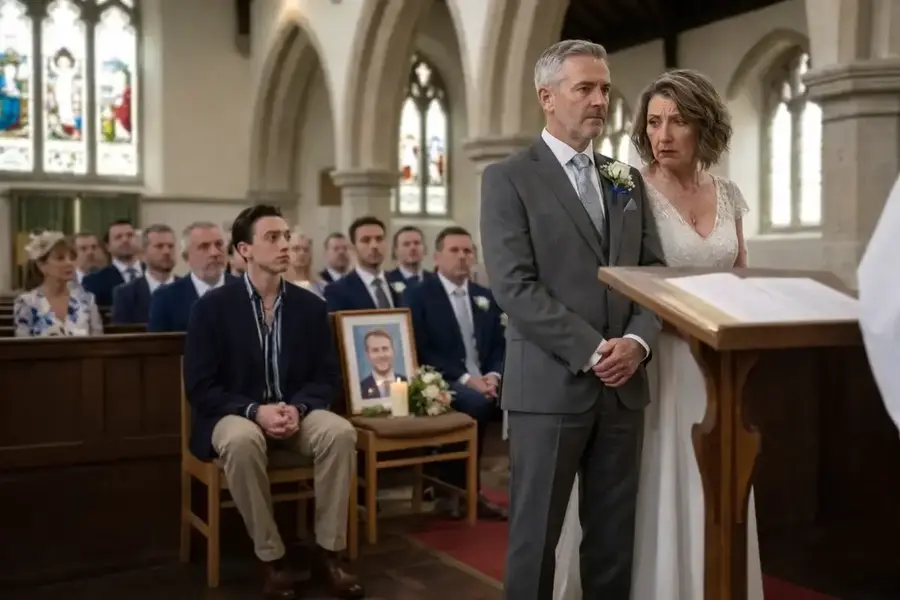
The officiant was mid-sentence when Helen saw him. A man she didn’t know had slipped into the front row and settled himself into the one seat that was supposed to stay empty—the chair dressed in white ribbon and white roses, with Daniel’s photograph propped against the back. Helen’s breath caught in her throat.
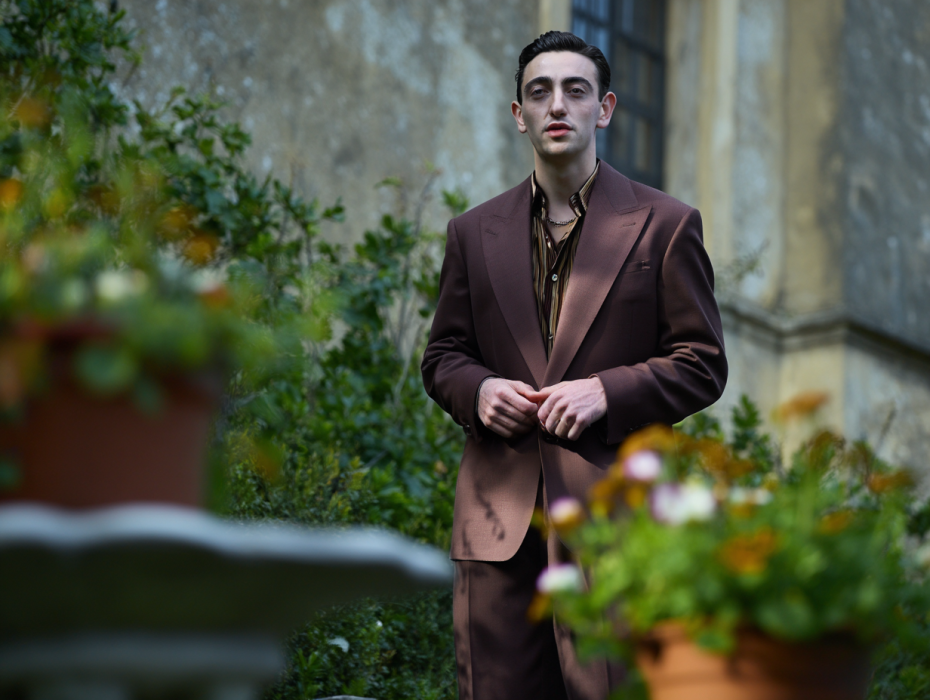
She kept her eyes on him while the officiant kept talking. The man was somewhere in his mid-thirties, dark-haired, wearing a suit that didn’t quite fit him. He held something pressed against his chest with both hands, and he was staring at Daniel’s photograph with an expression that had no business being at a wedding.
Richard was standing right beside her at the altar. She felt him follow her gaze. And that was the moment everything shifted, because Richard’s face reflected an unnamable expression. It was something watchful, like a man who had set a fire and was now waiting to see how it burned. The ceremony continued as though nothing had changed.
Helen was fifty-seven years old and had been organizing her life around absence for nearly a decade. Her son Daniel had died nine years ago—a wet road, a winter night, a phone call at 11:47 p.m. that she still couldn’t think about. He had been twenty-four. She had been a different person before it, though she could no longer remember exactly who.
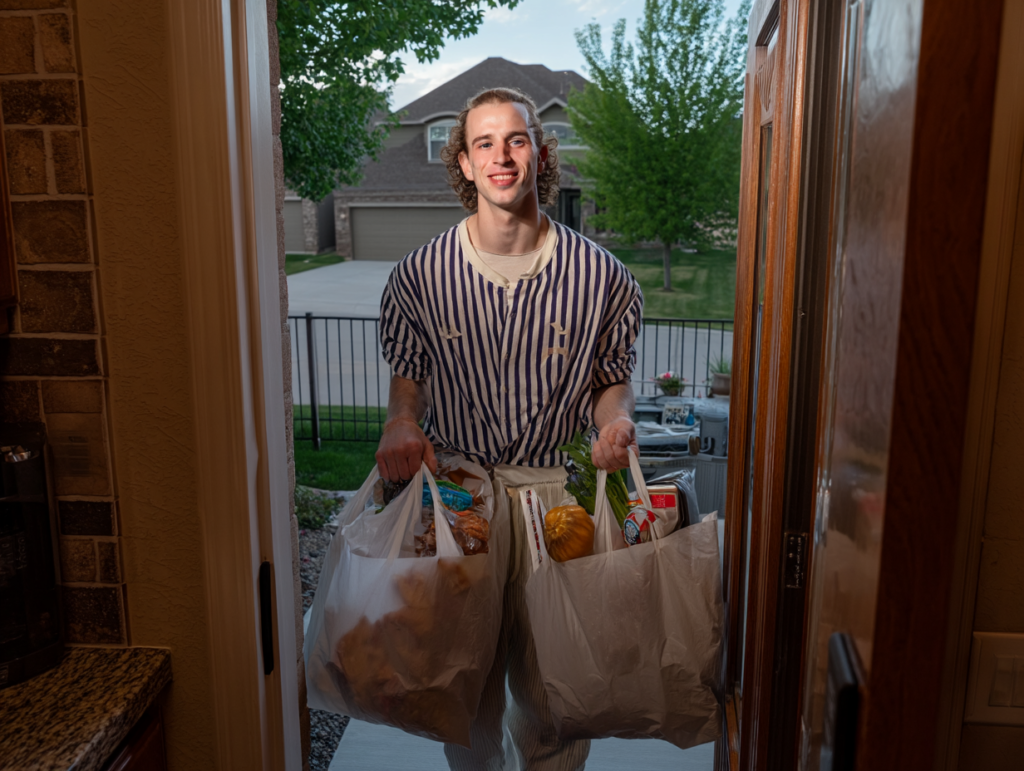
Daniel had been the one who stayed close. He called every Sunday without fail, showed up with groceries she hadn’t asked for, and had a habit of humming while he ate—always the same half-remembered tune that had driven her mad for years. She would have given almost anything to hear it again.
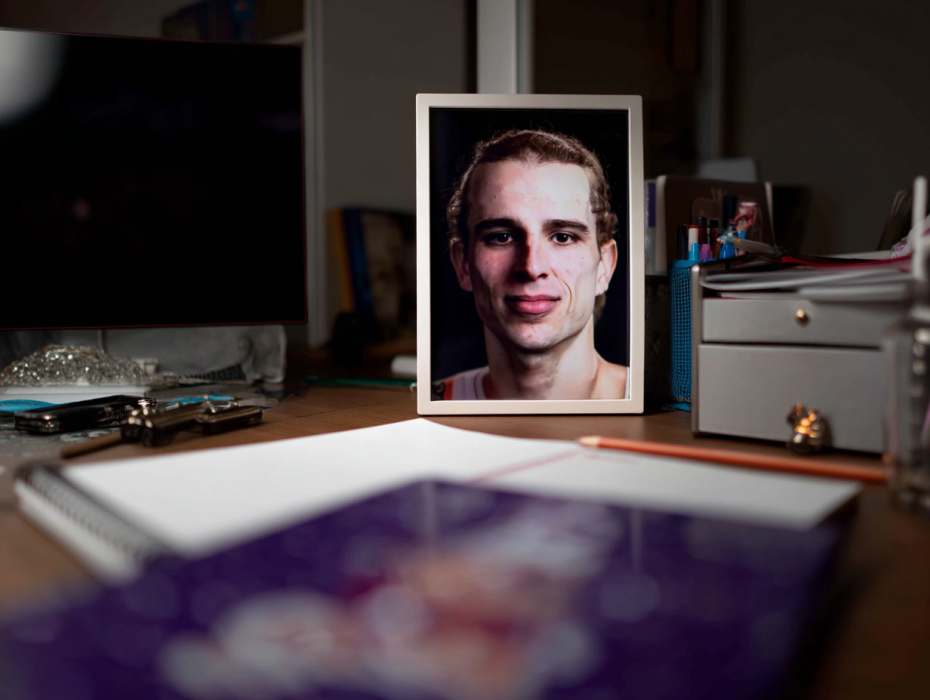
Her daughter Claire was thirty-three and lived two hours north with her husband Marcus. Claire carried her grief differently—vocal, kept Daniel’s photo on her work desk and talked about him easily at dinner. Helen carried hers inward. The two of them had never quite grieved the same way, but had always been each other’s shelter regardless.
For six years after Daniel died, Helen hadn’t wanted anyone. Then Richard came along at a dinner party she’d almost cancelled, hosted by a mutual friend who meant well. He was a retired civil engineer—calm, unhurried, with a dry sense of humour that crept up on her. He hadn’t tried to fix her or cheer her up, but simply sat with her grief.
The guilt of falling in love had arrived before she’d even admitted to herself that she was falling. She told Claire about Richard on a walk, bracing herself, certain her daughter would feel it as a betrayal of Daniel’s memory. Claire had stopped mid-stride and said, “Mum. Daniel would have been insufferable about how much he liked Richard.” Helen had laughed and then wept.

Richard and Daniel had never met. That was the wound at the centre of her relationship with Richard—small, quiet, permanent. Richard knew Daniel only through her stories, photographs, and the box of letters she kept under her bed. He had told her more than once that he wished he could have known him. Helen believed him.
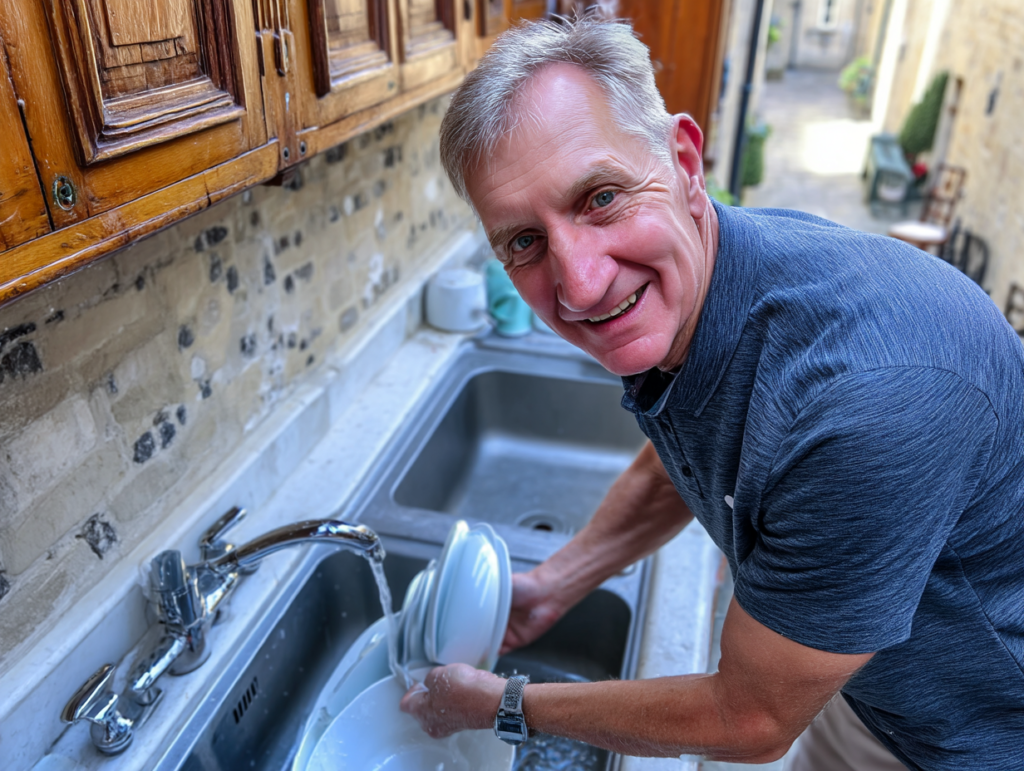
The proposal had happened on an ordinary Tuesday evening. No restaurant, no ring box, just the two of them at the kitchen sink after dinner, washing up. Richard had said: “I’d like to do this forever, if you’ll have me.” She had said yes before he finished the sentence. She called Claire the moment he left the room, and Claire had screamed loudly.
The wedding was small—forty guests, a converted Victorian estate on the edge of the countryside. It had been Claire’s idea to leave a seat for Daniel. White ribbon, white roses, his framed photograph leaning against the back of the chair, and a small handwritten card that read: Saving this one, D.
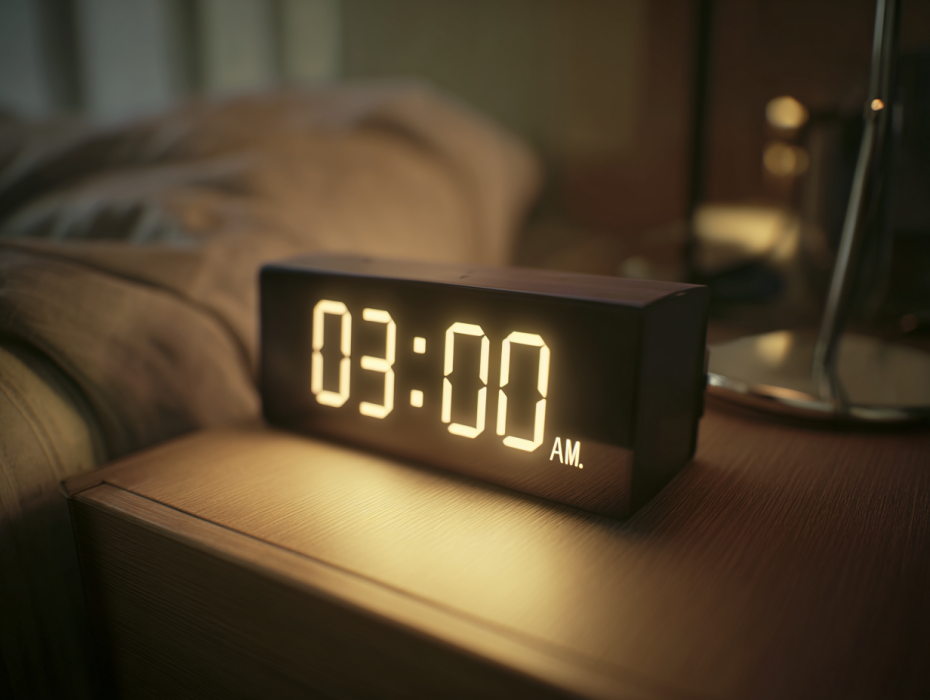
But the guilt had kept building quietly in the months that followed. She woke at three in the morning, convinced she was doing something wrong; that moving forward meant leaving Daniel behind; that the wedding dress hanging in her wardrobe was some kind of message that she was finished grieving, finished remembering, finished…
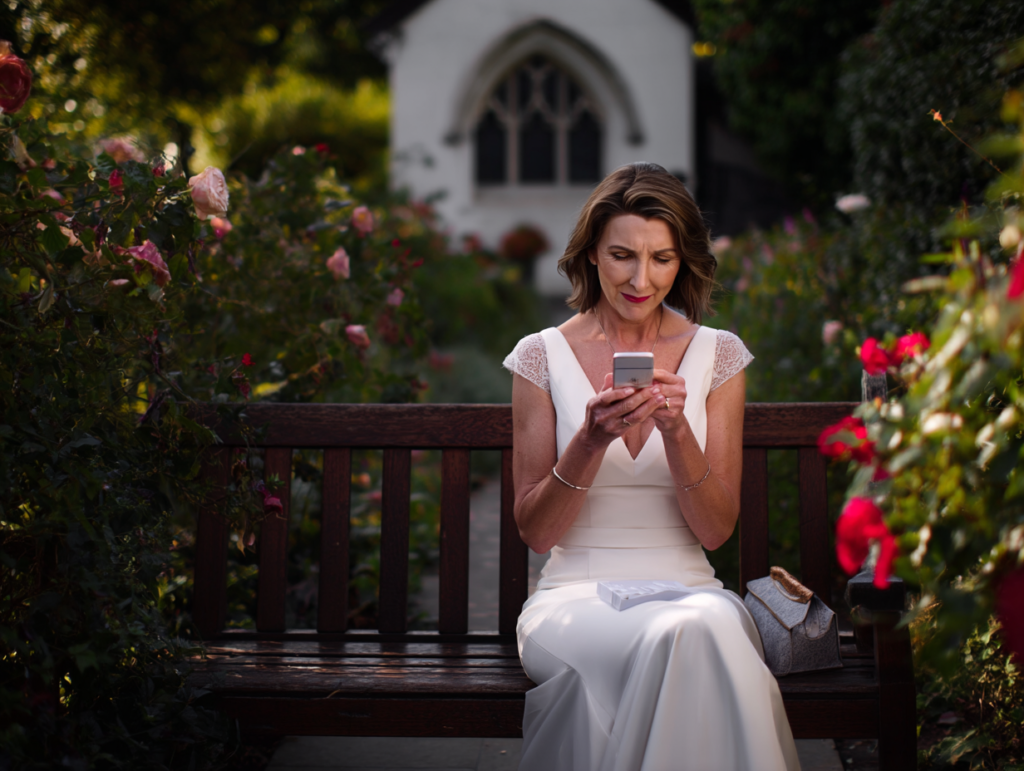
Three months before the wedding, a letter had arrived from an organization she didn’t immediately recognize. She opened it, read it twice, and placed it face-down on the kitchen table. She told herself it was administrative, impersonal, nothing that needed urgent attention. She never mentioned it to Richard or Claire, but she still hadn’t thrown it away.
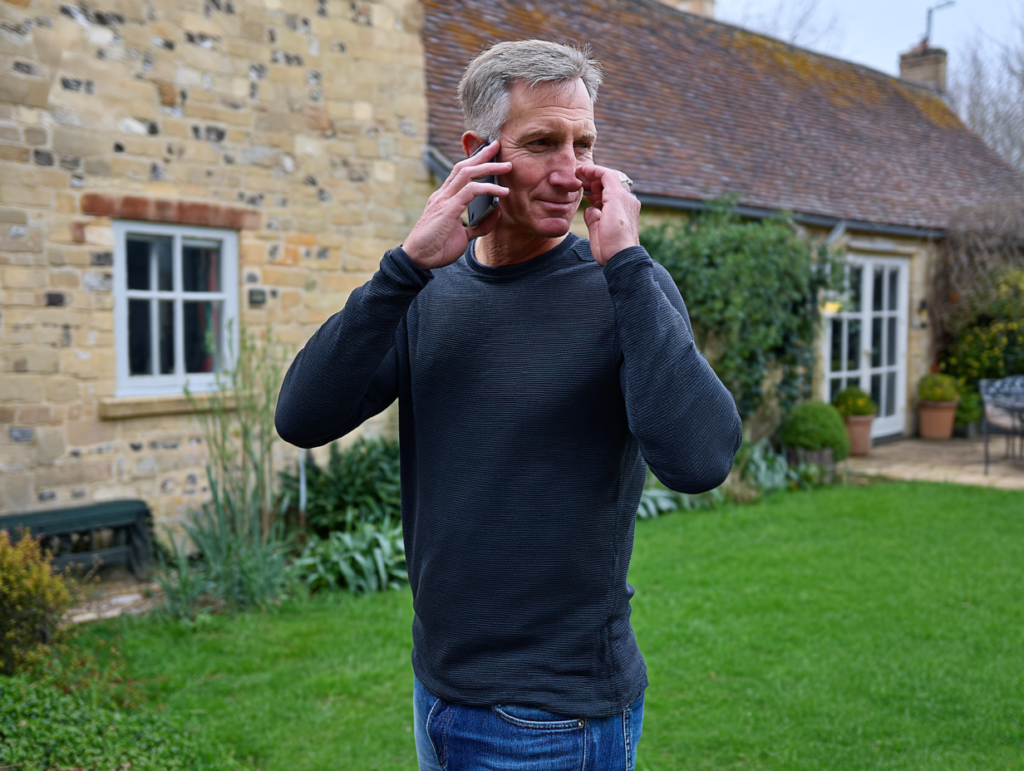
Three weeks out, she had noticed Richard on the phone in the back garden. He had drifted further from the window when he saw her watching—a small thing, but unusual for a man who had no real habit of privacy. When she asked who it was, he said he was just sorting something and moved the conversation on without difficulty. She had let it go.
A week before the wedding, Richard took an unexplained trip to the city. He was gone half the day and came back quiet and thoughtful, kissed her forehead at the door and said it had been a good day. His eyes had the look of a man who had been moved by something he wasn’t yet ready to put into words. She noticed it but said nothing.
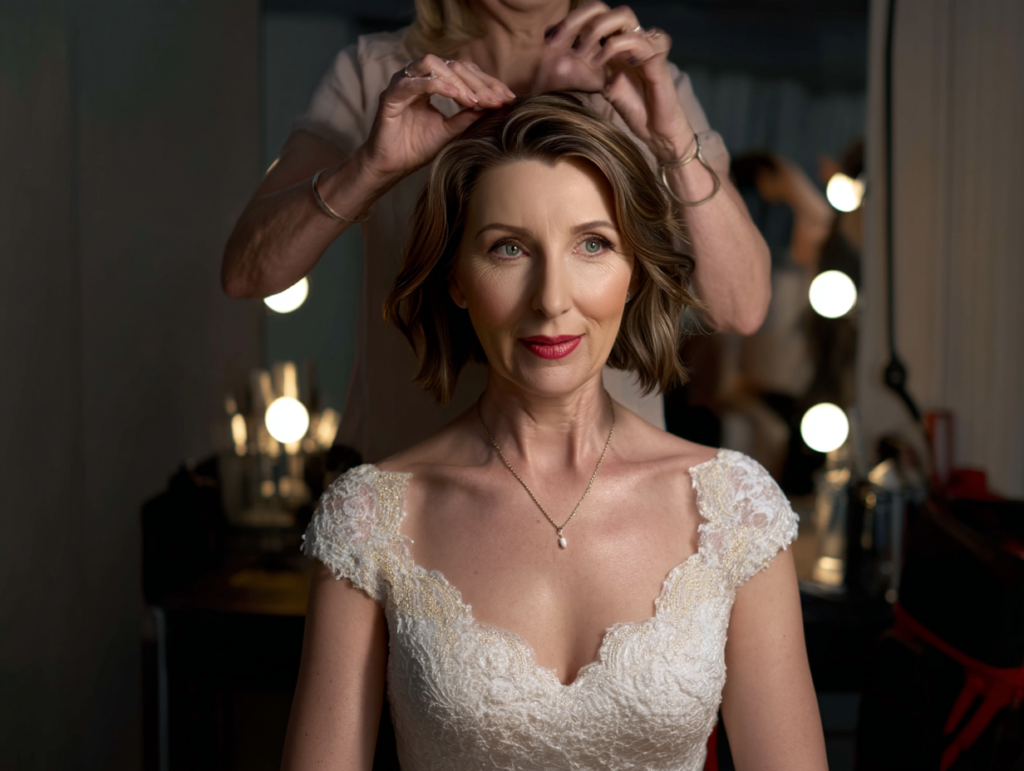
On the morning of the wedding, Claire sat beside her in the guest room and fixed her hair with the careful, deliberate tenderness of someone who knows they are doing something they will remember for the rest of their lives. Helen slipped a small photo of Daniel from her purse and tucked it inside the neckline of her dress, against her chest.
She walked through the venue in the final hour the way she always moved through spaces that mattered—slowly, touching things lightly, checking on people. She stopped at Daniel’s empty chair and straightened the ribbon. When she turned to go, she caught a glimpse of Richard standing in the far doorway watching her with an unreadable expression.
The venue coordinator caught her near the entrance with a small, apologetic frown. There had been a phone call that morning—a man asking about the venue, saying he was expected. He wasn’t on the guest list. The coordinator had meant to follow it up and had simply forgotten. Helen thanked her. The detail sat in the back of her mind.
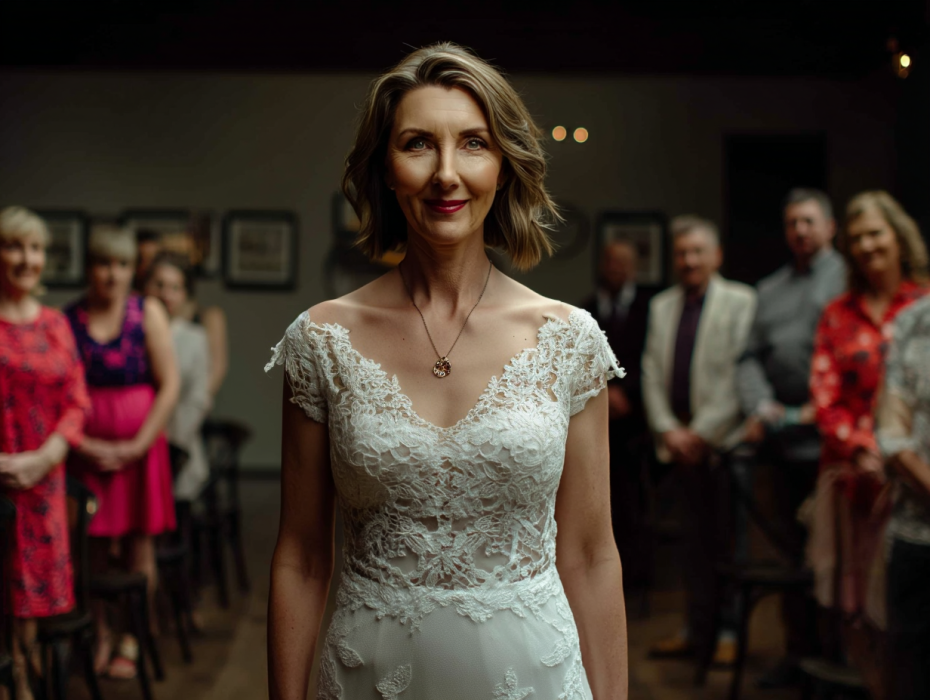
There was no time to pull at it. The music started. Helen walked herself down the aisle—her choice from the beginning, something she had felt quietly certain about, and when she saw Richard standing at the altar watching her, like she was the answer to something he had been working out for years, everything else dropped away.
The ceremony began. The officiant spoke. Richard took both her hands in his and held them. She was present, completely, and then she wasn’t, because at the edge of her vision, the rear doors of the chapel shifted open. Someone was coming in late, moving quietly along the left-hand wall, heading toward the front, the family section, and the empty seat.
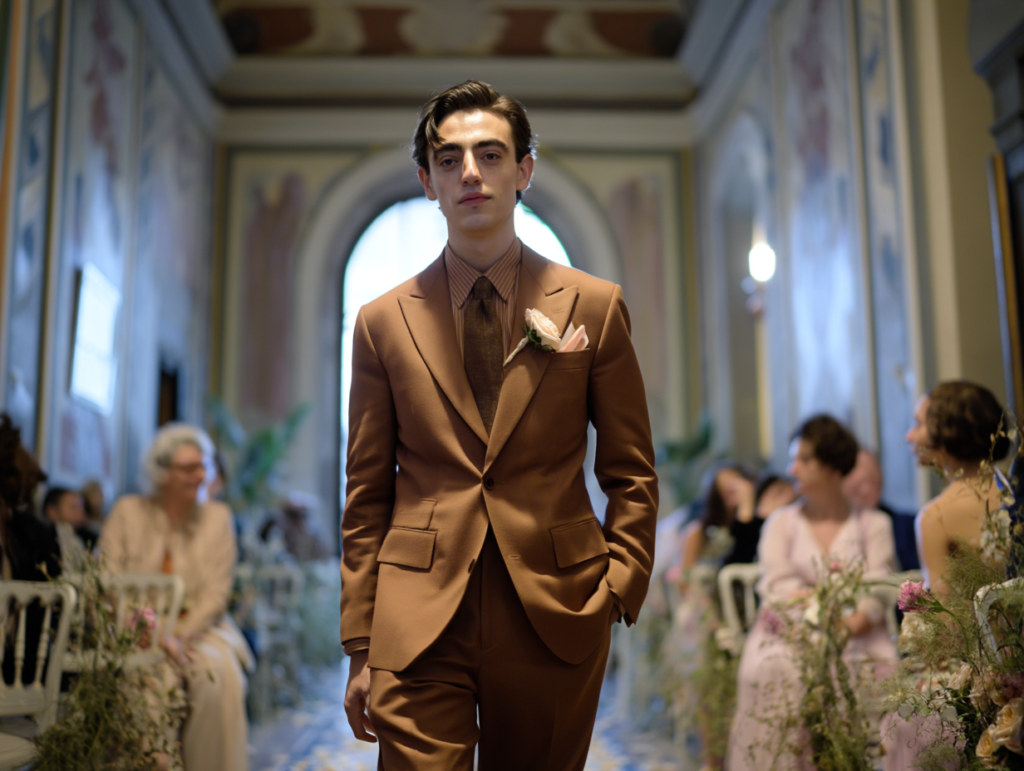
The stranger stopped at Daniel’s chair. He stood looking down at the photograph for a moment too long, as though something had rooted him to the spot. Then he sat, and with both hands, he carefully repositioned the framed photo on the ledge in front of him so he could still see Daniel’s face. Helen felt the floor tilt.
She was half walking toward him when she stopped herself. That was Daniel’s chair. But this was her wedding, and she would not make a scene at her own altar. She forced herself to stay still and studied the man’s profile. Mid-thirties. Dark hair going grey at one temple. A faint scar behind his left ear. His suit didn’t fit him properly.
Richard squeezed her hand. She looked at him. His face was composed and careful—the expression he wore when he was managing something, holding it steady from the inside. Not alarmed. Not confused. Managing. He invited this man, Helen thought, and the idea was so strange she couldn’t yet find the emotion to match it.
The stranger reached into his jacket. Helen went rigid. He withdrew something small; she couldn’t make out what from where she was standing. Then, he closed his fist around it and pressed it against his chest, against his sternum. He held it there for the rest of the ceremony without moving it once. He barely moved; just sat, watching the altar.
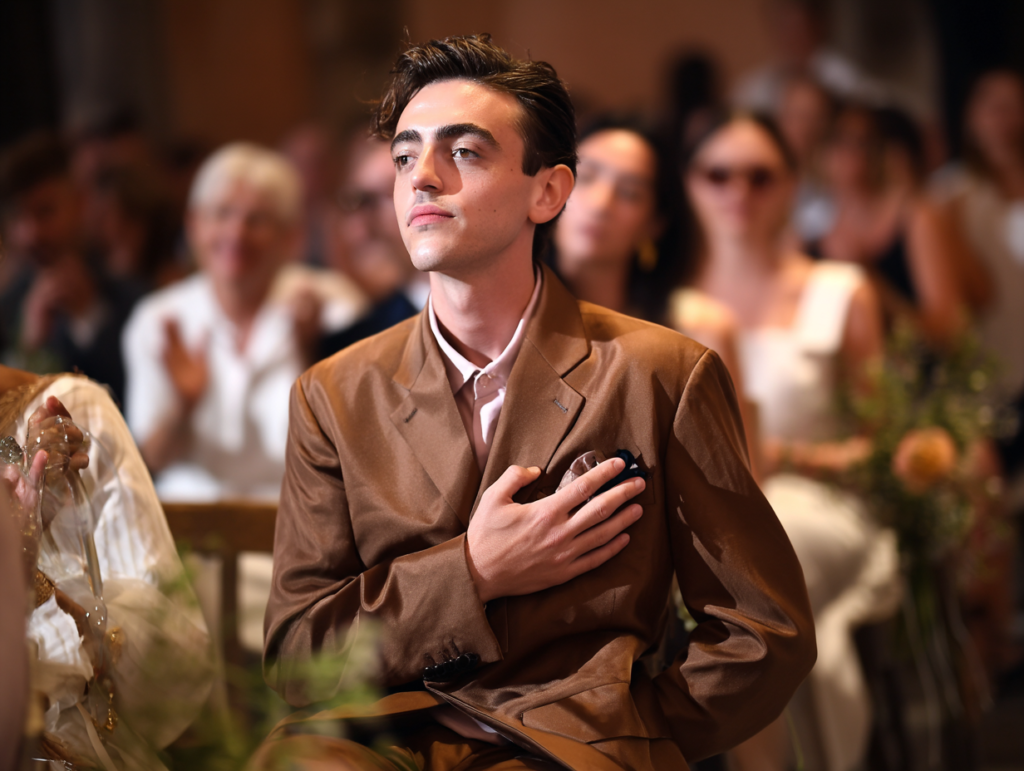
The vows. Helen spoke hers to Richard. She had written them herself, revised them eleven times, knew them by heart, and somewhere in the middle she realised she was crying and couldn’t trace the exact moment it had started. She said the words. Richard said his. Then, just to her left, she heard it: quiet, private weeping. The stranger.
He was crying the way people cry when they have held something for a very long time, and a door has finally cracked open. It frightened Helen more than his presence had. She looked away. She said I do. The chapel responded with a soft, collective exhale. She was married. Something enormous had already begun.

During the recessional, Claire appeared beside her with a champagne flute and narrowed eyes. “Who is the man in Daniel’s seat?” Helen kept her voice low. “I don’t know yet.” Claire glanced toward Richard. “Does he?” Helen met her daughter’s eyes. A beat of silence. “I think so.” Claire absorbed this. “Do you want me to—” “Stay close,” Helen said. “Not yet.”
At the chapel door, guests were moving out into the garden. Helen paused and looked back. The stranger hadn’t moved to leave. He sat alone in the emptying chapel with Daniel’s photo now held in his lap, looking at it keenly. The detail caught somewhere in Helen’s chest and stayed there.
She found Richard near the garden entrance, shaking hands with his brother. She waited beside a stone pillar until they were briefly alone, then said quietly: “The man in the chapel. You know who he is.” Not a question. Richard looked at her, and it was there again—not guilt exactly. Something older and more complicated than guilt.
“Tell me,” she said. Richard looked at her steadily. “I will—explain, I promise, every bit of it. But Helen, will you speak to him first? I need you to hear him before you hear me.” She stared at her husband. That word still sat strangely. Husband. She looked back toward the chapel. The stranger was standing in the doorway now, watching them.
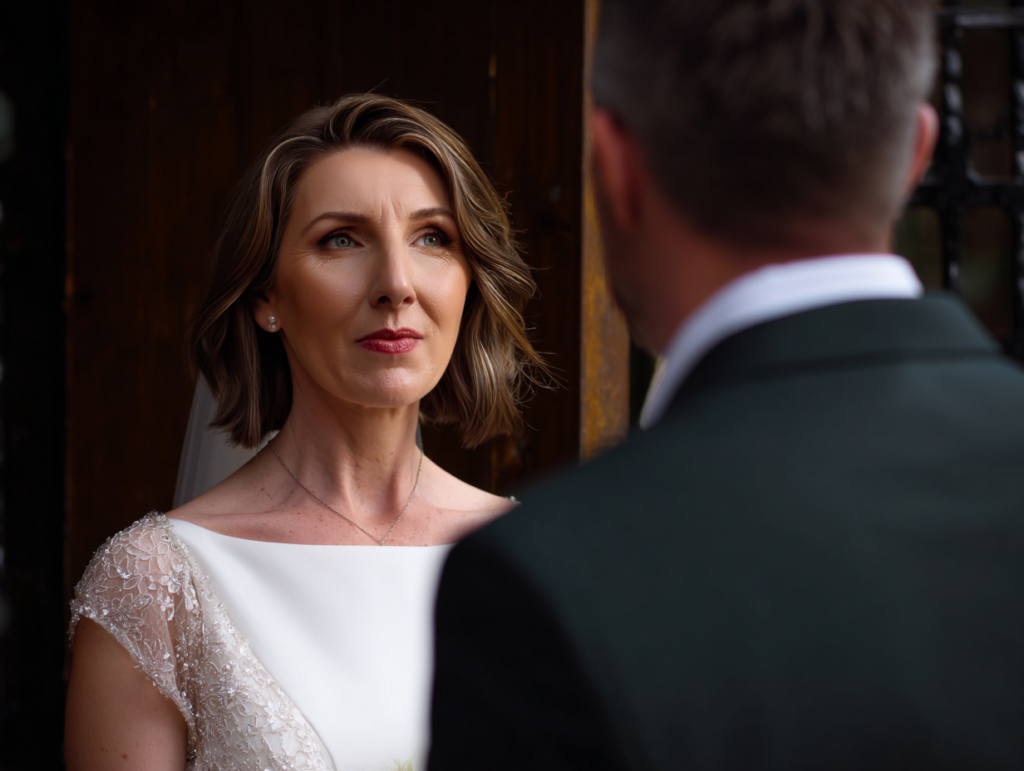
He didn’t approach. He stood in the chapel doorway holding Daniel’s photo against his chest— not clutching it, cradling it, and waited. He looked exhausted in a way that had nothing to do with the day. Like a man at the end of something very long. Like someone who had been carrying a weight with no guarantee it would ever be received.
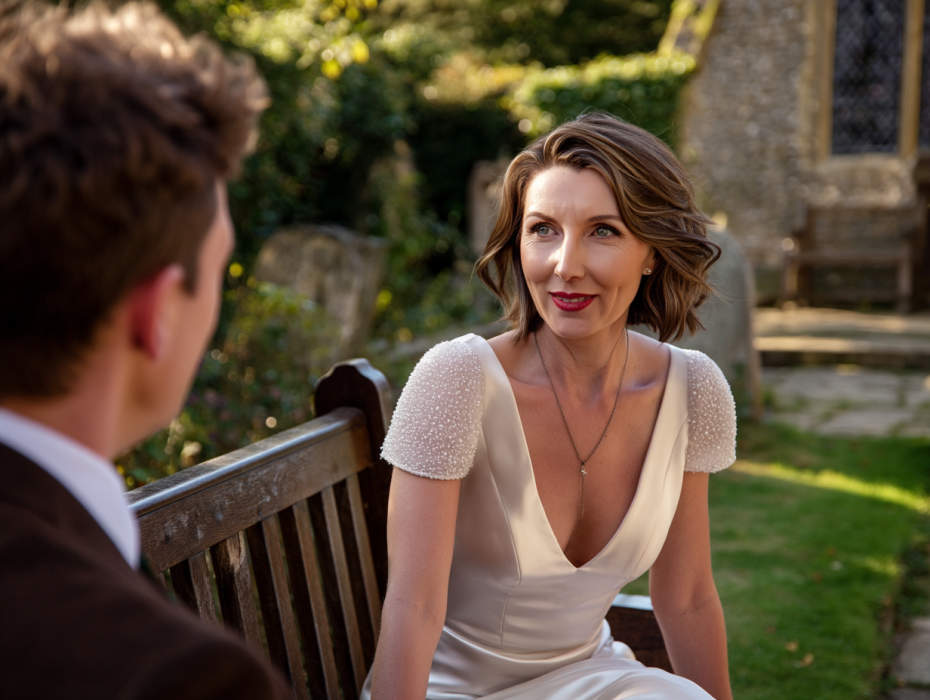
Helen crossed the courtyard toward him alone. Up close, she could see his eyes were red and deep-set, kind in a way that was hard to fake. His hands had a faint tremor. She held up one finger—wait—then gestured toward the east garden, the stone bench, the old roses, away from the guests. He nodded and followed without a word.
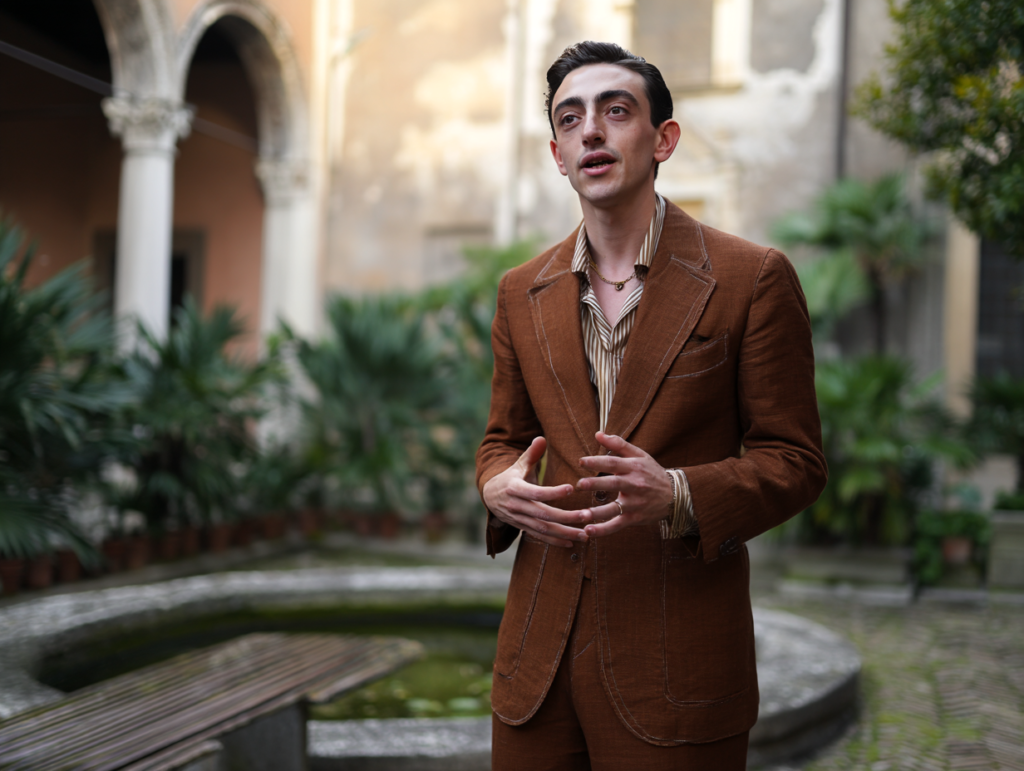
They reached the garden bench, gold afternoon light settling between the old hedgerows. Helen sat. The stranger stood. He said, “I know I have no right to be here. I’ve known that since I pulled into the car park this morning and sat in my car for two hours.” He paused. “I nearly left four times. My name is Owen.”
“Owen,” Helen repeated. “How do you know Richard?” He blinked, a fractional hesitation, just a beat too long, the first she had noticed. “He contacted me,” Owen said. “About three months ago. He told me he’d found me—that he’d been searching for a while. He said you’d received a letter. That you hadn’t been able to respond to it.”
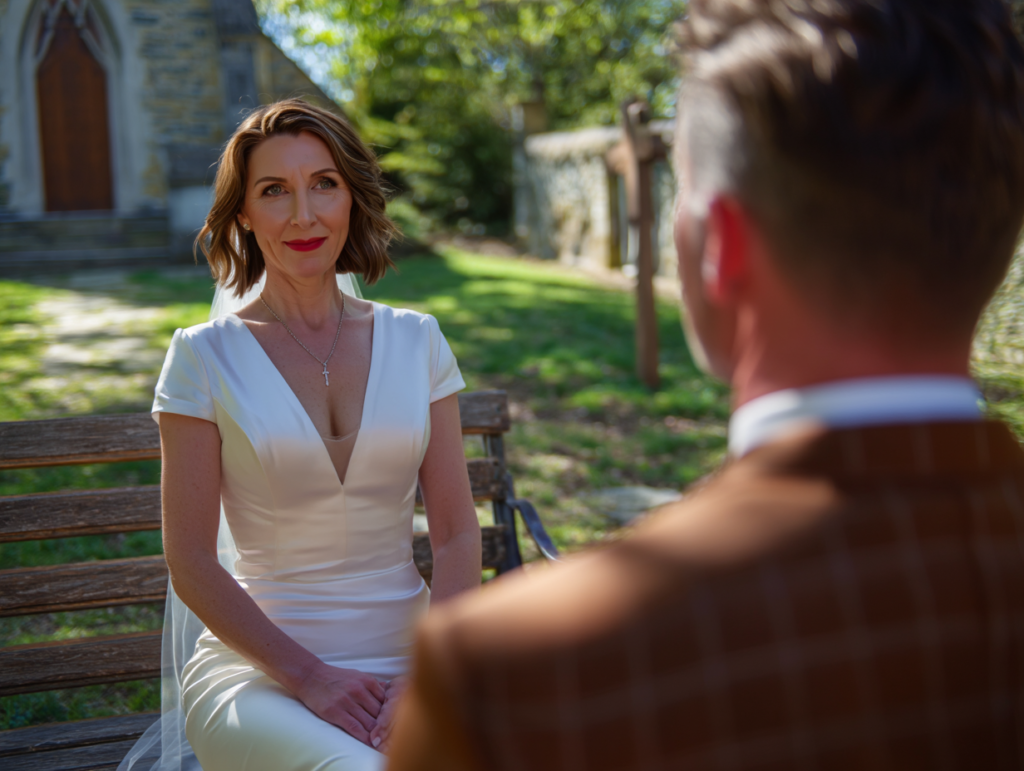
Helen went still. Richard had found this man. Had gone looking and found him and made whatever call she hadn’t been able to make herself. The letter under her bed, face down for three months, suddenly felt enormous. “What letter?” she asked carefully, biding for time. Owen reached into his jacket and produced an envelope.
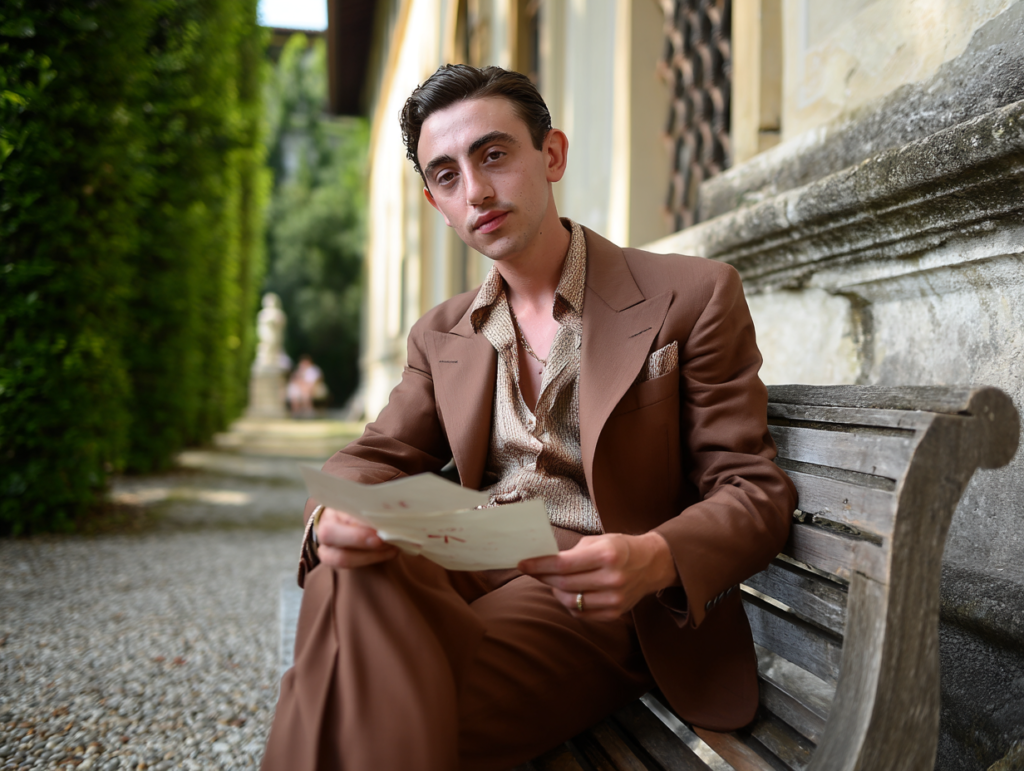
He didn’t hand it over. He held it with both hands, looking at it rather than at her. “I’ve rewritten this several times,” he said. “I drove here this morning, having rewritten it again last night. I’ve been carrying some version of it for—” he paused, “—a long time.” Her name was written on the front in careful, formal handwriting.
Helen leaned forward. Her fingers were an inch from it when a sound from inside the venue stopped everything—sharp, urgent, cutting clean through the music and the murmur of forty people. Not a scream exactly. The sound a room makes when something has gone wrong.
Richard’s uncle Gerald was on the floor between two tables, conscious but ash-grey, one hand pressed to his chest. The music died. People pushed back from their tables. Richard was across the room and on his knees beside the old man before Helen had fully registered what she was seeing. Owen quietly pocketed the envelope.
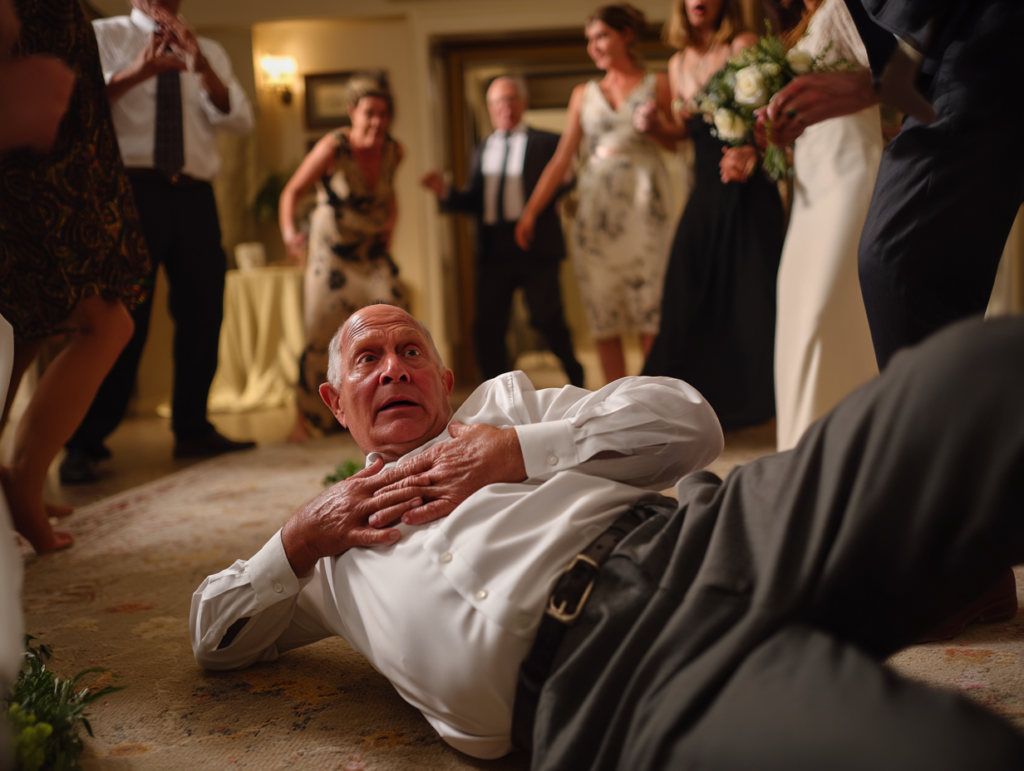
Then Owen was beside Richard. Moving quickly, calmly, with the quiet authority of someone who knew exactly what to do. He loosened Gerald’s collar, checked his pulse with two fingers, and spoke to him in a low, even voice. Gerald answered in fragments. Owen relayed information to the emergency operator on the guest’s phone.
Helen watched from across the room as Owen stepped back from Gerald and let the paramedics take over. He straightened up, said something briefly to Richard, then looked across the room until he found her. Then he quietly returned to his table, sat down, and folded his hands, as though he hadn’t just held the room together.

The next forty minutes belonged to other things entirely. The ambulance. Claire materialized at Helen’s shoulder and between them they managed it—kept the room calm, kept the alarm from spreading, and answered the same frightened questions repeatedly with the same steady voice.
Richard came back through the main doors to find Helen in the entrance hall, still in her wedding dress, thanking the last paramedic. They stood facing each other without speaking for a moment. “Gerald is stable,” he said. “Not a heart attack—dehydration. He’s comfortable.” Helen took his hand. They had to find their way back.
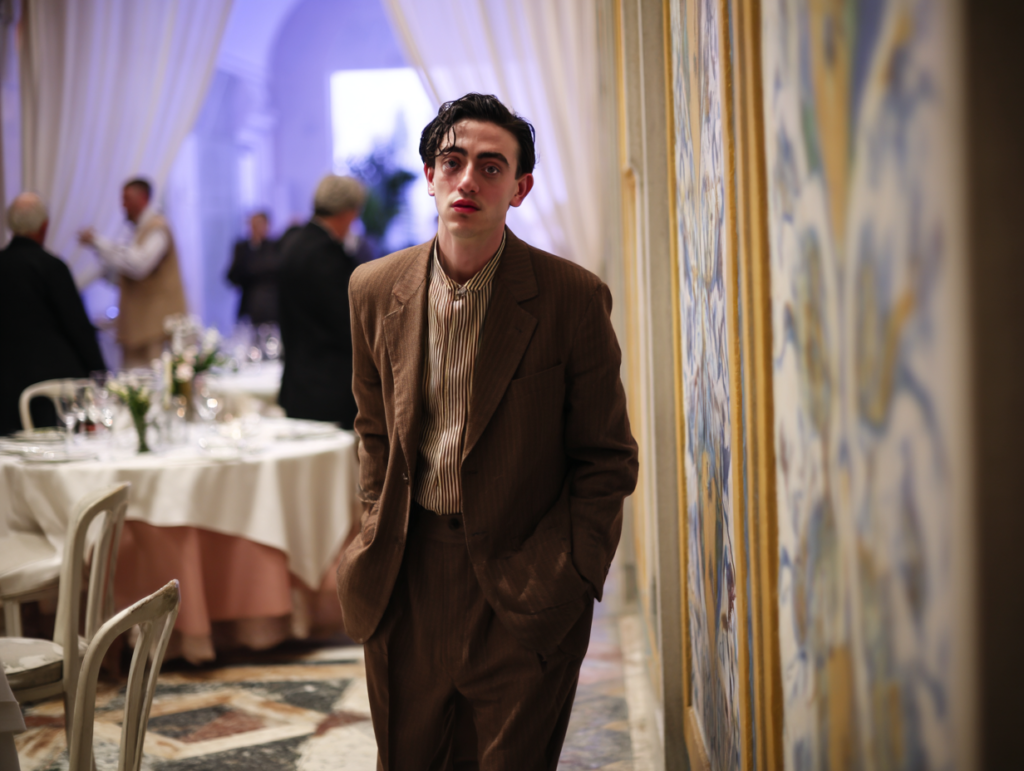
She found Owen at the small table near the garden doors, his water untouched, the envelope back in his jacket. He stood when he saw her. She shook her head — sit down, it’s all right. “He is going to be alright,” Owen assured her. She noted his need to put her at ease. “He’s going to be fine,” she echoed.
Richard appeared at the edge of her vision, caught her eye from across the room, and tipped his head slightly—I’ve got everything. Helen turned back to Owen. Outside the garden doors, the evening had deepened to a dark blue. The reception had found its footing again around them.

Claire appeared at the garden entrance. She had her phone in her hand and the careful, controlled expression she wore when she had found something and was deciding whether to use it. She looked at Owen, then at Helen, and said, “Mum. Can I have one minute?”
Three steps away, voices low, Claire said, “I looked him up. I found someone matching his profile. O. Marsh, mid-thirties, city address.” She held up her phone. “There’s a local newspaper article, three years old. A man named Owen Marsh was questioned in connection with a stalking complaint.” Helen kept her face neutral. “Questioned,” she said. “Not charged.”

Helen looked back at Owen on the bench. He was looking at Daniel’s photograph, not touching it, just looking—the way you look at something you consider sacred and know you have no right to touch. Helen had been reading people across rooms and in doorways for most of her adult life. She trusted what she saw now. “He’s not dangerous,” she said quietly.
Back on the bench, Owen began talking. Nine years ago, he said, he had been twenty-seven years old, and he had been dying. A congenital defect, diagnosed at nineteen, managed through his early twenties, then cascading into something unmanageable. The doctors had given him three weeks, which he had spent making lists of things left undone.
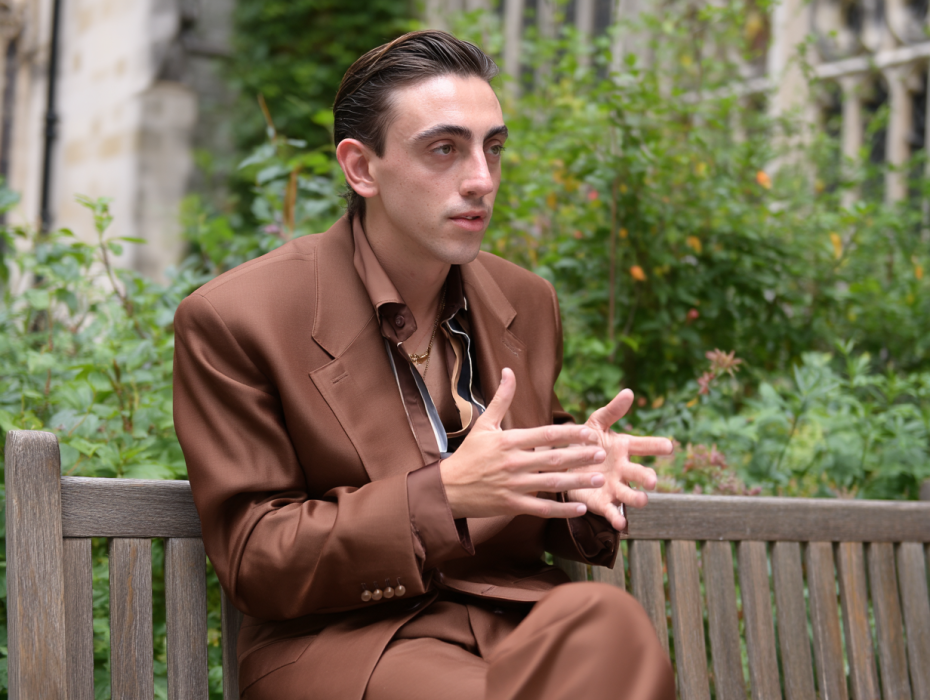
Then something happened. He said only that he hadn’t died. That he had woken up after a long period of unconsciousness in a different condition than he had been in before. He had spent the years that followed not asking questions, not looking backward. The questions came later, after his father died.
Grief, Owen said, opens doors that survival keeps shut. When his father died two years ago, he had found himself wondering about things he had deliberately avoided for years. He began searching. He had written letters and made phone calls and followed procedures that turned out to be long and complicated and mostly unrewarding.
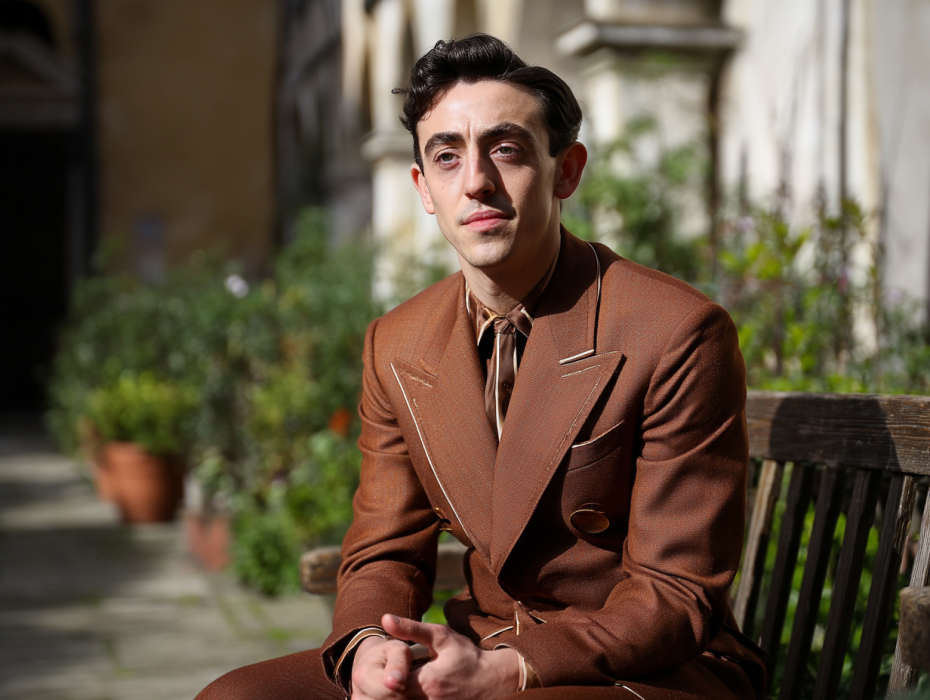
For nearly two years, he had received almost nothing useful. Then, three months ago, something shifted. A different kind of response arrived, referencing a family, an upcoming occasion. Shortly after that came Richard’s phone call. Owen said, “Your husband said—I think she’s ready. She just doesn’t know it yet.”
Helen was quiet. Then: “How exactly did Richard find you?” Owen considered this. “I don’t know the full details. He told me he’d been searching for close to a year and he’d eventually hired someone to help.” A year. Helen did the arithmetic. Richard had been quietly searching while they planned the wedding, while she woke at three in the morning sick with guilt.
“He told me directly that he’d used an investigator,” Owen continued. “He didn’t try to soften that. He said: I know this is an unusual way to make contact, and I need you to know that I only want something good to come from it.” Owen paused. “I believed him. I don’t know why—I’d never spoken to him before. But you married someone worth believing.”
Helen stood, needing to move. “Three years ago,” she said. “A stalking complaint. A man named O Marsh.” He didn’t flinch. “My wife’s former husband—,” he said. “He filed it during a custody dispute as a way of applying pressure. It was investigated and closed without charges. We have the full documentation.” Helen nodded, then sighed.
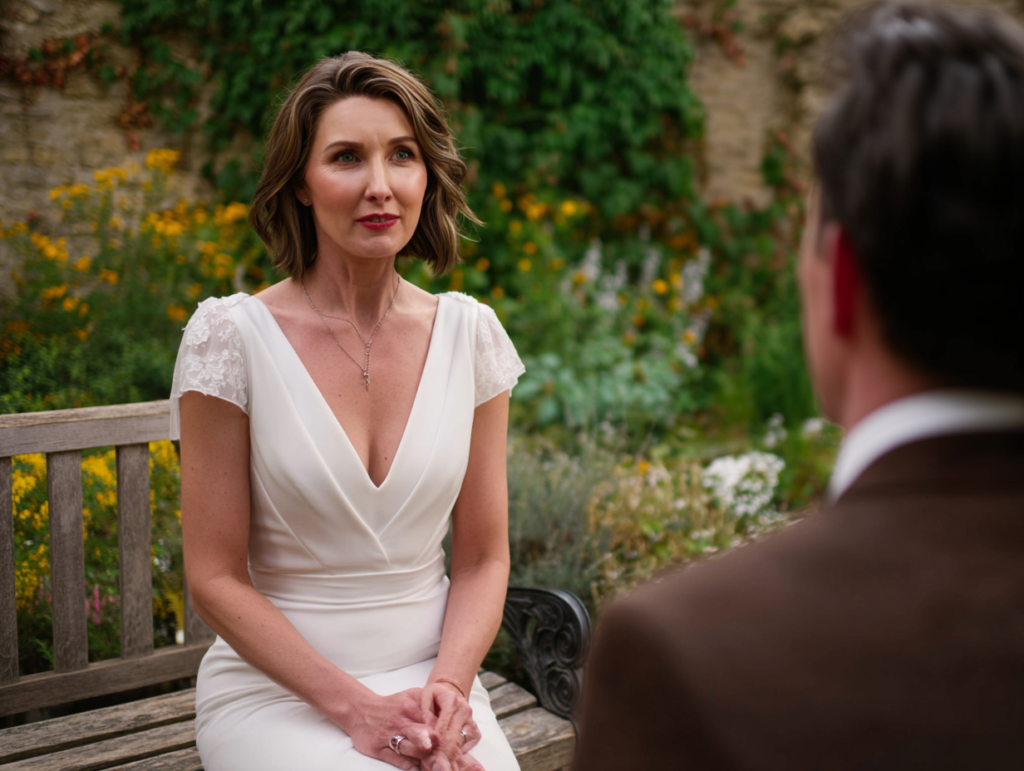
“Do you have a family?” Helen asked. She wasn’t sure why she needed this before anything else—some instinct to understand the full shape of the man before she could understand his story. Owen nodded. “My wife, Sarah. My children—Felix is six, and Rosa is four.” He showed two small faces on his phone screen. A gap-toothed boy. A girl clutching a cat.
Helen looked at the children longer than was strictly necessary. Owen let her. “Felix has a thing he does,” Owen said, keeping his voice light. “When it rains, and there are worms on the pavement, he picks them up so they don’t get stepped on. He’s been doing it since he could walk. We’ve long since given up trying to talk him out of it.”
Helen made a sound that wasn’t a word. Her hand went to her mouth. Owen stopped. “What is it?” She shook her head slowly. Her eyes had gone bright. “Daniel,” she said. “He did exactly that. From the time he was four. We used to call him “Worm Boy.” I’d find them in his coat pockets.” Owen stared at her. Neither of them spoke.
Owen pressed on because he understood now that he had to. He told her about a dream he had experienced regularly since his recovery—a wet road, oncoming headlights, a sensation of speed followed by a profound and sudden stillness. He had never been in a serious accident and had no explanation for the dream.
Helen had gone very still. She sat back down beside him on the bench, closer now than before. “The song,” she said. “You hummed a tune—did Richard mention it?” Owen shook his head. “Richard didn’t tell me about any song.” A pause. Then, quietly, with a slight self-consciousness that he made no effort to hide, he hummed a few bars. She gasped.
It was Daniel’s song. The one he hummed at the dinner table, in the back seat of the car, while doing the washing up late at night. The one she had heard so constantly in the first year of grief that she couldn’t bear it on the radio. She sat with her eyes shut and listened to Owen hum it. The garden held completely still.
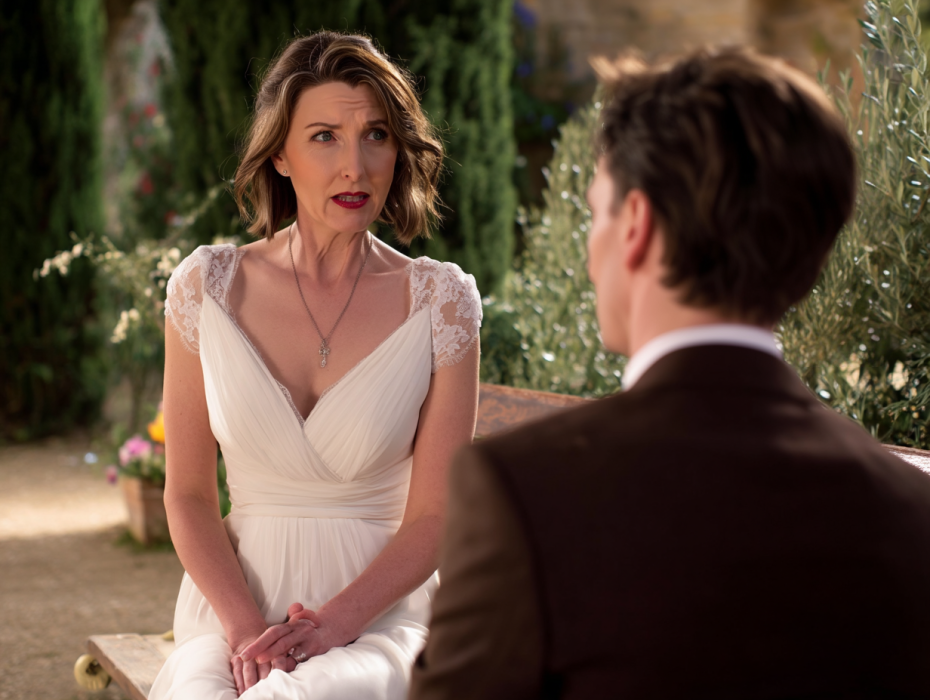
When she opened her eyes, he had stopped. He was watching her with an expression she recognised—the particular quiet of a person who has been trying to communicate something true for a very long time and has finally, somehow, been understood. He held out the envelope again. “I think,” he said, choosing his words carefully, “that you might be ready for this now.”
She took it. She didn’t open it. She held it in both hands and looked at him. “One more thing,” she said. “That night nine years ago—whatever it was that happened to you—were you frightened?” Owen was quiet for a long moment. “No,” he said at last. “That’s the part I’ve never been able to explain. I felt held. Like something was there with me.”
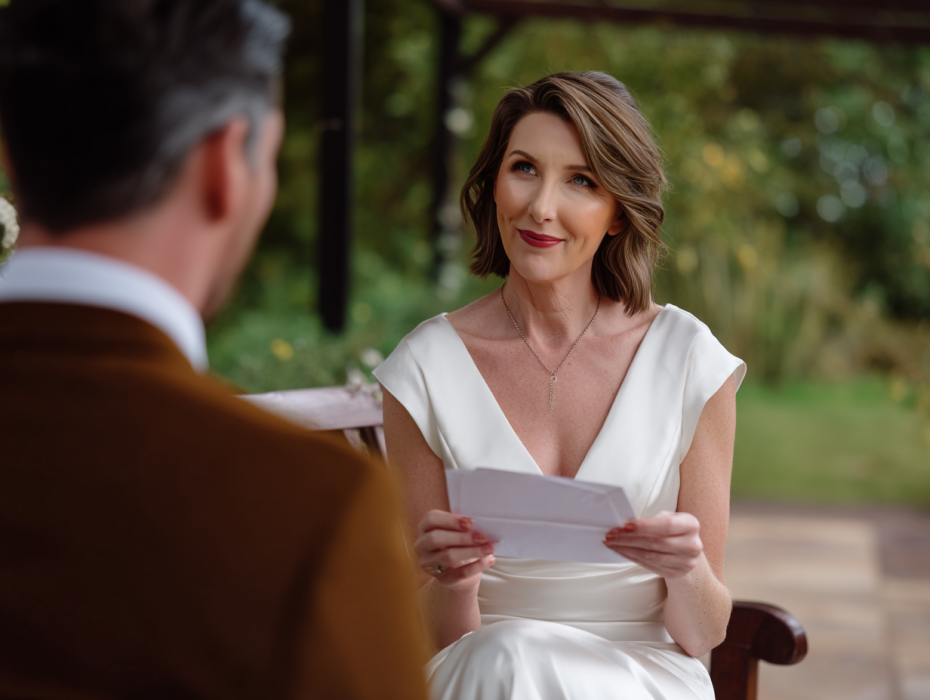
A bell rang from inside the venue—the signal for dinner seating. Helen stood, smoothed her dress, and looked at Owen for a moment without speaking. She had made a decision somewhere in the last hour without quite noticing the moment it happened. “Come inside,” she said. “There’s someone you need to meet properly.”
She led him through a side entrance away from the main flow of guests, along a short corridor that smelled of old stone and fresh flowers. She was calm in the way that followed a decision rather than preceded one. Whatever came next, she was ready for it. She had been getting ready for it, she suspected, for nine years.
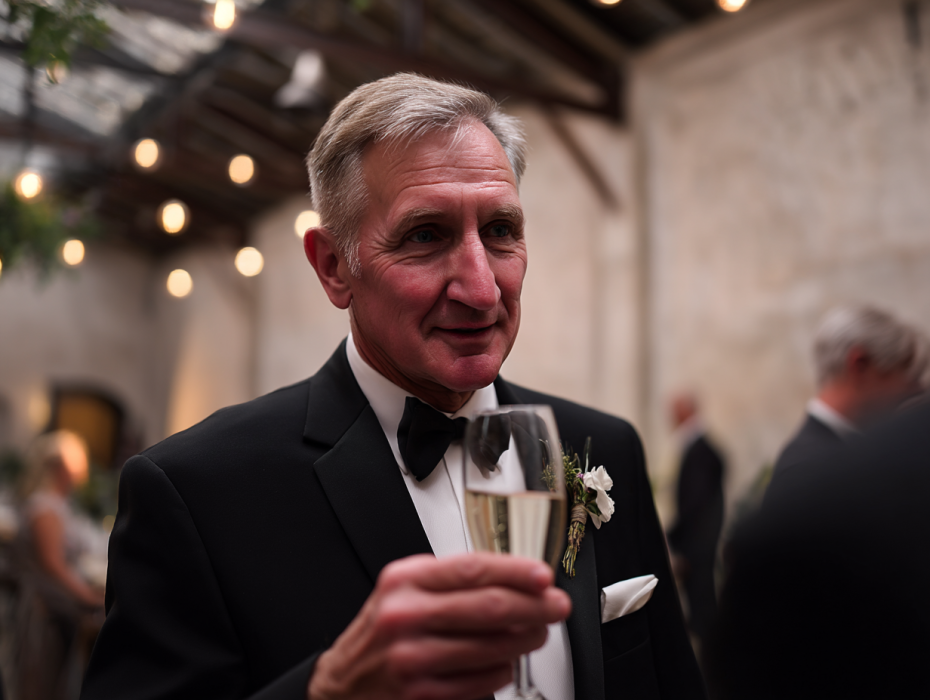
She found Richard at the bar, a glass of wine in hand, talking to Claire’s husband, Marcus. He saw Owen behind her and went very still. Marcus, reading the room, excused himself quietly. Helen stepped close to Richard and took his face in both hands.
“You went looking for him,” she said. “For nearly a year?” “Yes,” Richard said. She studied his eyes. “Why didn’t you tell me?” He answered without hesitating. “Because I wasn’t certain I’d find him. And because if I had told you, you would have asked me to stop.” She considered that for a moment. “Would I?” “Yes.” Another pause. “Yes,” she said quietly. “I would have.”
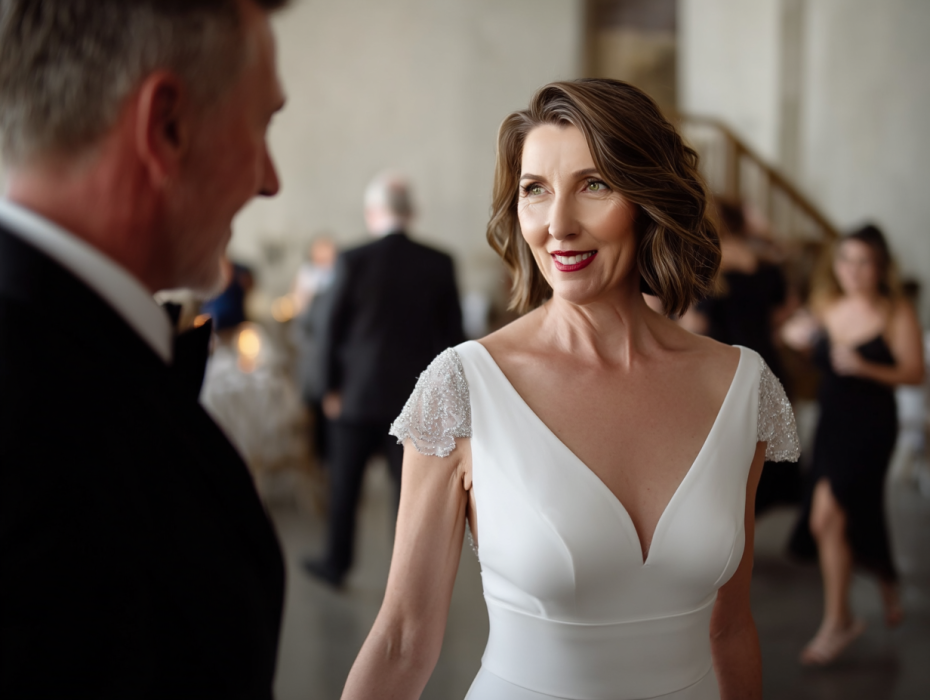
“How did you know I needed this?” she asked. It was the only question that truly mattered and they both knew it. Richard was quiet for a moment, not because he didn’t have an answer but because he wanted to give her the right one. He had always been a man who chose his words as though they cost something and were worth what they cost.
“Because you wake up at three in the morning and you think I’m asleep,” he said. “Because you pin his photograph inside your clothes on the days that matter most. Because in nine years, you have never once told me you were at peace with it.” He paused. “I couldn’t give you Daniel. But I thought perhaps I could give you this.”
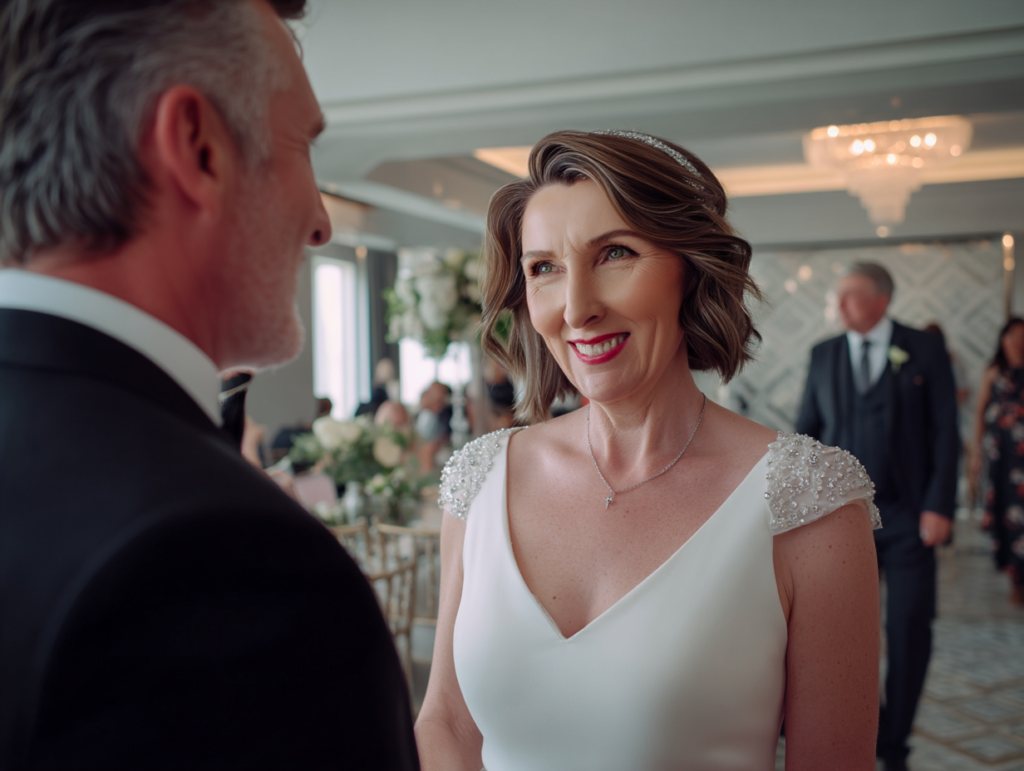
Helen looked at him for a long moment. Then she said, “You extraordinary man!” She meant it completely. Richard’s expression shifted—something in it eased, the way a person looks when they have been holding their breath for a very long time and have finally been told it is all right to breathe. He glanced over her shoulder at Owen, who had stepped back to give them space.
Claire had been watching from across the room. She came over now with Marcus a half-step behind her, and Owen was introduced properly. Claire looked at him with her mother’s eyes, steady, measuring, but not unkind. She extended her hand. “Thank you for coming,” she said.
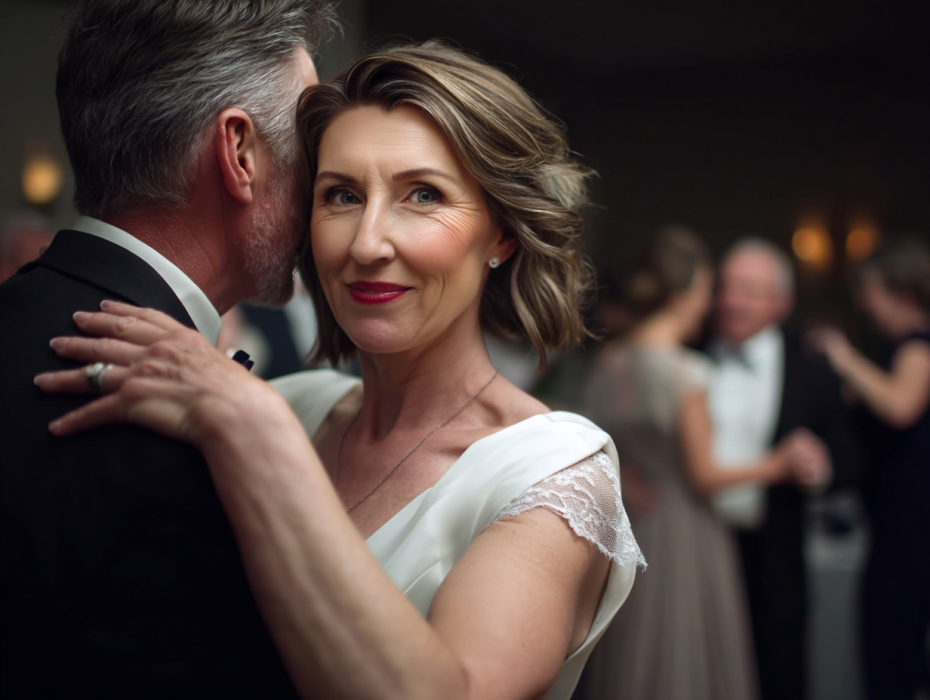
Helen and Richard moved onto the floor. For the first dance. Helen had worried whether she could be fully present in it, or grief would pull at her the way it sometimes did. Richard pulled her close and put his lips near her ear. “He’d have cut in by now,” he said quietly, “just to embarrass you.” Helen laughed suddenly, and the worry dissolved.
After the first dance, Helen crossed the room to Owen’s table and sat beside him. The reception moved around them, but their small corner of it had gone quiet. She had been building toward one question since the garden. She asked it plainly, without armour. “What was given to you, Owen? Nine years ago. What was it that saved your life?”
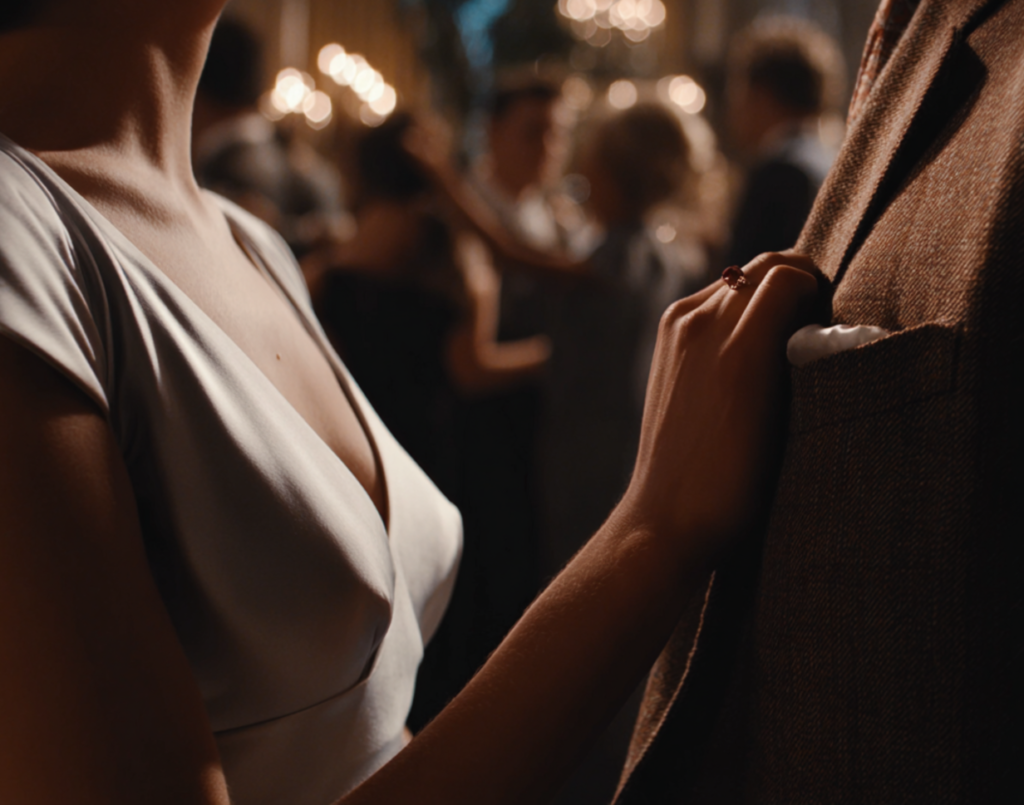
Owen turned to face her. He had known this question was coming since Richard’s phone call three months ago. He didn’t answer in words. He reached across the table and took Helen’s hand, gently but without hesitation, and guided it toward his chest, and pressed it there, and waited.
She felt it. The heartbeat. Steady and strong and unhurried, going on and on beneath her palm in the chest of this stranger who was no longer a stranger. Her son’s heart. Nine years old and still keeping perfect time. She looked at her hand. Then at Owen. Then, at some point beyond both of them. He’s still here, she thought. He never once stopped.
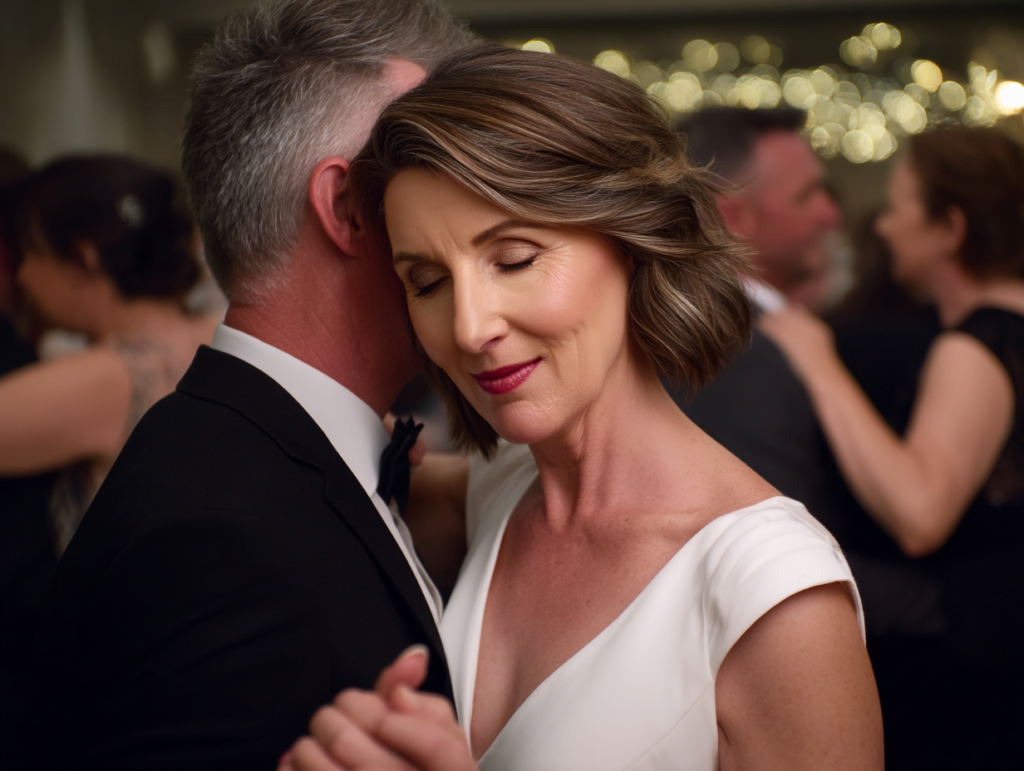
Richard appeared beside her. She didn’t know when he had come, only that his hand was on her shoulder and that she was more grateful for it than she had words for. Claire was on her other side a moment later, and Marcus behind Claire. The four of them and Owen existed briefly in a configuration all of them had in some way needed for a very long time.
Helen opened the envelope. She read it at the table, Richard and Owen on either side of her, the noise of the reception providing a strange kind of privacy. Owen had written about the years since the slow rebuilding, the life that had followed. Near the end, he had written: I don’t know how to carry what I owe. But I would like, if you’ll allow it, to spend some time trying.
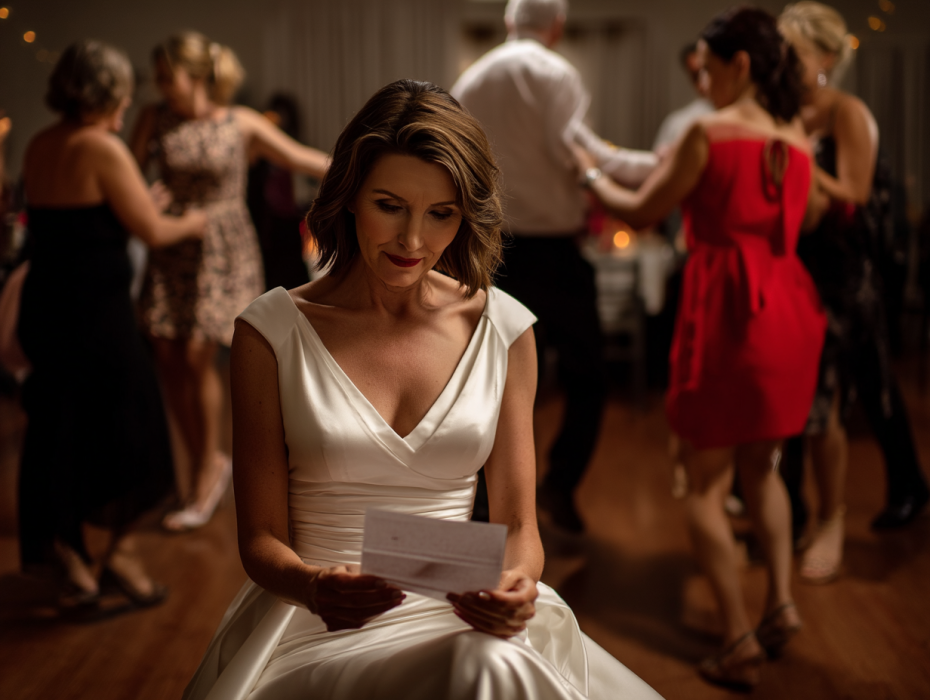
Claire, who had been reading over her mother’s shoulder and doing an imperfect job of concealing it, abruptly straightened up. “Right,” she said, with the brisk efficiency she deployed when she was trying not to cry in front of people. “I believe someone at this table needs more champagne and I’m fairly certain it’s me.” She disappeared. Marcus followed her.
Helen told Owen about Daniel. The Daniel who borrowed money and forgot entirely that he had, who failed his exam twice and sulked about it spectacularly, who once drove three hours in the completely wrong direction rather than admit he was lost. Owen listened the way a person listens when they are being given something they didn’t know they had been missing.
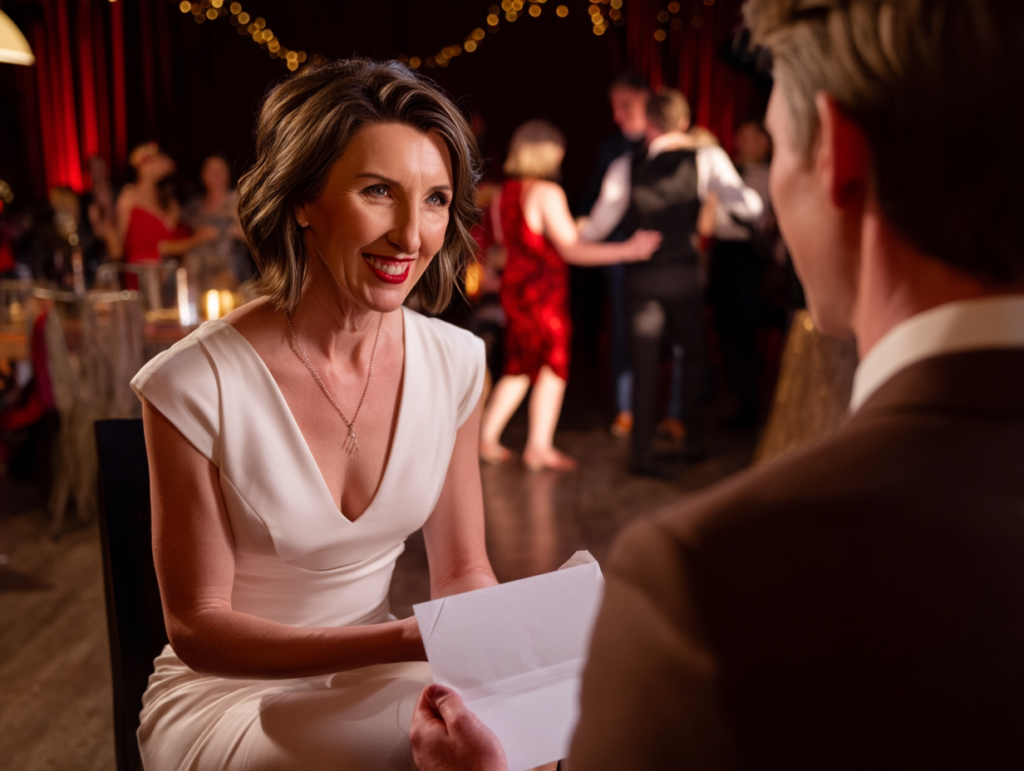
Before Owen left, Helen asked if he would come back with Sarah and the children. He went very still. “I didn’t expect to get through the door tonight,” he said. “But yes. Very much yes, if you want that.” “I want that,” Helen said. She wrote her number on the back of a cocktail napkin. It felt like exactly the right way to do it.
Owen said his goodbyes and moved toward the door. At the threshold, he turned back once. Helen was standing in the warm light of the room, Richard’s arm around her, Claire visible beyond them on the dance floor, laughing at something Marcus said. Owen looked at the four of them and pressed one closed fist briefly to his chest. A salute. A thank you. A goodbye for now.
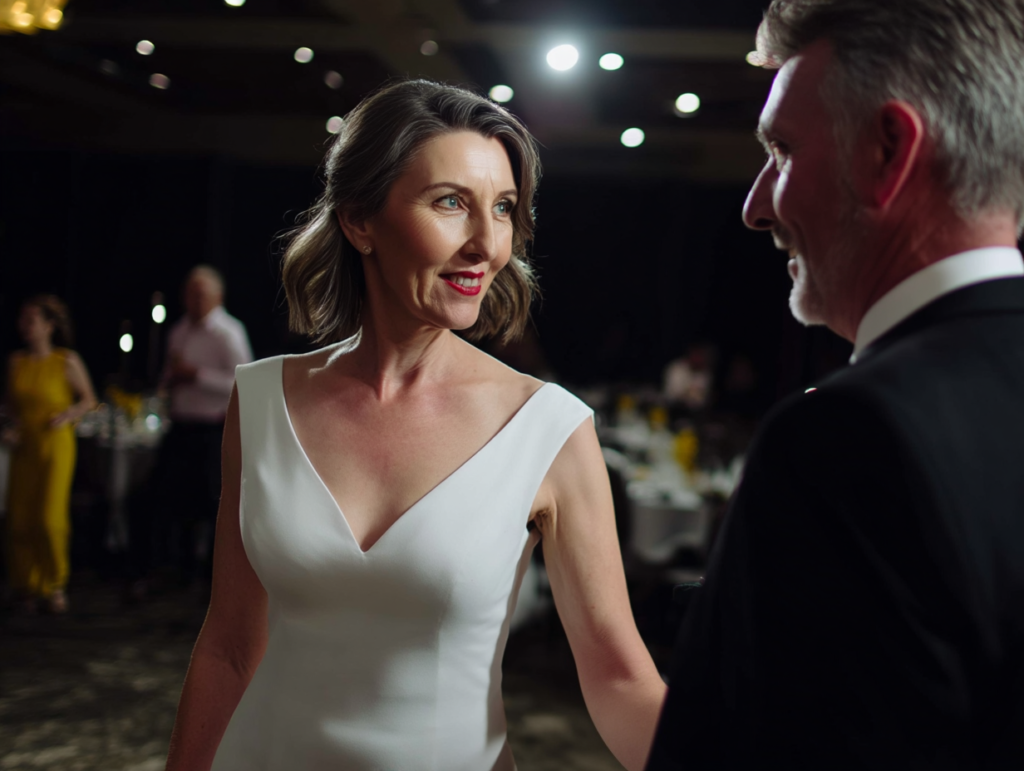
Later, when the last guests had left and Claire and Marcus had headed to their hotel, Helen and Richard moved quietly through the emptying venue, gathering forgotten wraps—the instinctive, unhurried tidying of people who love a place and aren’t quite ready to leave it. Helen found Daniel’s framed photograph still on the white chair. She picked it up. She sat down in his chair.
She talked to Daniel. She had always done this privately and had long ago stopped feeling self-conscious about it. She told him about Owen. She told him about Felix and the worms. She touched the glass over his face and sat quietly for a moment. Then Richard appeared in the doorway, coat in hand, and held out his other hand to her.
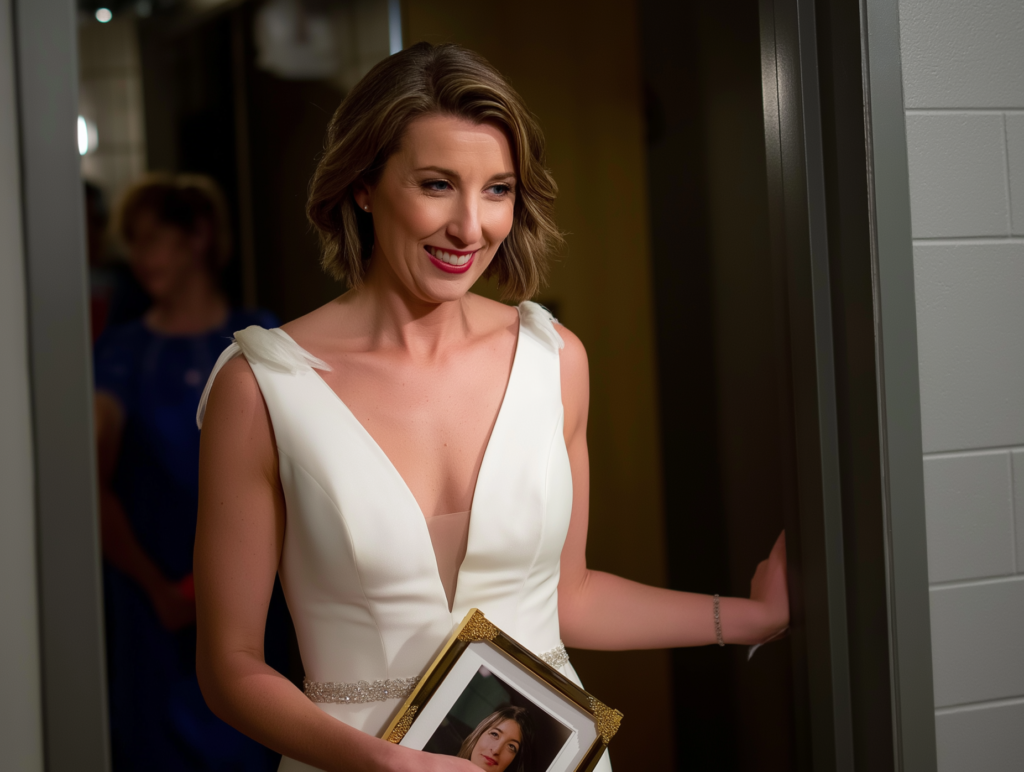
She stood. She tucked Daniel’s photograph under her arm, took Richard’s hand, and walked out with him through the old rose garden and down the long gravel driveway toward the car. She understood well enough by now that grief didn’t leave you. She walked toward the car, for the first time in a very long time, like a woman with permission to breathe.