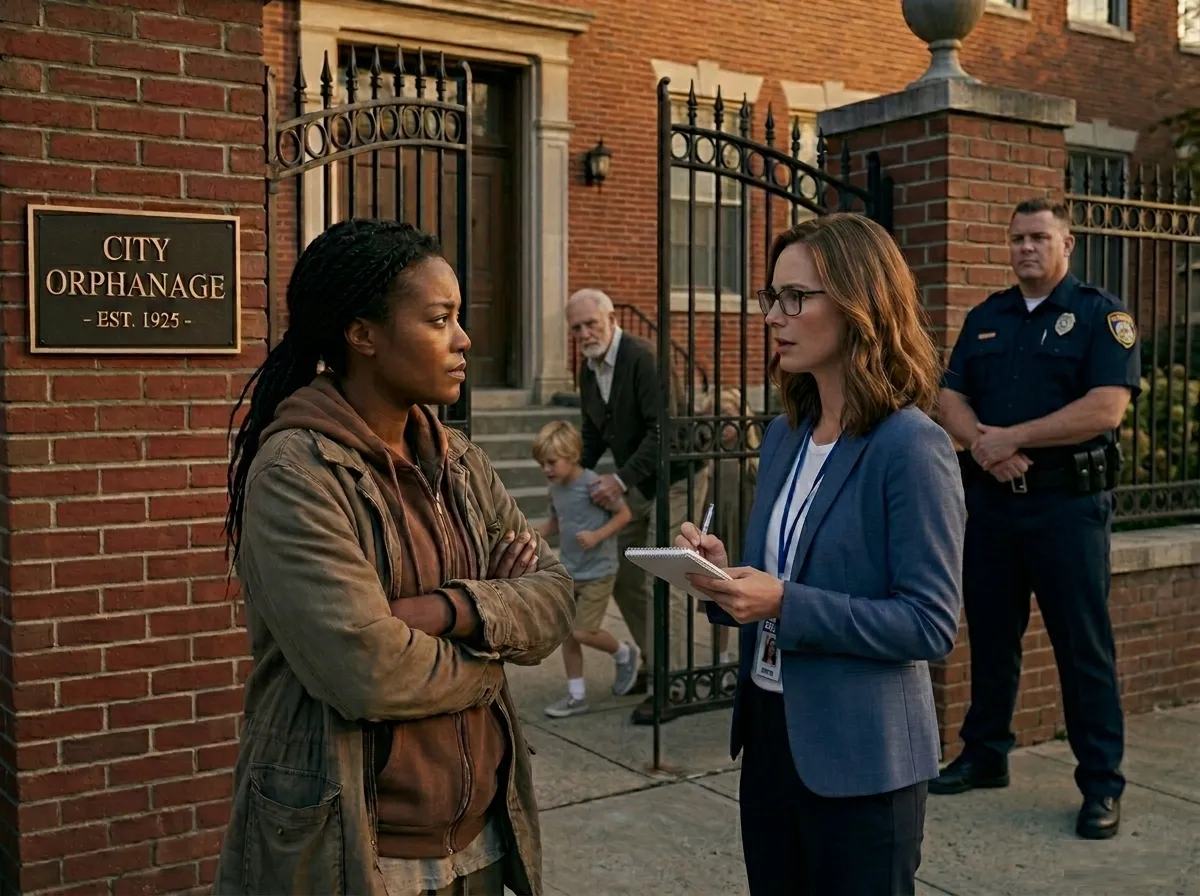
The guard shook his head before Nina finished. “No press. No interviews.” Behind him, the orphanage rose in careful brick and iron, windows shuttered like eyes that refused to meet hers. She showed her press badge anyway. He smiled. “We are a protected space.” Protected felt a lot like sealed.
Nina stepped away, pretending to scroll her phone. The twins were supposed to be one small part of her new series on broken systems. Three weeks until the funding vote and her season deadline. She was already behind. She was about to leave when a thin voice said, “Do not.”
Nina turned fully. “What?” The woman smiled, tired but sure. “Because I know the twins.” She recited, clear as a date, “Case number four one two seven dash B. Tuck and Mira. They like to stand near the right-hand fence corner.” Who was this woman with wild hair, and how did she know all this?
Nina had built her career on invisible damage. Eviction lists, waiting rooms, forms that swallowed people. Her podcast listeners liked stories where the villain was a process, not a person. Once, she had believed that it was safer. Then, a boy she covered vanished before her episode aired. She still heard his mother crying.

After that, she promised herself she would never move slowly again. If she saw a hole in the system, she would run at it. Her new series, “In Limbo,” followed people trapped by “temporary” measures. The twins sounded exactly like that. But she had three weeks until a national policy vote turned “temporary” into law.
The woman on the low wall wore a torn coat and a stubborn posture. People drifted past her as if she were air. Her eyes, though, were sharp. “They will not let you in,” she said. “The orphanage is not the mystery.” She paused. “The paperwork is.”

“Where did you get that case number?” Nina asked. The woman rolled the paper square between her fingers. “From my old job.” She shrugged. “Back when my name existed in the records.” Nina’s instinct pricked. Street stories were often wild, but the number had landed too clean. “What is your name?” Nina asked. “Jessa,” she shouted as she walked away.
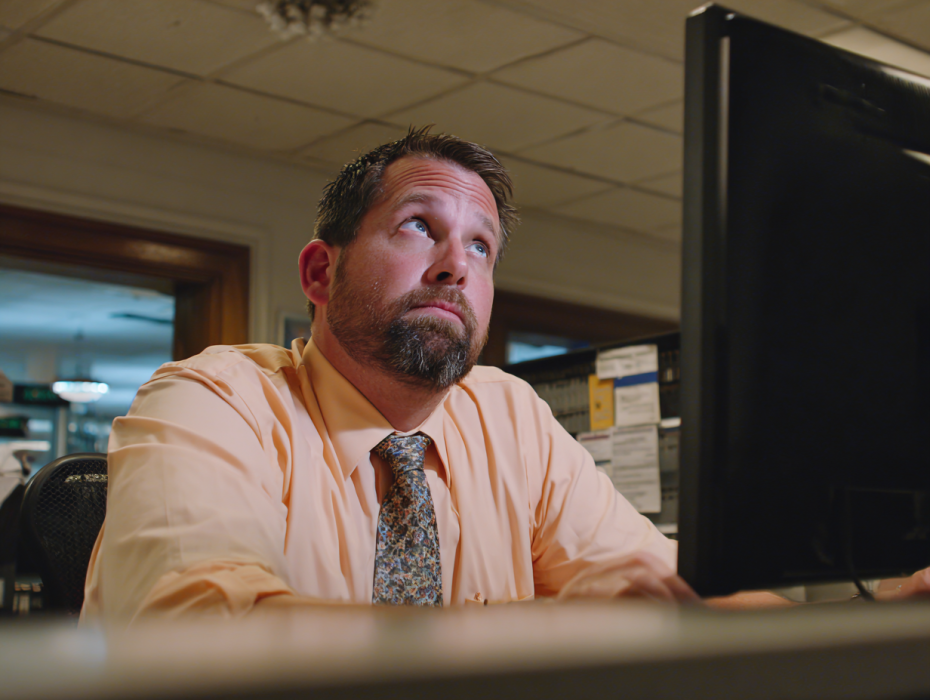
Nina went to the government records office, a dull place that smelled like printer ink. A worker looked up the twins’ case on his computer. He found it, but noticed something strange: the file said it was being checked every month, yet nothing had actually changed in two years. Nina asked, “Who was signing off on these updates? He shrugged, “No one. The signature line is empty.”
That missing signature felt like a warning. It looked like someone was keeping the kids on the books just to get credit for them, but making sure no one’s name was attached to the paperwork. Nina realized the twins weren’t just a small detail anymore; they were a symbol of the whole problem. She had to act fast, or these kids would be swallowed up by the system’s confusing language and disappear.
She found Jessa again by the wall, folding an old flyer. “I know you checked,” Jessa said without looking up. “The file is not moving.” Nina kept her tone even. “How do you know all this?” Jessa smiled wryly. “Because I used to stare at the files eight hours a day.”

“Where did you work exactly?” Nina asked. Jessa nodded toward the orphanage, then pointed farther. “Private agency office three streets over. We kept records for homes that wanted to look tidy. I printed their audits.” She met Nina’s eyes. “I know how they operate and make the numbers behave.”
Skepticism still sat like a stone in Nina’s chest. Was Jessa just lucky or misremembering old numbers? To test her, Nina intentionally mentioned a person by the wrong job title. Jessa caught the mistake immediately, gave the correct title, and even described the view from the office window. She was too accurate and too fast to be making all this up.

In a café, Nina opened her laptop. She looked up the orphanage’s public money records. She saw they got two types of funding: one for basic care and one for “long-term” care. Strangely, the money for long-term care stayed exactly the same every year, even when kids left the orphanage. What exactly was “long-term,” if the numbers never moved?
Her editor video-called her. “This sounds dry and boring,” he said. “We need a gripping episode. People want faces and emotions, not account statements.” Nina replied, “The human story is right there, behind the system that is hiding them.” He sighed. “You have three weeks, Jackson. If you cannot collect solid evidence, we scrap this one.”

Nina returned to Jessa with prints of the budget tables. “What is ‘long-term care’ in practice?” Jessa traced a column with her finger. “That is the money for children who never move on paper. The longer they stay “in care,” the calmer the numbers look. Empty beds scare funders. Full lists make everyone feel safe.”
“So they are not selling children,” Nina said slowly. “They are stalling their movement?” Jessa nodded. “They use words like ‘stability,’ ‘continuity.’ They will say it is better for the children. Less disruption. They will not mention that the budget meetings go smoother when no one leaves.”
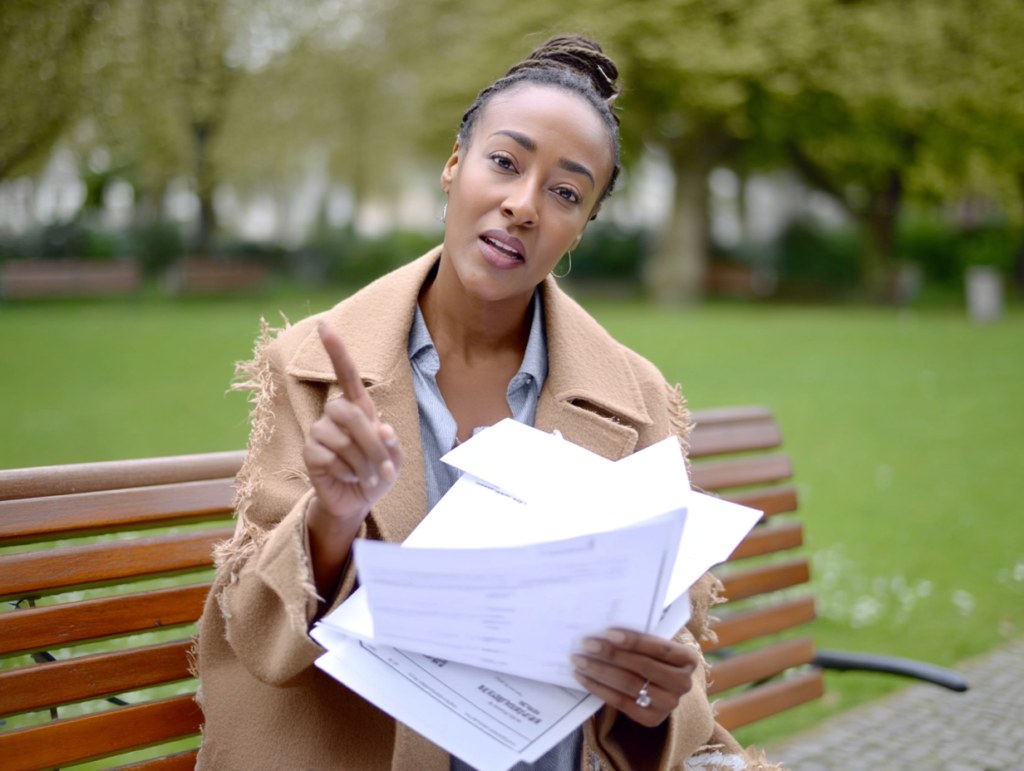
Nina spent the afternoon mapping other orphanages tied to the same agency. Their reports all used the same suspicious phrases. They were keeping beds full, not moving kids around. It looked like everyone was following the same script to hide the truth. It was an official plan to use this same “forever-care” system across the country. The date the government was set to vote on this plan was the same day as her deadline.
At the records office, Nina asked the young clerk for older budgets. He hesitated, then pulled dusty folders from the back. “No one wants these,” he muttered. Dust puffed as she opened them. Inside, the same children’s case numbers appeared across multiple years, always labelled “temporary.” Review dates walked forward in little steps, like someone dragging their feet.

She scanned a few pages to her editor. His answer came fast. “If this is a pattern, it is big. But we need more than numbers and a homeless woman’s memory. Legal will demand someone on record, or a document that actually says they are doing this on purpose.” Nina stared at the screen. She had a direction, but not the spine.
Nina moved on to the next obvious step: she requested a supervised visit to the orphanage, offering to record a positive segment about “resilience in care.” The reply came quickly. “Visit denied due to confidentiality and upcoming internal review.” No name under the message. No appeal link. Just a polite wall.

Her phone rang the same afternoon. “This is Advocate Meera Raman, legal adviser to the agency.” The voice was pleasant, measured. “We are aware you are exploring sensitive material. Child welfare is fragile. Misunderstandings can damage trust in good institutions. I hope you will not rush.” It sounded like concern, but felt like a hand on her throat.
For two days, Jessa vanished from her usual spot. Nina checked the shelter. A worker shrugged. “She has been warned to stop telling wild stories about the homes. We cannot encourage that. It upsets other residents. If she keeps going, she might not be a good fit for the dorm.” Services, Nina realized, could be a leash.

On the third day, she found Jessa sitting under an awning, her bedroll at her feet. “They told me I am disturbing people,” Jessa said. “They said I am fixated on old files and that it is bad for my health.” She laughed once. “Funny, how caring they become.” Nina sat beside her. “We can still move quietly,” she said.
Nina opened her laptop in the café, breathing slowly. Three weeks had reduced to nineteen days; the vote had been moved earlier “for efficiency.” She arranged her notes into a timeline. Her screen glowed with numbers, but the story still lacked one necessary thing—solid evidence.

That night, an email arrived from an unfamiliar address. “You are not wrong,” it said. “But you are not seeing all of it.” Attached were blurred photos of internal memos titled “Prolonged Placement Review.” A final line in plain text: “Look at the annex. That is where they hide the real purpose.”
The annex listed case numbers under “extended stay adjustments.” One column tracked how many quarters each child stayed “stable.” Another showed corresponding grant renewals. Case four one two seven dash B sat near the top, marked “extended four cycles.” Nina felt her heartbeat match the neat little boxes.

She tried to call the clerk who had helped earlier. He answered, voice tight. “I cannot talk anymore,” he said. “We had a meeting. All media requests go through central now.” Nina lowered her voice. “You sent those memos?” Silence, then a quick, “Delete that email. For both our sakes,” before the line cut.
Her inbox chimed again. A formal notice from her network’s ethics committee: they had received a complaint about her “repeated, distressing contact” with staff and questions “outside the scope of normal reporting.” A polite threat wrapped in procedure. If this escalated, her show could be censored or quietly ended.

In the next editorial meeting, her editor looked genuinely worried. “They have already called my boss,” he said. “They say you are harassing vulnerable employees and confusing ‘standard practice’ with abuse. If we are not careful, they will paint you as irresponsible.” Nina asked, “What if ‘standard practice’ is the abuse?”
He rubbed his forehead. “You know I believe in what you do. But if this goes wrong, you will not just lose the season. You might not work in this field again.” He paused. “I need you to be sure.” Nina thought of the boy who vanished after she waited. “I am sure enough,” she said.

She finally gained a partial victory: a tightly controlled visit to the orphanage, under the condition that she record nothing and use only “approved images.” She agreed. It was the only way. Inside, the halls smelled of disinfectant and chalk. Everything looked ready for a brochure.
Staff guided her past dorms, speaking in practiced phrases. “We focus on stability. We avoid disruption wherever possible.” In the courtyard, she saw them: a boy lining tiny stones in a row near the right-hand fence, a girl watching the gate, then forcing her eyes down as if she had been taught not to hope.
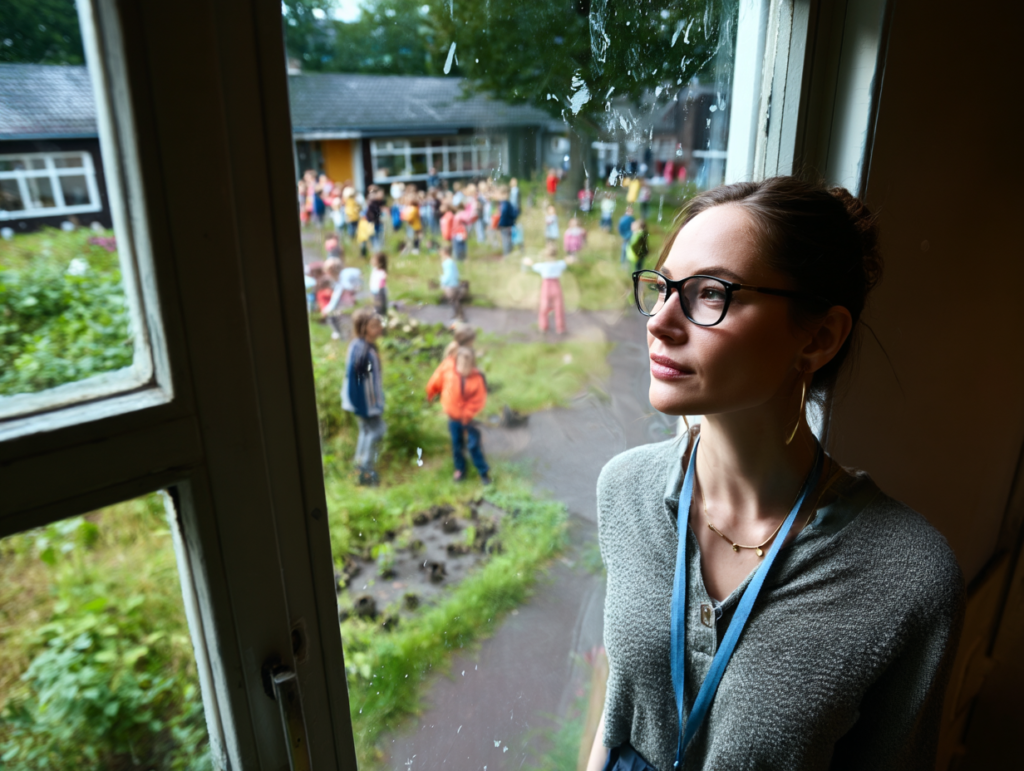
“That is Tuck and Mira,” the staff member said proudly. “They have been with us for years. Our longest success story.” The word success rang wrong in Nina’s ears. Success for whom? She opened her mouth to ask about placement attempts. The staff member smiled. “Their case is complex. It is all being handled.”
Back outside, Nina checked her pockets. Her notes from inside were gone. She remembered placing the small notebook in her coat earlier. Now it was not there. She had no proof it had been taken, only the cold knowledge that it had been. She would have to rely on memory.

Jessa listened as Nina described the visit. “Of course, they showed you the courtyard,” she said. “They want you to see happy children. That is the point.” Nina nodded slowly. “The staff said they avoid disruption. That word again.” Jessa snorted. “Disruption means anything that makes the numbers jump.”
Nina laid out the annex pages on Jessa’s blanket. “Explain this column,” she said, pointing. Jessa leaned closer. “This is where they balance ghost headcounts,” she said. “When one child leaves for real, they do not close the record. They move the number into an ‘extended’ slot and attach another name later.”

“So sometimes,” Nina said carefully, “the system keeps getting money for a child who has left, or does not exist there anymore.” Jessa nodded. “And sometimes, like with the twins, it keeps the child without ever letting the file move. Either way, the total stays smooth. No bumps. No sudden drops.”
The next morning, Nina received another call, this time from a calm woman on her network’s ethics panel. “We are not saying stop,” the woman said. “We are saying be careful whose words you rely on. Your main source appears to have a history of mental health concerns and employment disputes.”

Nina felt her jaw clench. “Who told you that?” “It was in a bundle from the agency’s legal team,” the woman replied. “They suggest your source is unstable and may be fixating on old grievances. They say she has been asked not to approach staff.” The file that ruined Jessa was being sharpened again.
That evening, Jessa showed Nina a folded letter, edges soft from handling. “Settlement offer,” she said. “If I sign that my dismissal was because of ‘personal health matters’ and that the agency followed all rules, they will give me enough money for a few months’ rent. If I sign, I become the problem officially.”

“What will you do?” Nina asked. Jessa laughed without humour. “If I sign, they win twice. They get a neat story about the crazy clerk. If I do not, I stay out here.” She looked at Nina. “You cannot answer this for me. But your story changes the weight of this decision.”
Nina’s chest ached. Every path would hurt someone. If she walked away now, the twins would stay stuck, and the policy would spread. If she pushed forward, Jessa could lose the little safety she had left. Nina thought of all the files she had seen that turned living people into lines. “I will not use your name,” she said. “But I will not pretend you do not exist.”

They moved to a quiet corner of the library, using public computers. Jessa’s fingers hovered over the keyboard. “There was a training document,” she murmured. “They used it when I was still inside. ‘Placement Continuity Strategy.’ If it is still there, it will give us the data to go public.”
She typed an old shared drive address from memory. For a moment, nothing happened. Then a list of folders appeared. Jessa clicked through, faster now, following paths her body remembered. There it was: “Placement Continuity – Risk and Funding Guidance.” She looked at Nina. “If this file is what I think it is, you will not need my word anymore.”

They opened the file, and the pages slowly appeared on the library computer. The title said, “Placement Continuity—Risk and Funding Guidance.” Nina said, “They’re not letting the number of kids in the building drop—grouping old cases together so the reports always look the same.” Jessa whispered, “This is it. They put the whole plan in writing.”
The document explained everything. They were holding groups of kids long-term and waiting as long as possible to close files. The report suggested giving bonuses to staff for keeping beds full. The orphanage was the “perfect test model.” Nina felt sick to her stomach. This wasn’t an accident; it was a deliberate trap. Children were being used like pieces on a scoreboard to keep the money flowing.

“This goes national if the vote passes,” Nina said. Jessa nodded. “They call it a model for efficiency. Every home will learn to freeze files the same way.” The screen flickered. They hit download, hearts pounding. Twelve days left. The policy would turn one home’s trick into a country-wide practice.
Back at Nina’s apartment, her phone rang. Advocate Raman again. “We hear you have been accessing internal training materials,” she said smoothly. “Those are not for public use. We would hate for this to become an ethics matter for your network.” Nina gripped the phone. They knew about the drive already.

“How did you—” Nina started. Raman interrupted gently. “We monitor access patterns. Old staff accounts draw attention. Be careful who you work with, Ms. Jackson. Some people carry grudges that cloud judgment.” The line about grudges was for Jessa. Nina hung up, pulse racing. The net was tightening.
Her editor texted immediately after: Ethics hearing scheduled. They claim you obtained proprietary docs improperly. Your source’s old personnel file just landed on my desk, too. ‘Unstable.’ We need to talk. Nina stared at the message. Publish now with questions unanswered, or fight for time and risk losing the platform entirely.

She met her editor in a coffee shop he rarely used. “They sent this,” he said, sliding over Jessa’s file. Notes about “fixation on patterns,” “refusal to follow updated protocols,” sudden “health concerns” after she questioned numbers. “If we run this, they will say we exploited a troubled ex-employee,” he warned.
Nina scanned the pages. The dates matched Jessa’s complaints exactly. “This is not instability,” she said. “This is retaliation.” Her editor sighed. “I know. But perception matters. And now they are threatening to cut off all our child welfare sources if we air anything ‘speculative.’”

The dilemma burned. Distance from Jessa to protect the story, but that would erase her again. Or stand by her and watch the whole investigation branded as reckless. Nina thought of Tuck lining stones, Mira glancing at the gate. “Give me five days,” she said. “I will make the documents speak without Jessa’s name.”
Jessa arrived at their usual corner, looking smaller. “They visited the shelter director,” she said. “Said I am a ‘disruptive influence’ and might need evaluation if I keep approaching the media. One more complaint, and they will review my bed eligibility.” Nina’s stomach dropped. Truth now carried a roof over Jessa’s head.

“I cannot ask you to choose,” Nina said. Jessa smiled faintly, “You are not asking. They are.” She pulled out the settlement letter again. “Sign this, get rent money. Or keep talking, stay outside. Your story tips that scale.” Silence hung. Jessa had already chosen, but the stakes were rising fast.
They worked through the night at the library. Nina built a timeline linking the training document to budget spikes, case freezes, and grant renewals. Every line matched. The orphanage was the blueprint for this scheme. Eleven days left. If the vote passed, hundreds of homes would copy this exact pattern.

A café meeting with a retired caseworker turned strange halfway through. “The director is the problem,” he said quickly. “Overzealous.” Nina noticed a woman at the next table, an agency pin on her bag, typing on her phone. The caseworker’s eyes darted. “I said too much,” he muttered, and left abruptly.
Back home, Nina cross-checked. The director had retired two years ago. The caseworker’s tip was a dead end meant to blame one face, not the policy. The real design sat in Regional Compliance and Oversight—the same office praised as “exemplary” in every audit. Someone wanted a scapegoat, not reform.

Nina’s ethics hearing loomed in two days. Her network demanded she name no individuals, cite only public records. But the training file was internal. Without it, the story would collapse into a coincidence. With it, legal would fire. Ten days until the vote. She paced, choices clawing at her.
She visited the orphanage gate alone at dusk. A new guard watched her too closely. Through the bars, she saw Mira again, pressing her hand to the fence, then pulling back fast. A staff member nearby said sharply, “Inside, now.” The girl had been trained comply with the rules.
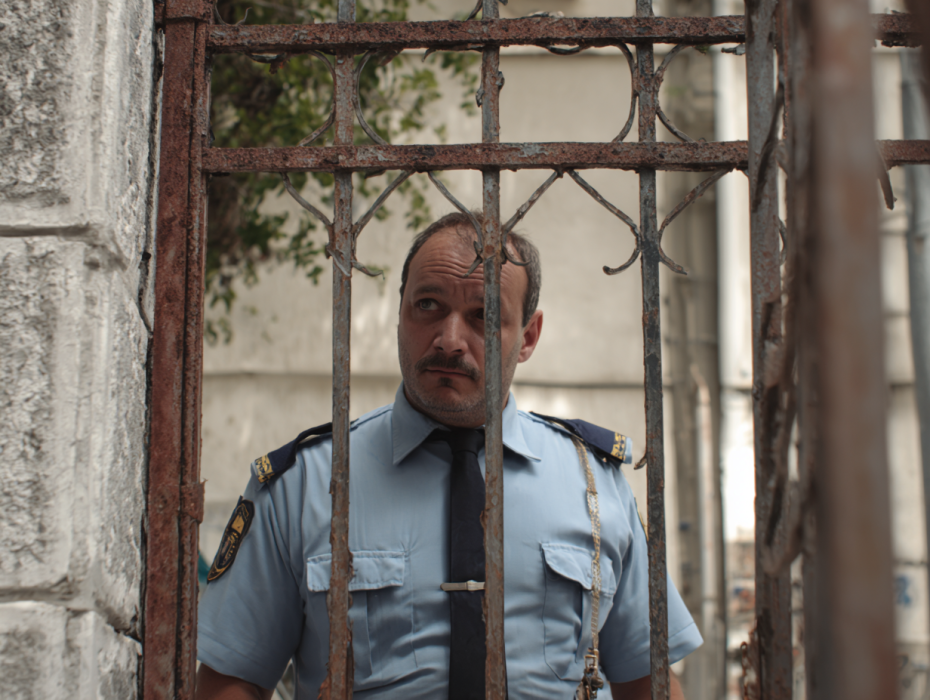
That image broke Nina’s caution. She called her editor. “I’m putting it out with the training file. Full disclaimers. If they sue, we will fight with their own words.” He paused long. “You are betting your career.” “I bet it every time I wait,” she said. “Nine days. We cannot wait any longer.”
Jessa met her one last time before the hearing. “Whatever happens,” she said, “do not sign their version of me into your story. Let the numbers speak. The children will know one day that someone saw the trap.” Nina nodded, throat tight. The vote clock ticked. The danger was no longer abstract.

Nina walked into the ethics hearing with the training file printed in triplicate. The panel flipped through pages silently. “This appears internal,” one said. Nina replied evenly, “It was left accessible on a public terminal. The agency monitors those drives—they knew I was there.” A pause. “We will review this.”
Advocate Raman waited outside, smile thin. “I signed Jessa’s dismissal papers myself,” she said quietly. “Three years ago. She was unstable then. She is unstable now.” Nina met her eyes, “You signed the continuity policy memos too. Same year. Same month.” Raman’s smile froze as she said, “Careful what you imply.”

The reveal landed like ice water. The same lawyer who buried Jessa now managed Nina’s silence. Not a coincidence. Design. Nina left the hearing with a warning but no formal block. Eight days until the vote. Her editor called: “They cleared the episode with heavy disclaimers. We can air tomorrow.”
That night, Nina cut the final script. Jessa wasn’t named—just “a former records specialist” and the training file was a centerpiece. She opened with Mira’s hand on the fence, Tuck’s stones in a line. “These children exist. Their files do not move. Here is why.” Her voice shook once, then steadied.

The episode dropped at dawn. “The Orphanage That Never Emptied.” Eight minutes explained the continuity model. Five minutes showed the money trail. Three minutes showed the vote to be held in three days. Nina ended, “Lawmakers decide tomorrow whether this becomes standard nationwide. Listen to the numbers. Then call.”
No viral storm followed. Instead, there were targeted ripples. An oversight board member emailed: “We are pulling the continuity guidance for review.” A caseworker leaked an internal note: “Pause all exemplary site references until cleared.” Nina’s phone hummed with messages from people who knew.

Seven days left. Nina traced a leaked audit schedule. Regional Compliance and Oversight—the policy’s home—was now under independent review. Staff there stopped answering calls. The lawyer, Raman, issued a statement about “misinterpreted training aids.” But the documents stayed online, public, waiting for the right eyes.
Jessa called from a borrowed phone. “They pulled my housing rights. Said I created ‘safety concerns’ for residents.” Nina’s chest tightened. “Where are you?” “Library. For now.” A pause. “Your episode mentioned no names, but they know. The shelter director got a call this morning.”

Nina acted fast. She connected Jessa with legal volunteers who owed her favors. “Use the training file against them,” she told them. “Show how they discredited her the moment she questioned continuity metrics.” The volunteers nodded. “This is wrongful dismissal with paper proof.”
Six days out, the twins’ case broke open. A department notice: “Case four one two seven dash B reassigned to independent advocate, effective immediately.” Not adoption. Review. But motion after years of freeze. A worker added quietly, “Recent reporting prompted expedited action.” Nina’s story had drawn first blood.
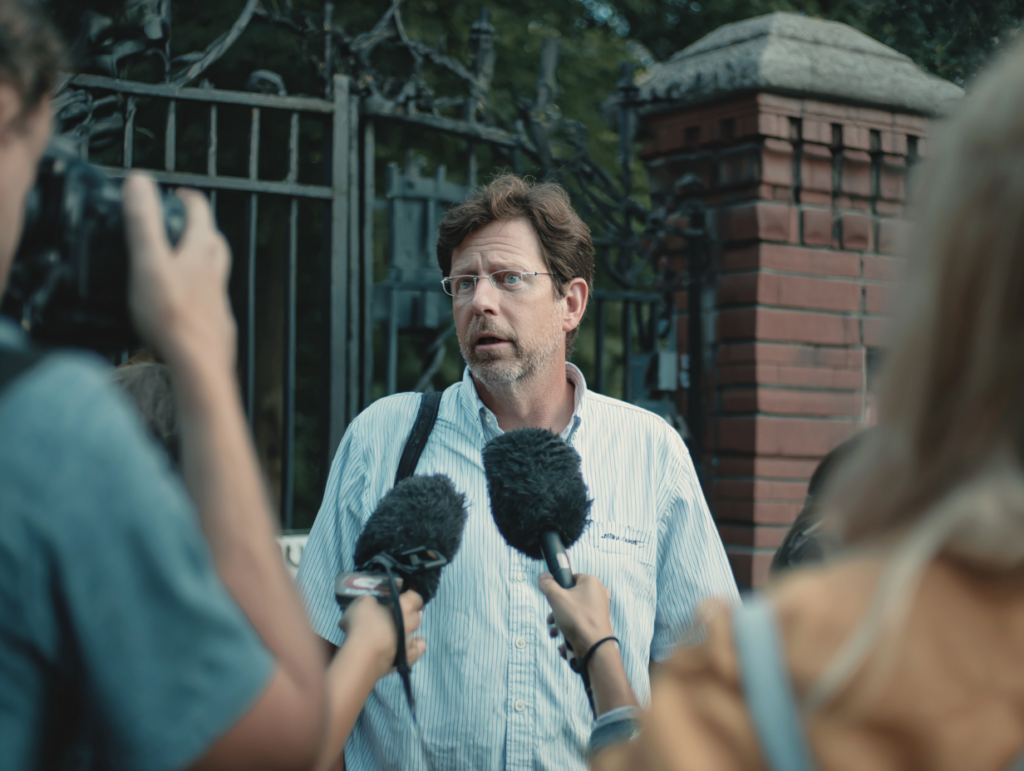
The continuity policy faced formal suspension. Lawmakers tabled the national rollout pending “clarification of metrics.” Internal emails leaked: “Exemplary sites no longer exemplary.” The machine that ran on stillness now ran on damage control. Nina watched the budget lines she had mapped begin to twitch.
Jessa’s legal team filed a narrow claim: reinstatement of her record, housing support as reparative action. They used Raman’s own memos to show retaliation. The agency settled quietly—no admission, but back pay, an apartment voucher, and a note cleared. “Wrongful characterization reversed,” the filing read.

Nina released a second episode: “What Happens When Paperwork Remembers.” She traced the audit trail, the reassigned cases, and the paused policy. No victory lap. Just facts. “One home changed. One policy paused. Names moved. This is what systems do when watched.” Downloads tripled overnight.
Raman vanished from public view. A new compliance head took over, promising “transparent metrics.” Staff at the orphanage whispered about retraining. Nina walked through the gate again. Clipboards showed real updates now—transfers logged, reviews dated. Someone had learned that frozen files drew the wrong kind of attention.

Jessa moved into a small flat with a window facing a park. She refused interviews but left Nina a note: “Numbers move when people count them. Thank you for counting.” Nina tucked it into her research binder. Heroes lived best in footnotes, not spotlights.
Back at her desk, Nina opened “Systems That Remember.” She added the twins’ motion, Jessa’s address, and the suspended policy. Not a fairy tale. A ledger balanced. The villain—polite funding math—had lost its clean alibi. Children would move more slowly, but they would move.

Nina powered down her laptop. The boy from her past—the one who vanished—would not return. But Tuck and Mira had names again. Jessa had walls. Raman had to face questions. Outside, rain cleared to evening light. Nina walked toward the sound of a city no longer perfectly silent.