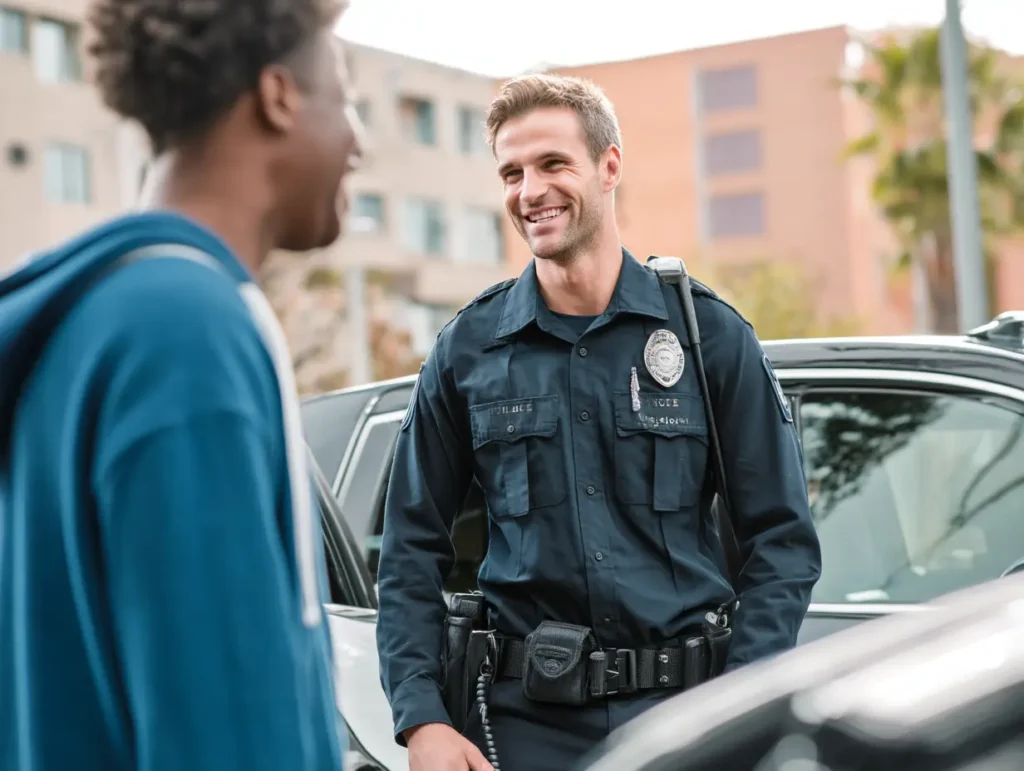
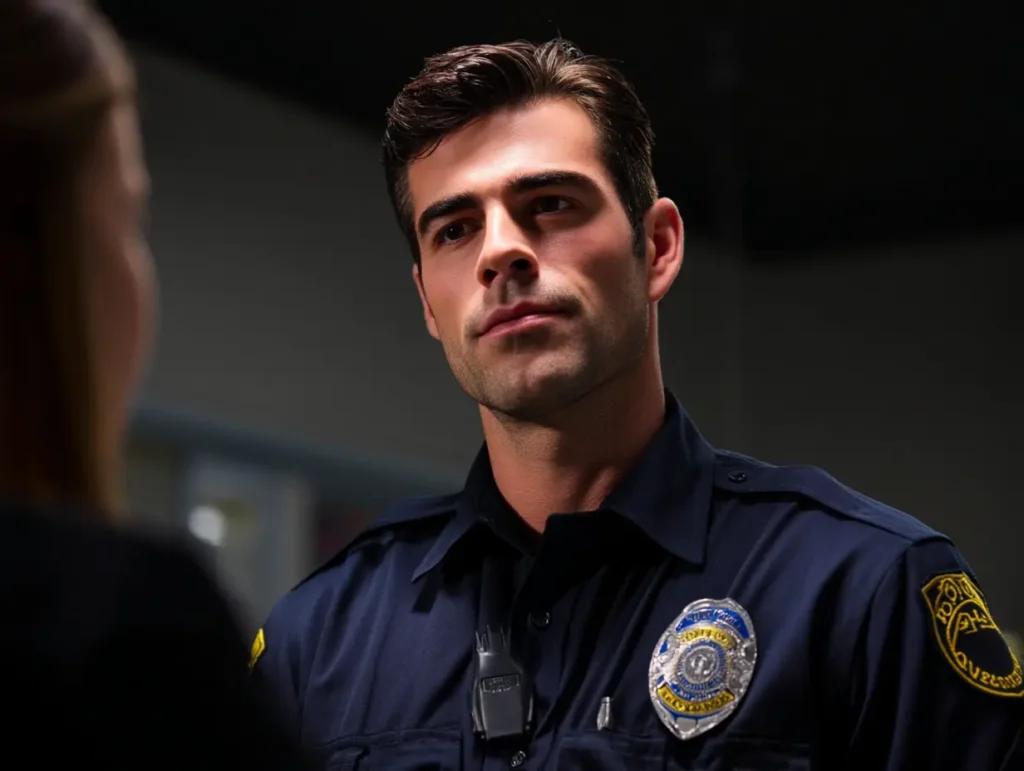
I knew it the moment I stepped toward him. The blank look. The delayed answers. The way his body stayed loose, ready. I reached for the cuffs already telling myself I was done second-guessing. I was done letting instinct be talked down by excuses. Then he ran.
Not frantic. Not wild. Clean and fast, like he’d measured the distance and decided it was worth the risk. My chest tightened as I lunged after him, boots slapping concrete, radio bouncing uselessly against my side. Every stride felt heavier than the last. This wasn’t my terrain. This wasn’t my day.
I pushed harder anyway, panic creeping in as my lungs burned. If I lost him now, I knew exactly how this would go. Another report. Another face I’d remember too late. Another suspect who vanished because I hesitated once and paid for it twice. I wasn’t chasing a man anymore—I was chasing the moment where this stopped being my failure.
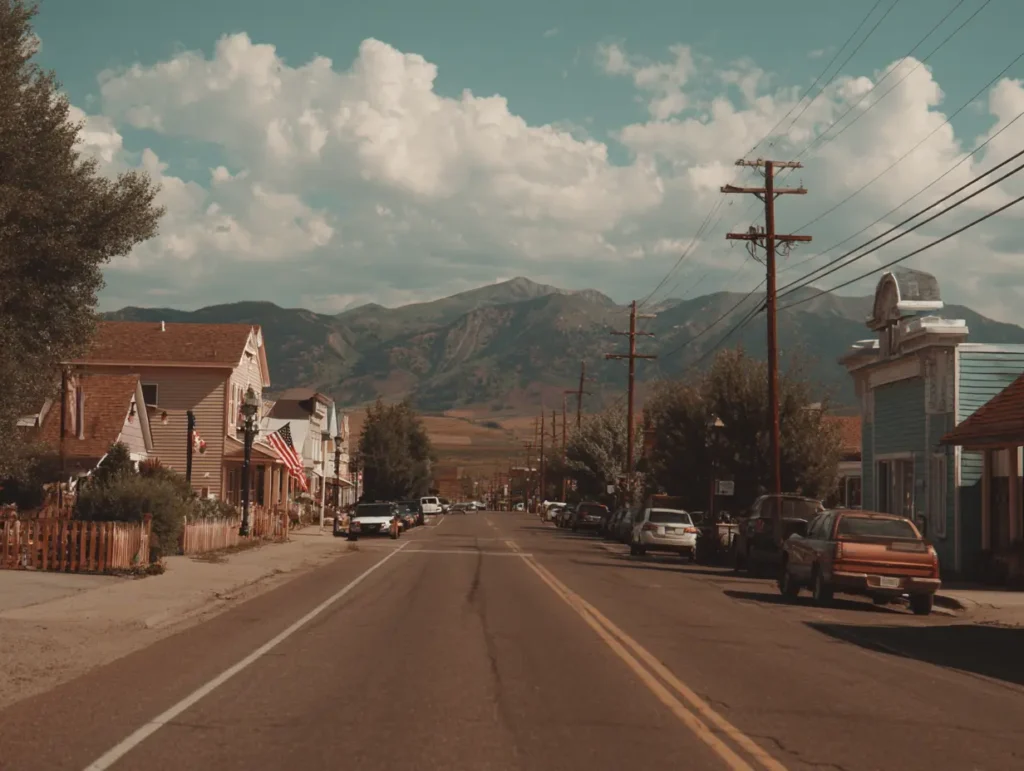
Nothing much ever happened in our town. That was the point of it. We handled noise complaints, the occasional drunk, lost dogs, domestic arguments that cooled off by the time we arrived. The kind of place where you learned every street by heart and every shift blurred into the next. Serious crime belonged to cities an hour away, not here.
Then the burglaries started. Not all at once. Not loudly. Just enough to feel wrong. One house, then another. A back window pried open. A garage door left ajar. A laptop gone, a wallet missing, a sense of violation that lingered longer than the damage itself. The calls came days apart at first, spaced just far enough that no one panicked.
But they kept coming. By the time we finished paperwork on one break-in, another would be reported somewhere else in town. No pattern we could prove. Just the same tired look on homeowners’ faces when we told them we’d “keep an eye out.”
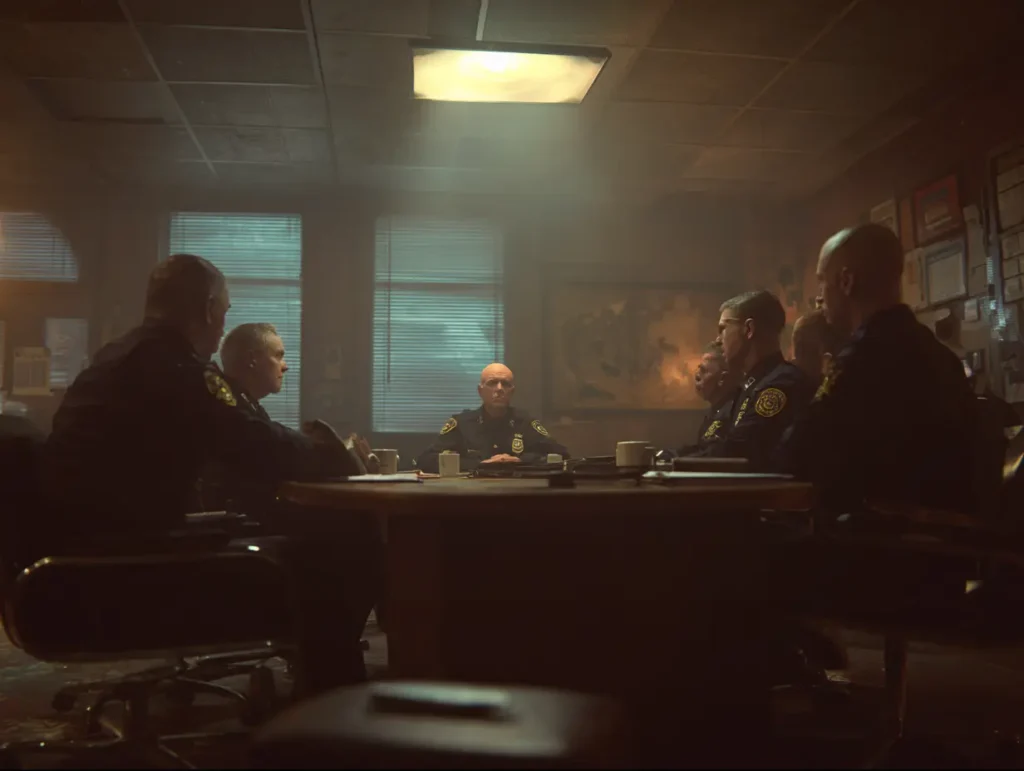
For a department like ours, that was enough to put everyone on edge. After that, the captain had us on high alert. Roll call stopped being casual. Maps went up on the board, neighborhoods circled and re-circled as the reports clustered. We were told to be visible, to slow down, to notice what didn’t belong.
The public was watching now, asking why a town that prided itself on being quiet suddenly couldn’t stop a thief. We needed something. And I needed it more than most. I was six months into the job—fresh out of training, still learning how much of policing came down to instinct instead of procedure.
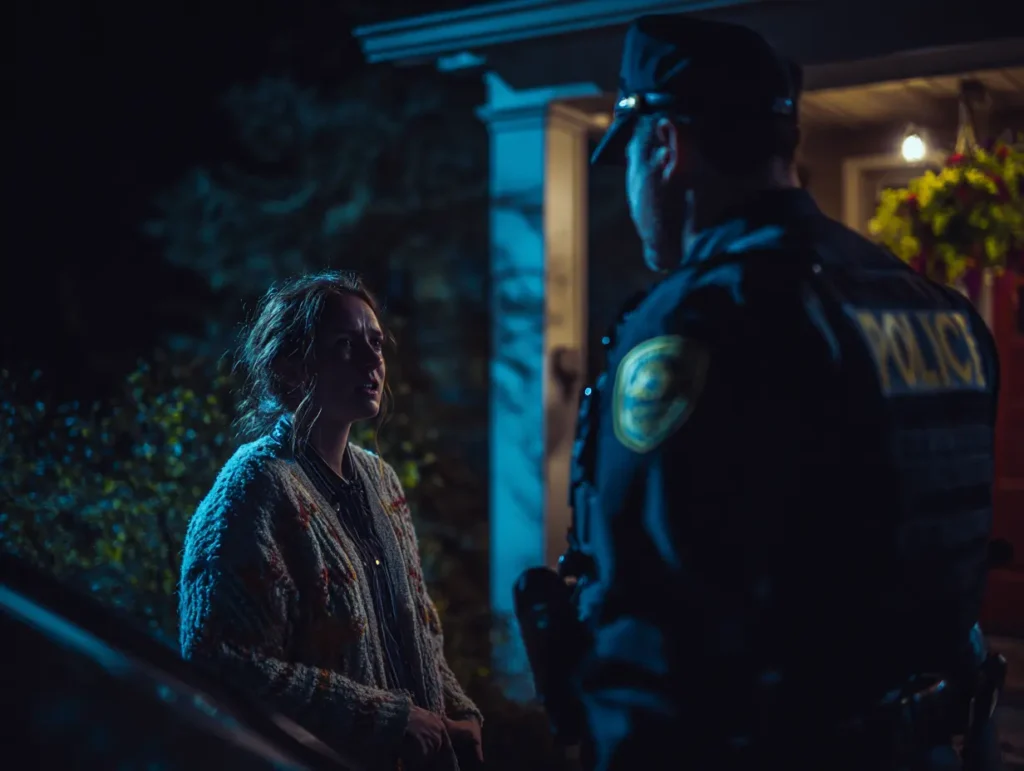
I wanted to prove I could do more than respond after the fact. That I could spot the detail everyone else missed. That night, I drew the late patrol. It was just past three in the morning, the hour where the city feels suspended between days. The streets were quiet, but not peaceful. Porch lights glowed behind drawn curtains. Cars sat untouched in driveways.
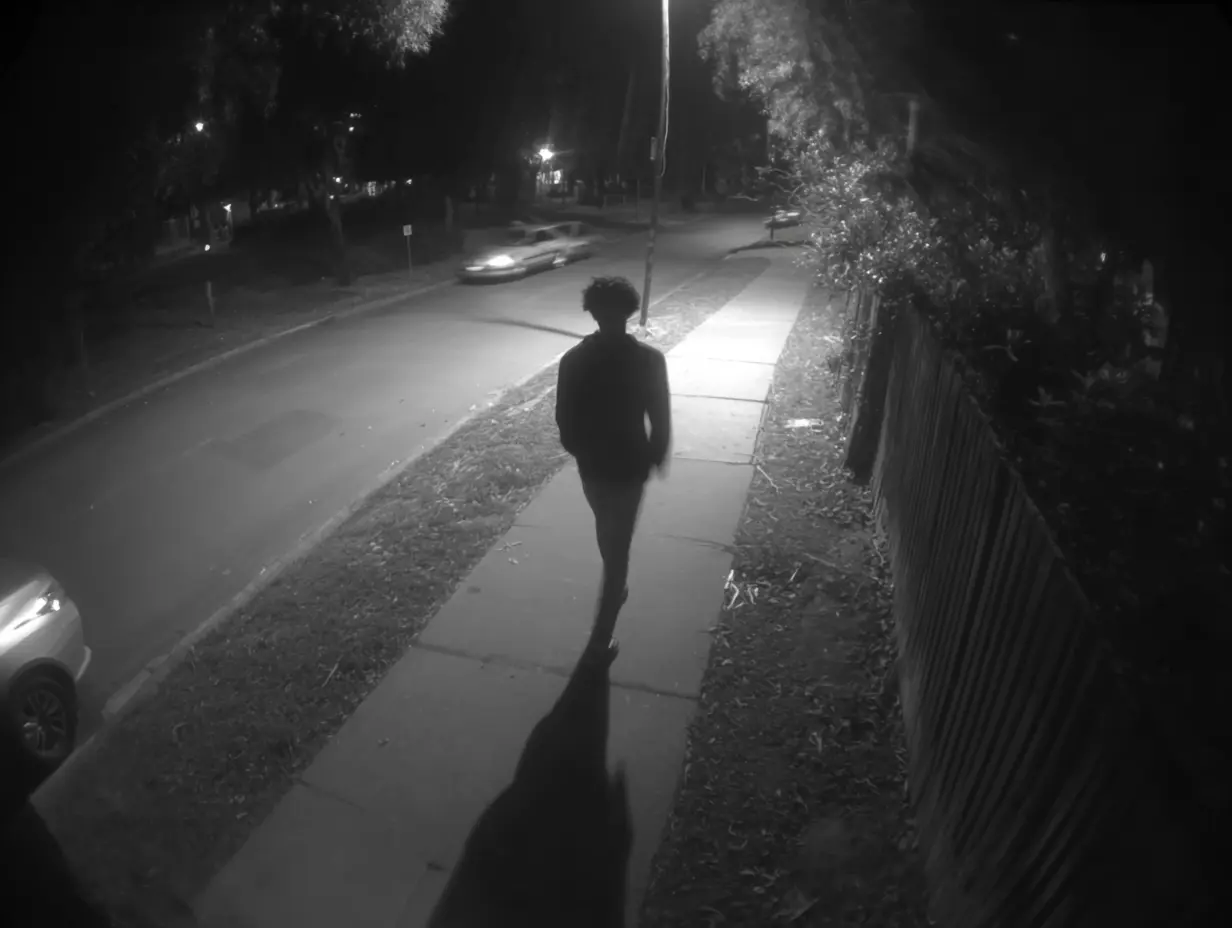
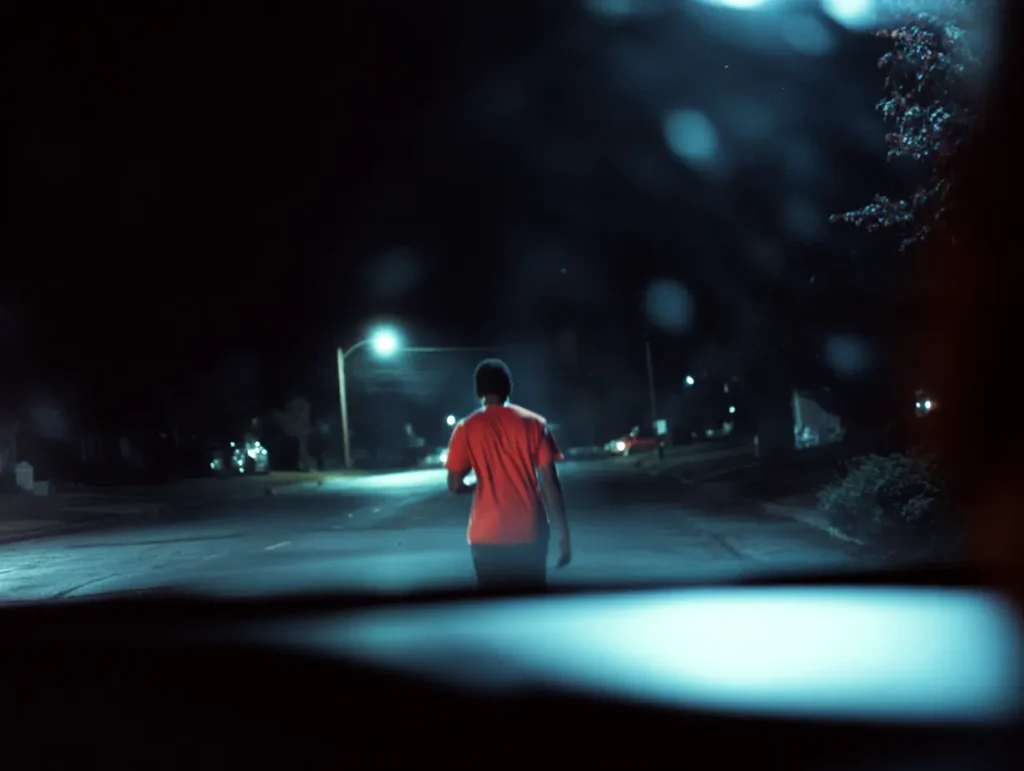
Even the air felt watchful, like it was holding something back. That’s when I saw him. He was walking along the shoulder of the road, hands tucked into the pockets of a thin jacket, head slightly lowered. There was nothing illegal about it. People walked at night all the time—night shifts, early shifts, insomniacs trying to burn off restlessness.
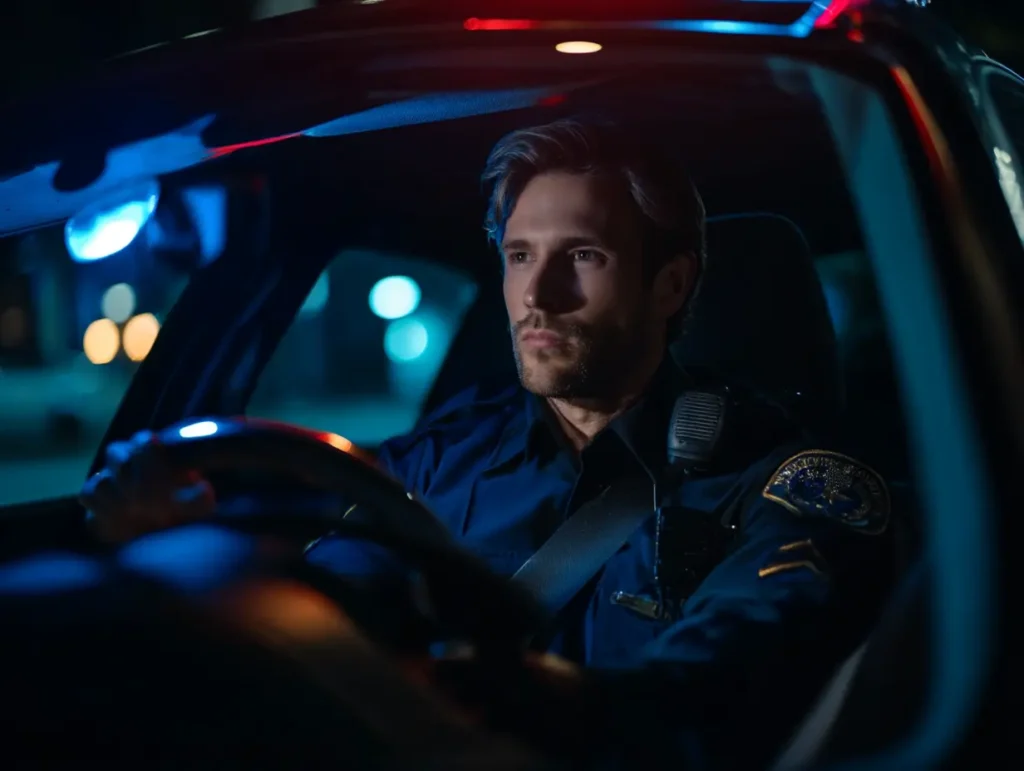
But something about the way he moved caught my attention. He wasn’t wandering or meandering. His pace was steady, deliberate. Each step landed with the same rhythm, as if he were following a path already laid out in his head. When my headlights swept over him, he didn’t look up or react. He just kept walking.
I slowed the cruiser and pulled alongside him. Up close, I noticed the sweat first. His shirt was darkened across the shoulders and down his back, clinging to him despite the cool air. His breathing was heavy, but not frantic. It was the kind of breathing you get after sustained effort, not fear.
I tapped the siren once. Short. Controlled. “Hey,” I called through the window. “Mind stopping for a second?” He stopped immediately. Not reluctantly. Not startled. He turned toward me like he’d been expecting the interruption. For a split second, his eyes didn’t quite focus, then they sharpened, settling on me with a neutral expression that felt oddly distant.
“You okay?” I asked as I stepped out of the car. “Yeah,” he said. Then, after a pause, “I think so.” He looked young. Mid-twenties, maybe. No visible injuries. No smell of alcohol. His hands weren’t shaking. Nothing about him screamed trouble, and yet nothing about him felt ordinary either.
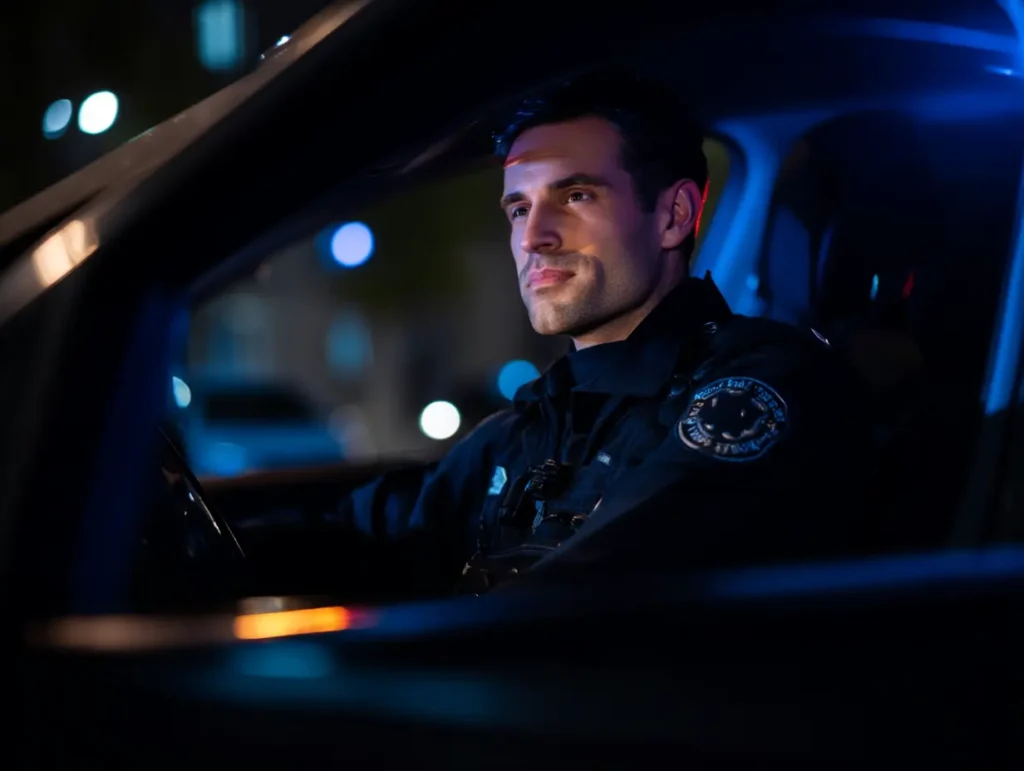
“Where you headed?” I asked. He hesitated, just long enough for the silence to stretch. “Work.” “What kind of work?” Another pause. His brow furrowed slightly, as if he had to reach for the answer. “Warehouse.” “Where’s that at?”
“Lincoln.” Lincoln was a long way from here. Industrial district by the river. “You walking all the way there?” I asked. He nodded once. “Yeah.” “How far is that?” He glanced down at his shoes, then ahead at the road. “Twenty miles.” That finally landed.
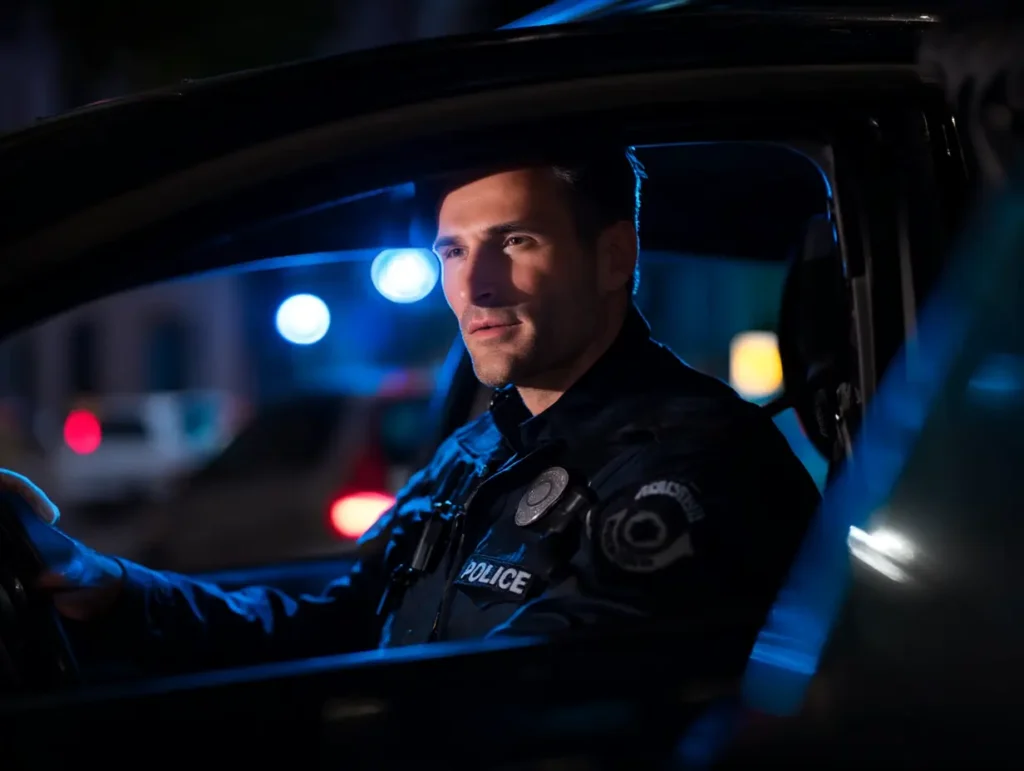
Twenty miles wasn’t a casual walk. It wasn’t something you did on impulse. “You start work soon?” I asked. “Some time in the morning,” he said. That made me look at him again. The sky was still black. Streetlights hummed overhead. Morning was hours away. If that was true, then he was early. Too early. And there was no reason to be out here yet.
“So why walk now?” I asked. He blinked, like the question needed to travel a longer distance to reach him. “It’s quieter,” he said, then added, “I like when it’s quieter.” He glanced past me, down the empty road. “The air’s different.” That wasn’t an answer. Or maybe it was, just not to the question I’d asked.
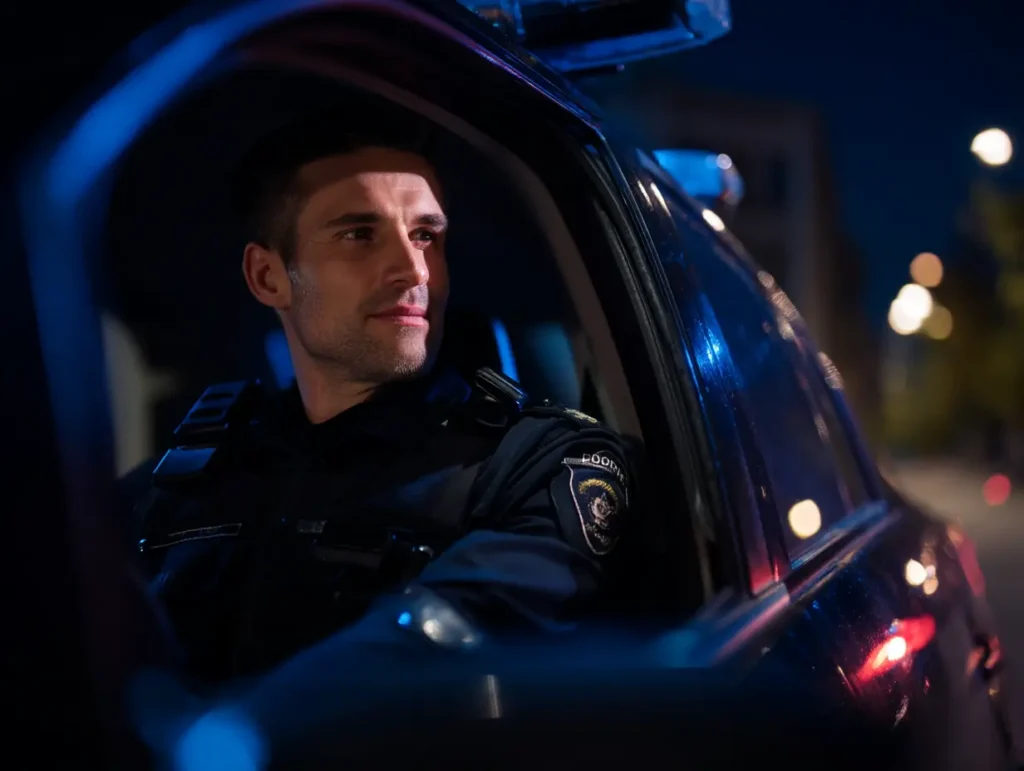
“You got ID on you?” I said. “Yeah,” he replied immediately. He smiled—small, polite, almost relieved—and patted his jacket. Then he stopped. His hands hovered there, unsure. He didn’t keep searching. He didn’t pull anything out. He just stood there, smiling like the rest of the motion would happen on its own. I waited. Nothing.
“ID,” I repeated. “Oh,” he said. The smile faded into concentration. “I don’t think so.” “Why’s that?” Another pause. Longer this time. His brow creased, like he was genuinely trying to locate the answer. “Lost it,” he said finally. “When?” He looked at the pavement. Then the sky. Then back at me. “A while ago.”
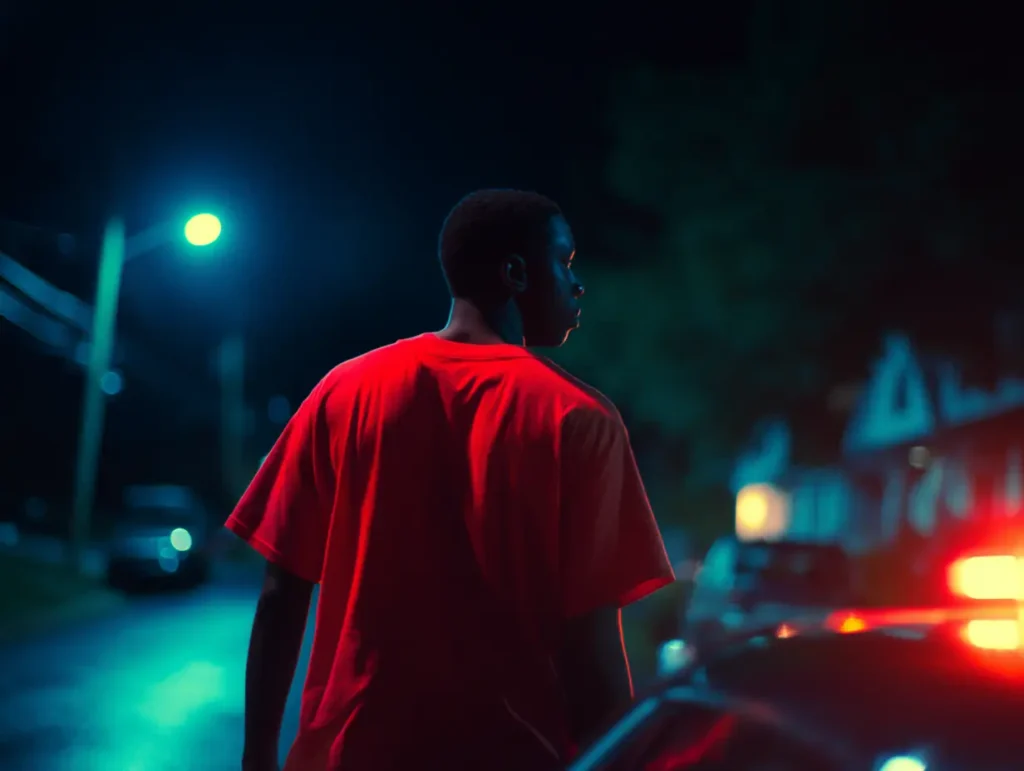
It felt less like he was avoiding the question and more like he couldn’t quite grab hold of it. Like every thought slipped just before it settled. I shifted in my seat, already reaching for the door handle, unsure whether I was being played or wasting my own time. That’s when the radio cut in. “Unit Twelve, possible mugging in progress. Maple and Third. Suspect on foot.”
I looked back at him. He was still standing exactly where he’d been, hands at his sides, eyes calm. “Stay here,” I said. “Don’t go anywhere.” He nodded, immediate and compliant, like that instruction made perfect sense. That was it. No argument. No irritation. I hesitated a second longer than I should have.
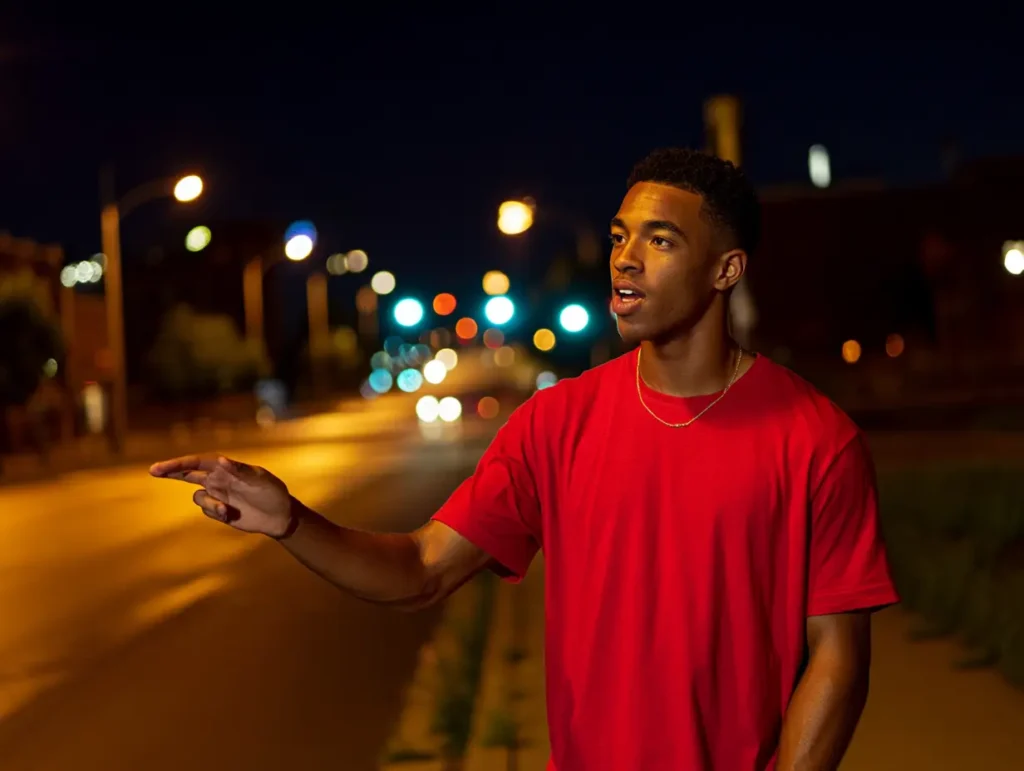
Long enough to feel the weight of my badge press against my chest. Then my radio crackled again—urgent this time—and instinct took over. I jogged back to the cruiser and pulled away, tires crunching softly as I accelerated. The whole drive, my thoughts kept circling back to him.
Work, he’d said. Too fast. Like he’d practiced the answer. But his eyes hadn’t darted. His hands hadn’t shaken. He hadn’t asked why I stopped him, or how long I’d be there, or whether he was in trouble. Most people did. Especially at that hour. Especially when they were sweating through their shirt and breathing like they’d run a mile. And I hadn’t even asked his name.
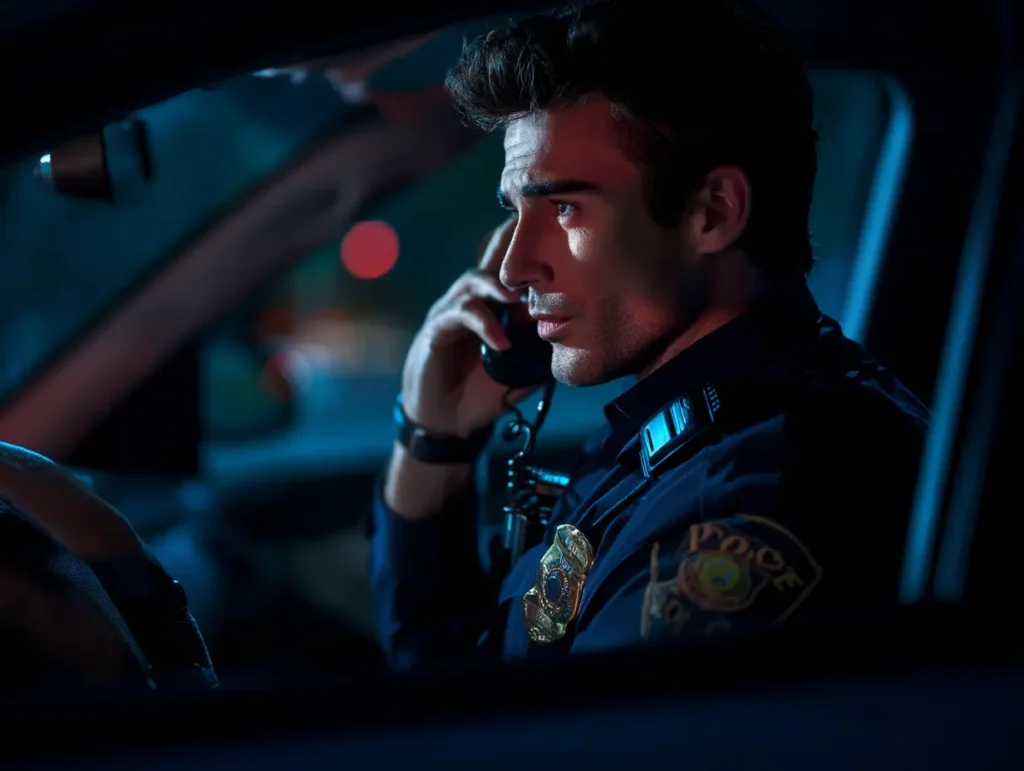
The thought came late, unwelcome. Name first—that was basic. Something drilled in during training, something that usually happened without thinking. But I’d let the moment slide past me, distracted by the call, by the way he stood there too calmly, like he was waiting for a cue I never gave. I told myself it didn’t matter. If he was nobody, he stayed nobody.
Still, the absence sat wrong. A missing piece where there shouldn’t have been one. I told myself it was nothing. Fatigue. Nerves. A guy caught off guard. Still, something about the way he’d spoken stuck with me. Not slurred. Not confused. Just… off. Like he’d woken up mid-thought and kept going. Focus, I told myself, gripping the wheel tighter as I turned onto Maple.
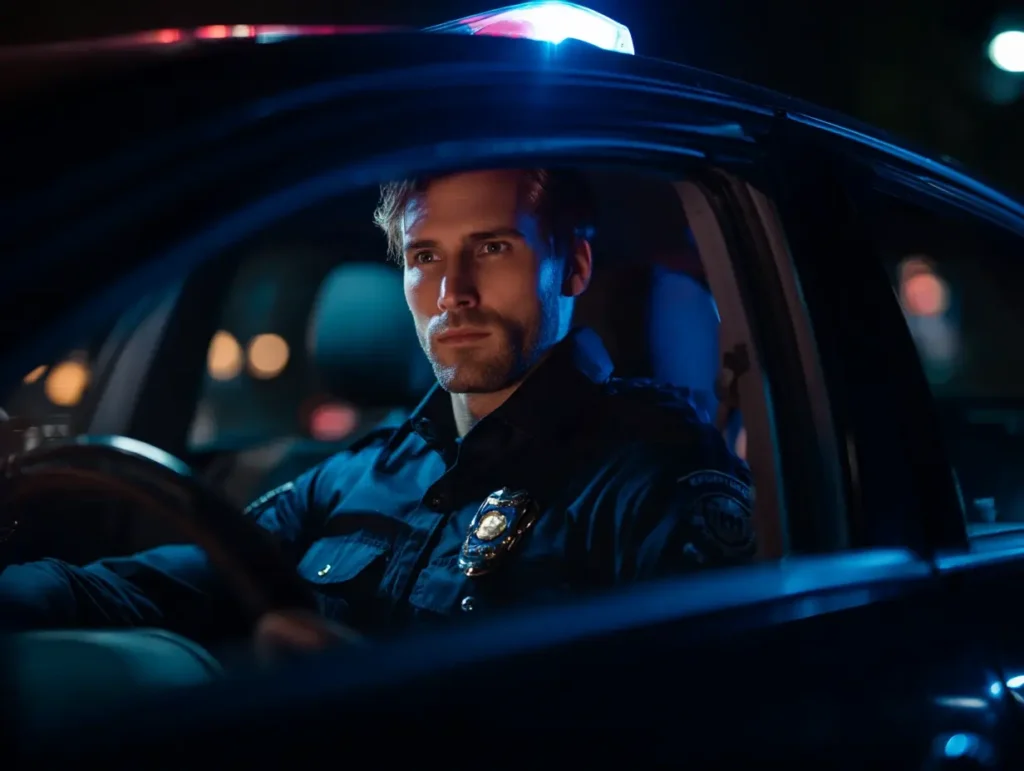
The call came through clear as I approached the address: possible mugging in progress, female victim, suspect on foot. I killed the headlights and rolled in slow, scanning the sidewalk. I saw them just in time. A man was yanking a bag from a woman in scrubs, her shoes skidding on the pavement as she fought to keep her balance.
She screamed when she saw the cruiser, sharp and panicked, pointing at the direction the suspect ran towards. “Police!” I shouted, already moving. The suspect bolted, but not fast enough. He clipped a trash can, stumbled, and that half-second was all I needed. He went down hard, face-first on the sidewalk.

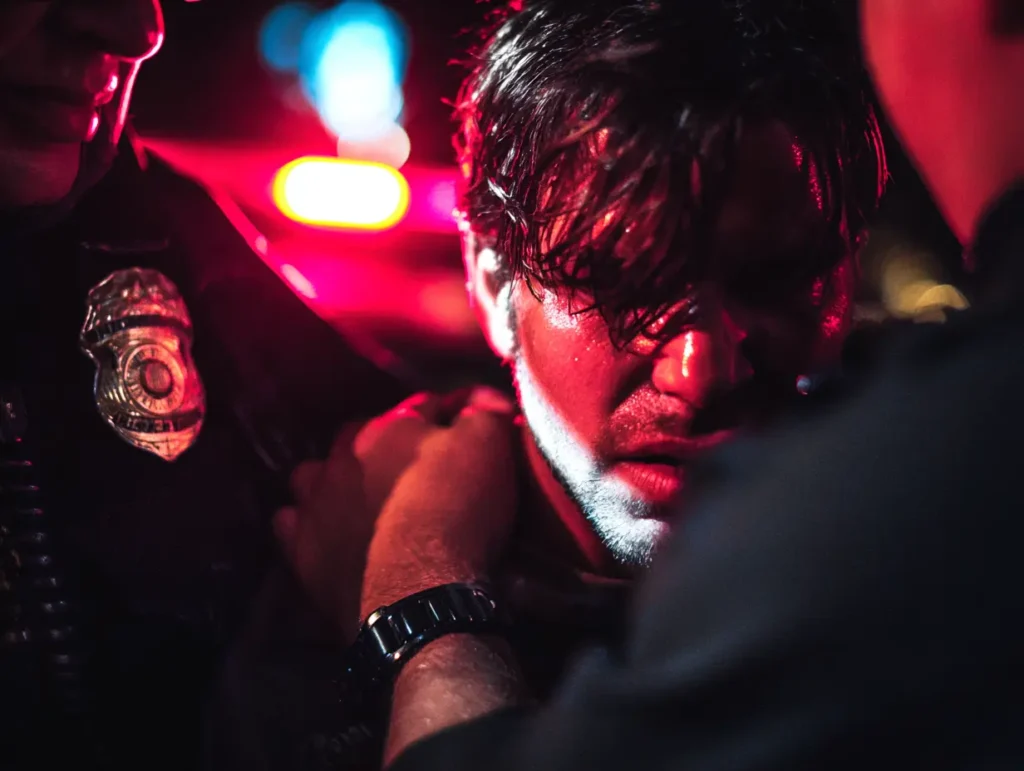
I had him cuffed before he could say much of anything. As I hauled him up, his face caught the streetlight—sweat-slicked, wild-eyed, jaw clenched like an animal cornered too late. I didn’t recognize him, not from the board at the station or any of the grainy stills we’d been circulating, but that didn’t mean much.
Half the people we caught never matched the photos cleanly. Desperation changed faces. The woman stood a few steps back, shaking, clutching what was left of her bag like it might disappear if she loosened her grip. I told her she was safe. That it was over. She nodded, tears streaking down her cheeks, still staring at the man like she expected him to lunge again.
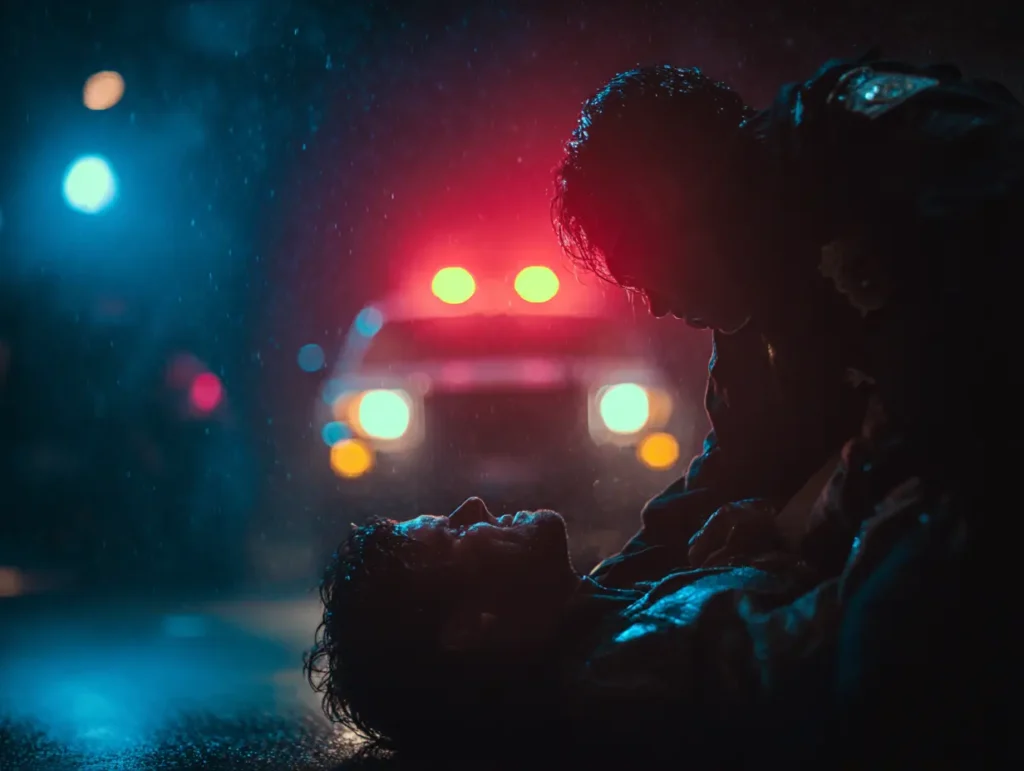
By the time backup arrived and took custody, the adrenaline had faded just enough to leave a hollow in its place. I told myself this could be one of them. A burglar turned mugger when the pattern slipped. It happened. We’d seen worse escalations. I finished the statements quickly. Too quickly.
As soon as I was cleared, I swung the cruiser back toward the stretch of road where I’d stopped the walker earlier. The sidewalk was empty. No figure under the streetlight. No steady pace disappearing into the distance. Just the hum of the engine and the soft orange glow washing over cracked pavement.
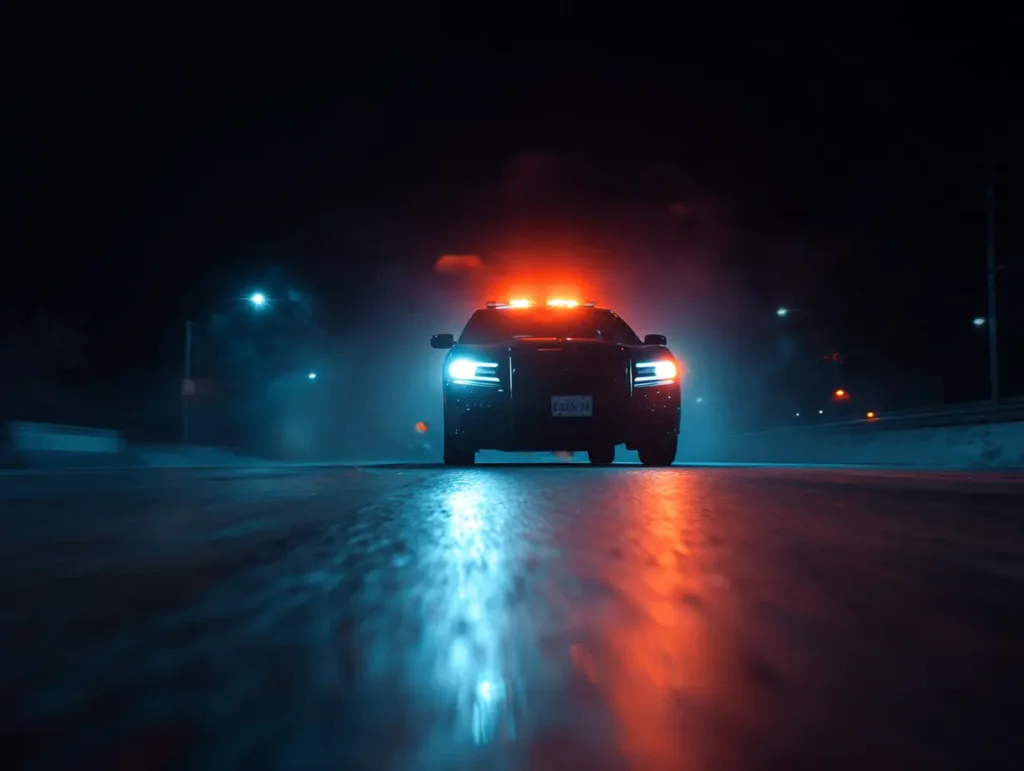
I slowed, then stopped completely, scanning the alleys and side streets. Nothing. I drove the block once. Then again. I told myself he could’ve turned off anywhere. Still, the absence pressed harder than it should have. People didn’t vanish like that. Not without running. Not without a sound. Who walks twenty miles to work?
Who answers questions without really answering them? And who disappears without leaving a trace? I told myself it was nothing. A tired man. A night worker with nowhere else to be. It wasn’t illegal to walk. It wasn’t illegal to be exhausted. Still, one thought refused to let go: if he was innocent, I’d see him again. And if I didn’t, that meant something else entirely.
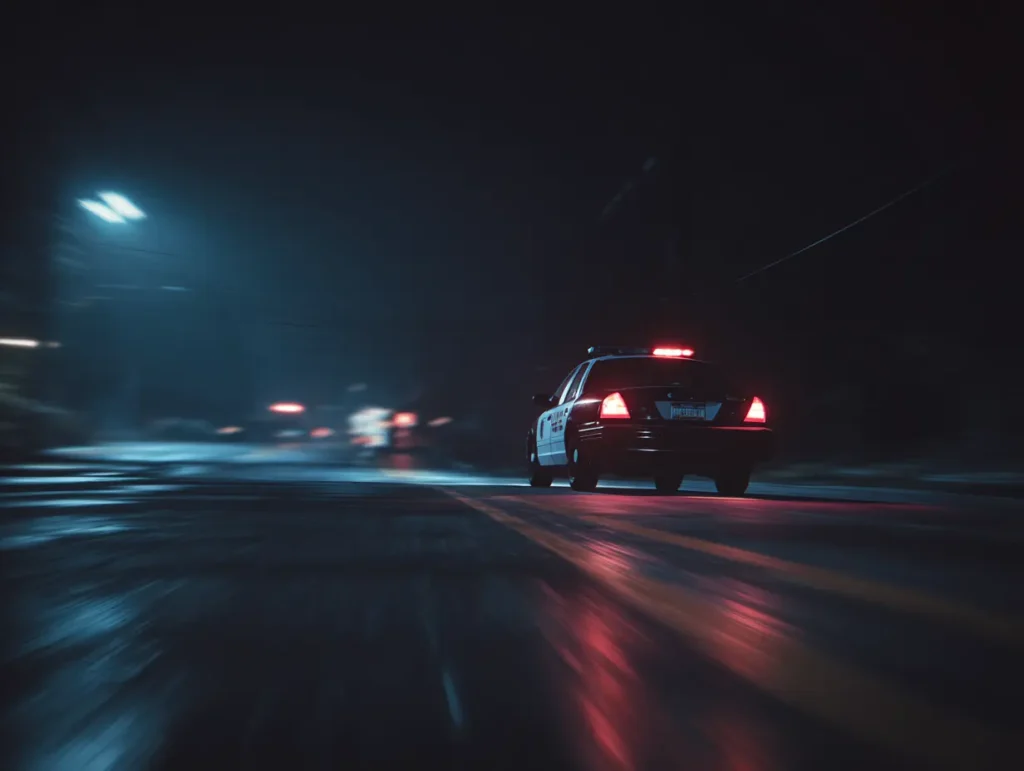
I delivered the mugger to the station just before dawn. He went quiet the moment the cuffs came off, eyes darting like he was already calculating how much trouble he was in. The others took him back for questioning. Someone clapped me on the shoulder, said I’d done good. Another officer muttered that maybe this would finally give us something to work with.
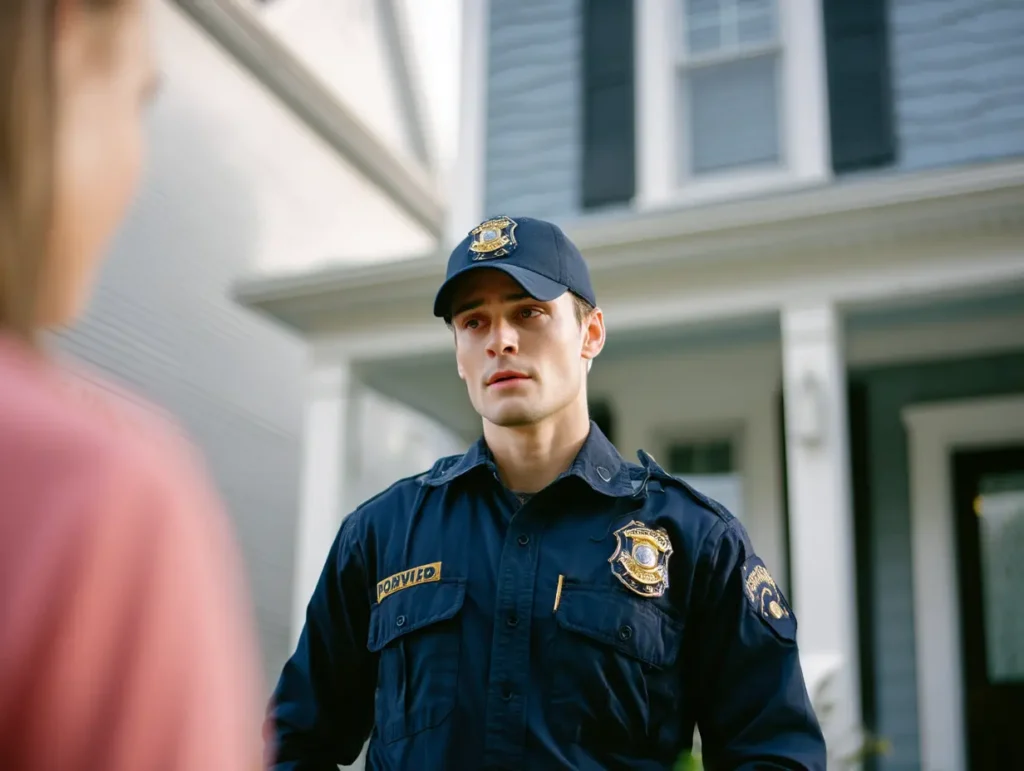
“Get some rest,” the sergeant told me. “We’ll know more by morning.” I nodded—but I didn’t go home. Instead, I stayed out and started knocking on doors. The neighborhoods were waking up in fragments. Porch lights still on. Coffee brewing behind half-open blinds. People answered in slippers and hoodies, wary but relieved to see a uniform.
I took statements slowly, letting them talk past their nerves. One woman said she’d woken up because her dog wouldn’t stop growling. When she looked out the window, she saw a man walking down the sidewalk like he belonged there—head down, hands loose at his sides, moving fast but not running.
Another swore she’d seen the same man hours later, sprinting through her yard like he was being chased, vanishing between houses without ever looking back. Different streets. Same description. A man on foot. Alone. Late-night to early-morning hours. Jacket wrong for the weather.
Backpack sometimes, sometimes not. And the way they all hesitated before saying the same thing—that there was something strange about how he moved. By the third statement, my stomach had tightened into something cold and heavy. Because every detail lined up with the man I’d let walk the night before.
I should’ve handed the statements in right then. Should’ve logged them, attached them to the case file, done this by the book. Instead, I drove back to the station and went straight past the front desk. The mugger was still in holding. I stood outside the interview room while another officer wrapped up. When they stepped out, they shook their head.
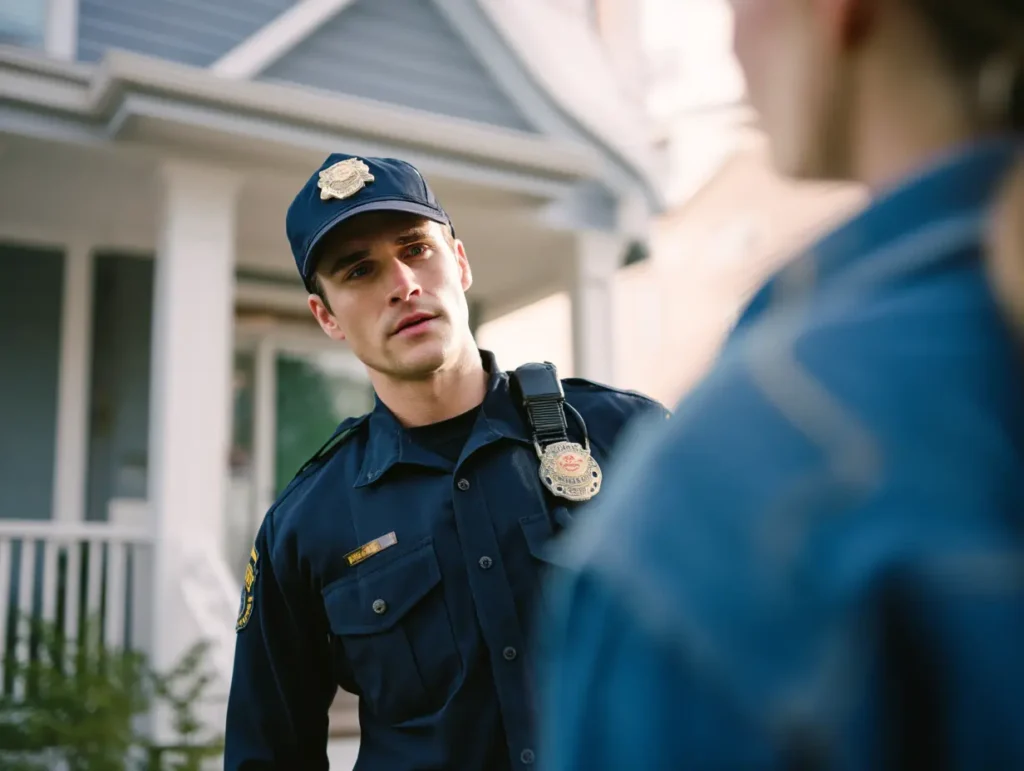
“Guy’s dirty, but not for this. Solid alibi. He was on camera across town during two of the break-ins. Looks like we grabbed the right guy for the wrong crime.” That should’ve felt like closure. Instead, it felt like confirmation. I didn’t sit down.
Didn’t write anything up. I turned around and walked back out to my cruiser with the weight of every missed question pressing between my shoulders. There was only one place left that made sense. Lincoln. He’d mentioned it offhand the first time we spoke—barely more than a word dropped into the night. Work. Lincoln. At the time, I’d logged it and moved on.
Now it replayed in my head with an insistence I couldn’t shake. Lincoln was the kind of place that never fully shut down. Warehouses. Loading docks. Graveyard shifts that blurred one day into the next. If someone was moving on foot at strange hours, if they needed work that didn’t ask many questions, that stretch of road made sense. I told myself I was just following up.
Just confirming a detail. But my grip tightened anyway as the lights of the industrial park came into view. Floodlights cut hard shadows across concrete yards. Trucks idled. Somewhere metal clanged against metal. I rolled slowly past the warehouses, scanning faces, telling myself I wouldn’t be disappointed if I didn’t see him.
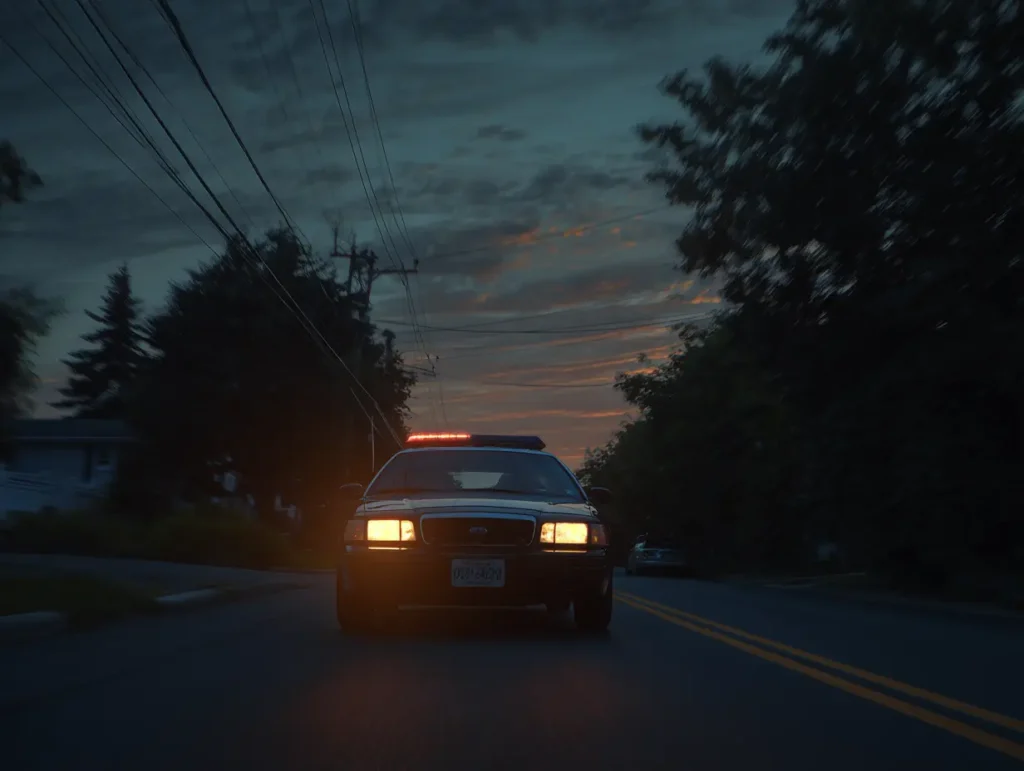
I didn’t. After a few passes, the absence started to bother me more than his presence had. I parked near the edge of the lot and sat there with the engine running, replaying the conversation from earlier.
In the morning, he’d said when I asked about work. Not soon. Not after midnight. Just morning. It had sounded simple enough at the time. But the more I turned it over, the less it fit. Twenty miles wasn’t a casual walk. It wasn’t something you misjudged by a little.
Even at a hard pace, it was hours. Which meant leaving in the middle of the night to get somewhere in the morning didn’t add up. Not unless he was lying. Or unless something about his nights didn’t follow the same rules as the rest of us.
Nothing he’d said lined up cleanly. Who walks that far to get to work? Who answers questions like they’re pulling from a place they’re not fully present in? Eventually, I pulled back onto the road. I told myself to wait. If he was telling the truth—if any part of it was true—I’d see him again in daylight. I didn’t have to wait long.
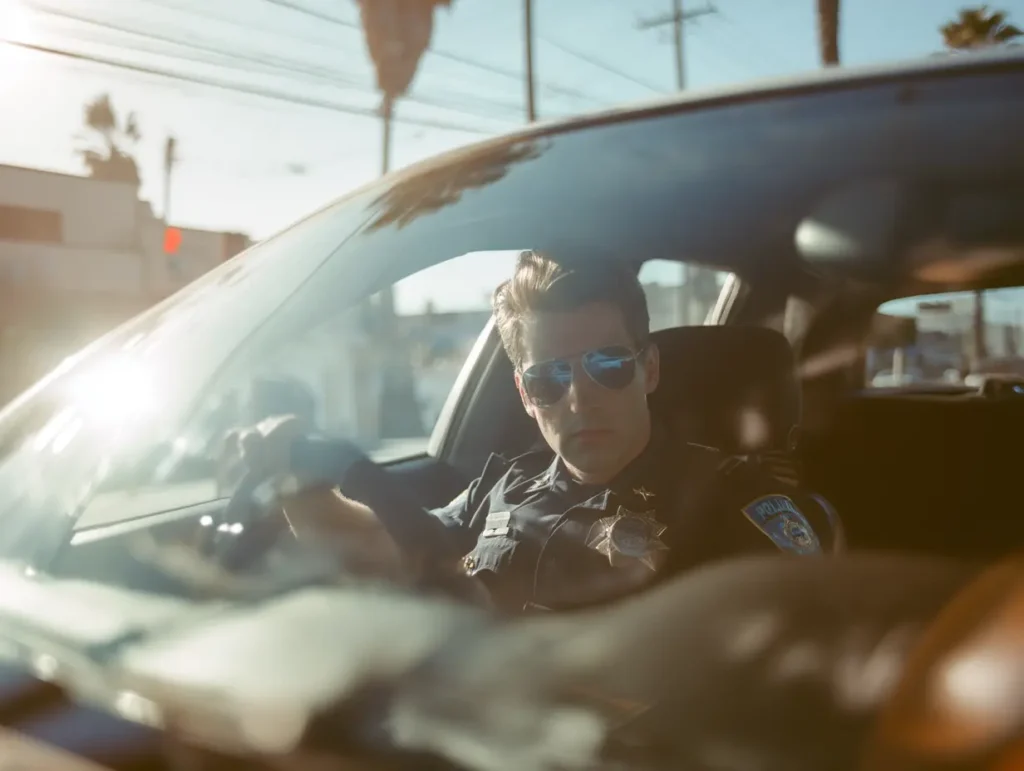
The next morning, I parked across from the bus stop near Lincoln and watched commuters gather in loose, tired clusters. Coffee cups. Work bags. The quiet impatience of people counting minutes. Then I saw him. Same man. Same build. But this time he looked… put together. Clean uniform. Buttoned jacket. Hair combed.
He stepped off the bus with the others and headed toward the warehouse like he belonged there, shoulders squared, stride practiced. Still, something wasn’t right. Up close, I could see it in his face. The heaviness around his eyes. The way his focus lagged half a second behind the world, like he hadn’t fully arrived yet. He looked exhausted in a way sleep didn’t fix.
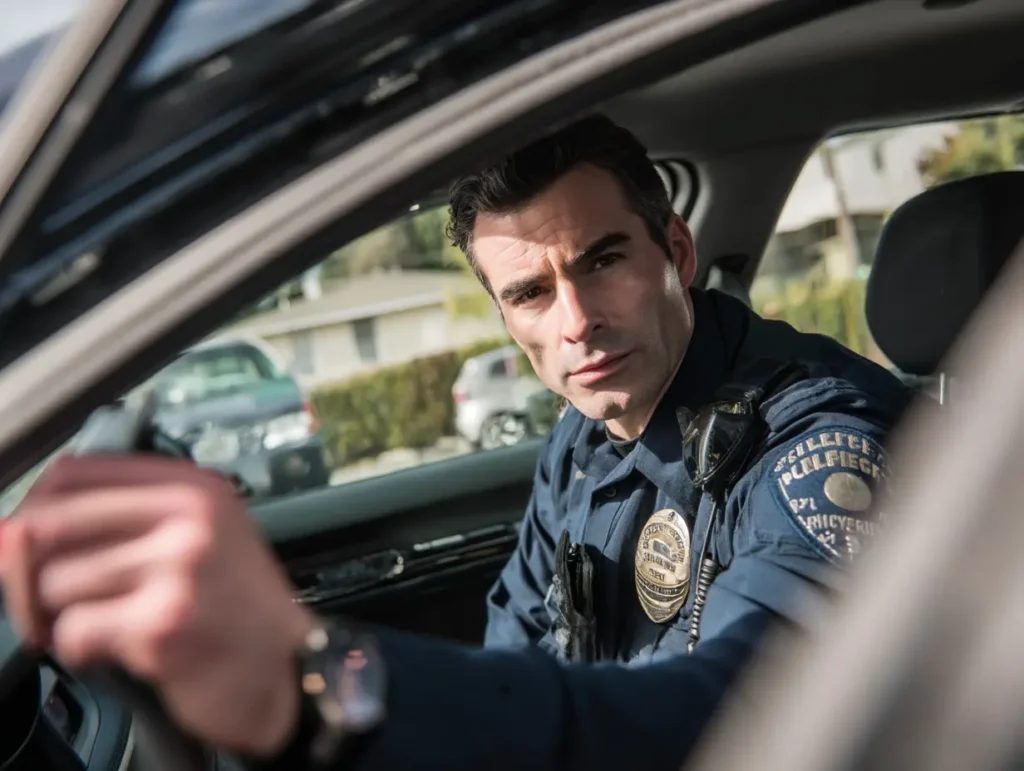
Like someone who’d been awake without being aware of it. I stepped out of the cruiser. As I crossed the yard, he saw me. Just a flicker of recognition—nothing dramatic—but enough. His head snapped down, shoulders tightening, and without a word he turned sharply and disappeared back through the warehouse doors. “Hey!” I called. He didn’t stop.
That was all it took. I broke into a run, boots pounding concrete as I followed him inside. The warehouse swallowed sound—forklifts whining, pallets slamming, men shouting over engines. He moved fast, weaving between stacks of boxes like he knew the layout better than anyone. Too smooth. Too intentional. “Stop him!” I shouted.
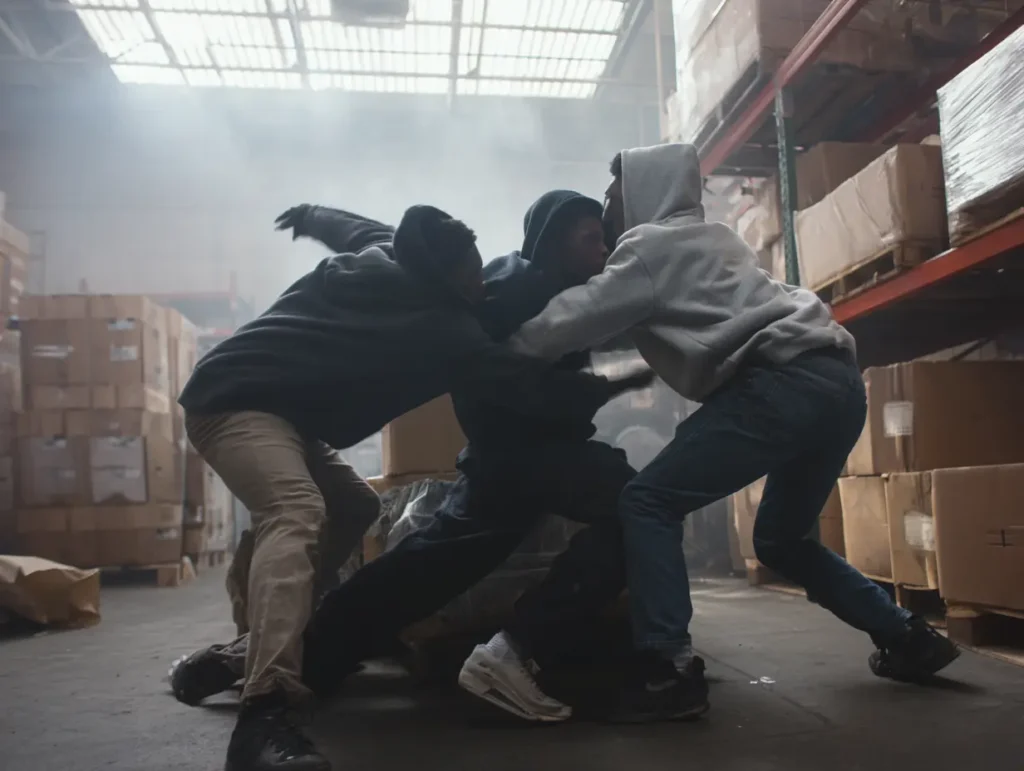
Two workers near the loading bay reacted on instinct, stepping into his path. The man skidded to a halt, boots scraping concrete, eyes wide now, chest heaving like he’d been sprinting for miles. I was on him seconds later, grabbing his arm as he twisted away. “I didn’t do anything!” he shouted, panic breaking through his voice. “I swear—I didn’t do anything!”
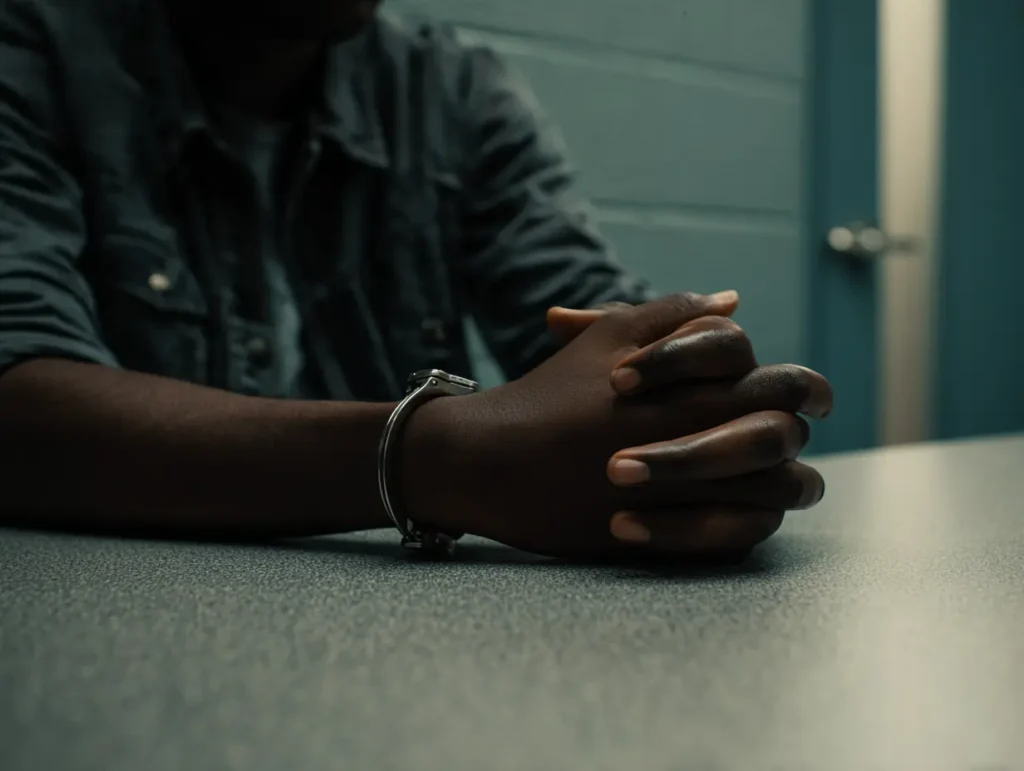
I forced his hands behind his back as he fought me, panic spilling out of him in broken bursts. “Please—please—I didn’t take anything!” The cuffs snapped shut, metal biting into his wrists as his strength gave out.
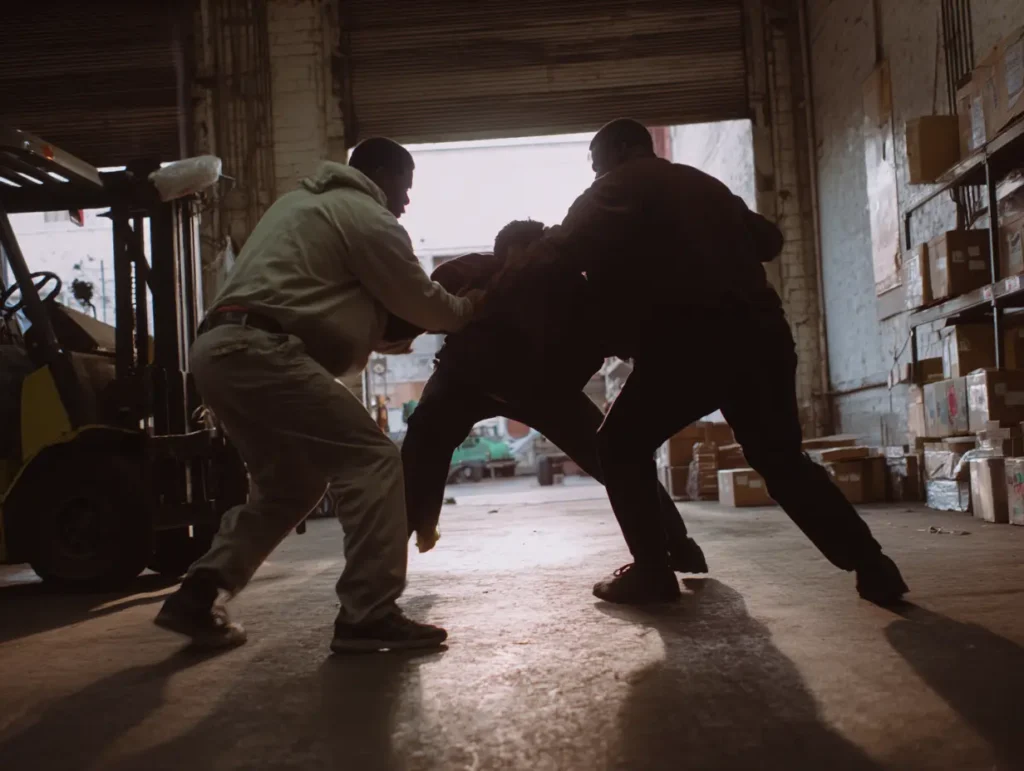
“Why did you run?” I demanded, breath still heavy in my own chest. “Why take off if you’ve got nothing to hide?” He shook his head hard, tears streaking down his face. “I didn’t know—it just—” He stopped, words collapsing in on themselves. I leaned closer. “Do you remember me?” I asked. “From the other night?”
His eyes searched my face, wild and unfocused. “I—I don’t know,” he said, and the hesitation sounded like a lie. That was when the warehouse door slammed open. Footsteps pounded across concrete. “Walter!” a voice shouted. “Walter, what’s going on?”
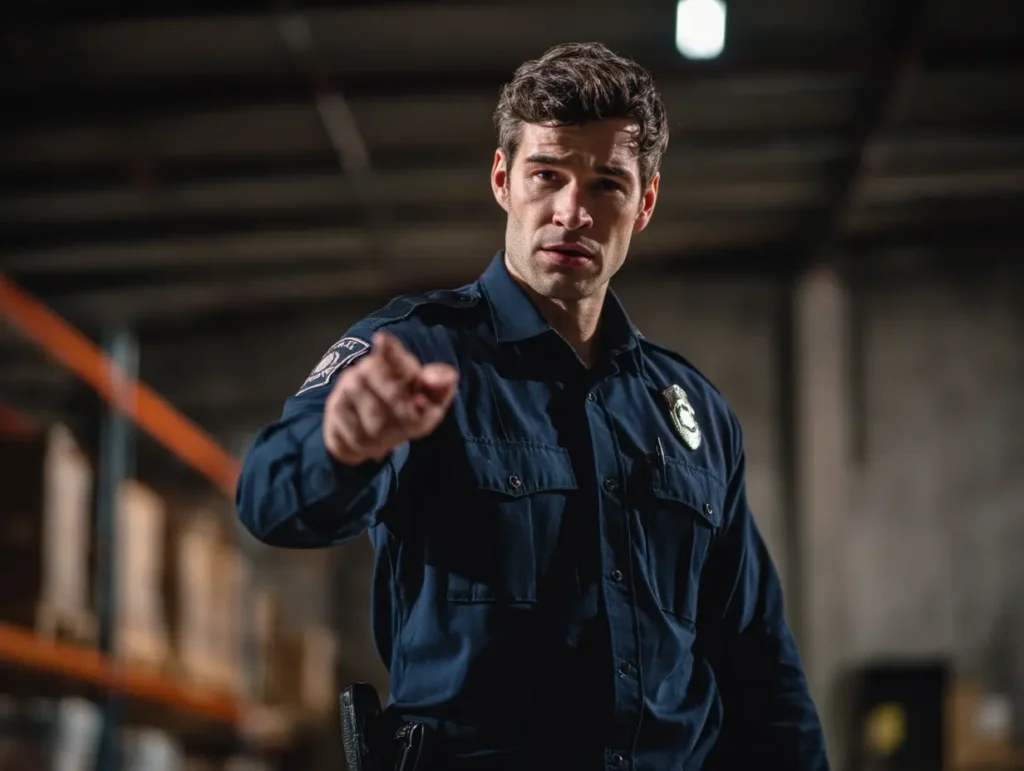
The manager came skidding to a stop, red-faced and furious, staring at the cuffs, the cruiser, the small crowd forming behind us. “He’s a suspect,” I said, keeping my grip firm as the man—Walter—shook beneath my hands.
“Multiple witness reports. Seen moving through neighborhoods connected to a string of burglaries.” “No—no—I didn’t—I don’t—” His breath hitched. He sagged against the cruiser as I guided him toward the door, sobbing now, words tumbling out faster than he could control them.
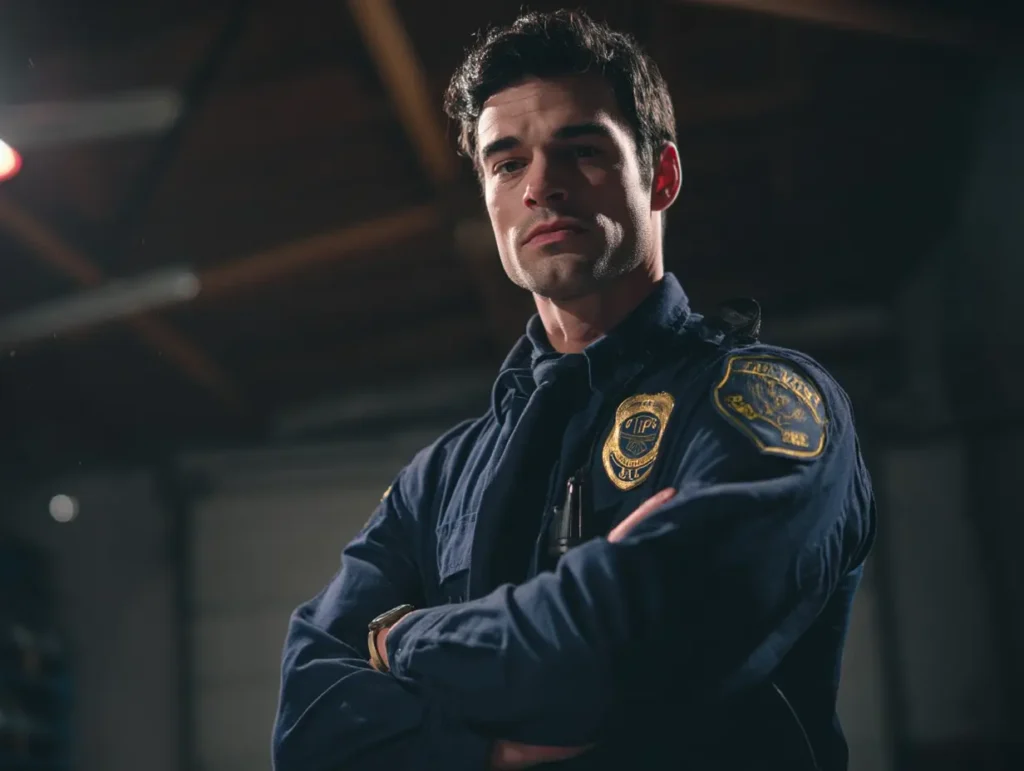
“I wake up places,” he said, voice cracking. “I don’t know how I get there. I just—sometimes I wake up.” At the time, all I heard was desperation. And desperation, I thought, was exactly what guilt sounded like.
“I don’t remember getting there. I see it on the news and—I think—it’s me. I think maybe I did it and don’t know.” That made my stomach drop—but not enough to stop me. Not yet. I shut the door, sealed him in, and drove.
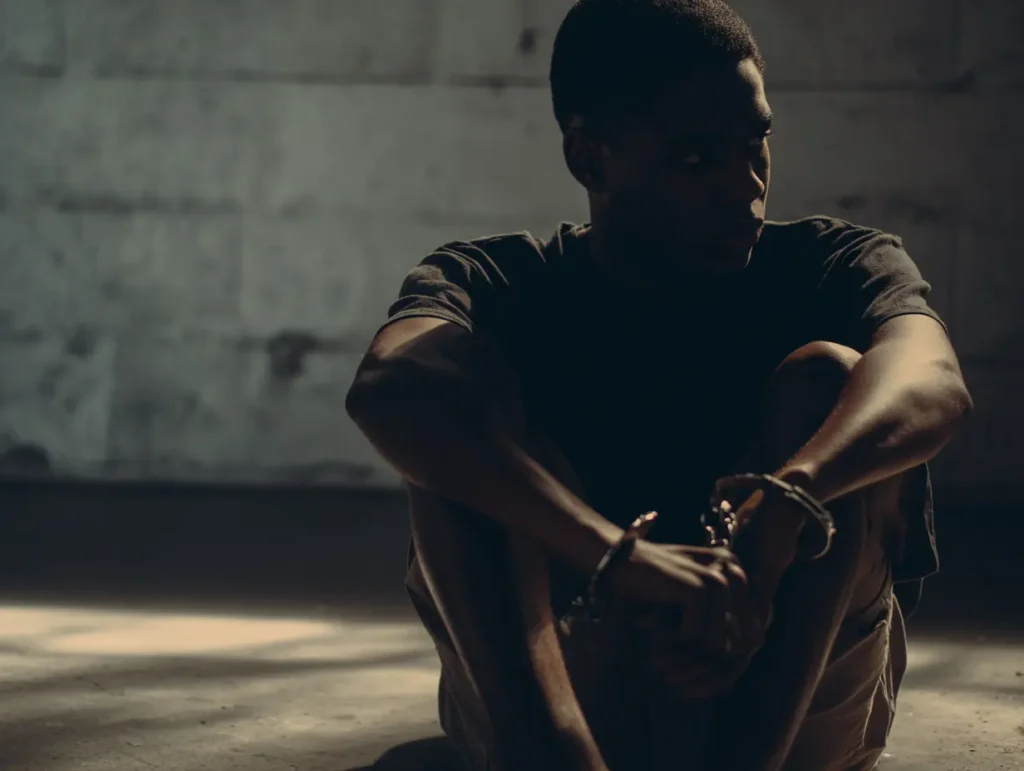
At the station, he fell quiet. Not defiant. Not calculating. Just emptied out. He told the story again, haltingly this time—blackouts, waking up miles from home, dirt on his shoes, hours missing. Said he’d started avoiding sleep.
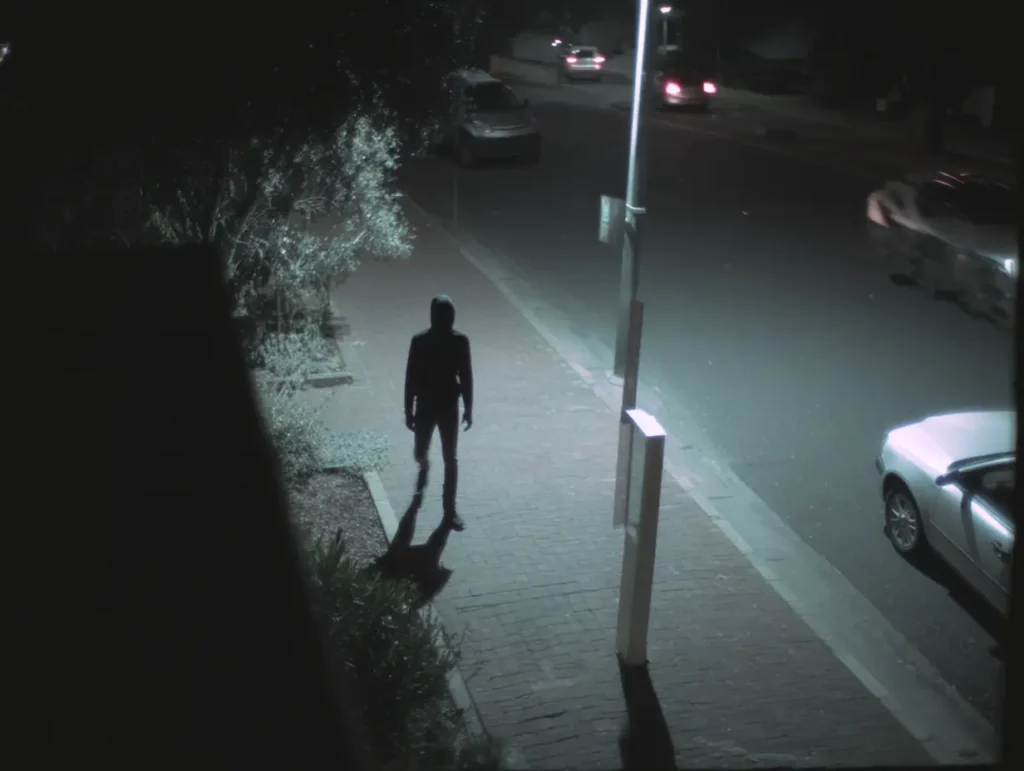
Said he was scared of himself. I didn’t interrupt. I stepped out and pulled footage. Cameras near his house. Street corners. Traffic poles. And there it was. Night after night, Walter leaving his home. Sleepwalking.
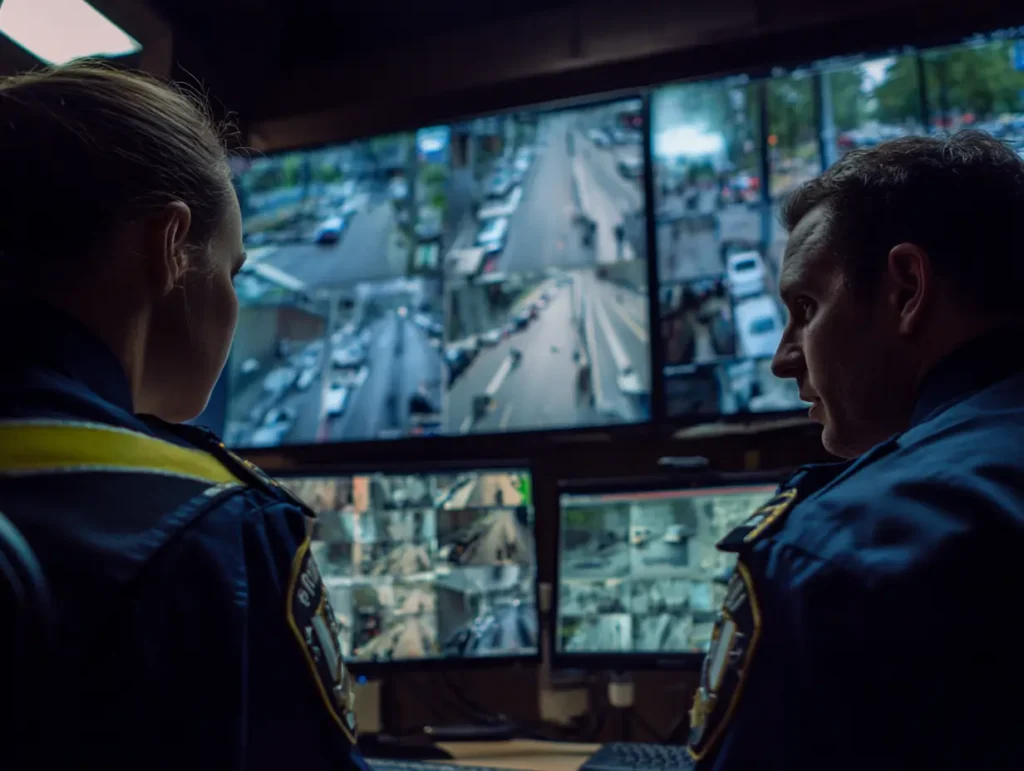
Not sneaking. Not watching houses. Just moving forward, head down, eyes unfocused. Sometimes stopping in the middle of the sidewalk like he’d forgotten why he was there. Sometimes rubbing his face hard, like he was trying to wake himself up.
He never entered a single house. Never touched a door. Never looked back. The truth hit like ice water. It came together slowly. Not all at once. That was the worst part. Back at my desk, I spread the reports out again—not looking for a suspect this time, but for overlap.
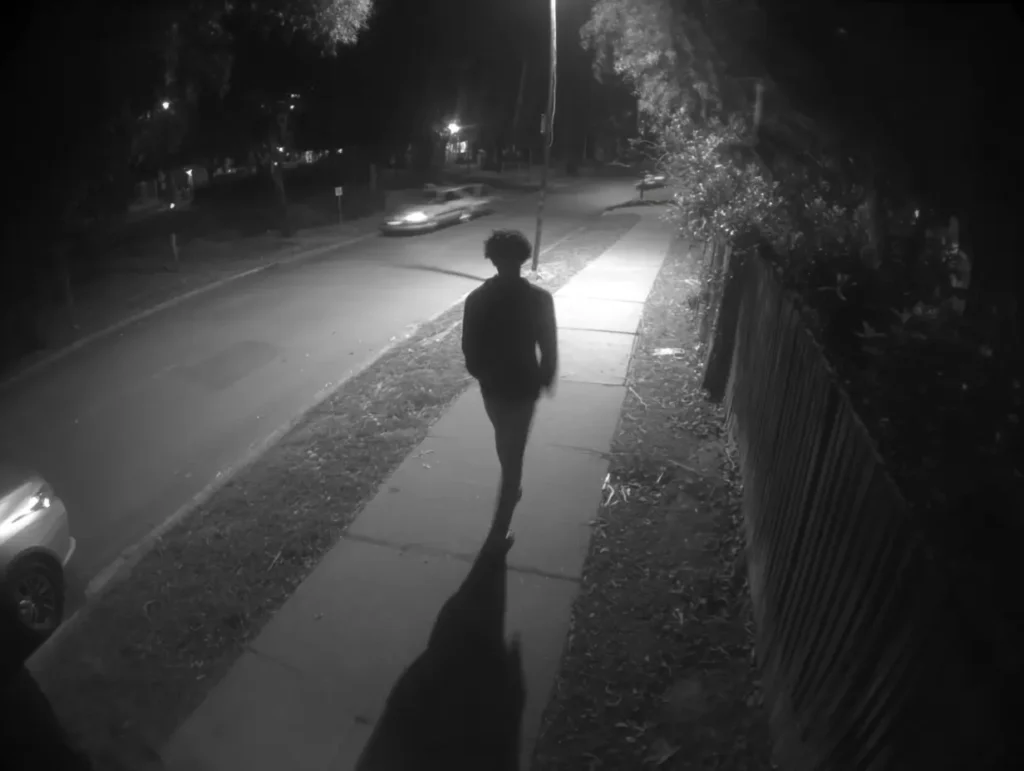
Times. Streets. Witness statements that mentioned movement instead of theft. Someone walking. Someone seen, then gone. Someone remembered only because they were there when nothing else made sense.
Walter’s route ran through all of it. Not inside the houses. Not breaking windows or forcing doors. Just passing through. Always nearby. Always close enough to be remembered. Close enough to be blamed later if someone needed a face.
And every burglary happened just after—never during. Like whoever was responsible knew exactly when to move. I leaned back, staring at the ceiling, the answer settling in with a kind of quiet dread.
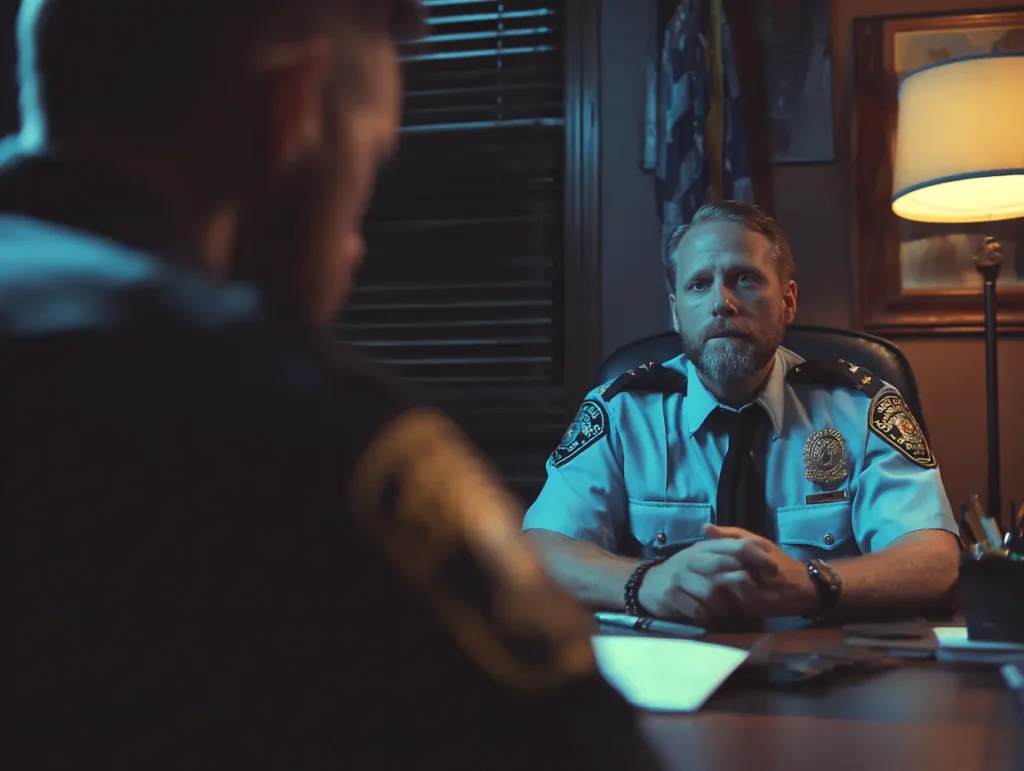
They weren’t hiding behind him by accident. They were using him. I took it straight to the captain. No theatrics. No certainty. Just the pattern, laid out carefully, and the risk of being wrong if we kept doing nothing.
He listened without interrupting, eyes moving from map to map, timeline to timeline. When I finished, he exhaled slowly. “If you’re right,” he said, “we’ve been chasing a ghost—and nearly buried an innocent man to do it.”
“If I’m right,” I said, “they’ll move again. Same way. Same timing.” He nodded once. “Then we do it clean. Quiet. No leaks.” I went back to the interview room alone. Walter looked smaller without the adrenaline in him. Exhaustion had settled deep, dragging at his posture, his face.
He flinched when I sat down, like he was bracing for another accusation. “I owe you an apology,” I said. He looked up, wary. I explained it slowly—what we’d found, what we believed was happening, and why he’d been in the wrong place every single time.
His hands trembled as he listened, but he didn’t interrupt. When I finished, he swallowed hard. “So… you don’t think it’s me,” he said. “I don’t think it ever was,” I said. He sat with that for a moment.
Then, quietly, “What happens now?” I told him the truth. That the people responsible were watching patterns. That they were counting on him to keep walking. And that if he was willing—only if he was willing—we could stop it.
He nodded after a long pause. “If it ends this,” he said. “Yeah.” That night, we ran it exactly the same as always—except this time, we were everywhere he wasn’t looking. Plain clothes. Unmarked cars.
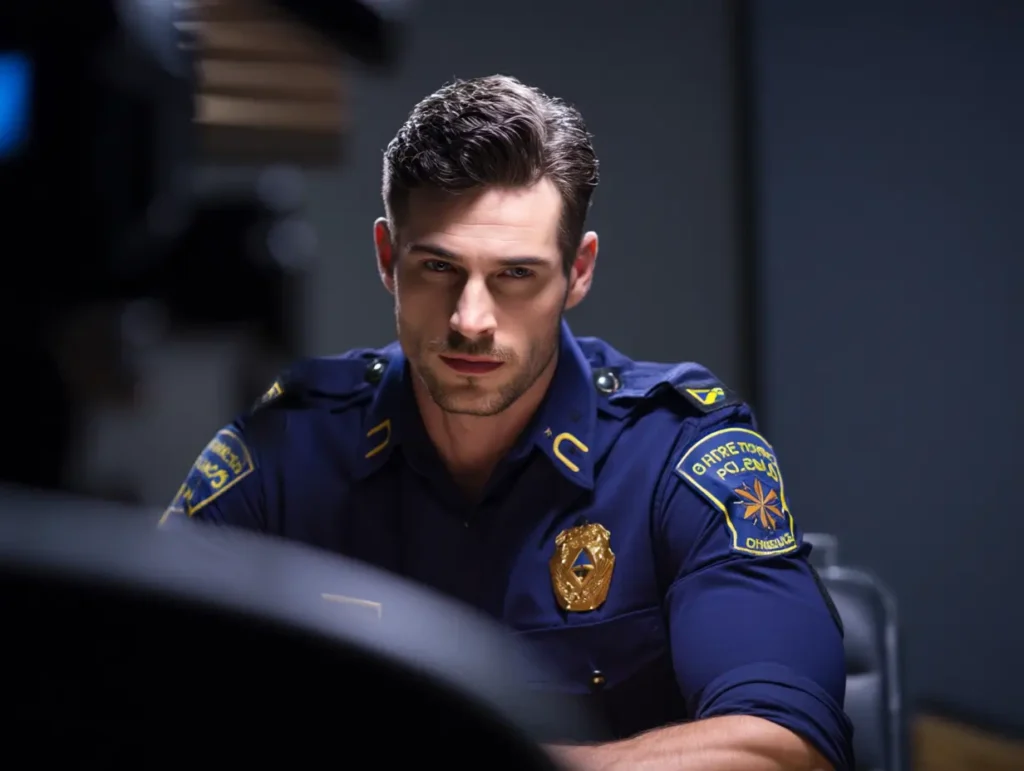
Eyes on every corner where the pattern had repeated. The burglars moved right on schedule, confident they were invisible. They weren’t. By the time it was over, no one needed to explain what had happened.
The evidence spoke for itself. Walter was released quietly before sunrise. No paperwork beyond what was necessary. No one else needed to know how close we’d come to ruining his life. I drove him to work myself.
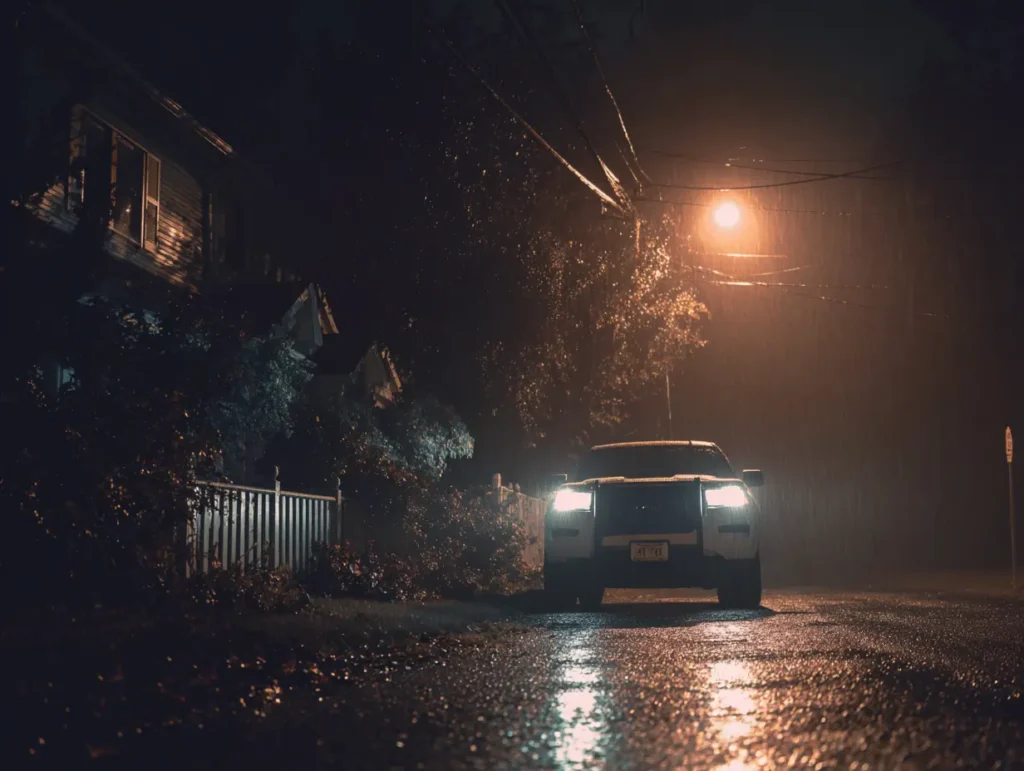
He stared out the window the whole way, like he didn’t trust the morning to be real. When his manager came storming out, already angry, I stepped between them. “He helped us shut it down,” I said. “He didn’t do a damn thing wrong.” The man hesitated, then nodded.
Walter got out slowly, standing a little straighter than before. Before he closed the door, he looked back at me. “Thank you,” he said. I shook my head. “I’m sorry it took me so long to listen.”
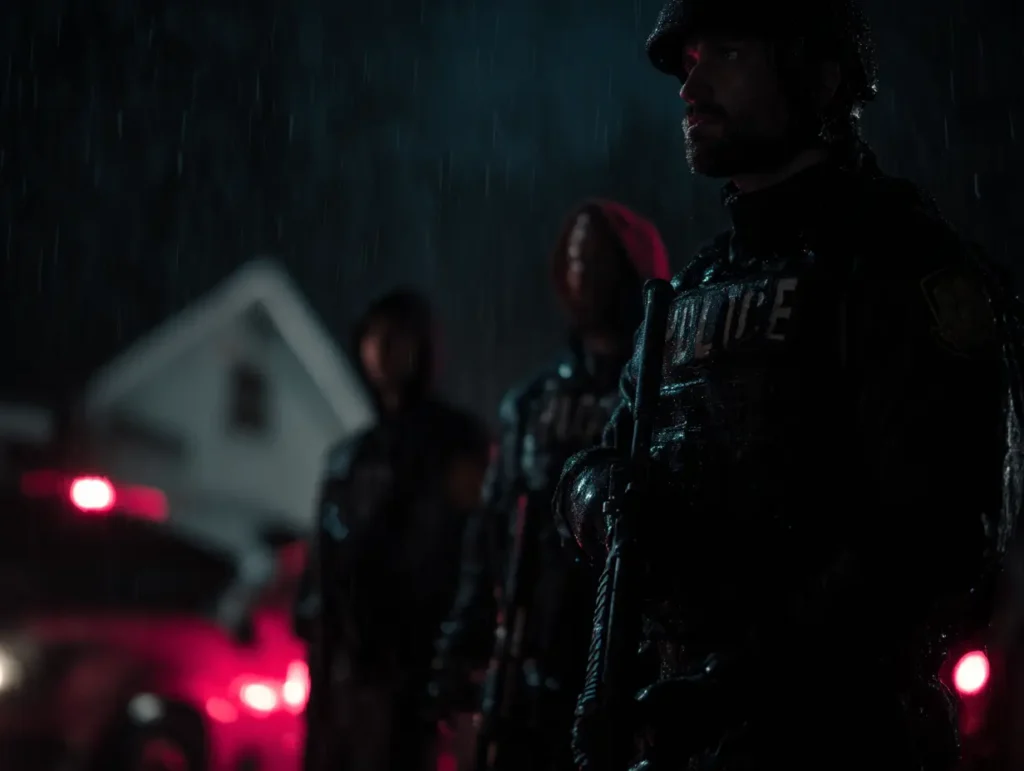
As I watched him walk inside—awake, grounded, finally safe—I understood what the night had almost cost him. Not everyone moving through the dark is a threat. Sometimes the real danger is how badly we want someone to be guilty.