
Mara stood near the back of the rooftop ballroom while her brother, Ethan, introduced “Lattice” as a small sensor device paired with software that predicted machine failures before breakdowns. He called it a “listening system” for factories. Investors clapped, applauding the future.
A man in a crisp suit leaned close with a grin. “Still busy with your little hobby, while your brother is doing the real work?” he asked, loud enough for nearby laughter. Mara smiled as if it did not sting. Across the room, Sloane’s hand rested on Ethan’s arm, steady and possessive.
Ethan lifted the demo unit, and the room quieted. A green status light blinked, ready. Mara’s stomach tightened. It was nearly time. That light meant the system was ready to accept a valid key. Lattice’s core features would run only on her validation—and it was time to show them…
Years earlier, Mara worked at their mother’s kitchen table with wires snaking across the wood and notebooks stacked beside her mug. Ethan paced, pitching ideas with easy charm. He promised they would build it together and split it fairly when it finally worked.
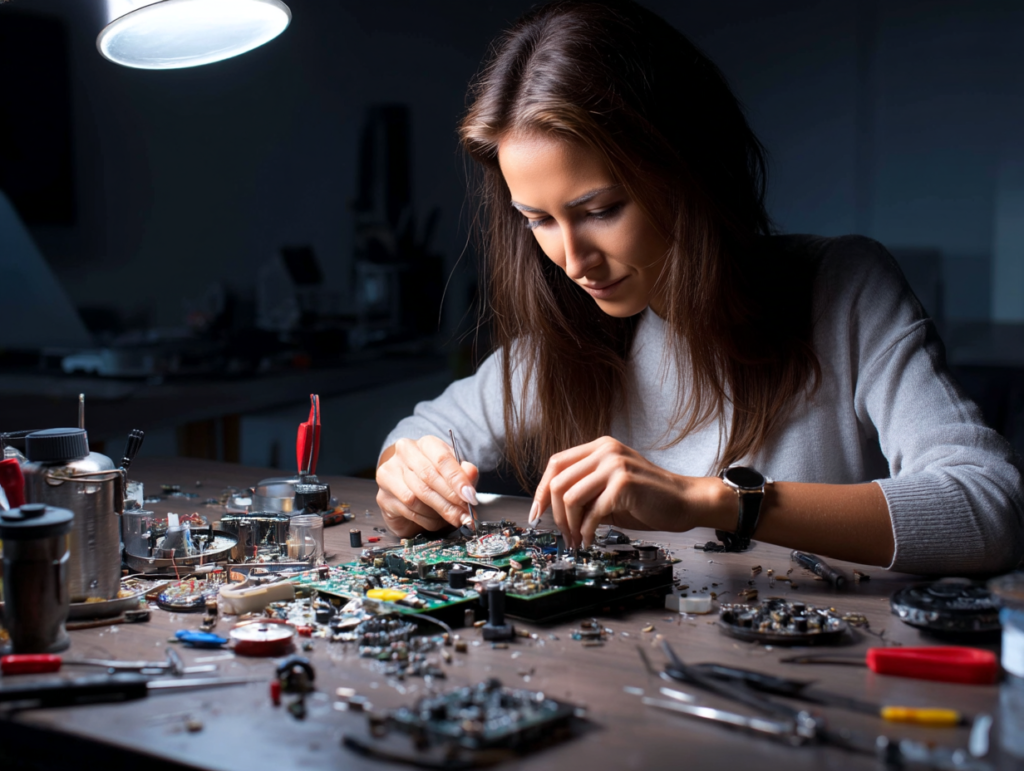
Mara built the first prototype from cheap sensors and borrowed parts. She soldered quietly, then wrote the firmware that made the device stable instead of twitchy. Ethan told friends “they” were building a startup. Mara let him talk and kept fixing what mattered.
Most nights, Mara debugged while Ethan practiced investor lines in the hallway mirror, smiling at his own confidence. When she asked about a contract, he laughed and said, “Paperwork is for people who don’t trust family.” Mara believed that sounded reasonable.

Early adopters came because Ethan networked hard, but they stayed because Mara’s system did what it promised. She recorded every improvement—dates, version numbers, tests—because she feared her work could be rewritten later. Documentation felt like self-defense.
Advisors arrived once the product looked promising. They praised Ethan’s “vision” and called Mara “support,” like she was a helpful extra. Mara swallowed it because Lattice still needed her hands on it, and she was happy to stand by as Ethan brought in the right people.

Mara stayed quiet in meetings, but she was not careless. As Lattice improved, she began saving her work in ways that could not be rewritten by anyone else—dated builds, clean backups, and careful notes that showed exactly what she created and when. Mara thought it was good practice.
As attention grew, Ethan became obsessed with “the story” investors wanted. Mara became obsessed with reliability. Their roles drifted apart without anyone naming it. Ethan wanted speed and shine; Mara wanted proof that the system could not be copied and sold without consequences.

That was when Victor Crane appeared—an investor candidate with perfect teeth and polite eyes that never rested. He praised Lattice, but his questions stayed fixed on ownership, access, and control. Mara felt measured, like a part he planned to purchase separately.
After Victor left, Mara warned Ethan, “The man asks the wrong questions for someone who truly cares about building.” Ethan shrugged and said, “Victor is aggressive because he believes in them.” Mara nodded, but she watched Ethan’s excitement swallow his caution.

Around the same time, Sloane entered Ethan’s life. She was charming, supportive, and instantly comfortable beside him in meetings. She laughed at his jokes and touched his arm when he spoke. Mara noticed how quickly Sloane treated the spotlight as something to guard.
Victor Crane emailed a term sheet that looked generous at first glance: a big check and introductions to “strategic partners.” Mara read past the bold numbers and felt her skin prickle. The fine print seemed to shift control to Victor’s holding company.

She pointed to one paragraph and slid the page toward Ethan. “This assigns all present and future IP,” she said. Ethan frowned, then tried to laugh. Victor called it standard. Mara did not argue; she simply asked why “standard” always favored the investor.
Victor invited Ethan to dinner at a private club and insisted it be “founders only,” no assistants, or notes. Mara heard about it afterward and hated the separation. Ethan returned late, quiet, and tense, like someone had been pressured in a locked room.

“He kept saying we’d miss the window,” Ethan admitted the next morning, rubbing his eyes. “And he talked about you like… like you were replaceable. I didn’t like it…I felt my hand was being forced.” Mara waited for Ethan to shrug it off. He did not. His anger looked real.
Victor’s team began requesting “technical diligence” directly from Mara, bypassing Ethan. They asked for architecture diagrams, source folders, and “anything that explains your secret sauce.” The language sounded friendly, but Mara saw through the ruse.

Mara replied that they could review materials in a controlled data room after legal steps were signed in writing. Within an hour, Victor’s assistant called, sweetly impatient. “We’re on a tight timeline,” she said. “Delays make investors nervous, you know.”
Mara kept her tone calm. “Rushing makes founders stupid,” she answered. The line surprised even her. She heard Ethan exhale beside her, relieved that someone said it out loud. That night, Ethan asked her what worried her most.

Mara walked Ethan through the clauses: assignment, access, and a “consulting” requirement that would lock them into Victor’s oversight for years. Ethan’s jaw tightened. “So he doesn’t fund us,” he said slowly. “He buys us.” Mara nodded, letting it sink in.
Victor scheduled a factory demo and arrived with a “technical advisor” who asked oddly specific questions. The man wanted to know how Lattice verified its updates and who approved releases. Mara felt her throat tighten. Those were control questions, not ones just out of curiosity.

During a break, Mara returned to the demo table and saw the advisor angling his phone toward a whiteboard sketch. She stepped in front of the lens and smiled politely. “No photos, please,” she said. His hand jerked back like a child caught stealing.
Victor laughed it off. “Relax,” he told Ethan. “We’re all on the same side.” Then he looked at Mara and added, “She’s really protective, no?” Mara heard the insult hiding inside the seemingly light compliment. Ethan heard it too, and his smile disappeared at once.

Over the next week, Ethan stayed up reading email threads and checking who had been copied. Mara watched him move differently—less charm, more focus. He asked for access logs. He asked for calendar notes. He started treating Victor like a problem, not a savior.
Mara found a forwarded attachment in a shared folder: her old module summary, sent to an unfamiliar address. She brought it to Ethan without drama. Ethan’s face hardened. “That wasn’t supposed to leave,” he said, and for once, he sounded more like her.

Ethan reached out to another founder in Victor’s network and asked blunt questions. The founder hesitated, then warned him in a tired voice. “Victor funds, then digs,” the man said. “If he can copy you, he will. If you fight him, he will bury you.”
Ethan came home sick with anger. He paced the kitchen the way he used to as a teenager, jaw clenched. “We’re not signing this. Not with Victor Crane,” he said. Mara was relieved. For once, Ethan was entirely with her, and they could face this as a team. She only wished he had seen it as early as she did.

Ethan apologized, short and uncomfortable. “I should’ve listened to you, sis,” he said, not meeting her eyes. Mara did not forgive everything in one breath, but the apology mattered to her that day. It meant he still knew the difference between partnership and performance.
Ethan suggested a test. They would offer Victor a “latest build” in a controlled environment and watch what his team did. Mara agreed, and she prepared a decoy package that looked real but carried harmless traps—errors that only appeared outside approved pathways.

At the next meeting, Victor’s advisor tried to run the build on his own laptop, away from their network. The software immediately failed with a clean restriction message. Victor’s smile tightened. He called it “a glitch,” but his irritation looked too sharp.
Ethan stayed calm. “It’s not a glitch,” he said. “It’s a boundary.” Victor leaned forward and lowered his voice. “Boundaries cost money,” he replied. Mara kept her hands folded and watched Ethan hold the stare without flinching for a full second.

Ethan confronted Victor with the forwarded files and the unauthorized attempts, step by step. Victor denied everything and turned cold. “You’re acting paranoid,” he said. “And paranoia kills deals.” Ethan asked, “Then what’s the hurry, Victor? Why is everyone on your team so keen to push things? I don’t think we want to be pushed.”
Victor’s tone changed again, smoother, more dangerous. He warned Ethan that refusing him would make future investors “cautious.” He hinted at rumors, lawsuits, and reputations. Mara felt the threat land like a weight, but Ethan’s face did not soften at all.

Victor tried a last play: he praised Ethan’s leadership and suggested a “solo CEO” path. “You don’t need complications,” he said, glancing toward Mara. Ethan’s voice stayed even. “Mara isn’t a complication,” he replied. “She’s the reason this system exists here.”
“We’re done here, Victor,” Ethan said. He stood, thanked Victor for his time, and ended the meeting. In the elevator, his hands shook once, then steadied. “He wanted to own us,” he muttered. Mara nodded. “He wanted to own the work,” she corrected.

After that, Victor filed a messy provisional patent using phrases that sounded familiar. Mara recognized her language inside it, distorted. She and Ethan moved fast, pulling dated notebooks, commit histories, and drafts into a clean evidence bundle for their lawyer.
Ethan handled calls, lawyers, and stress while Mara supplied the technical trail. She watched him absorb pressure without dumping it on her. For the first time in a long time, she felt happy working alongside him. Their roles were clear, and it was clear that both were equally important for the future of their venture.

Their lawyer sent formal notices, and the threat of a real lawsuit finally made Victor retreat. He withdrew with a smile that promised future trouble. “This won’t be the last time,” he said. Mara heard Ethan answer quietly, “Then we’ll be ready.”
The startup survived, but the story shifted. People praised Ethan as the hero who “saved the company,” because he was the public face of the fight with the investor. Sloane hugged him, glowing with pride, and told everyone Ethan had nerves of steel. Mara quietly noticed her own name stayed unspoken, but she was okay with that.

Mara’s focus snapped back to the present. The rooftop ballroom glowed with warm light, and applause rolled like waves. Ethan stood onstage again, smiling for the cameras. Sloane stood beside him, close enough to look more like the co-owner, rather than a girlfriend.
Sloane approached Mara with a bright, friendly smile. “Let’s catch up somewhere quieter,” she said, guiding her toward a side lounge. Inside, Sloane introduced the company’s lawyer, Mr. Patel, and placed a document on the table. “Just a simple acknowledgment,” Sloane said.

Mara read the first page and felt her face heat. The document described her as “informal support” and assigned “all contributions” to the company. It did not call her a builder. It did not call her a founder. It turned years of work into a footnote. It offered her a sum that looked generous but belied her hard work.
Mara looked up. “Are you really going to have a merger that wipes my name out?” she asked. Sloane gave a small laugh and tried to make it light. “Mara, it’s not like that,” she said. She joked about how she was “too intense” about everything.

Sloane leaned in, voice softly awash with what was supposed to be kindness. “This is just business,” she said. “Take the generous payout. Start fresh. You’ll be happier.” Mara understood that Sloane was not trying to protect Ethan. She was trying to lock control in place—control that did not include Mara.
Mara did not argue in the lounge. She returned to the main room and began collecting proof. She watched the slides on the big screens and recognized her own phrases in the bullet points. She saw diagrams that matched sketches she once drew by hand. Even the menu layout on the demo station looked like the interface she built late at night.
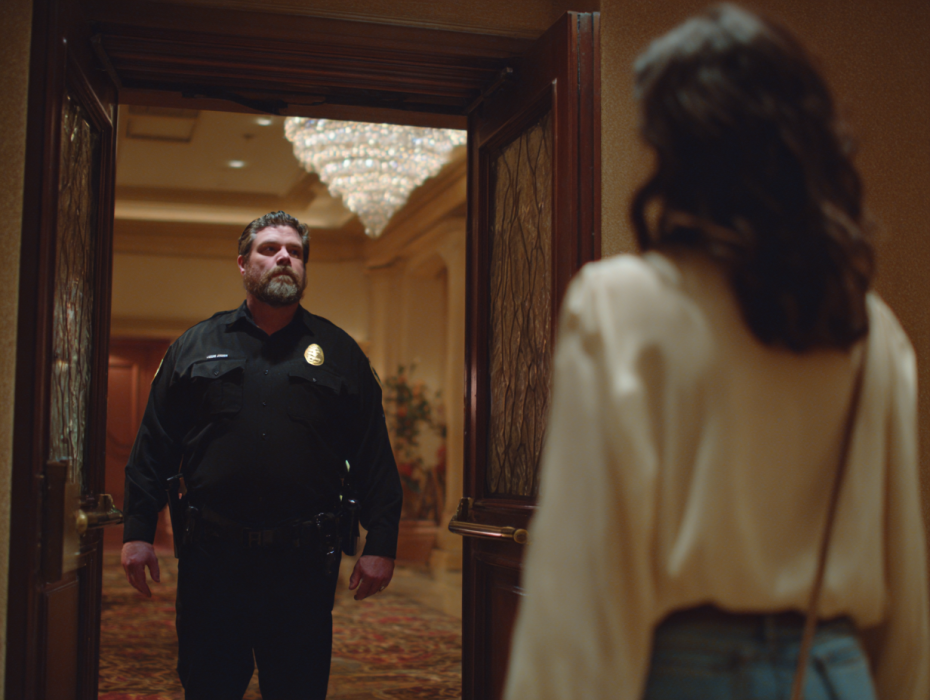
As she moved, she noticed people watching her. A security guard stood too neatly near her path. Mr. Patel stayed close, hovering like a shadow. Mara understood she was no longer just a guest. She was a problem they wanted to keep quiet.
Near the demo table, Mara spoke to an engineer she recognized from the early team. She kept her questions casual. “Did the core system change much?” she asked. His answers confirmed what she already felt in her gut. The core architecture was still hers. They had renamed it, but they had not rebuilt it.

Mara stepped aside and messaged her lawyer, Dana. She explained the new threat clearly: this was not an outside investor stealing ideas now. This was internal pressure using legal words to rewrite history. Dana replied fast: “You need one written admission tied to the merger documents verifying they’re stealing your work.”
Mara understood the difference. She had proof that she built Lattice. She had logs, drafts, and old files. What she needed now was proof they knew it and erased her anyway. She needed intent, apart from just a timeline.

She positioned herself near the acquirer’s deputy counsel and listened. She heard the same phrases repeated—“assignments,” “representations,” “licensing rights.” Everyone sounded rehearsed, like they had practiced answers for a risk they hoped would never show up in the room.
Mara returned to Sloane and asked for a copy of the acknowledgment “to review everything properly.” Sloane hesitated, then agreed and emailed it, confident that Mara would be a problem easily solved. The email arrived with a subject line that made Mara’s jaw tighten: Founder Support Acknowledgment.

Mara read it more closely. One clause referenced “core computational methods authored internally.” She forwarded the email to Dana and asked whether it would do. Dana replied: “The best link would be a company officer admitting they reused Mara’s modules after she left.”
Mara walked back toward the engineering group and tried a small test. She mentioned one old internal codename out loud, like she was being nostalgic. One engineer flinched so fast it was almost invisible. Mara watched him step away, then return ten minutes later, tense and pale.

He spoke quietly. “What do you want?” he asked. Mara kept her voice low and steady. “I want the truth on record,” she said. “I want my just share. Surely you know the work I’ve put in? I’m not here to ruin employees who followed orders.”
The engineer swallowed, weighing his choices. “Leadership told us to port your codebase,” he admitted. “They said you walked away from everything, willingly.” Mara did not interrupt. She let him finish, because people told more when they did not feel attacked.

“Can you put that in an email?” Mara asked. “Just the facts. What happened, who directed it? I need it for my lawyer so this ends clean.” He hesitated, fear tightening his shoulders. Then he nodded once. “I’ll send something. But I must remain anonymous if it goes to trial,” he said. Mara said, “You have my word.”
While Mara waited, Mr. Patel returned with a cooler smile and a firmer deadline. “We need your signature before the toast, Miss Wittman,” he said. “If you refuse, we’ll need to respond formally.” He let the word litigation hang in the air like a warning.

Mara smiled politely and asked for water, buying time. She watched Ethan onstage, ready for his toast with a relaxed grin. He looked proud. He looked unaware that his own foundation was shifting under him.
Her phone buzzed again. The engineer’s email arrived. It included the sentence Dana needed: leadership ordered reuse of Mara’s modules after she left. It also mentioned a term sheet clause calling it “the Mara framework,” as if her authorship was known and mocked inside the company.

Mara forwarded the email to Dana and asked for immediate action. Dana replied that she could file notices and send a cease-and-desist to the acquirer before signatures landed. Legally speaking, it seemed that Mara’s odds of winning were pretty good.
Then Dana added something else: “If you can, speak up tonight, show your control over it. If you can prove the core features depend on your validation, the room will stop debating and start calculating. It may not even have to go to court.”

Mara looked at the demo unit across the room. She remembered the validation gate she built long ago, designed to protect the system from outside theft. She never thought she would need it against her own brother, but the logic stayed the same: the product did not run properly without the right authorization.
Mara opened the secure panel on her phone and prepared one action. She would disable a core feature briefly, then restore it. She wasn’t sure they hadn’t reset it, but she trusted her gut feeling. Her hand stayed steady because she had imagined this moment more times than she wanted to admit.

Ethan began his toast, and the room hushed. He looked happy, like the hero again. Sloane watched the crowd carefully, tracking who mattered. Ethan invited the acquirer’s CEO to join him for the ceremonial demo, and cameras rose like a row of eyes.
Mara stepped forward just enough to be seen. “Before you run that,” she said, loudly but calm and clear, “I need to make a statement for the record.” The room shifted—seemingly annoyed and hushing for silence at first, and then curious.

Ethan let out a small laugh. “Kiddo,” he said into the microphone, trying to soften it into a joke. Mara did not react. She kept her eyes on the device like a technician watching a warning light.
“I owned the underlying IP,” Mara said, “and I controlled the licensing keys for the core system.” The room quieted in a new way. People stopped smiling because they were thinking quickly about how the equations had changed.

Mara tapped her phone once. On the big screen, a central feature panel blinked and turned gray. A clean message appeared: Authorization required. The acquirer’s CEO froze mid-gesture. A few investors leaned forward, suddenly alert.
Mara waited one beat, then tapped again. The feature returned. The error vanished. The system looked whole again, as if nothing happened. Mara kept her voice practical. “I don’t want to sabotage the system, obviously,” she said. “But I can,” she ended after a pause.

Around the room, counsel and executives began moving in tight patterns. Conversations stopped and restarted in whispers. The business merger—so confident seconds ago—suddenly looked fragile. Mara stayed still and let the silence do its work.
Mara let the room sit in silence for one more second. Then she explained, in plain words, what everyone had just seen. “There’s a safety system in Lattice,” she said. “I built it. It uses my validation code. That’s why I can turn core features off and on. It proves I was the original builder.”

Ethan’s smile vanished. He looked from the demo unit to Mara’s phone like he could not connect the two. “That’s not possible,” he said, but his voice sounded thin. Mara did not argue. She watched him realize it in real time: the product he bragged about still answered to her.
The room broke into whispers. People leaned toward each other, legal teams already moving. Mara saw the difference immediately—some faces looked genuinely shocked, while others looked guilty, like they had feared this moment, and hoped it would never arrive. She understood who Sloane had quietly pulled into the rewrite.

The acquirer’s counsel stepped in fast. She touched the CEO’s sleeve and made a small hand gesture toward the signing table. It was not dramatic, but it was final. “Material risk,” she said, loud enough for the nearest people to hear. The signing stopped without anyone announcing it.
Sloane recovered first. She turned toward the crowd with a tight smile. “This is… all just a misunderstanding,” she said, as if Mara had shown up to cause a scene. “She’s been bitter for a long time.” She glanced at Ethan, trying to pull him back into the old story. But the live demo still glowed behind them, and the email proof sat in counsel’s hands.

Mara kept her voice steady. “I’m not asking for sympathy,” she said. “I’m stating facts.” She laid out her terms in simple language: public credit for authorship, restitution for what was taken, a fair licensing deal going forward, and guardrails in governance so her work could not be used to trap others later.
Mr. Patel tried to interrupt, but the acquirer’s team did not look at him the same way anymore. They looked at him like a risk. Mara did not need to raise her voice. The room had already heard the only thing that mattered: the product could not be trusted without her.

Ethan stared at Sloane now, not at Mara. Something shifted in his face as he finally understood how deep the erasure went. He had told himself he was “protecting the company,” and Sloane had encouraged that story, step by step, until it turned into stealing from his own sister.
Ethan stepped closer to Mara and lowered his voice. “Can we talk? Just us,” he said. Mara nodded. She did not want a fight in front of the cameras. She wanted the truth to land where it belonged.

They moved into a hallway away from the music. Ethan’s shoulders looked heavier there, like the stage lights had been holding him up. “I thought I was protecting Lattice,” he said. “After Crane, I thought—if we left loose ends, someone would take it.”
“You didn’t protect it,” Mara said, calm but firm. “You wanted full control.” She held his eyes. “You became the thing you once fought. Crane tried to steal our work from the outside. This time it was done from inside, with paperwork and smiles.”

Sloane appeared at the end of the hallway, voice soft and urgent. “Ethan, don’t let her manipulate you,” she said, stepping closer, touching his arm the way she always did when she wanted the room to follow her lead. She promised solutions, quick fixes, quiet deals.
Ethan looked at her hand on his sleeve, then at Mara’s face. He finally saw the pattern: praise when he obeyed, pressure when he hesitated, and Mara erased in every version of the story. He pulled his arm away. “Stop,” he said quietly. “Just… stop, Sloane.”

When they returned to the event, Ethan did not try to laugh it off again. He told the acquirer’s team the signing was paused. He asked counsel to review Mara’s documentation properly. Then he said something Mara had not expected to hear in public: “She built the core. We will need to fix the record.”
The party did not end with cheers. It ended with careful voices and small clusters of people leaving early. Mara collected her coat and walked out steadily. Outside, she looked back at the glass-lit rooftop and saw Ethan watching her through the window. He did not look triumphant.

He looked changed. And for the first time in years, Mara felt sure he saw her as a person, not a prop in his story. She just stood still long enough to let the moment register for both of them. Then she turned and walked away, carrying the certainty that she would never need to beg for her place again.