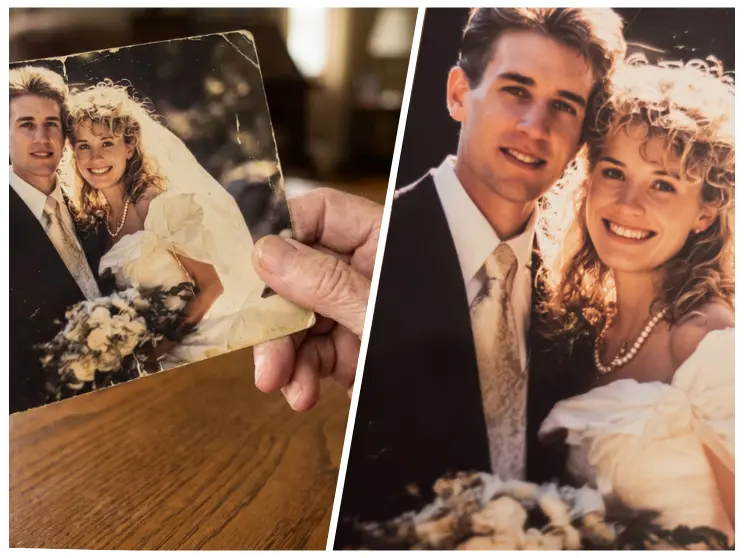
The envelope had no return address. Detective Marcus Dellray found it buried on his desk at the Asheville field office on a Tuesday morning in February. The handwriting—his name, his office, printed in careful block letters—belonged to someone who needed him to find it but could not afford to be found themselves.
Inside was a single photograph, printed cheaply on plain copy paper. A couple stood at a lakeside marina squinting into the afternoon sun, faded colors, that soft mid-2000s digital quality. Dellray’s hands went cold before his brain caught up. He recognized the faces before he read the date stamp of June 2006.
Ryan and Claire Calloway smiled up at him—alive, slightly older, tanned, unremarkable. Claire’s blond hair was shorter. Ryan was thicker through the jaw. Dellray sat down and knocked over his coffee. He had signed their presumptive-death paperwork himself!
32 years ago, he had stood at the edge of a waterfall. He had been just shy of 30, one of the youngest detectives in Transylvania County. The call came on a drizzly Wednesday. A honeymooning couple hadn’t returned from Hooker Falls near the state forest. Their rented Cherokee, luggage, and a few possessions were left behind.
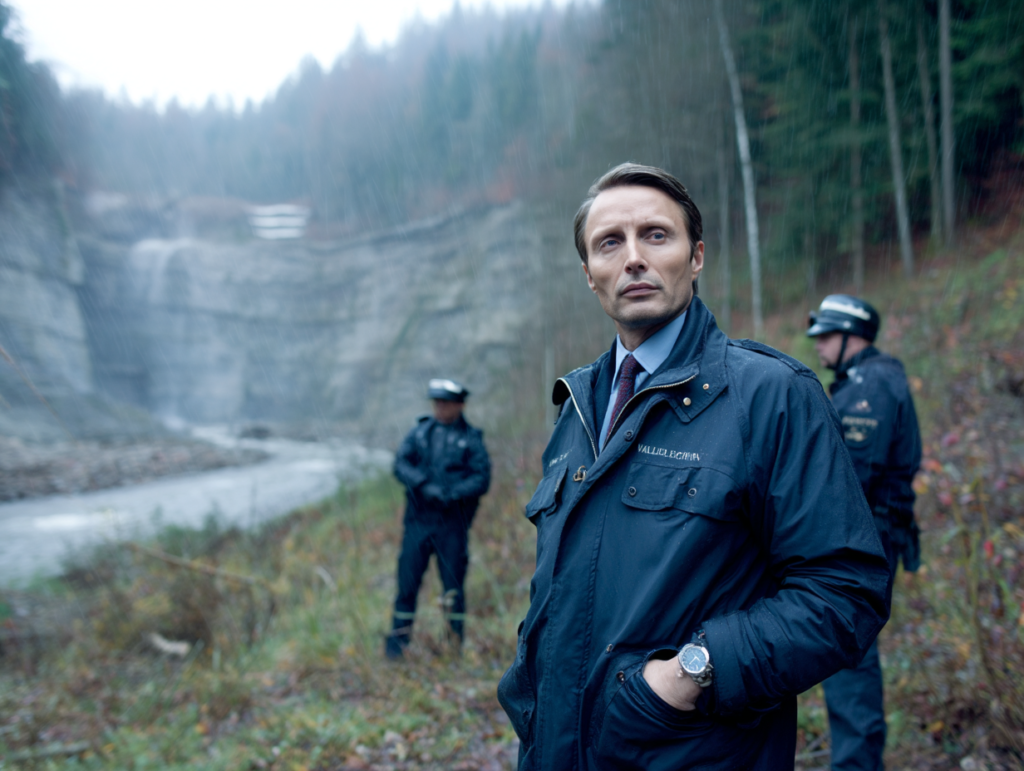
The falls were monstrous. Three days of mountain rain had pushed the Little River into something with real force and indifference. Dellray swept a flashlight beam across the churning pool below and felt the dread immediately—knowledge arriving before evidence that something irreversible had already happened.
Ryan Calloway, 29, was a software engineer at Charlotte’s Meridian Systems. Claire Hartwell-Calloway, 27, was a third-grade teacher near Raleigh. They had married three weeks ago in a large ceremony. Both families were solid, well-regarded, and there was no reason to suspect any foul play.
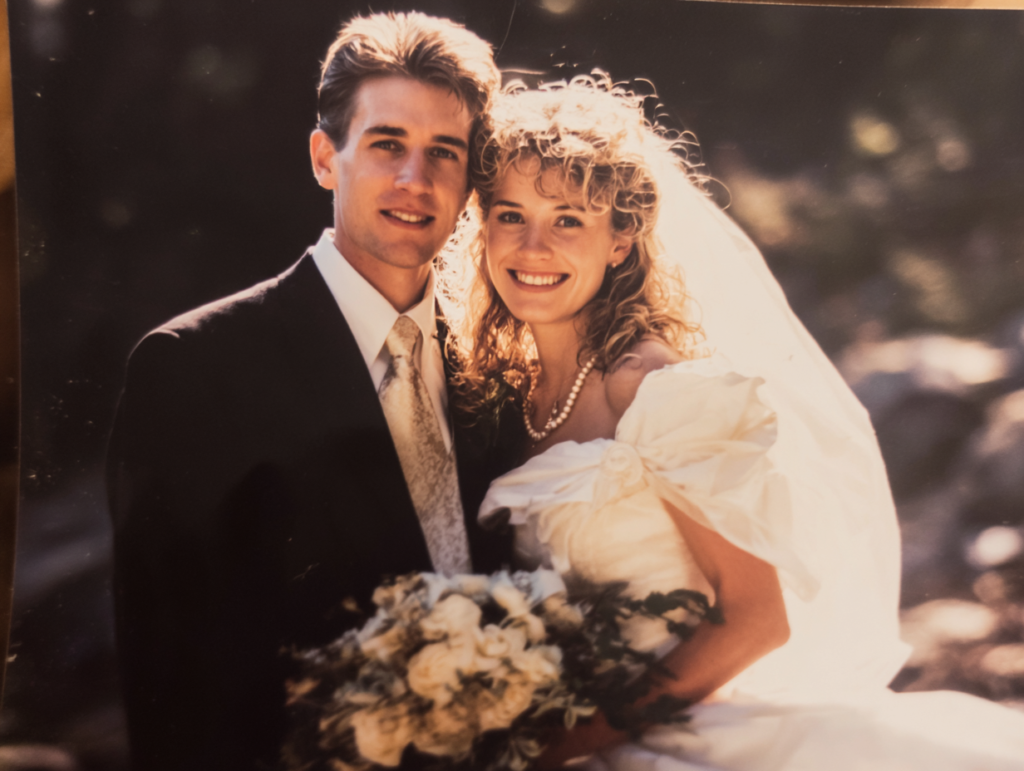
Search and rescue worked for nine days. Divers went into the plunge pool twice; current and visibility defeated them both times. Tracking dogs followed the scent to the water’s edge and stopped. Four miles of riverbank yielded no clothing, personal effects, or remains. The mountains kept whatever the river had taken.
The families waited: Ryan’s parents from Charlotte, and Claire’s from Raleigh. Dellray sat across from them and said he had found nothing new. Claire’s mother, Patricia Hartwell, watched his face with focused attention as though reading what was said versus what was meant.

The investigation was thorough. The rental Cherokee was examined and returned within forty-eight hours. Financial records showed no debts or unusual withdrawals. Meridian Systems responded to Ryan’s employment record within two days: excellent employee, recently resigned, no issues, deeply mourned.
A forensic expert examined footprints at the falls rim before rain erased them. Her report suggested two adult sets, consistent with voluntary walking, no drag marks or signs of struggle, and no third-party impressions. It was all that they expected to find, and yet, Detective Dellray wasn’t satisfied.
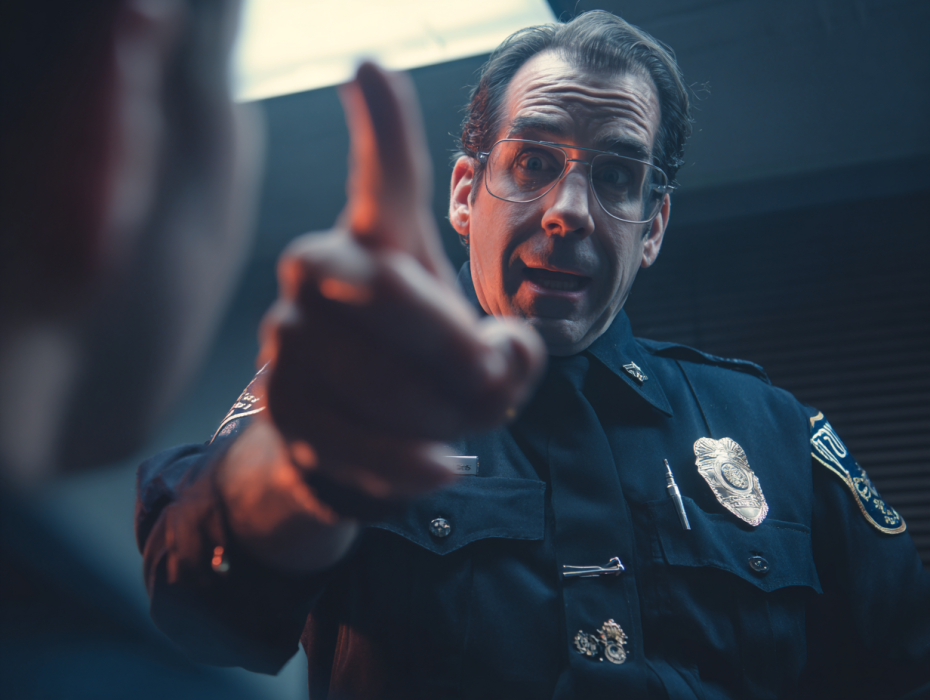
The case file ran to 58 pages. The senior detective called Dellray in. “There’s nothing more without new evidence, Marcus.” The ruling was accidental drowning, bodies unrecovered—not unusual for mountain terrains. Both families obtained death certificates. Two life insurance policies were paid out—Ryan’s to his parents, Claire’s to her parents—totaling $280,000.
Patricia Hartwell came to the office alone, sat straight-backed, and said in a level voice: “Claire called me during the honeymoon. She said the mountains were beautiful. She said she missed home.” Her eyes held Dellray’s. She said, “I can’t believe she’s gone—something tells me there’s more.”
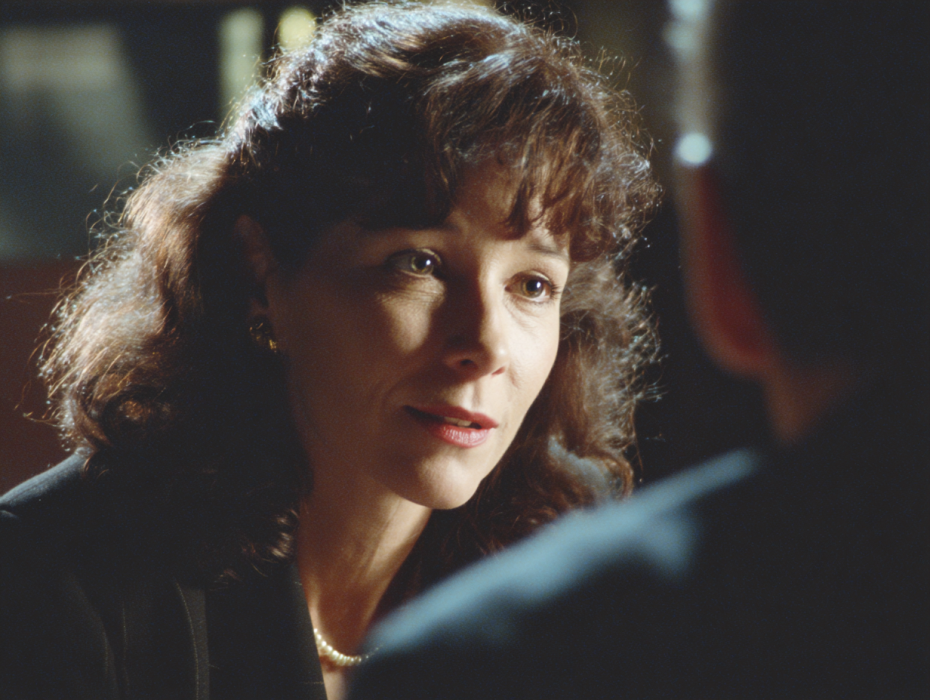
He had believed Patricia then. He still did. But he had believed the evidence more, which was what detectives were trained to do. The case closed. For 32 years, it had lived in him. It was one of his first serious cases, and it never left his system entirely.
Now this photograph, stamped June 2006, had arrived—twelve years after they went missing, but 20 years ago. Someone had printed this, addressed it in block letters, and mailed it to his specific desk. Someone wanted him looking. The question hammering in his chest wasn’t just who sent it. It was: Why had they sent it after so long?
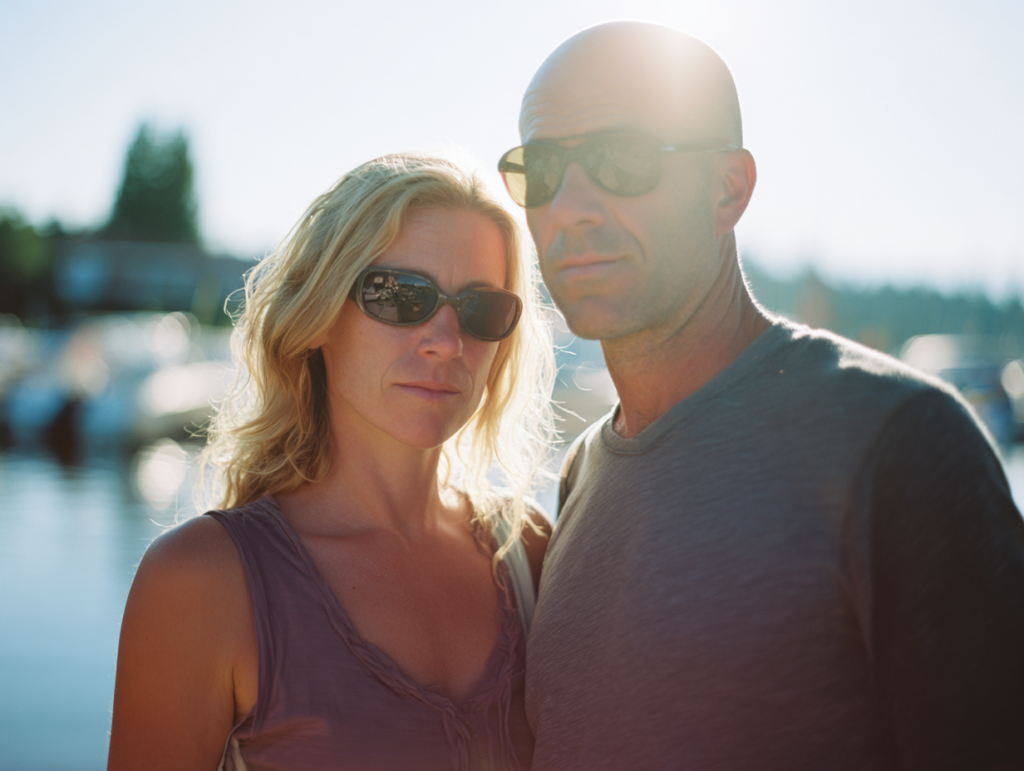
His first call was to the forensic lab: authenticate the photograph. Second call: pull the 1994 file from storage. The third call was to his supervisor, Special Agent in Charge Renata Voss, who listened without interrupting and then said precisely two words—”Quietly, Marcus”—before she hung up.
The lab came back in five days. The photo was genuine, consistent with early-2000s consumer inkjet printing, without digital manipulation. The marina background was tentatively identified as Lake Norman, north of Charlotte. Facial analysis confirmed both faces as consistent with Ryan and Claire Calloway, allowing for slight aging.

Rereading the 1994 file now, Dellray felt an uncomfortable professional admiration. Nothing was planted clumsily. Only genuine elements—footprints, swollen falls, and seasonal rain—were allowed to speak for themselves. Whoever designed it had understood a detective’s thoroughness and used that understanding for deception.
Insurance fraud was the obvious hypothesis. If the couple staged their deaths with family knowledge, there was federal mail fraud on top of state insurance charges—$280,000 in 1994 dollars, over $600,000 adjusted for today. Dellray wrote it at the top of his legal pad, though he didn’t entirely buy it.

Special Agent Dani Marsh, freshly transferred from the financial crimes unit, was assigned as his partner. She studied the photograph, turned it once toward the light, then set it down. She asked the questions running in his mind: “If the Calloways sent this, why anonymously? And if they didn’t—who did, and what do they want now?”
The insurance policies had been purchased over a year before the wedding, not in the weeks just prior. Calculated fraudsters bought coverage close to the act. Fourteen months suggested either extraordinary long-range planning or policies bought ordinarily, in the way most young newlyweds did. Still, Dellray decided to talk to the family again.
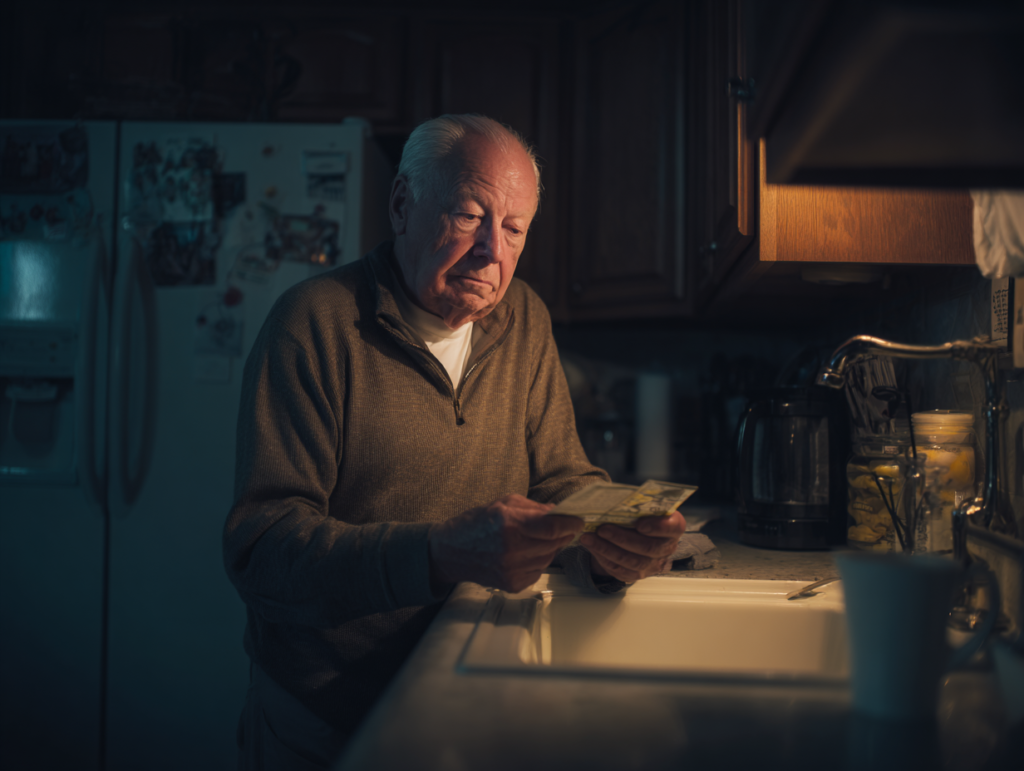
Ryan’s father, Douglas Calloway, was 78 and widowed. Ryan’s mother, Lorraine, had died of cancer in 2015. He met him in his kitchen. He was a careful man who had rebuilt his life methodically after his tremendous losses. When Dellray placed the photograph on the table, Douglas stared without speaking for a while.
“Lorraine always said he was alive,” Douglas said quietly. “Right up until she died. I told her she needed to let go.” He looked at the photograph. “She told me I was confusing letting go with giving up.” He looked up at Dellray. “She was right, wasn’t she?”
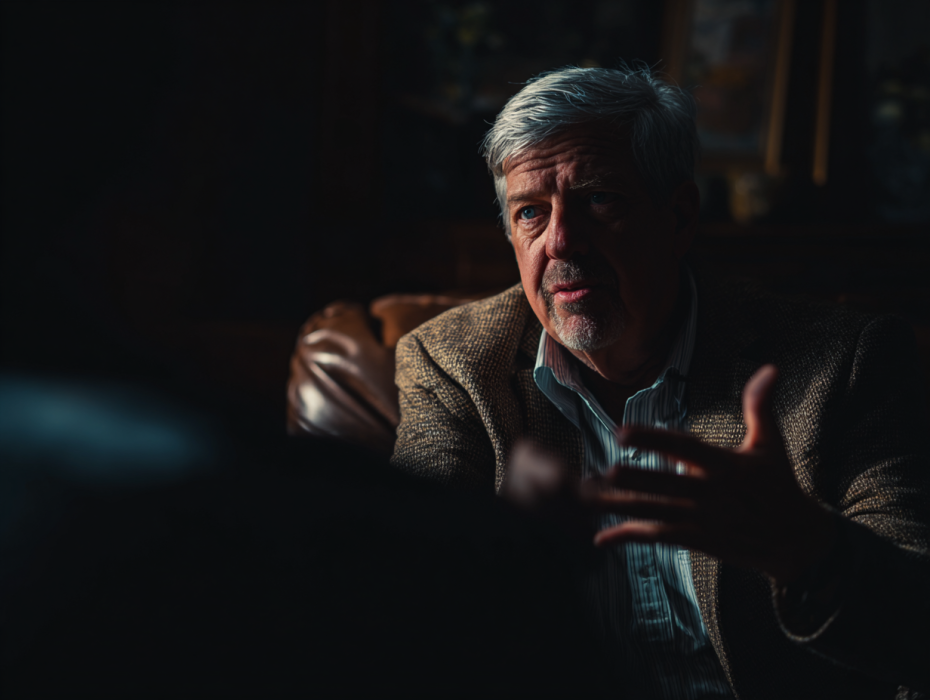
Ryan’s younger brother Scott, drove up from Columbia. He moved quickly from grief to sharp questions: “Was this a crime? Are they in danger? If Ryan was alive and didn’t call—even when Mom was dying—something was stopping him. Or someone was.” Dellray said nothing to correct him either way.
Claire’s father had died of a stroke in 2009. Patricia, 81, was in an assisted-living facility outside Raleigh—her mind still sharp, her loss still present. Claire’s sister Diane, a senior physician in Chapel Hill, met Dellray in the facility parking lot. When she saw the photograph, she turned away briefly, then looked determined.
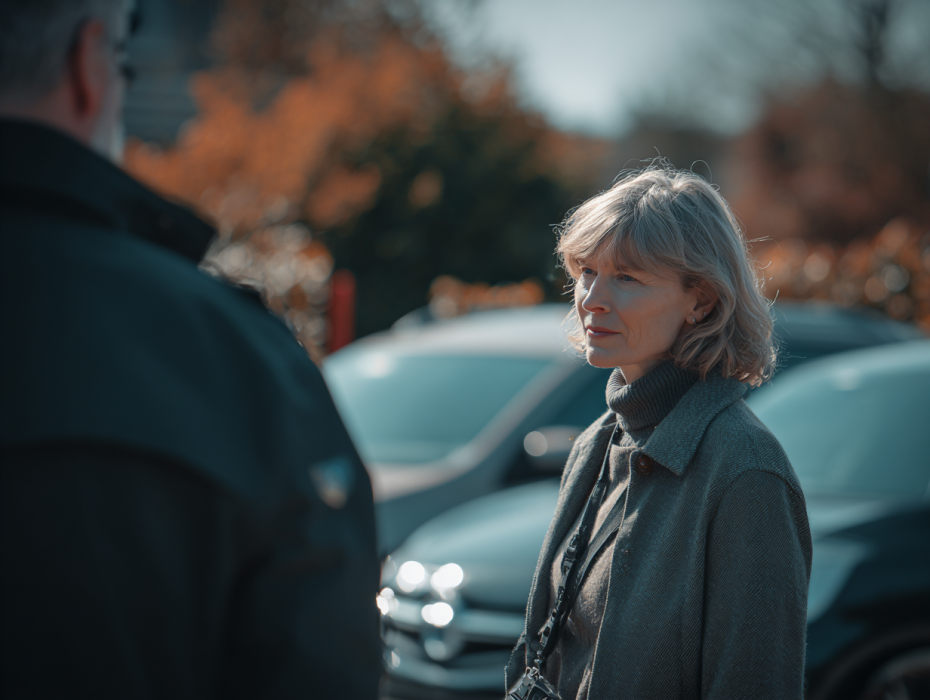
“Does Mom know?” Diane asked. Dellray said not yet. Diane nodded once. “When you tell her—and you will need to—please, not that it was a choice. Let me be there. Let me be the one to frame it for her.” Dellray said he understood. He meant it.
Three days of careful family interviews produced the same essential finding in both households: genuine, verifiable ignorance. The grief had been real. The insurance money had gone to medical bills, tuitions, lean years. No unexplained deposits or hidden accounts suggested decades of complicit silence. The fraud hypothesis was collapsing.

Sitting in the car outside the Raleigh facility, Dellray said to Marsh, “They didn’t do this for money.” She said: “Then what for?” He said: “I don’t know yet. But someone does. Someone sent me that photograph for a reason. Something changed from when they disappeared.”
Meridian Systems, where Ryan last worked, no longer existed. A 1999 merger had folded it into a larger Atlanta tech group, which had eventually become Axiom Tech Partners, stock exchange-listed, with offices across the country. Tracing that corporate lineage took four days, two official requests, and a favor from an analyst in Washington.

Ryan’s employment records from Axiom’s archived files were cooperative and useless: standard HR, good performance reviews, resignation recorded as voluntary in August 1994, citing personal reasons. Dellray stared at the date: August—-only two months before the honeymoon and wedding. He knew he had to find out more.
Marsh found a breakthrough in a retired Meridian accounts employee named Gary Whitfield, who had known Ryan. Over coffee at a diner, Gary, a quiet man with the watchfulness of someone who had sat on something for decades, said, “Ryan didn’t resign voluntarily. He was made to resign. He had found something.”

Ryan found fraud inside Meridian’s billing infrastructure: the company was overbilling its enterprise healthcare and financial clients, inflating billable hours. This was happening across contracts worth $18–24 million annually. Ryan had discovered it while doing a routine data migration. He made the mistake of reporting it internally.
The report went up the chain to Warren Aldridge, Meridian’s founder, forty-six in 1994, a former IBM salesman turned entrepreneur, charming, meticulous, and beneath that, ruthless. “Aldridge called in Ryan,” Whitfield said. “I don’t know what happened exactly. But Ryan resigned soon. A month later, he married. And days after that, he was dead.”

“Except he wasn’t,” Dellray said. Whitfield nodded slowly. “Ryan came to me in September ’94, before the wedding. He was scared. He said Aldridge had told him that if he went to anyone with what he knew, the consequences wouldn’t fall on Ryan. They’d fall on everyone around him. He’d been shown those weren’t empty words.”
Whitfield looked at his coffee. “Aldridge named his parents. Claire’s family. Ryan was visibly scared and upset.” He paused. “I told him to be careful. Not to do anything impulsive.” His voice was flat. “When he got married, went on his honeymoon, and drowned, I should’ve voiced my fears, but I was a coward.”

He said that last part without excusing himself. On the drive back to Asheville, Marsh pulled everything on Warren Aldridge: the 1999 merger had gotten him $40 million. He lived in a private lakefront compound outside Charlotte. In a 2018 commencement address, he spoke at length about integrity as the foundation of lasting enterprise.
Through this new lens, the disappearance looked entirely different. The honeymoon location, the remote national forest falls, and the early rainy season: all conditions that made drowning plausible. Someone had helped choose the site. Someone experienced in making things look exactly as terrible as nature sometimes made them.

The laptop was another thing nagging Dellray. Ryan’s work laptop had been in the B&B cabin with their other possessions. It was preliminarily examined and returned to Meridian Systems—logged in Dellray’s own 1994 case file. The routine company property recovery had probably worked to Aldridge’s advantage.
The financial forensics analyst who had helped them trace Meridian Systems’ progression also traced regular wire transfers from a Delaware shell LLC, through two intermediate accounts in Georgia and Tennessee, arriving monthly in amounts of $1,500 at a Knoxville credit union. The sender remained anonymous.

The payments had begun in late 1994—only months after the disappearance—and continued with remarkable regularity until 2021, when they stopped cold. Twenty-seven years of support. Someone had funded the Calloways’ survival under a new identity. And five years ago, without explanation or warning, that funding had ended. Why?
Marsh said it before he did, “When the payments stopped, something shifted. They couldn’t go to the police without exposing the fraud and the false identities. They couldn’t contact family without putting them in danger. But they could mail a photograph to the detective whose name was on the 1994 case closure, hoping he’d look.”

Dellray thought about Patricia Hartwell, her mind sharp and her daughter officially 32 years dead. He thought about Lorraine Calloway—right about her son every single day and dead without ever knowing it. Whatever the legal dimensions of what the Calloways had done, the human cost had been huge.
He laid it all out for his boss, Voss, from the photograph to Whitfield’s testimony. She listened with the stillness of one calculating the exposure, then said, “Aldridge has money and lawyers, Marcus. Lay every brick carefully.” She paused. “And find the couple before he gets them. If they’re your witnesses, they need to be safe first.”

The Knoxville credit union account gave them a geographic anchor. The address on file placed the couple in West Knoxville. Stroud found two more traces in the same area—a utilities connection and a lease—both from the 2010s, both in matching false names. The question now was—Were they still there in 2026?
Marsh worked the photograph’s geography. The Lake Norman marina identification was confirmed. Shadow angles and foliage color narrowed the shot to late May or June, consistent with the June 2006 stamp. An old retired dock photographer, who had kept 30 years of printed albums, remembered a couple he knew as Aaron and Kate.

Aaron and Kate Mercer. He was a freelance IT consultant and she, a part-time reading tutor. Neighbors near them in Knoxville remembered them as quiet and private. No children. Evening walks. He had a slight limp. She kept a vegetable garden. They had moved away around 2021, exactly when the payments stopped. Nobody knew where.
Stroud found the thread in a Tennessee property database: a small A-frame cabin near Gatlinburg, registered in 2021 under A. C. Mercer, matching Ryan’s age. Gatlinburg was mountain country, forested, reasonably remote, and invisible among tourist traffic. Dellray looked at the map and felt the case narrowing to a point.

He didn’t move immediately. He waited while he and Marsh built the evidentiary picture of the Meridian fraud. Gary Whitfield helped reconstruct the fraud’s trail. Their analyst aid in Washington said, “Give me the primary-source documents. This is federal, Marcus. I can move it.” Dellray said, “Give me one week.”
He was not the only one looking. This was what Dellray had felt since the envelope arrived—an unspoken, shaping pressure behind every decision. The photograph had not been sent in fear. It was not a puzzle to be solved. It was a distress signal from people who believed they were running out of time.

Dellray knew Warren Aldridge was seventy-eight. The fraud was buried 32 years deep, its participants dead or scattered, and his public legacy immaculate. He had paid the Calloways for nearly 30 years to keep it that way. Then he had decided to stop. Dellray turned that decision over and examined it from every angle. Why now?
Marsh laid out three possibilities. Aldridge might believe the threat had faded—aging witnesses, old evidence, expired statutes. His health or finances might have changed. Or, and she said this with particular care, he had decided that ceasing the payment was not the ending he required. And the Calloways had realized that.

Dellray called in a Knoxville surveillance team, quietly, with Voss’s authorization to monitor the Gatlinburg address and report any unusual vehicles or external interest. They were not to contact the occupants yet. The team reported that the cabin was occupied. An unfamiliar vehicle was observed in the vicinity for at least four days.
A dark gray Silverado with Georgia plates, seen at two different pull-offs, both with clean sightlines to the Mercer cabin. The driver sat low, rarely emerged, and had been identified only because the team was looking closely. The team lead said. “This isn’t a curious neighbor, but someone who is watching closely.” Dellray felt the funnel close.

He made the call to move. He couldn’t wait for a perfect case; if someone else reached the Calloways first, there would be no case. He took Marsh and two Knoxville agents, a federal warrant covering the false-identity and fraud conspiracy charges, and drove to the mountain cabin at four in the morning.
The cabin was small and orderly: bookshelves on every wall, a woodstove, a back porch facing a hemlock ridge. The man who answered at five in the morning was sixty-one, lean, gray at the temples, and wore watchful eyes as if having spent decades waiting. He studied Dellray’s badge, then stepped back and let them in.

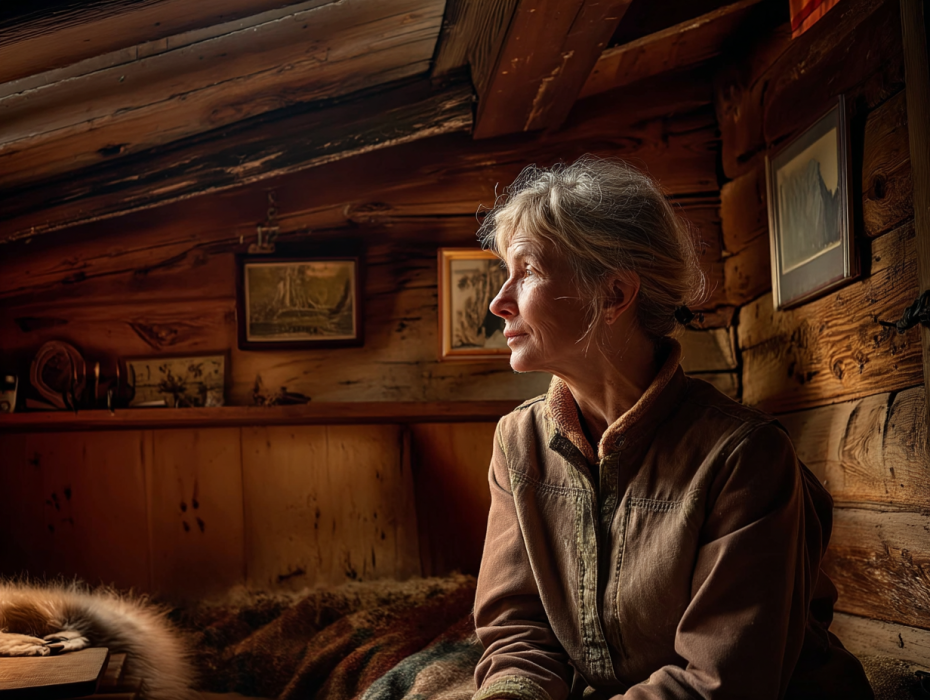
Claire appeared from the back hallway and froze. The silence that followed had a texture Dellray had felt only a few times in his career: the weight of something long-anticipated finally arriving. She looked at her husband. He nodded once. She came and sat at the kitchen table. The Calloways had finally been found, after 32 years!
Ryan said, “I sent you the photograph. From a FedEx in Knoxville, when I could still move safely. I found your name in the directory—still in Asheville. I figured you were either the right person or the only person.” Dellray asked: “The right person for what?” Ryan said, “To move in on Aldridge. I have all the proof you need.”
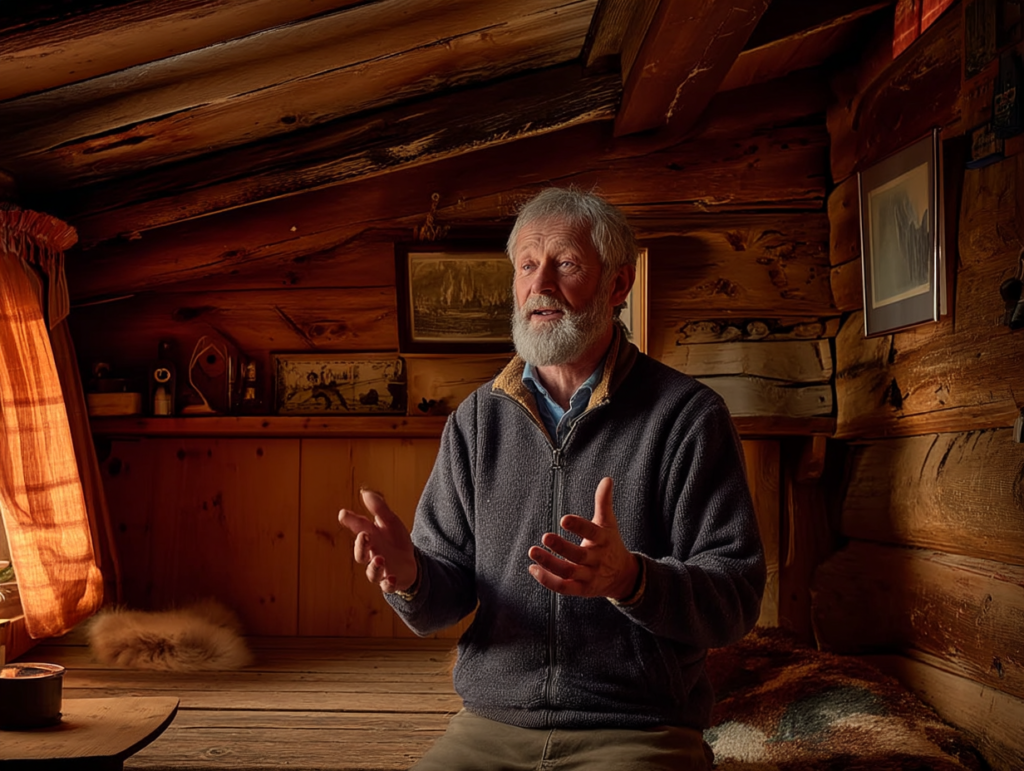
The records were in a waterproof metal case behind a panel in the crawl space: photocopied billing records from 1994, a handwritten fraud reconstruction, a pendrive with scanned documents gathered through an anonymous Axiom insider over the following decade, and a long, signed affidavit describing the fraud in full.
Claire spoke carefully, “I chose this. I need that on record. Ryan told me everything before the wedding—what he’d found, what Aldridge said, what the alternative was. I chose to go with him.” She looked directly at Dellray. “I haven’t spoken to my mother since 1994, but have thought about her every single day.”
Marsh cut in from the window, “Marcus.” Dellray looked up. She said, “The gray truck is at the bottom of the access road.” Dellray told the two Knoxville agents to stay, door closed to everyone, and took Marsh out the back. Through the tree line, he could see the Silverado closer now, engine off, someone inside watching the cabin door.
Dellray took the passenger side; Marsh covered the driver’s window. The moment the man registered them coming, he reached for the door pocket. Marsh had her badge and hand at her hip before he got there. He stopped. He’d been reaching for a cell phone, not a weapon. He sat perfectly still, recalculating, and said nothing as they arrested him.
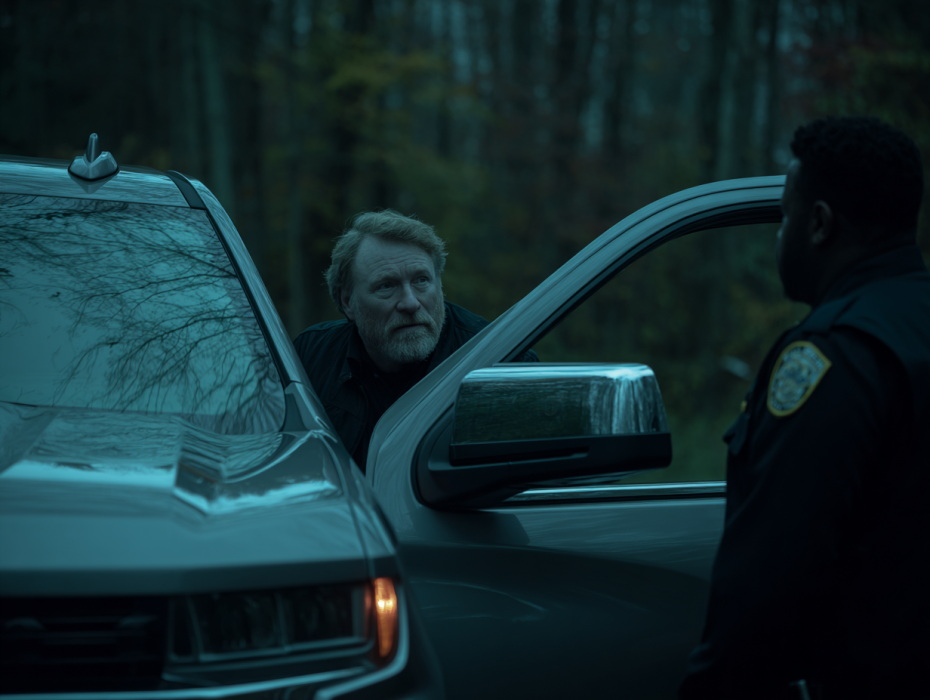
The man was Dale Pruitt, was fifty-four, a former private security contractor for three corporate risk firms. He was named in two civil complaints for intimidation, both settled before trial. He had no criminal record. He had the clean, neutral appearance of a man whose profession required him to be unremembered.
His phone yielded nine calls to a Charlotte-area number over the preceding two weeks. That number was traced to a prepaid burner—normally a dead end. But one call had been placed through a tower serving the gated community outside Charlotte, where Warren Aldridge lived. “A beginning,” Dellray told Voss.

In the glove compartment of his car was a manila folder: Satellite printouts of the cabin with annotated entry points and sight lines, a recently taken photo of Ryan on a Gatlinburg street, and a typed note read, “Confirm identification and proceed as previously discussed. Terms as agreed.” Dellray read it thrice, then photographed and bagged it.
Dellray placed the bagged note on the kitchen table between Ryan and Claire. He watched Ryan read it. He watched the color leave the man’s face. Dellray said, “Tell me about when the payments stopped.” Ryan was quiet for a moment. He said, “Three months before they stopped, I got a letter. It said the arrangement was concluded.”

“Concluded. Not terminated. Not discontinued. Concluded—as in fully resolved, closed out, finished.” He looked at the note. “For almost 30 years, the monthly payment was the contract—my silence, his protection money. When the letter said concluded, I realized he wasn’t ending the payment. He was ending the need for it.”
The full shape of it settled into clarity: Warren Aldridge had made a final calculation. The evidence Ryan held could destroy the legacy, foundation, and family name. Ryan, aging and legally trapped, unable to approach law enforcement without destroying himself, was precisely the kind of loose thread that he could now, finally, simply cut.
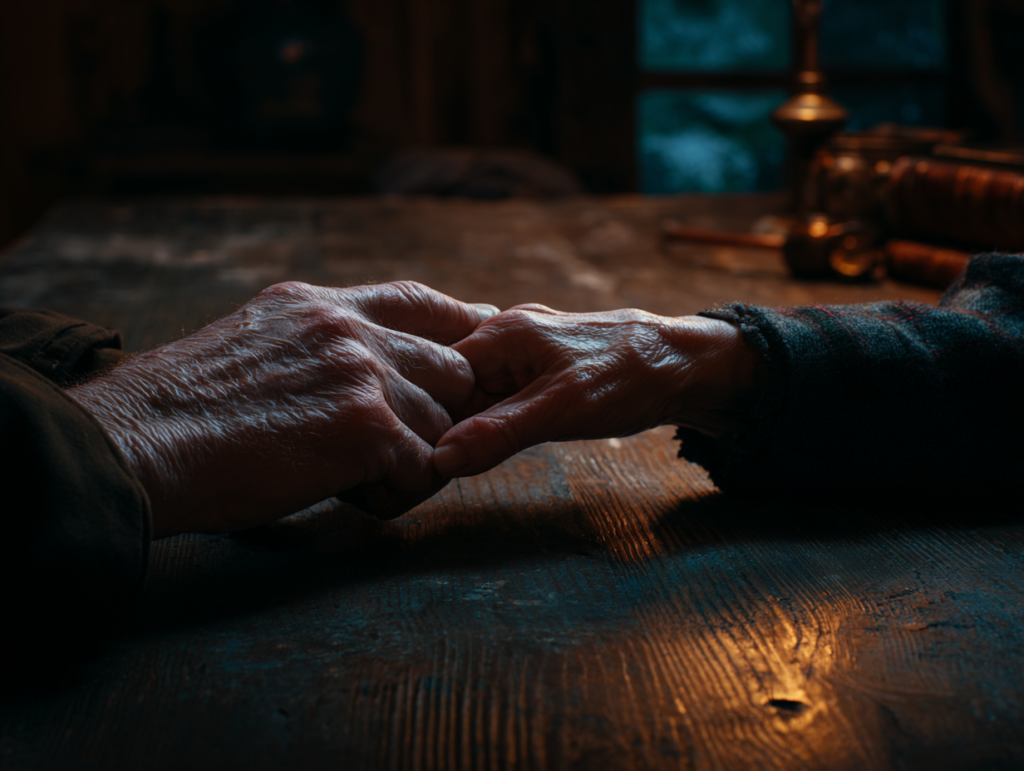
Ryan looked at the evidence bag. “I found Pruitt watching the cabin ten days ago. I knew then—the photograph had either reached you, or it hadn’t, but either way I was out of time.” He placed both hands flat on the table. Claire covered his hands with hers.
The Calloways moved to a federal safe house in Knoxville that morning—two agents on rotation, location undisclosed, registry under a case number. Dellray drove back to Asheville in the mountain dawn with the evidence case on the passenger seat. He thought about the 58 pages he had assembled in 1994.

The case now ran on multiple tracks simultaneously: Pruitt in custody, refusing to speak; the evidence case being certified; the corporate fraud being built by a federal prosecutor who had now reviewed the pendrive; the Calloways’ own legal exposure being mapped with a federal public defender.
The cell tower data linked Aldridge’s compound to the burner but stopped short of a federal arrest warrant. They needed one final thread. Marsh found it in the typed note. The financial forensics analyst traced a $65,000 payment from a private trust tied to Aldridge’s foundation to an account eventually traced to Pruitt.
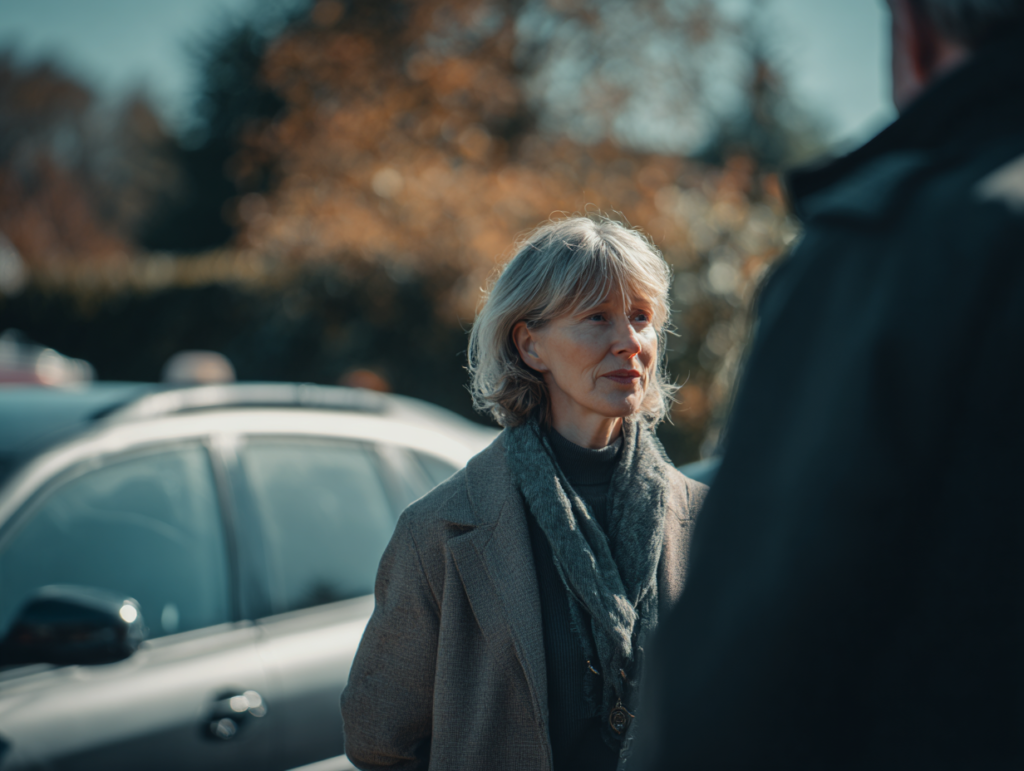
The warrant arrived soon. Dellray scheduled the execution for Monday, giving time to secure the Calloways and ensure the attorney had all the supporting documents in order. He drove to Raleigh first. Diane was in the facility parking lot. He told her quietly, “Claire was alive and safe, and she would be able to reach out soon.”
He did not tell Patricia that day. The older woman sat in the sunroom with tea and a paperback, her mind present, held in a peace that had taken 32 years to construct. Dellray stood a moment in the hallway and finally decided Claire should be the one talking to her.
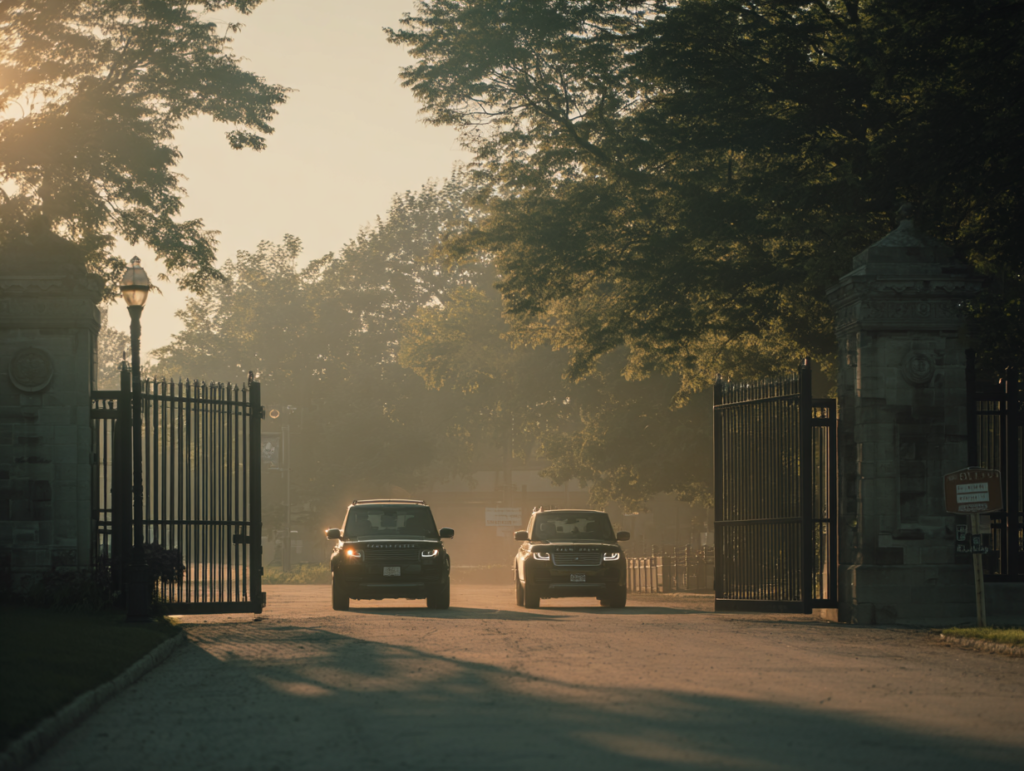
They arrested Warren Aldridge on Monday morning. Dellray led the team personally. Four federal agents and two Charlotte PD officers of the local jurisdiction in two unmarked vehicles arrived through the gate of the lakefront compound on the bright, cold morning.
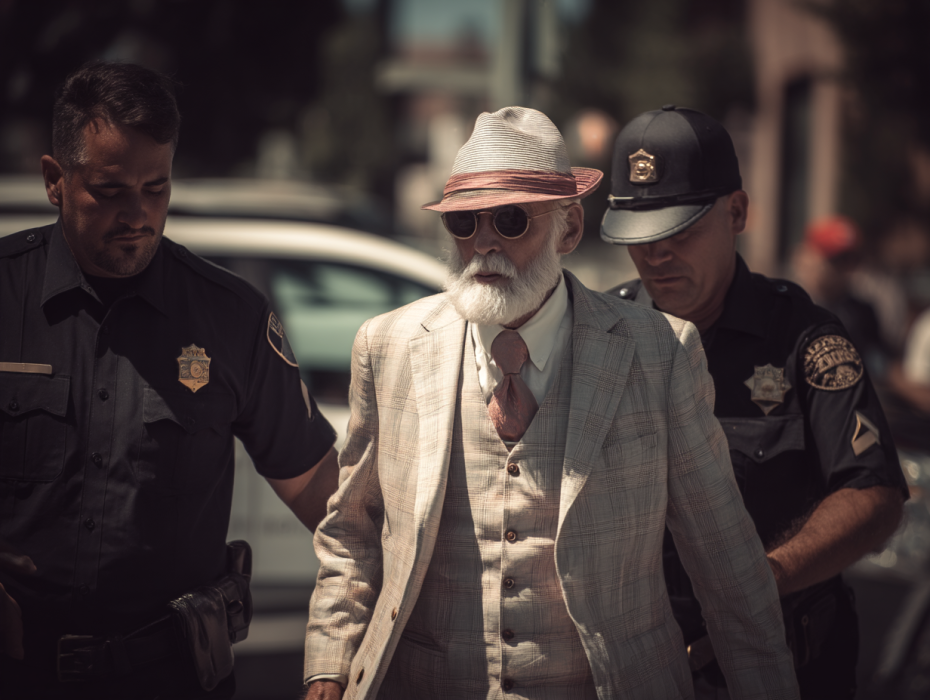
Aldridge was on his back deck with coffee and the Wall Street Journal, tall, silver-haired, in pressed slacks and fleece vest. He had the unhurried bearing of a man accustomed to being the most powerful person in any space he chose. He saw the vehicles and rose from his chair slowly. He looked at Dellray once, but said nothing.

He allowed himself to be led with the composed, almost contemptuous silence of a wealthy man whose attorneys were already on the phone. His daughter appeared at the glass door in a bathrobe, phone to her ear, face white. A grandchild, perhaps eight, appeared behind her, staring at her grandfather in the driveway.
Everyone knew the legal proceedings would take years, even if the fraud case was substantive enough. With the Calloway records, Whitfield’s testimony, and corroboration from archived client billing audits, the federal prosecutor was confident the case would survive the preliminary hearing and go to trial.
The Calloways’ own legal exposure remained—two counts of fraud-related deception, one of insurance conspiracy. Their attorneys argued duress and extraordinary cooperation as the key facts for sentencing consideration. The prosecutor indicated a shorter sentence was possible given all the circumstances.
Claire first called her mother from the Knoxville safehouse. Diane had arranged it—sitting beside Patricia in the sunroom, holding her hand. That evening, Diane sent him a text: “Mum knew her voice before Claire said her name. They talked for an hour. Mom cried the whole time but wouldn’t stop talking.”

Dellray read the message twice and thought about Lorraine Calloway, who had been right about her son every day for 32 years and had gone to her grave without a single person confirming it. He sat with that for a long time. There was no legal remedy for that.
Later, Ryan met his father for the first time in 32 years. Douglas Calloway told Dellray about it later, in a brief phone call, his voice stripped down to the bone: “He walked through the door, and I couldn’t speak. I just held on to him. Still can’t believe it.”

A few days after that, Dellray stayed late at his desk and thought again of the original 1994 case file—cardboard cover worn soft, 58 pages, his own handwriting on the tabs. He opened the current case jacket running to 312 pages and growing. He uncapped his pen and smiled at the irony of a business unfinished even after 32 years!