
Jack was halfway across the park before he realized he was running. Eli wasn’t on the field. Not by the goalposts, not near the benches, not with the other boys shrugging uselessly when Jack asked where he’d gone. The cold under his ribs came back all at once.
He found him at the far end of the east path, sitting alone on a bench near the boundary gate, shoulders shaking. Jack slowed only when he saw Eli’s face. Red-eyed. Pale. Wrong. Then his son looked up at him and said, in a voice barely above a whisper: “Dad… I saw Mum.”
Jack turned before he meant to. Across the street, a woman stood in the doorway of a small blue house with one hand resting on the frame, watching them. He stopped moving. Stopped breathing. Because the woman standing there was his missing wife.
Jack Callahan had built his life twice. The first time, he built it with Sarah. The second time, he built it without her. With Sarah, everything had felt bigger. Louder. Full of plans and momentum and the reckless confidence of two people young enough to believe they could build their way out of anything. In some ways, they had.

Sarah had always been the kind of person who couldn’t leave a bad idea alone. Years before their company existed, a low-quality hiking pack had split on a trail and sent her hard into a slope, leaving a long scar across her upper back. Jack still remembered cleaning gravel out of the wound while she sat on the bathroom counter swearing at the manufacturer.
“We could do this better,” she’d said. So they did. What started as frustration turned into an outdoor gear company built around one simple idea: if people trusted something with their lives in the wild, it should actually deserve that trust. By the time Eli was born, the business was stable. By the time he turned four, it was thriving.

By the time he turned five, Sarah was gone. She disappeared on a solo hike on a Tuesday in August. Search teams combed the mountains for days, then weeks. No body. No gear. No final trace of where she’d gone. At first, Jack lived inside the search. Then the waiting.
Then the long, shapeless years after, where he had no choice but to keep moving because Eli still needed breakfast, school uniforms, and someone to tell him the kind of lies children can survive. For two years, Jack stayed in the town where it had happened.
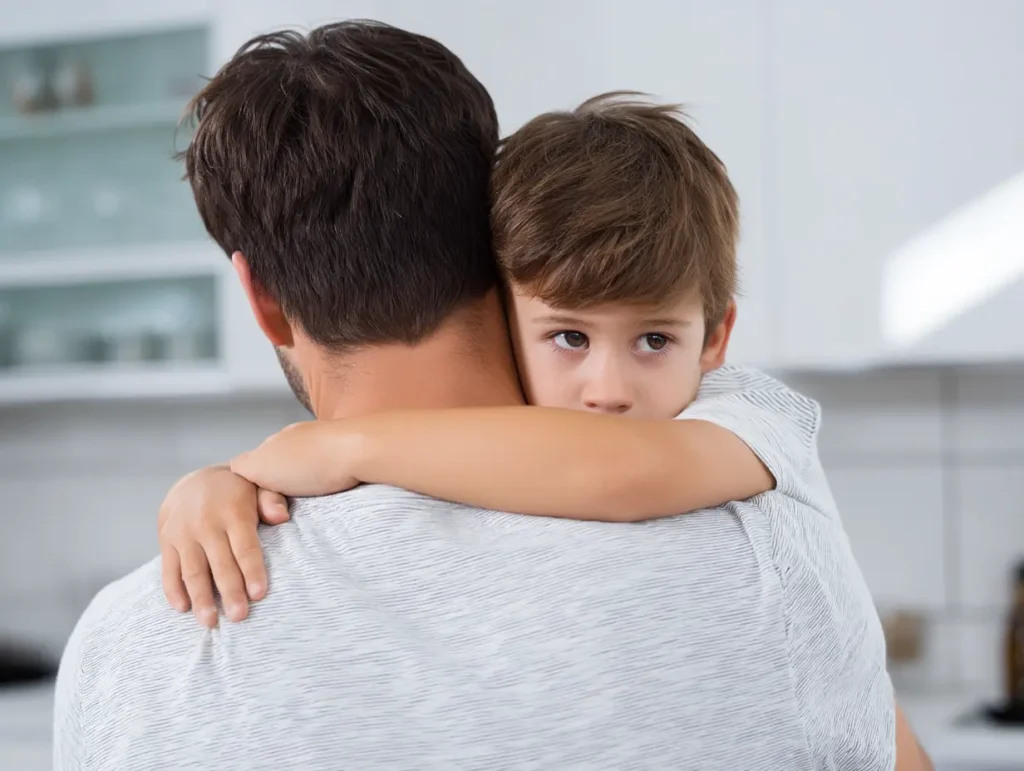
Then he sold the house and moved them three hours away to a quieter city where the roads didn’t feel haunted and the skyline didn’t remind him of what the mountains had taken. That had been six years ago. Long enough for life to become manageable again. Long enough for routines to settle in.
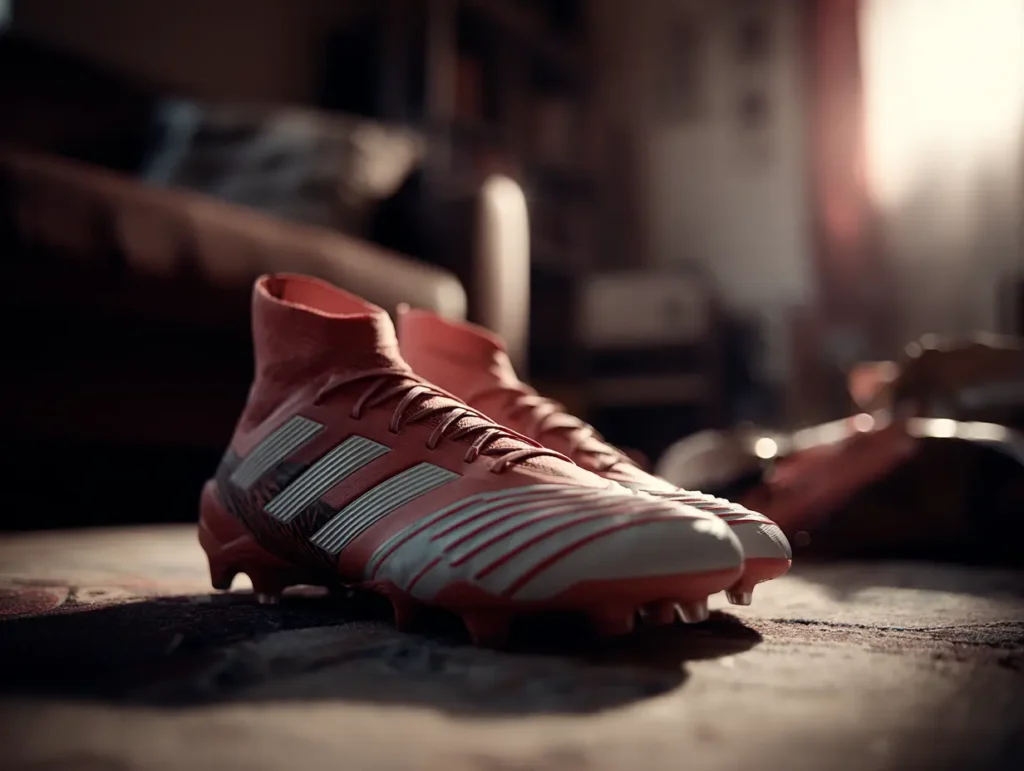
Long enough for Eli to become thirteen, all sharp elbows and sarcasm and football boots left in the wrong rooms. Long enough for Sarah to become, for him, a person made mostly from photographs. That part hurt in ways Jack never quite got used to. Eli remembered pieces. A smell, once. The sound of Sarah singing badly while making pasta.
A vague memory of being carried half-asleep from the car. But mostly, he knew her through what had been preserved — frames on walls, albums in drawers, the box of old company photos Jack had never managed to throw out. His mother existed for him in still images and secondhand stories. Jack tried not to think too hard about what that meant.
Saturday mornings had settled into a rhythm over the years. By seven-thirty, Jack was downstairs with coffee. A few minutes later, Eli appeared in football shorts and one sock, already looking mildly offended by the concept of being awake.Eli opened the fridge, stared into it for a moment, then sat down when Jack pushed a plate of toast toward him.

There was comfort in this. In the repetition. In the ordinary friction of shared life. After enough years of surviving, this counted as peace. Jack had a hardware errand to run. Eli had football with friends at the park. Not a formal match, just the usual weekend chaos involving one ball, improvised goalposts, and too much shouting.
The drive there took ten minutes. Eli spent most of it talking about football with the kind of intensity only thirteen-year-olds could manage. Jack listened. Or mostly listened. He dropped him at the edge of the grass just before nine. “Be back where I can find you,” Jack called after him. Eli turned, already walking backwards toward his friends. “Yup, see you later.”
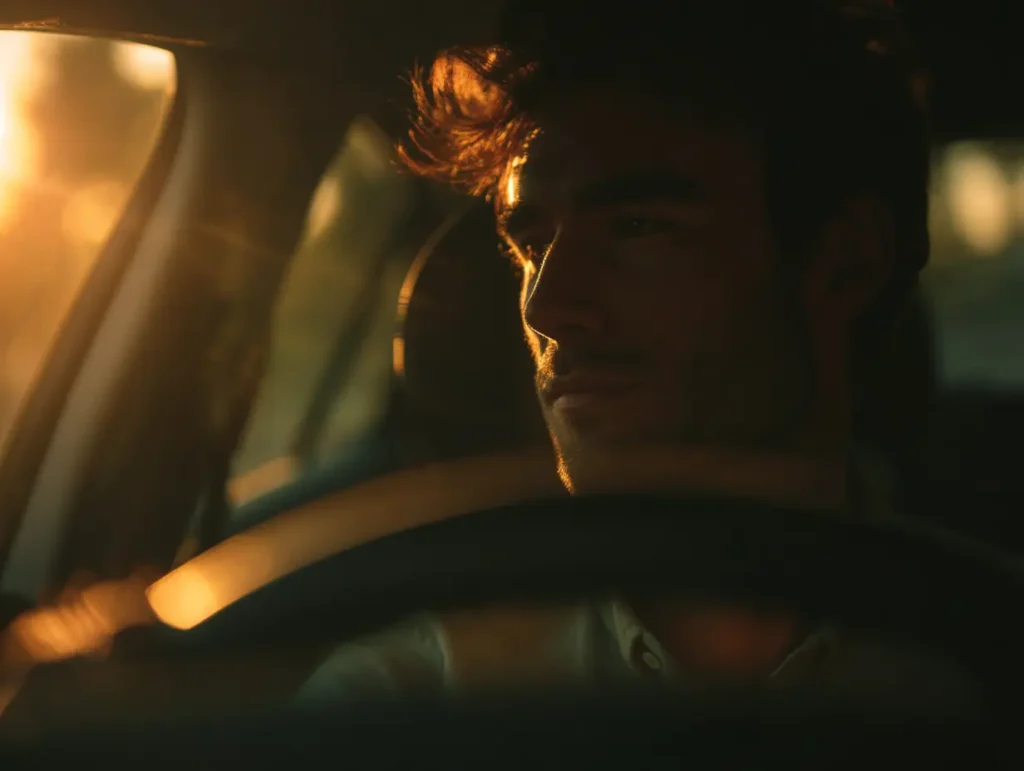
Jack watched him for a second longer than necessary. That had become part of fatherhood too — the constant quiet inventory. Where is he. Who is he with. How long has it been. He ran his errand, grabbed what he needed, and was back at the park by ten twenty-five. The first thing he noticed was that the game had broken up. The second was that Eli wasn’t on the field.
Jack got out of the car and scanned the grass. Four boys. No Eli. He started walking. Then faster. Then with the first cold turn of something old and immediate beginning to move under his ribs. He reached the boys near the goal. “Where’s Eli?”
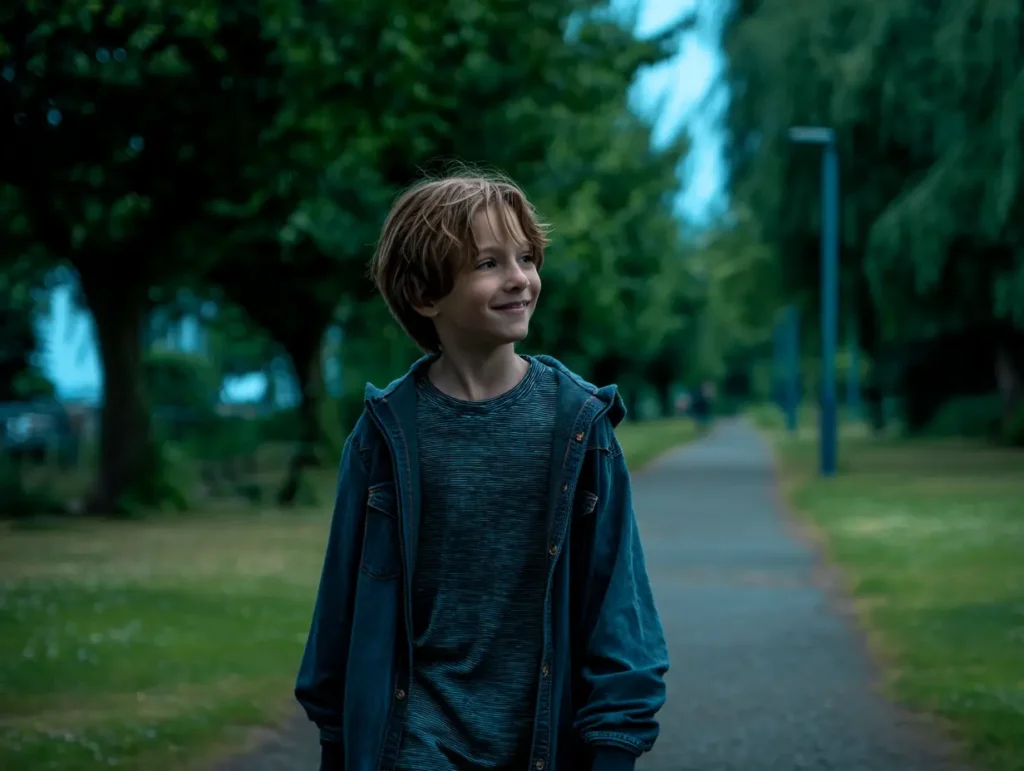
Marcus looked up first. Shrugged. “Dunno.” Jack stared at him. “What do you mean, you don’t know?” “He was here.” “When?” Marcus looked briefly offended at being expected to know the passage of time. “Like… before.” “Before when?” Danny glanced toward the path and back. “Maybe ten minutes?” Ten minutes.
Jack turned in a slow circle and scanned the field again, as if Eli might have become visible through sheer force of refusal. He wasn’t there. “Did he say where he was going?” Blank looks. A shrug. Danny was already looking away. Jack felt his pulse jump hard enough to make his fingers feel strange. “Think,” he said, sharper than he intended. “Did anyone see him leave?”
Nothing. No answer. No useful detail. Just boys at the exact age where attention came and went in unreliable bursts and everybody assumed everyone else was keeping track. Jack turned away before the panic on his face could become anyone else’s problem. He crossed the grass. Checked the benches. The climbing frame. The toilets block.
The little café kiosk near the entrance. Nothing. By the time he hit the east path, he was no longer pretending this was normal. He was nearly running. The path curved along the tree line toward the boundary gate, half-shadowed by old rain trees and lined with benches no one used unless the rest of the park was full.
Jack scanned ahead as he moved — the path, the shrubs, the stretch of open ground beyond the fence. Nothing. His mind was doing things he didn’t want it to do. Not yet. Not this fast. Eli was thirteen. He wasn’t a toddler.
He could have wandered off with a friend, gone to get water, taken a shortcut toward the road for some stupid reason that would make sense only to a thirteen-year-old boy and nobody else. But fear didn’t care about logic. Fear remembered. And Jack had lived long enough with the kind of fear that never really left the body once it had moved in.
He was halfway to the gate when he heard footsteps behind him. “Mr. Callahan!” Jack turned. It was Preet, jogging toward him, out of breath. “I saw where Eli went,” he said. Jack was on him in two steps. “Where?” “There was this little girl by the gate. She was crying. Eli went to talk to her.” “And?” Preet pointed toward the street outside the park. “They walked out together.”
Jack didn’t wait for anything else. He ran. The gate came up fast. Beyond it, the lane outside the park was quiet and still in a way that made his panic feel louder. Then he saw him. Eli was walking back through the gate alone, head down, hands in his pockets. Jack stopped so hard it nearly hurt. Relief hit first. Then fear.

Because even from a distance, he could see Eli had been crying. Jack crossed the space between them in seconds. “Where the hell were you?” Eli looked up, and whatever Jack had meant to say next died immediately. His son’s eyes were red. Jack put a hand on his shoulder. “Hey. Talk to me.” Eli swallowed hard.
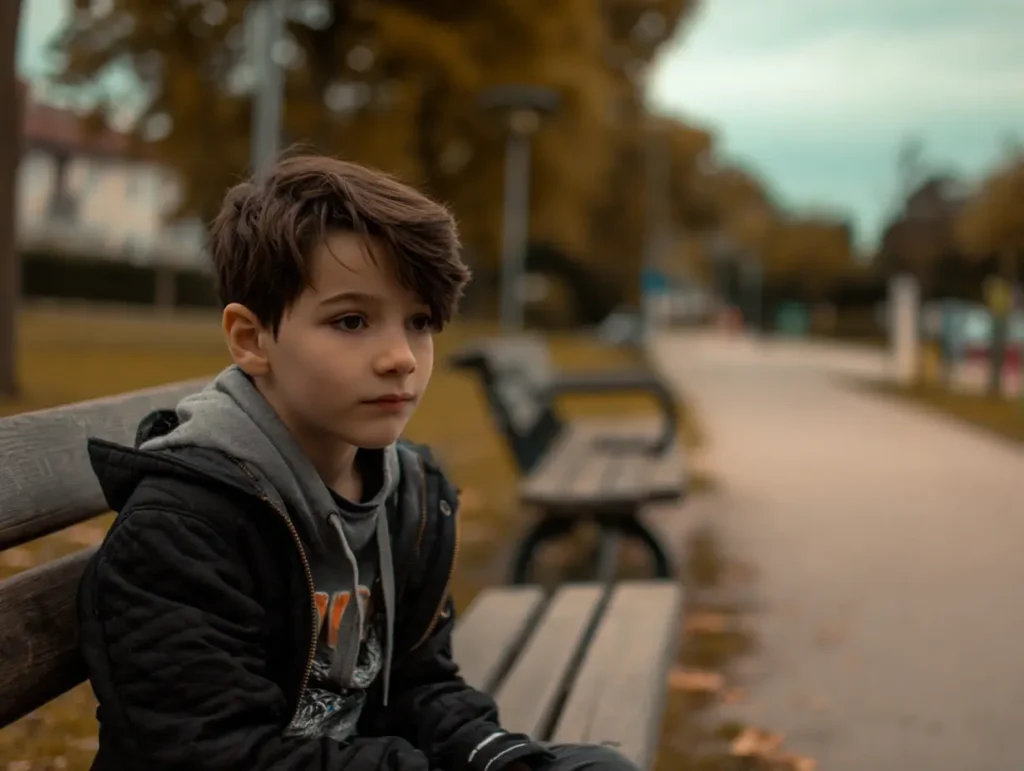
Then, in a voice so small Jack barely recognized it, he said: “Dad… I saw Mum.” Jack stared at him. A second later, they were sitting on the nearest bench. Eli wiped at his face and tried to explain it through sniffles. There had been a little girl near the gate, crying because her mum had left her there in a hurry and hadn’t come back when she said she would.
She knew which street she lived on, but not much else. So Eli had walked her home. Then, somewhere near the house, her mum appeared. Jack patched the rest together himself. Then Eli looked at him and said, with complete certainty: “It was her.” Jack said nothing. “Not someone who looked like her,” Eli whispered. “Mum.”
Jack looked toward the gate. Toward the street beyond it. Then he stood. “Show me.” Eli hesitated. Then nodded. They walked out of the park and onto the lane beyond it. “Which house?” Jack asked. Eli pointed up ahead. “That one.” It was a small, tidy house with a faded blue gate and chalk drawings on the walkway.
A pink bicycle leaned against the wall near the steps. Jack opened the gate and walked up the path. He knocked. A moment later, the door opened. And Jack stopped breathing. The woman standing there had Sarah’s face. Not close. Not similar. Exactly. Eight years of trying not to hope collapsed in a single second. “Sarah,” he said. The woman blinked. “I’m sorry?”
Jack stared at her. Up close, it was worse. The same eyes. The same mouth. The same crease between her brows. “It’s me,” he said, hearing the strain in his own voice. “Jack.” She looked between him and Eli, confused. “I think you may have the wrong person,” she said. Then her eyes landed on Eli. Recognition flickered there. Small, but unmistakable.

“You were with Willow,” she said quietly. Eli nodded once. Something unreadable moved across her face, then disappeared. She looked back at Jack. “Would you like to come in?” she asked. “I think we should talk.” Jack should have said no. But with Sarah’s face standing in front of him and his son beside him trying not to shake, no part of him was capable of walking away.
So he nodded. And followed her inside. The house was warm and lived-in. Children’s drawings on the wall. Tiny shoes by the door. The smell of something cooking somewhere deeper in the house. Jack barely noticed any of it. He was too busy looking at her. She led them into the kitchen and set three mugs on the table without asking what anyone wanted.

That hit him harder than it should have. Sarah had always done the same thing. “Sit,” she said quietly. Jack sat. Eli sat beside him. A moment later, Willow appeared in the doorway, peeking around the frame. She looked at Eli first. “You came back,” she said. Eli gave a small shrug. “Yeah.” She stepped into the room. “Do you want to see my rabbit?”
Eli blinked. “You have a rabbit?” She nodded. “He bites sometimes.” For the first time since Jack had found him, Eli smiled. A real one. Rosalind looked at them, then back at Jack. “My name is Rosalind,” she said. “I think we should start there.” Jack told her about Sarah. The hike. The search. The years of not knowing. Eli seeing her outside and saying her name.
By the time he finished, Rosalind looked close to tears. Then she told him her story. She’d been found near the mountains eight years ago. Hurt. Alone. No ID. No phone. The doctors had called it trauma-induced memory loss. She remembered fragments sometimes, but never enough to make sense of them. “And Willow?” Jack asked.
Rosalind looked toward the stairs. “She was born not long after,” she said quietly. “I didn’t even know I was pregnant.” Jack went still. Eight years. The mountains. A child the right age. He did the maths without wanting to. Sarah must have been pregnant. And neither of them had known. Upstairs, Willow laughed, and the sound of it hit Jack harder than it should have.

His daughter. His daughter had grown up without him. Rosalind wiped at her face. “I’m sorry,” she said quietly. “I know that doesn’t mean much.” Before Jack could answer, Eli came halfway back down the stairs with Willow right behind him, both of them talking over each other about the rabbit. Eli looked happy. Not casual happy.
The kind of happiness that comes from standing too close to something you thought you’d lost forever. Rosalind looked at them too. “If there’s even a chance,” she said softly, “maybe it’s worth trying.” Jack looked upstairs. At Eli. At Willow. At the shape of a life he had stopped allowing himself to imagine. When they left, Eli lingered by the door.
“Can we come back?” he asked. Jack looked at him. Then at Rosalind. At Sarah’s face. And standing there, Jack found himself running out of reasons not to believe. “Yeah,” he said quietly. That was how it started. Not all at once. In pieces. Visits first. Then dinners. Then overnight stays when Willow fell asleep on the couch or Eli asked if they could come back the next day.
Willow attached herself to Eli almost immediately, and Eli softened around her in a way Jack had never seen before. Rosalind fit in more easily than Jack wanted to admit. And the timelines kept circling in his head. Eight years. The mountains. A child the right age. The possibility of Willow being his was enough to break something open in him.
It was Eli who pushed the rest forward. One night, after Willow had fallen asleep upstairs, he stood in the kitchen doorway and said quietly, “It feels nice.” Jack looked up. “What does?” “Having people here.” That was all. After that, it became easier to say yes. Yes to toothbrushes in the bathroom that weren’t his or Eli’s.
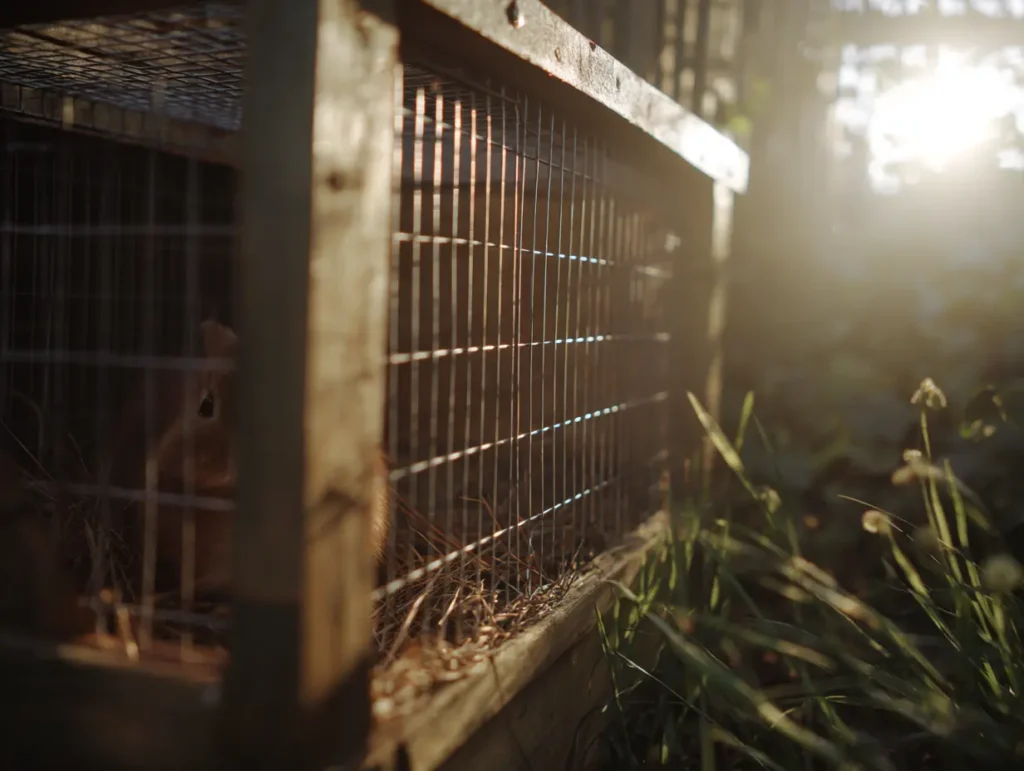
Yes to Willow’s rabbit hutch in the backyard. Yes to Rosalind staying longer, then staying over, then eventually staying. And slowly, the house stopped feeling like a place he and Eli survived in. It started feeling like a home again. For a while, that was enough. Then the cracks started.
Not big ones. Just small things that didn’t sit right. Sarah had always hummed while she cooked. Rosalind didn’t. Sarah used to reach for his hand absentmindedly. Rosalind never did unless she seemed to remember she was supposed to.
And when Jack finally told her, one late night in the kitchen, that she felt different, Rosalind had looked at him with quiet hurt and said, “I lost eight years, Jack. You can’t ask me to come back exactly the same.” That landed harder than he wanted it to. Because it was fair. Because it was true.

Because if she really was Sarah, then maybe this was what getting someone back actually looked like. Broken. Changed. Almost, but not quite, the same. And for a while, that was enough for Jack to keep believing. That night, the house was finally quiet. Willow was asleep in the guest room.
Eli had gone to bed an hour earlier after pretending he wasn’t tired and then nearly falling asleep halfway through a sentence. The television downstairs had gone dark. The dishes were done. The lights were off except for the one in Jack’s bedroom. For the first time in weeks, everything felt still.
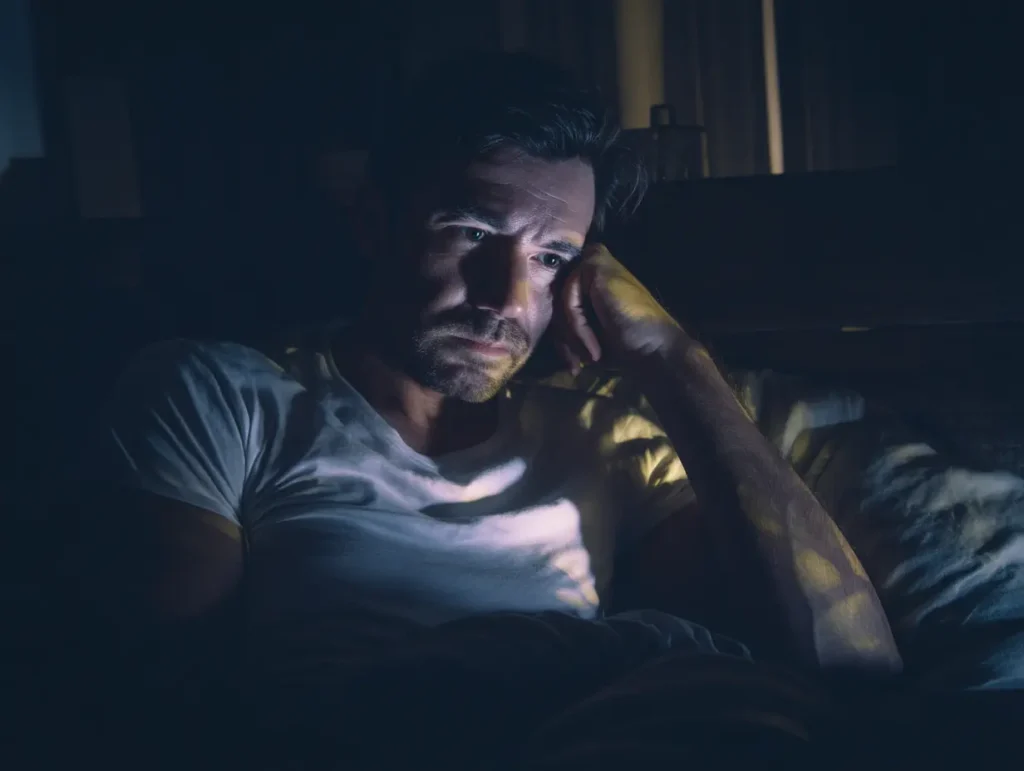
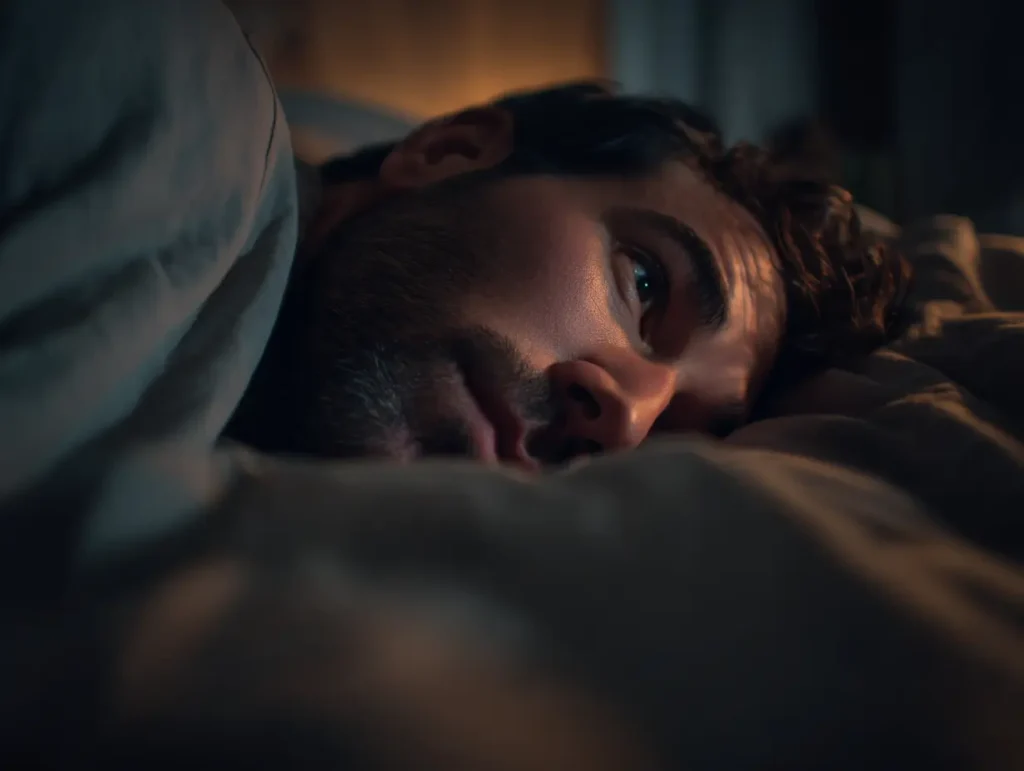
Rosalind stood by the dresser with her back to him, pulling her sweater off slowly, like someone already half-asleep and thinking about nothing more complicated than bed. Jack was sitting on the edge of the mattress, watching without really watching. Then he saw her back. And his whole body went cold. He didn’t understand it at first. Not consciously.
Just a hard, immediate wrongness that moved through him before his mind caught up. Then it did. Sarah’s scar was gone. Jack stared. The place where it should have been — high across her upper back, cutting diagonally toward her shoulder blade — was bare. Smooth. Unbroken. Nothing. For a second, he genuinely thought he might be misremembering.
That grief had distorted something. That time had moved it, softened it, blurred it into the wrong place in his mind. But no. He remembered cleaning that wound. Remembered the gravel. The antiseptic. The angry red line it had left behind for years after. Remembered kissing the edge of it once while Sarah laughed and told him he was being weird.
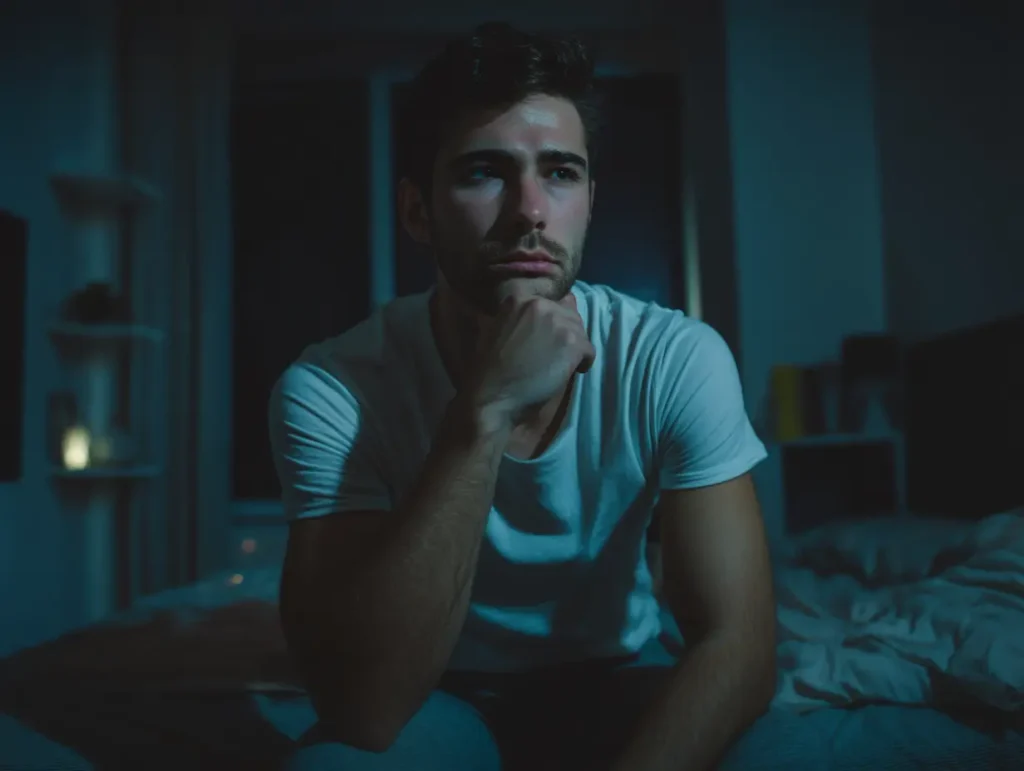
That scar had built their company. That scar had changed the course of their life. And it was not on the woman standing in his bedroom. Jack looked away before she turned around. His heart was beating too hard. Too fast. He forced himself to breathe normally. Forced his face to stay still. Forced himself not to say anything.
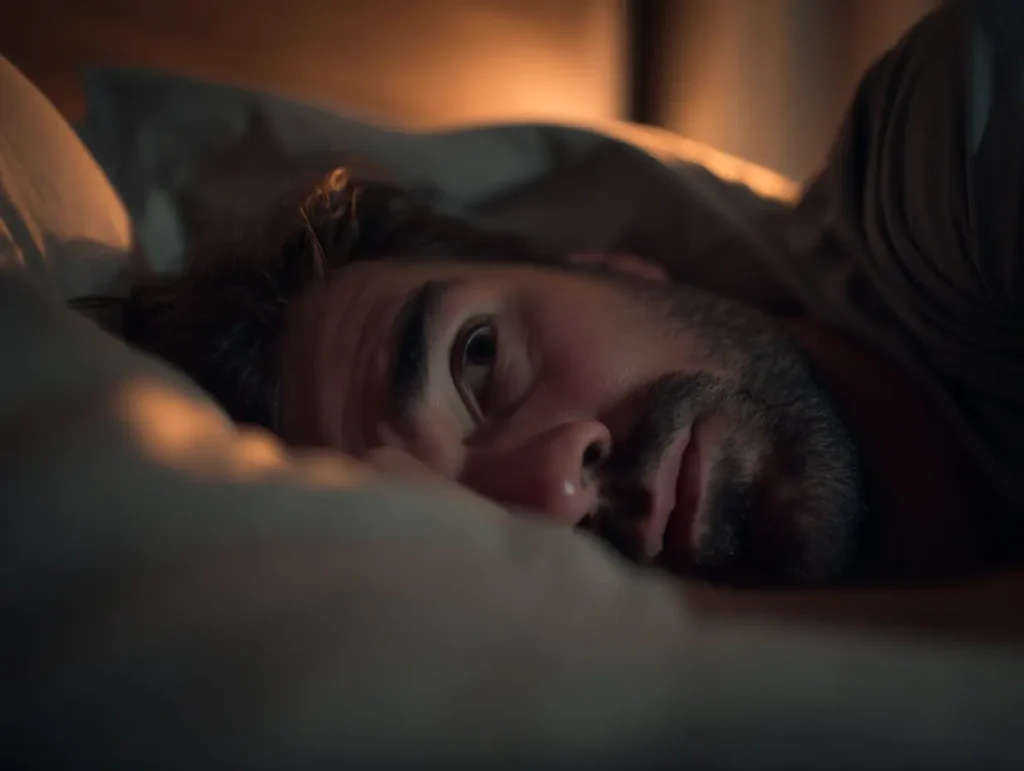
Rosalind climbed into bed beside him a moment later, warm from the shower, smelling faintly of soap and something floral he couldn’t place. She said something soft and ordinary. He didn’t hear it. He lay there in the dark with his pulse hammering in his throat and one clear thought moving through him again and again, each time sharper than the last.
This is not Sarah. Beside him, Rosalind shifted once and settled. Jack stayed awake for a long time after that. Listening to her breathe. Listening to the house. Listening to the exact moment hope died and something colder took its place. He said nothing the next morning. That was the hardest part.
Rosalind stood in the kitchen making coffee while Willow sat at the table swinging her legs and Eli argued with her over whether rabbits counted as intelligent life. The scene was so painfully ordinary Jack almost hated it. He watched Rosalind move around the kitchen in his wife’s face. Poured cereal for his son while wondering who the hell was sleeping in his bed.
By the time Eli left for school, Jack had already made up his mind. He waited until the house was empty. Then he went to the hall cupboard and pulled down the old storage box he hadn’t opened in years. Sarah’s things. He found the hairbrush near the bottom, wrapped in an old scarf he hadn’t had the heart to throw away. A few dark strands were still caught in the bristles.

Jack stared at it for a second longer than necessary. Then he closed the box and made the call. Adrian picked up on the third ring. He and Jack had known each other long before the promotions and the greying at the temples and the exhaustion that seemed to settle permanently into men who stayed too long in difficult jobs.
They’d played football badly together in college and had spent the last fifteen years pretending not to be getting old. “Tell me this isn’t business-related,” Adrian said. “It’s not.” A pause. “That’s somehow worse.” Jack looked toward the kitchen. Rosalind’s mug was still in the sink. “I need a favor,” he said. There was silence on the other end for a second.

Then Adrian said, more seriously, “What kind of favor?” Jack kept it simple. Not all of it. Just enough. A DNA comparison. Quietly done. No paperwork unless it had to become paperwork. When he finished, Adrian didn’t speak immediately. Then: “Jack…” “I know.” “This is a bad idea.” “I know.” Another pause. Then, reluctantly: “Do you have both samples?” “Yeah.”
Adrian exhaled through his nose. “Fine. Bring them to me. But if this turns into something bigger, I’m not saving you from your own decisions.” Jack almost laughed. “Wouldn’t ask you to.” He hung up and stood there for a moment with the phone still in his hand. Then he went upstairs. Rosalind’s hairbrush was on the dresser. He looked at it for a long second.

Then plucked a strand from the bristles and slipped it into a folded tissue. His hands were steady. That scared him more than if they’d shaken. Three days later, Adrian called. Jack was in his office at the warehouse when his phone buzzed. He answered immediately. “Well?” he said. Adrian didn’t waste time. “It’s not her.” Jack closed his eyes.
Even knowing, even expecting it, the words still hit like something physical. “You’re sure?” “Yes.” Jack said nothing. There was a rustle of paper on the other end. Then Adrian added, “And there’s something else.” Jack opened his eyes. “What?” “This wasn’t just a mismatch. I ran the profile against an internal database because something about it bothered me.”
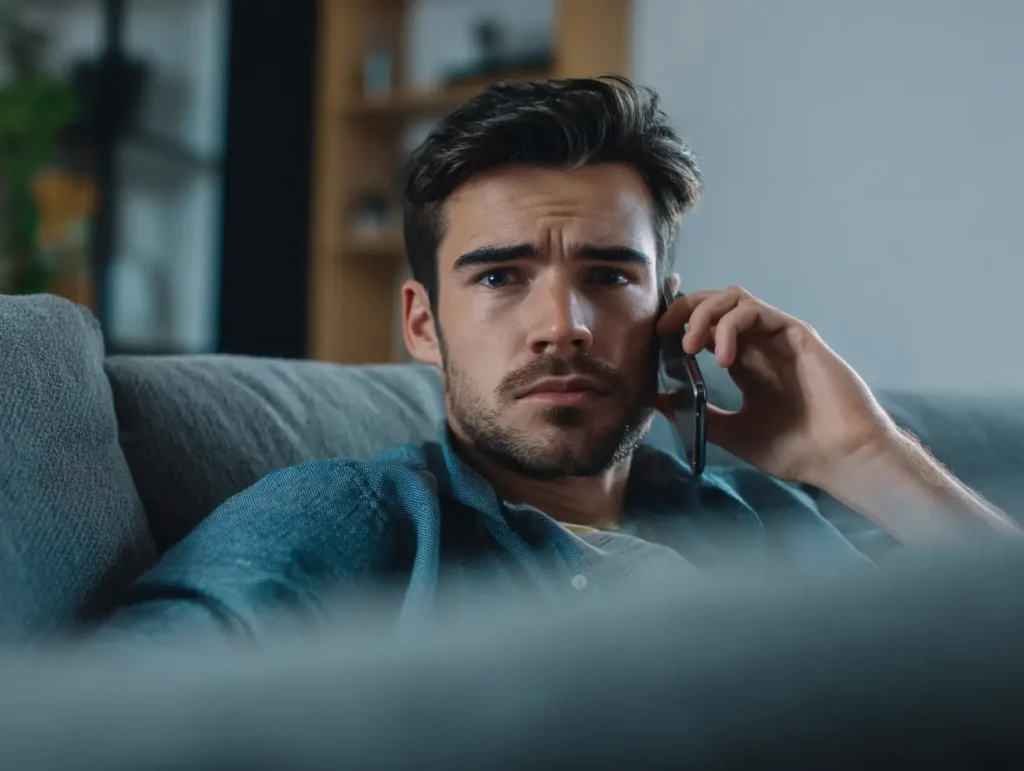
Jack went still. “And?” Adrian hesitated. “It matched someone named Claire Holloway.” The name landed like a sound from another life. Jack frowned. He knew it. Not well. But enough. Claire Holloway. Sarah’s old colleague from before the company. Office job. Sharp dresser. Too much eye contact.
The kind of woman who always seemed to be standing slightly too close when Jack dropped by to pick Sarah up. Jack leaned back slowly in his chair. And suddenly, with sickening clarity, he remembered her. Not just her face. Her interest. The way she’d always laughed a little too hard at his jokes. The way Sarah once called her “intense” and then dismissed it with a shrug.

The way she’d hovered. Watched. Stayed. Adrian’s voice came through again. “You know her?” Jack stared at the wall. “Yeah,” he said quietly. “I think I do.” Jack didn’t go home right away. He sat in his office long after Adrian hung up, staring at nothing, letting old memories rearrange themselves into something uglier.
Claire Holloway. Sarah had worked with her before the company. Back when they were still stuck in fluorescent offices and pretending the life they wanted was something they’d get around to later. Jack remembered her now in flashes — too polished, too present, always seeming to appear in conversations she hadn’t been invited into.

Sarah had never called her a friend. Just someone from work. Someone intense. Someone who asked too many personal questions and laughed too hard at things that weren’t funny. Jack remembered, suddenly, Claire standing beside Sarah at an office party years ago, watching him cross the room with that same unreadable half-smile she wore now in his kitchen.
She had known them. Known enough. More than enough. By the time he got home, he knew exactly what he had to do. He didn’t say anything that night. Didn’t look at her differently. Didn’t accuse. Didn’t slip. He ate dinner at the table with Rosalind and Willow and Eli like he hadn’t just found out the woman across from him had built herself out of his wife’s absence.
He listened to Willow talk about school. Watched Eli grin at something stupid. Let Rosalind pour him tea with hands that didn’t shake nearly enough. If Claire noticed anything, she didn’t show it. That was fine. He didn’t need her to panic yet. He just needed her to stay. After dinner, when Willow and Eli disappeared upstairs, Jack found Rosalind in the kitchen rinsing mugs.
“We need to talk,” he said. She glanced back at him, then turned off the tap. Something in his tone must have landed, because the softness in her face faded almost instantly. “About what?” Jack leaned against the counter and looked at her for a long moment. Then he said, very quietly, “Do you remember Claire Holloway?”

For the first time since she had entered his life, her face slipped. It wasn’t dramatic. Just small. But real. A pause too long. A stillness too sudden. The tiniest tightening around the mouth before she recovered. And that was enough. Jack felt something inside him go cold. Rosalind blinked. “Who?” He held her gaze.
“Claire Holloway,” he repeated. “Sarah used to work with her.” Rosalind let out a short breath through her nose and shook her head once. “Jack, I don’t know what you’re talking about.” He nodded. Reached into his pocket. Set the folded paper on the counter between them. She looked at it. Didn’t touch it. “The DNA came back this afternoon,” he said.

Her eyes lifted slowly to his. “And?” “It’s not Sarah’s.” Neither of them moved. Jack watched the words hit her. Not with surprise. With calculation. That hurt more than he expected. “It’s yours,” he said. “Claire.” The silence after that was absolute. For one suspended second, she looked exactly like Sarah again. Then she didn’t. The mask didn’t fall all at once.
It came apart in pieces. The softness in her eyes disappeared first. Then the hurt. Then the careful uncertainty she had worn like a second skin for weeks. What remained underneath was harder. Sharper. More tired than he’d expected. Rosalind — Claire — looked away first. Then she laughed once under her breath. Not because anything was funny.

Because there was apparently nothing else left to do. “You tested me,” she said. Jack stared at her. “You moved into my house.” Claire gave a small, bitter shake of her head. “I gave you your family back.” That landed like a slap. Jack straightened. “You gave my son a lie.” Her jaw tightened.
“He was happy.” “He was grieving.” “So were you.” Jack didn’t answer. Because the worst part of it was that she wasn’t entirely wrong. Claire looked at him then, really looked at him, and for the first time Jack saw how deep the delusion went. Not a con artist’s confidence. Not greed, exactly. Something sadder. Something far more broken.

“You looked at me,” she said quietly, “like I was a ghost you wanted to touch.” Jack said nothing. “You let me in,” she said. “You knew I was different and you still let me in.” “Because I thought you were Sarah.” Claire’s face changed at that. Not guilt. Something more like resentment. “She’s gone,” she said. The words hit the room and stayed there.
Jack went still. Claire swallowed once. Then, quieter, she said, “She was gone.” Jack didn’t move. “And you were still waiting for her,” Claire said. “Still living around her. Still leaving space for her like she was going to walk back through the door one day.” Jack felt his hands curl into fists. “That wasn’t yours to take.” Claire laughed once, bitter and small.
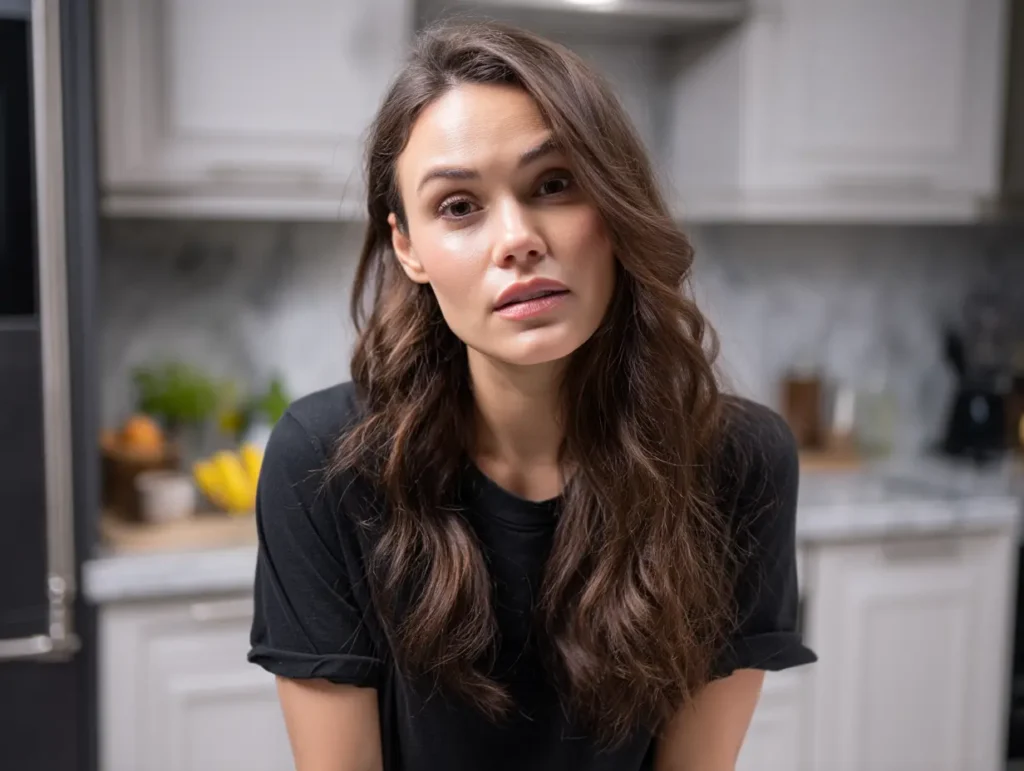
“No?” she said. “I followed the case, Jack. I know what happened to you. I know what you went through. I watched all of it.” Jack stared at her. “You were alone,” she said. “Eli was growing up without a mother. You were both just… stuck.” Her voice sharpened. “And she was gone. She left all of this behind and you were still acting like no one else could ever step into the space she left.”
“She didn’t leave,” Jack said, low and dangerous. “She disappeared.” Claire’s mouth tightened. “And she never came back,” she snapped. “That’s the part that matters.” The words hit hard. Hard enough to make the room feel smaller. Claire took a breath, steadied herself, then said, quieter: “I knew I could be there for you.” Jack said nothing.

“I knew I could fill in the gaps she left so irresponsibly.” That did it. Jack stepped toward her so fast she actually flinched. “Don’t,” he said. His voice was quiet. Which somehow made it worse. “Do not talk about her like that.” Claire stared at him. For the first time, there was no performance left in her face. Just resentment. Years of it. And underneath that, something uglier.
Something almost pathetic. Behind them, somewhere upstairs, Willow laughed. The sound cut through the room. Claire heard it too. And for the first time, something like shame crossed her face. Small. Late. But there. Jack followed her eyes toward the ceiling. Then back to her. Jack stared at her. Then, after a beat, he said, “And what about Willow?” Claire didn’t answer.
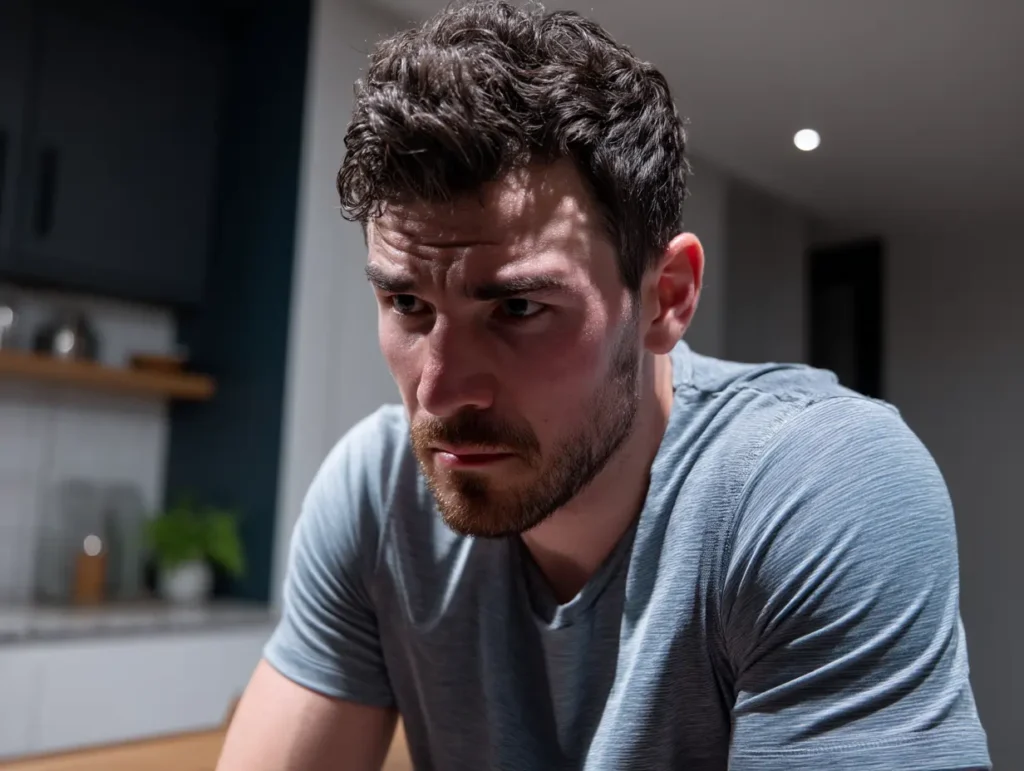
Jack took a step closer. “What about her?” he said. “Did you ever think about what this would do to her?” Claire’s jaw tightened. Jack didn’t stop. “How does a child grow up with her mother’s face changing?” he asked. “How far did you go, Claire? How many times did you do this?” Something flickered across her face. Not guilt. Something colder.
“She was too young to remember,” Claire said. Jack went still. Claire held his gaze. “She was barely two when I had the first procedures,” she said. “Young enough that all she ever knew was me.” The room seemed to narrow around him. Jack stared at her. “And after that?” he said. Claire gave the smallest shrug. “She adjusted.” The casualness of it made Jack’s stomach turn.

“You built your own daughter’s life around a lie,” he said. Claire’s expression hardened. “Don’t tell me what I had to do for my daughter,” she snapped. “I did what I had to do to protect her.” Jack stared at her. Claire’s jaw tightened. Then, quieter, more unevenly, she said, “Ever since my husband left, all I could think about was you and Sarah.” Jack didn’t move.
“How perfect you had it,” she said. “You, the company, the house, the family… all of it.” Her voice cracked slightly. “I wanted that too.” Jack looked at her in silence. Claire swallowed. “I loved Willow,” she said. “I wanted her to have something whole. I wanted us to have something whole.” Jack’s face didn’t change. “I loved you,” she said.

That was the part that made his skin crawl. Claire looked at him with tears standing in her eyes now, but there was still something deeply wrong underneath them. “I knew what you’d lost,” she said. “I knew what Eli had lost. And I thought… if I could be what was missing…” She trailed off. Jack let the silence sit there for a second. Then he said, quietly: “This wasn’t the way to do it.”
Claire flinched. But Jack didn’t stop. “You don’t get to build a family out of someone else’s grief.” Claire didn’t answer. Because she couldn’t. Then there was a knock at the door. Not loud. Not aggressive. Just firm. Claire closed her eyes for a second. When she opened them again, the fight had gone out of her. Jack stepped back. She looked at him once more.

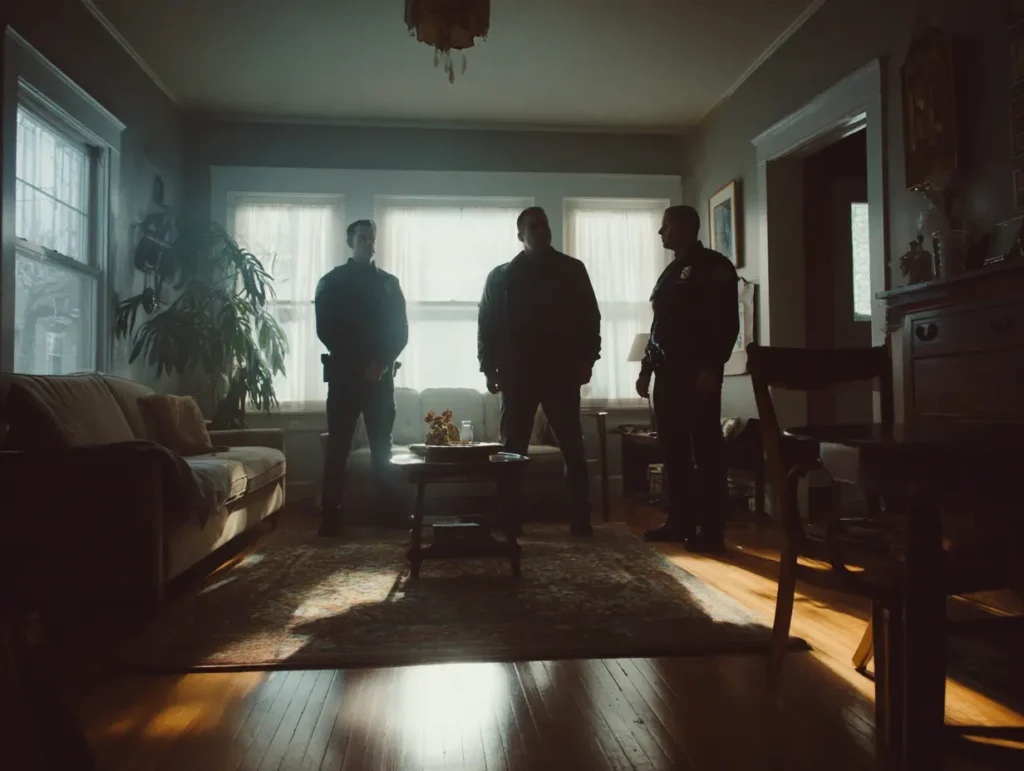
And for one strange, awful second, there was no Sarah left in her face at all. Just Claire. Just a woman who had spent too long wanting a life that belonged to someone else. Then she walked past him and opened the door. Adrian stood outside with two officers behind him. No one said much after that. Willow started crying when they took Claire out.
Eli came down the stairs halfway through it, stopped dead in the hallway, and looked from Jack to the front door to Willow in a way Jack would remember for the rest of his life. That was the part he would never forgive. Not the lie. Not even the face. That. What it had done to the children. Jack held Willow while she cried for her mother and Eli too stunned to speak.
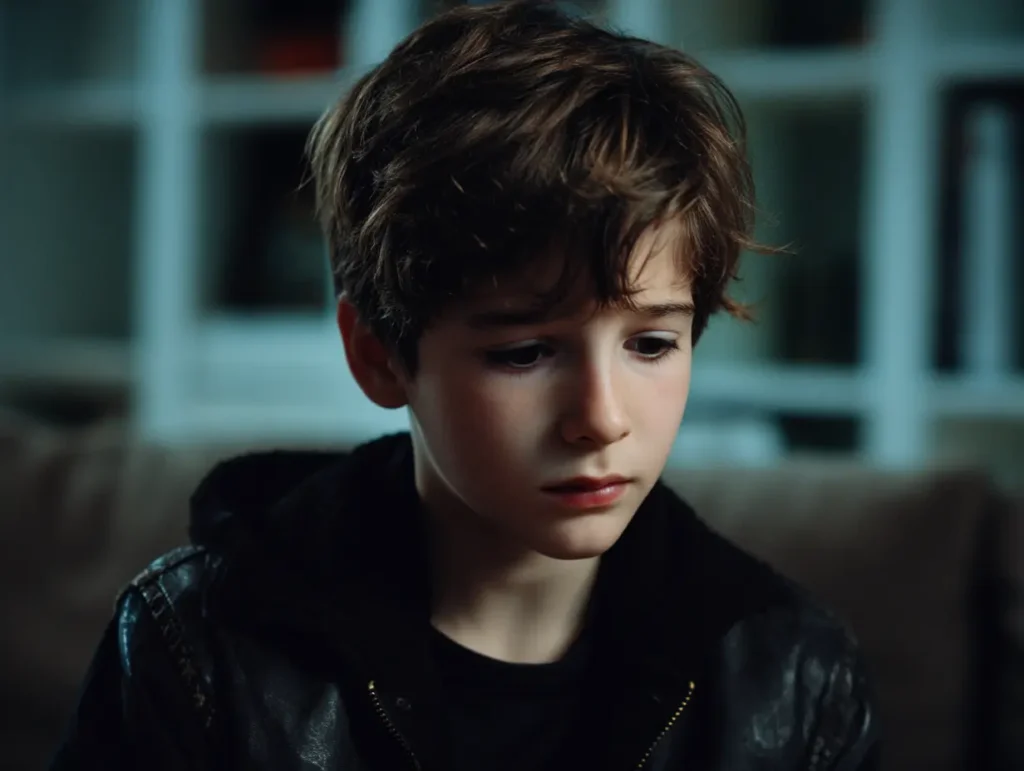
Later that night, after the police had gone and the house had finally gone quiet, Jack sat on the edge of Eli’s bed. His son stared at the floor for a long time before asking, in a small, strained voice, “Did I really not know what she looked like? I thought that was Mum” Jack looked at him. “No,” he said quietly. “It’s not your fault, I thought the same.” Eli’s jaw tightened.
“I thought—” “I know.” That was all Jack could give him. Willow went into temporary care first, but she kept asking for the same two people. Eli. And Jack. It was Eli who said it first. One evening, standing in the kitchen while Jack dried dishes, he said quietly, “She shouldn’t have to lose everyone.” Jack looked at him. And understood. The paperwork took time.
But eventually, Willow came back through the front door with her rabbit in a cardboard carrier and a backpack too big for her shoulders. And this time, nobody was pretending she belonged there. She just did. It didn’t fix anything.
It didn’t bring Sarah back. But when Jack thought about the day everything changed, the part that stayed with him most wasn’t the panic. It was the image of Eli walking a lost little girl home. Doing the one thing Sarah had built their life around. Refusing to leave someone vulnerable behind.