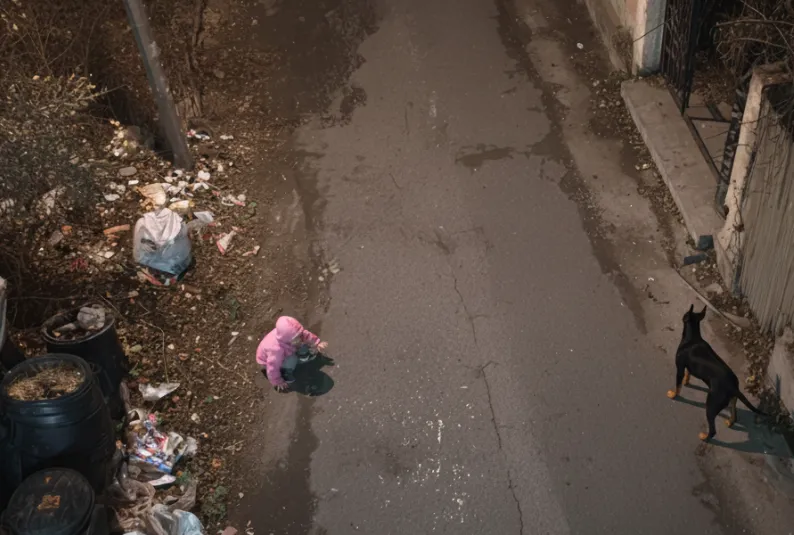
Officer Emmanuel “Manny” Hart didn’t expect movement in the garbage heap, just the familiar rustle of wind along the alley he walked every sleepless night. But tonight, something shifted under broken cardboard, quick and deliberate. His pulse jumped as he stepped closer, flashlight trembling in his grip.
A low growl rolled out from the shadows, freezing him in place. Two yellow eyes glinted between plastic bags—an animal crouched low, braced over something hidden. Manny’s instincts warned of danger, yet the creature’s trembling paused him momentarily.
He lowered the beam, inch by slow inch, until it caught a small, pale hand sticking out from beneath the trash. Manny’s breath stopped in his lungs. The dog stood over a little child—curled tight, unmoving, and ice-cold. His worst suspicion slammed into him at once: someone had left a child here!
Manny often walked through this particular lane when the worst of his insomnia kept him awake. It was a habit born of a long-forgotten case—one the memory of which he couldn’t shake himself free of. The cold, crisp air often brought him a sense of relief he couldn’t ever find in the warmth of his bed.
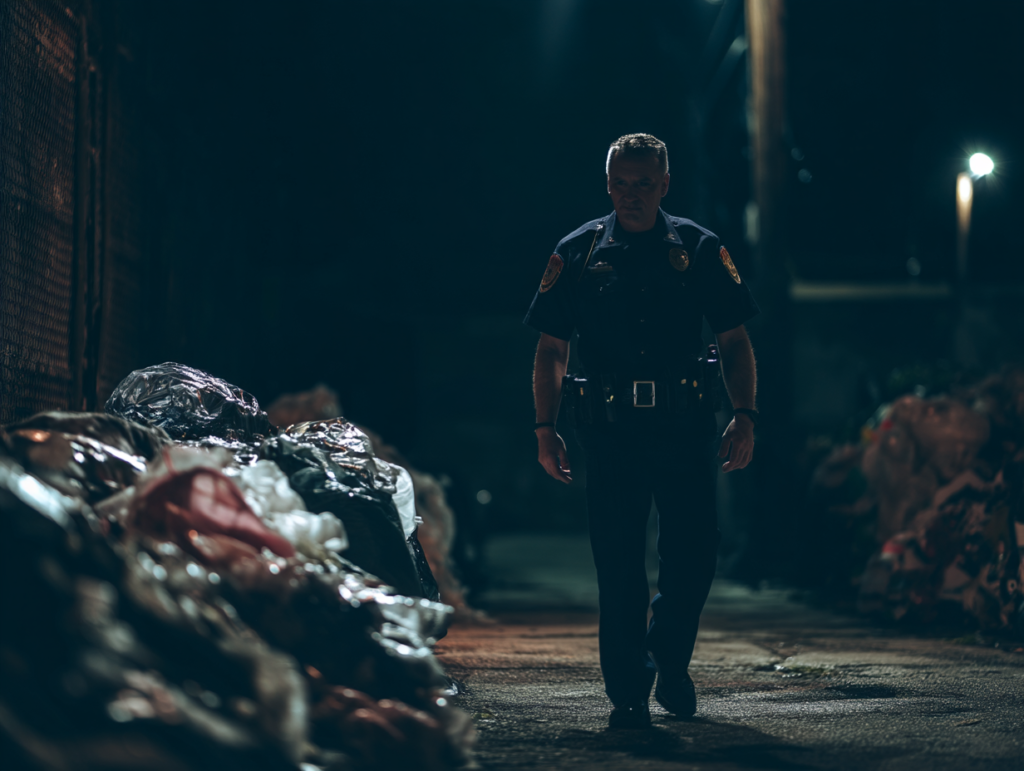
Now, Manny crouched carefully, palms open, murmuring soft reassurance into the bitter air. The dog growled again, then let out a trembling whine, torn between warning him off and begging for help. Rain clung to its matted fur like tiny crystals.
The little girl didn’t respond when Manny called to her, not even a flinch—just a faint twitch of her fingers. Her lips were a frightening shade of blue. She wasn’t asleep. She was slipping away.
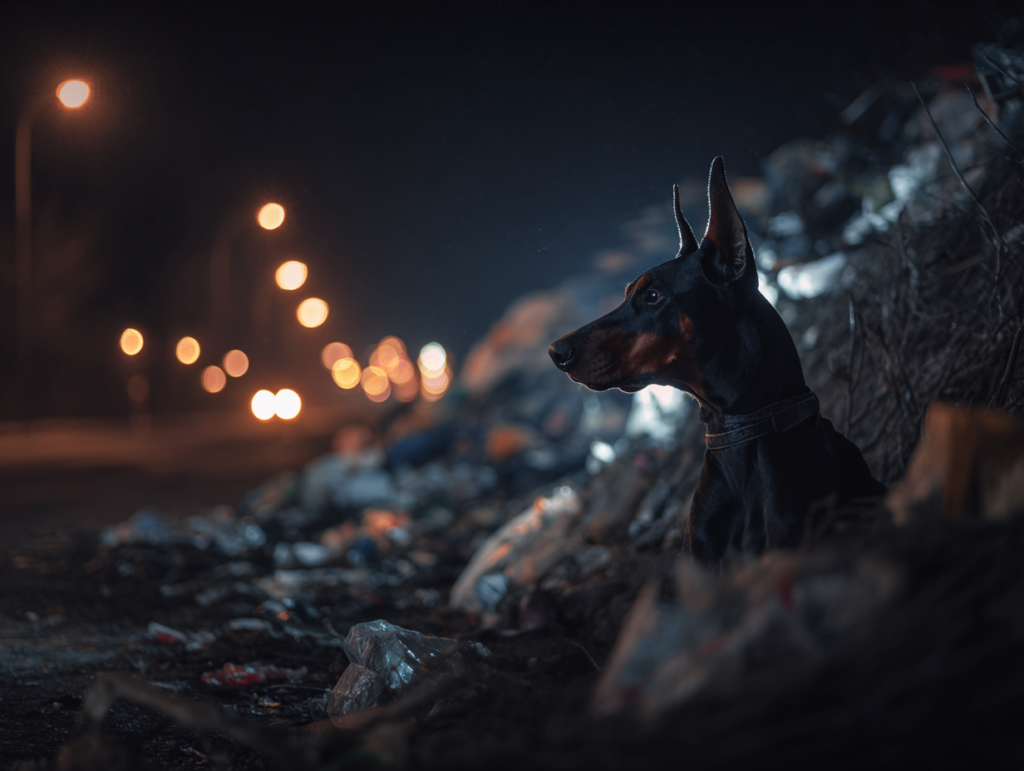
When Manny reached forward too quickly, the dog lunged, snapping in panic. Manny froze, letting the animal sniff the sleeve of his jacket, letting it feel his warmth. The tension eased by degrees, thawing one heartbeat at a time.
Finally, in a single painful moment of trust, the dog stepped back just enough. Manny slid his arms beneath the girl’s fragile body and lifted her. She weighed almost nothing. It was like he was carrying a bundle of clothes.

As he hurried toward his patrol car, the dog trotted at his heel, refusing to fall behind, as if tethered to the girl by an invisible thread. Inside the car, as the heater roared awake, the girl’s eyes fluttered open. She released a faint, crumbling whisper, “Max…,” before slumping back into unconsciousness. Manny assumed she meant the dog.
He cranked up the heat, one hand steadying her tiny shoulder, and sped toward the nearest hospital, silently begging her to hold on just a little longer. Manny hoped that the large Dobermann’s presence by her side might have kept her warm enough so she would make it unscathed.

At intake, when the nurses tried to wheel her away, the dog snarled, snapping at the air, planting itself between her and anyone unfamiliar. It refused to budge, making its loyalty very clear. They had no choice but to allow it to stay.
Manny stayed beside it, voice low and steady, calming the animal enough for the doctors to work. As he watched them lift the girl onto a warmed stretcher, something inside him, something long dormant, tightened with fierce protectiveness. This child and her loyal dog had cracked open a part of him he thought had died years ago.
The medical team moved with swift precision, diagnosing deep hypothermia, dehydration, and bruises in different stages of healing, and severe emotional shock. One of the doctors murmured that she must not have been properly cared for in a long time. Manny felt the words settle like ice along his spine.
When he stepped into the hallway, a nurse showed him the preliminary search results. No missing child report matched her description. No one had filed anything. She was a nameless child, a ghost walking among the living—misplaced, unaccounted for, and lost.
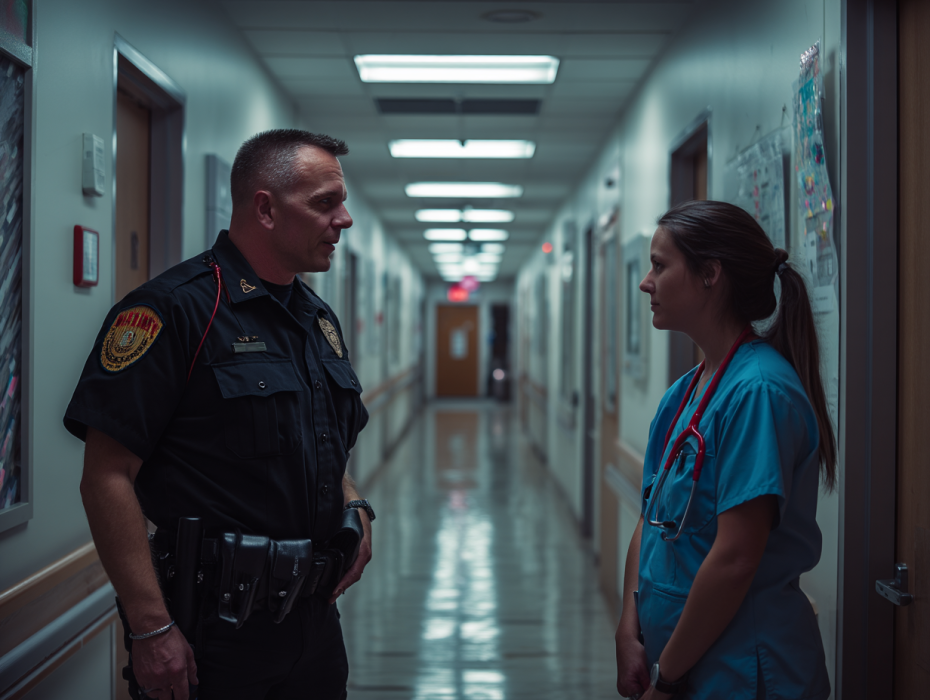
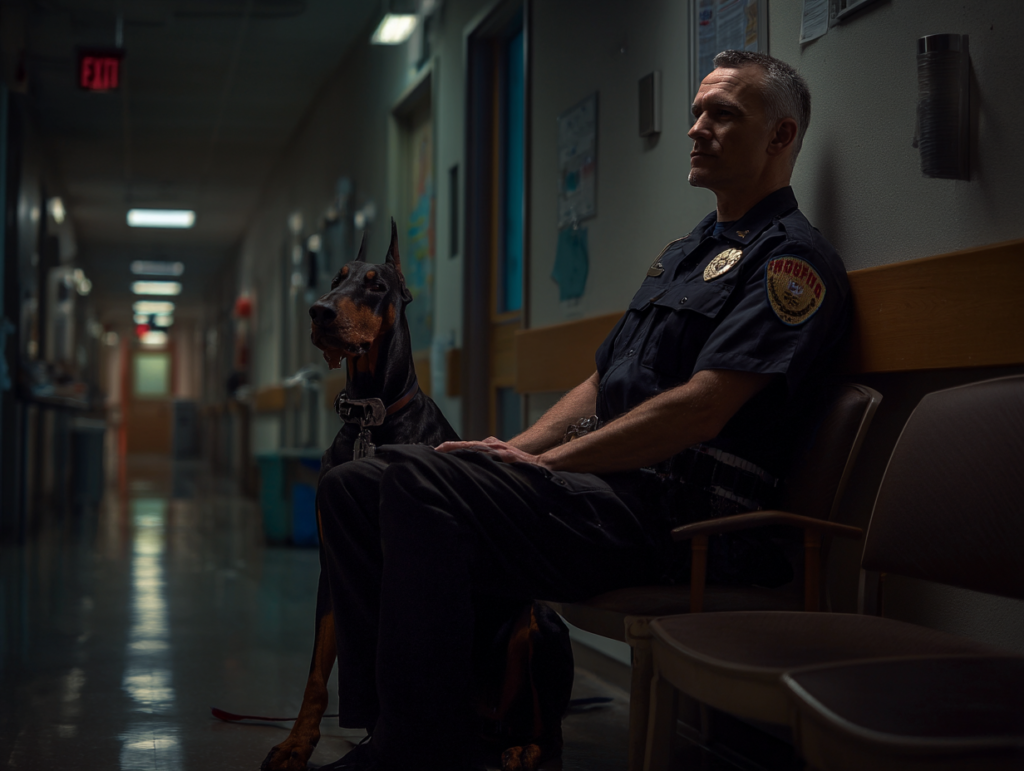
Manny sat outside her room long after his shift ended, elbows on his knees, forcing himself to remember training: officers couldn’t get attached. Still, the thought of walking away felt unbearable, like abandoning her a second time.
The dog lay stretched across the doorway in a silent vow, refusing to leave or even eat. Manny was the only one from whom it took some food. Every passerby received a low growl, but Manny’s presence seemed to soothe the animal instantly.

Near midnight, a nurse reported finding a side door to the pediatric wing propped open with a small rock, cold air drifting inside. No one claimed responsibility. The incident unsettled the staff, and security began sweeping the corridors, radios crackling with terse voices. Manny felt unease settle heavily in his chest.
Hospital security later pulled grainy footage from the loading dock camera. A hooded figure lingered near the service elevators, appearing and disappearing between blind spots. The person never approached the girl’s room directly, yet their presence felt intentional—too still, too focused, like someone waiting for the right opportunity.
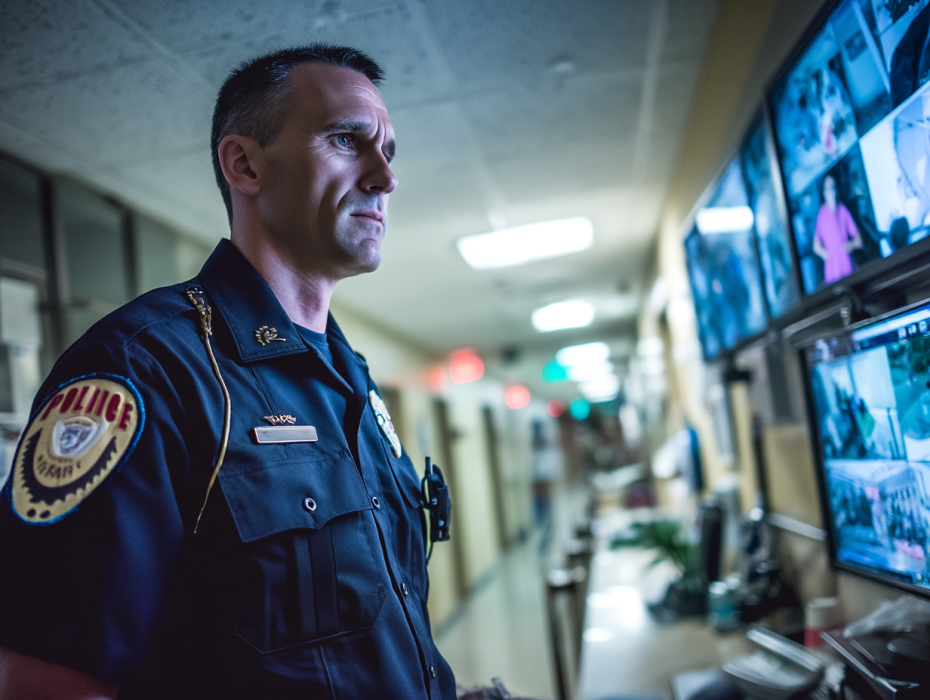
Manny reviewed the footage repeatedly, searching for details he couldn’t quite name. The figure’s posture, the way they kept glancing toward the children’s wing—it didn’t feel random. Although the identity remained unknown, Manny sensed purpose behind their movements. Someone was looking for the girl.
Later, the girl stirred in her sleep, her voice breaking the quiet. She whispered “Max” again, but this time the word trembled with fear, as though she were calling out to someone she’d already lost. Manny noticed she reflexively petted the dog’s head. He wondered whether Max was the dog.

Nurses mentioned the dog growled whenever the hospital doors hissed open, pacing as if expecting danger to walk right in. Its anxiety was sharp enough to infect the staff. Manny wondered briefly about the deep connection that had been forged between the dog and child.
Manny knew that by protocol, he needed to step aside, to let proper channels handle the case. But something rooted him there instead. It was the same instinct that had driven him years ago, during that investigation he never solved. The one that still kept him awake at night.

When the girl finally woke, she jerked upright at the sight of unfamiliar faces and tried scrambling off the bed. Panic twisted her features until the dog quickly pressed against her side, nudging her with a steady insistence. Slowly, her trembling eased, but her eyes remained wide, tracking every movement in the room.
Manny stepped forward cautiously, keeping his voice low and unthreatening as he introduced himself. He didn’t attempt to close the gap between them, allowing the dog to remain planted as a barrier. He told her gently that she was safe, that no one here would hurt her or force her anywhere.

She didn’t respond, only gripping the dog’s fur so tightly her small hands trembled. Her gaze stayed lowered, as if the ground felt safer than meeting anyone’s eyes. Every shuffle in the hallway made her shoulders flinch, her body tightening like she expected a sudden blow to land.
Manny asked her name softly, careful not to startle her. She hesitated, looked toward the doorway nervously, then whispered one fragile sentence: “He’ll…find…me.” The words shook out of her like a confession. She curled closer to the dog, burying her face as if hiding could make danger disappear entirely.
The terror inside that simple sentence struck Manny harder than winter’s cold. It wasn’t ordinary fear. It carried memory, warning, and something like resignation. Whoever “he” was, she had learned to fear him deeply. Manny felt an old instinct reigniting, the one urging him to protect children who couldn’t protect themselves.
Over the next days, Manny visited the girl, Mia, briefly, always letting her set the pace. Through hesitant fragments, she began revealing pieces of her story in soft, trembling sentences released like secrets. She spoke as if everything she’d endured still lived close enough to touch and could swallow her again.

Eventually, she explained that “Max” wasn’t the dog at all. Max was her older foster brother, the one who tried to shield her when their home grew frightening. Her voice softened when she said his name, carrying both longing and worry, as though she feared remembering might mean losing him forever.
She revealed their foster caretaker was a man named Derrick Vale, whose temper erupted without warning. Max used to distract him, stepping between Vale and the younger kids. She said it like a practised truth, something she and Max had repeated silently—a rhythm of survival learned long before she reached Manny’s care.

Some nights, Vale shouted so loudly that even the neighbor’s dog barked nonstop, as though trying to drown out the yelling. The girl would hide under her blanket while Max held the door shut with his small weight. Manny imagined the terror embedded in those nights, fear becoming routine for two children alone.
Then came the night everything changed. She woke to the creak of the back door and saw Vale carrying a gasoline can toward the shed, moving with a strange, determined pace. Light flickered across his face, hard and twisted. In that moment, she knew something terrible was about to happen, and so did Max.

She told Manny how the first flames flared behind the house, glowing orange against the trees and sky. The firelight flickered wildly, throwing shadows across the yard. She remembered standing frozen at the window, watching something she didn’t understand transform into something she instantly knew was dangerous.
Max tried dragging her from the window, telling her not to look, but she already saw Vale’s shadow twisting through the flames, his movements frantic and furious. The fire cast him as a dark, distorted figure. Even through the glass, she sensed he wasn’t simply angry; he was unhinged, unpredictable, and terrifying.

When Max peeked again, Vale spotted him. He stormed inside, striking Max so hard the girl gasped. She clamped her hands over her ears, trying to block out the shouting and impact. Everything shook inside her—fear, confusion, and the realization that Max had been protecting her all along.
Somehow, the dog, now curled loyally at her hospital bedside, had broken free from wherever it was kept and charged into the chaos. It hurled itself between Vale and the children, snarling with brave desperation. In that wild moment, the girl understood the dog was their defender.
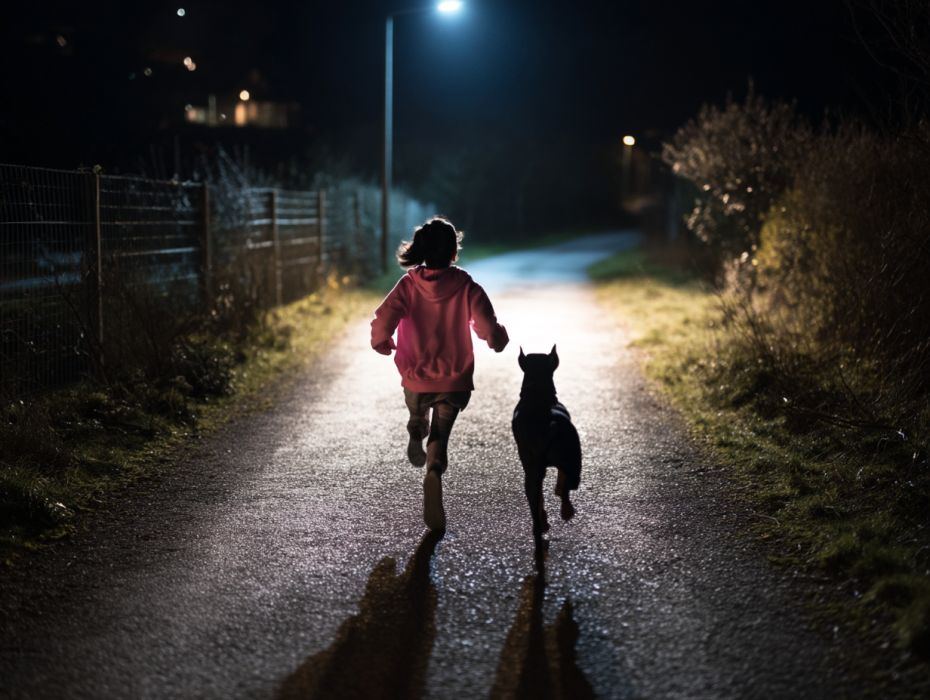
Max shouted at her to run, promising he’d come right behind. His voice carried both urgency and certainty, like he’d rehearsed this escape in his head many times. She grabbed the dog’s fur and bolted into the cold night, sprinting blindly as the dog pulled her farther from danger, guiding every step.
She kept glancing back, waiting for Max’s silhouette to emerge from the darkness. Each time she looked, the space behind her remained empty, swallowing hope. The dog tugged her forward, urging her onward. Yet the absence of Max’s footsteps haunted her with every breath she forced into her aching lungs.
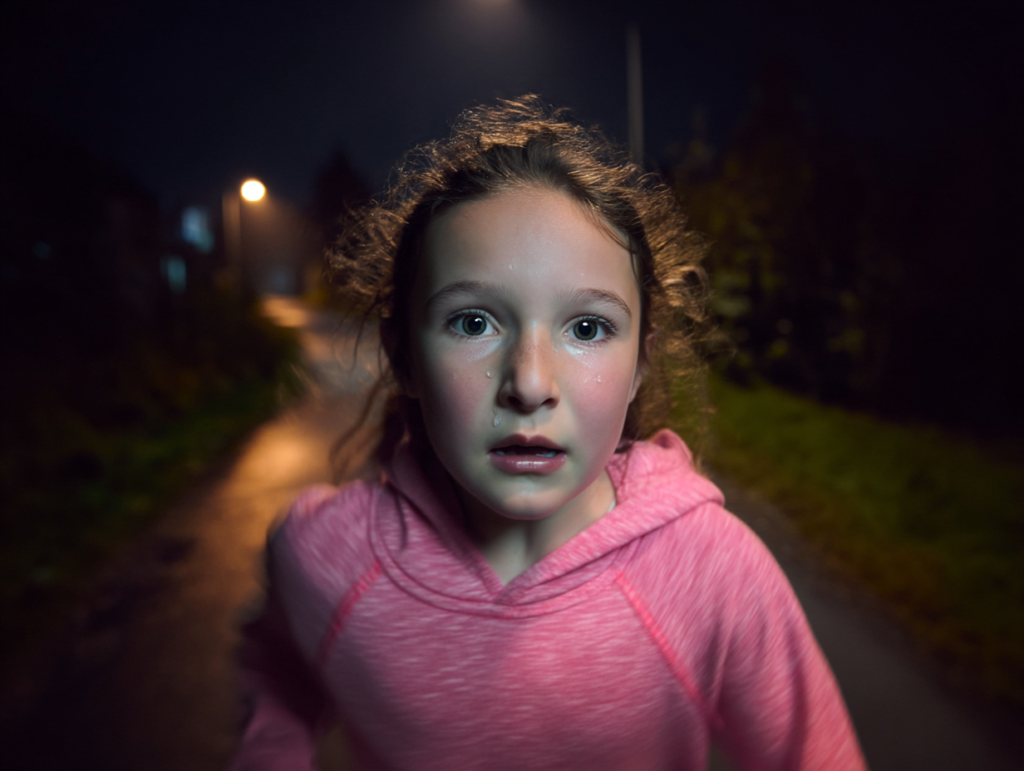
Tears filled her eyes as she remembered Max’s last words: “If anything happens, follow the dog.” It hadn’t felt like a goodbye then, but now it echoed like one. She realized Max had prepared her for escape, sacrificing his own safety so she might reach someone who could help.
Manny felt his chest tighten painfully. She hadn’t been wandering aimlessly through freezing streets; she’d been following the only plan Max could create under fire and violence. Max had trusted the dog to lead her to safety, hoping someone, anyone, would find her before Vale did. Manny felt the weight of that trust.
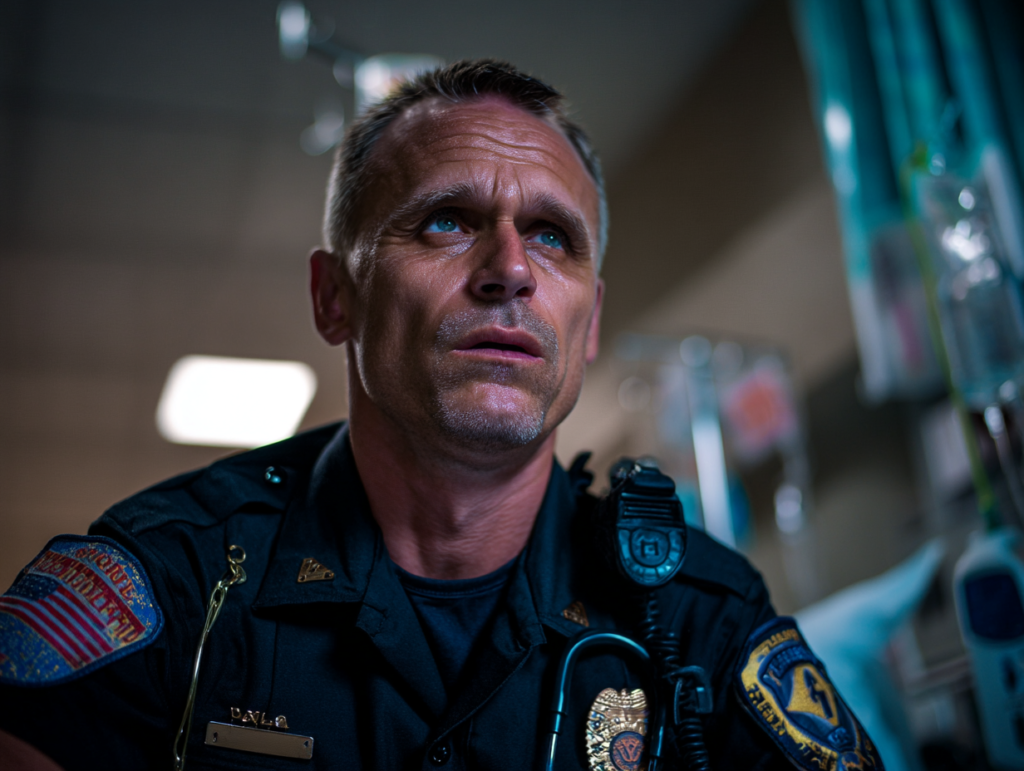
The girl’s voice shrank to a whisper as she clutched the dog. “Please don’t send me back. Please don’t let him find me.” Her plea was raw survival, spoken by a child who had already lost too much. Manny felt something inside him lock firmly into place.
Manny reported Derrick Vale to Child Protective Services immediately. Though sympathetic, the caseworker explained that Mia’s statements, fragmented, traumatized, and uncorroborated, could only open an investigation, not trigger immediate action. Without physical evidence or a documented pattern of complaints, their hands were tied far more than Manny liked.
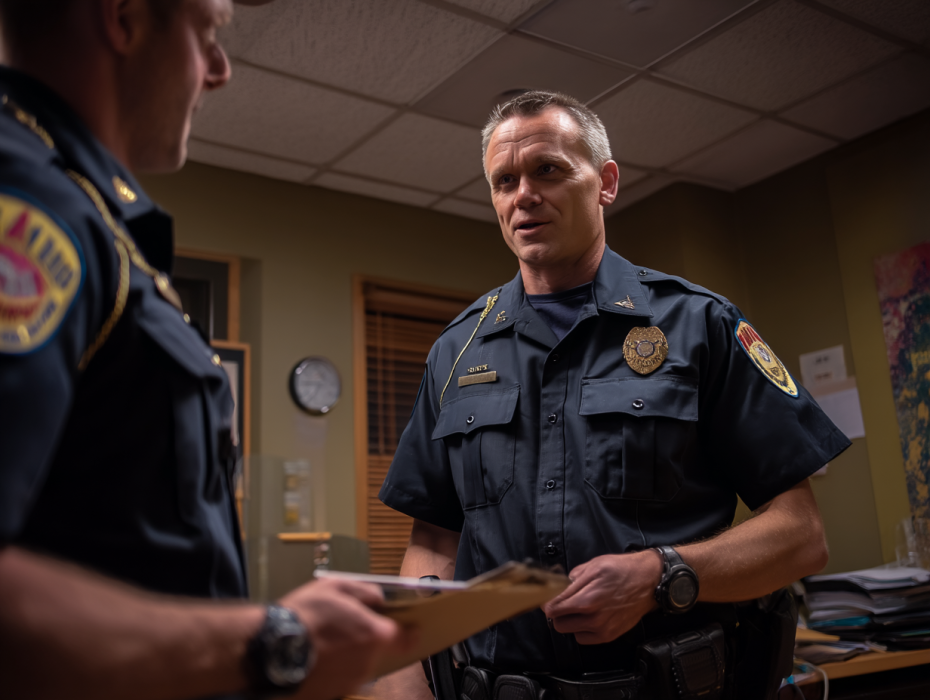
Determined, Manny went to his precinct, formally requesting a warrant to arrest Derrick Vale. The detective on duty reviewed Mia’s statements but ultimately shook his head. A warrant required more than fear and memory; it needed concrete proof. Manny felt frustration twisting inside him, knowing every hour lost widened the danger.
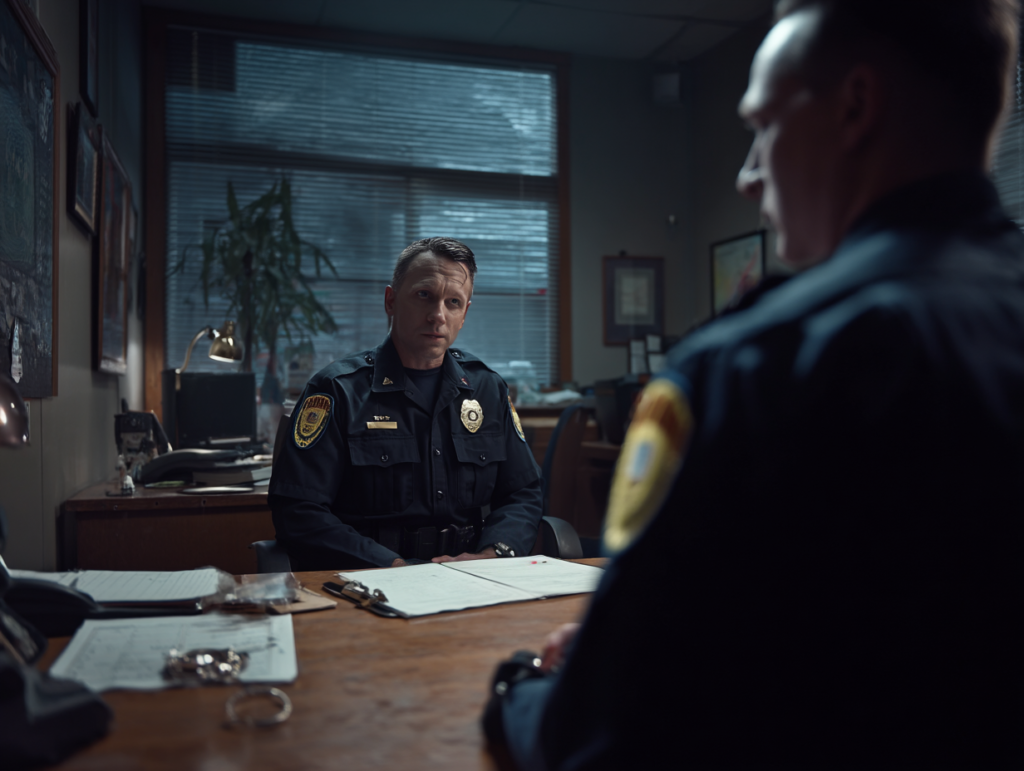
Manny’s captain called him into his office, leaning back with a tired sigh. “You’re trying to protect her, I get that,” he said, “but you can’t push the system without cause. A judge won’t sign anything based on instinct alone. Don’t risk your badge over an unsubstantiated story. You’ll need to wait. Let’s first question Vale. For now, the man seems missing.”
Manny left the office hollow-chested, the same helplessness from the long-ago missing-girl case. That night, he found a small matchbox resting at his doorstep, its edges singed, the smell of burnt sulfur lingering. Someone had been here, wanting him to know they could reach him anytime, without leaving more than smoke behind.
His old fear surged back, the same icy dread rooted in the case he’d never solved. He recognized the pattern: the quiet escalation, the subtle threats, the suggestion of fire. He understood immediately that this wasn’t a random warning. It was personal. Vale wanted him off the case, silenced.
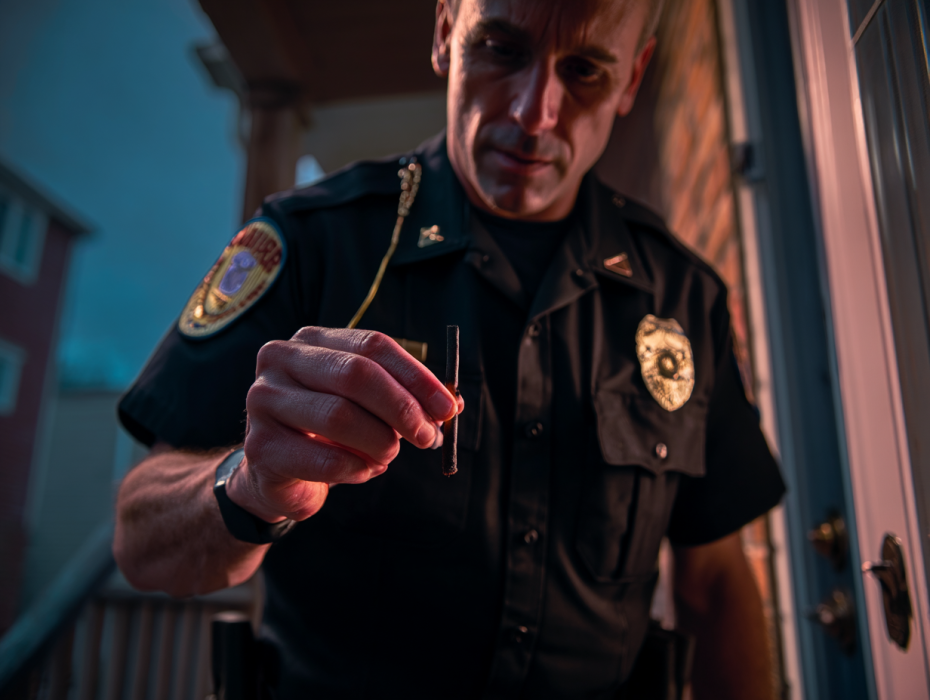
Manny hurried to the hospital, checking the girl’s room. The dog paced in circles, ears pinned back, muscles tight with unease. It kept glancing toward the hallway as if expecting danger to appear around the corner. The tension in the room felt electric, a storm poised to break at any moment.
A security guard mentioned seeing a man earlier who matched Vale’s description lingering outside near the loading bay. He’d slipped away before anyone could question him. The report left Manny with a sinking certainty. Vale was circling, watching, waiting for a moment when the girl wasn’t guarded closely.
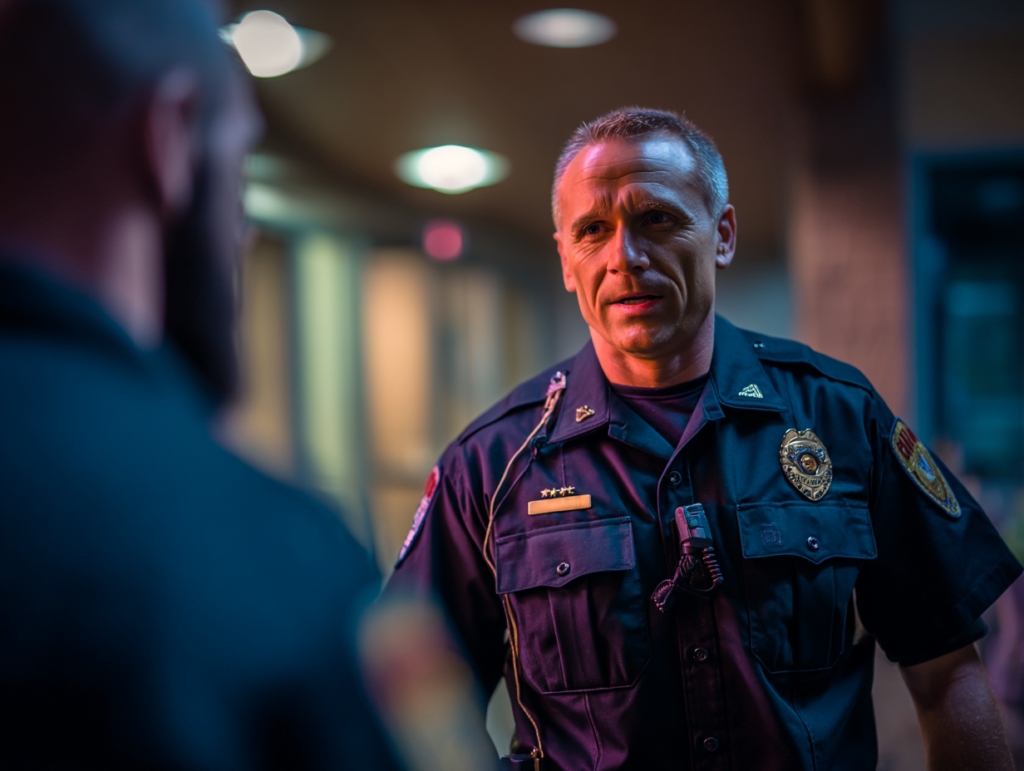
The search warrant was only on its way, but Manny drove to Vale’s property alone, without backup or notifying dispatch. Mud crunched beneath his boots as he crossed the yard, each step echoing with unease. He wanted answers right away, not later through vague paperwork.
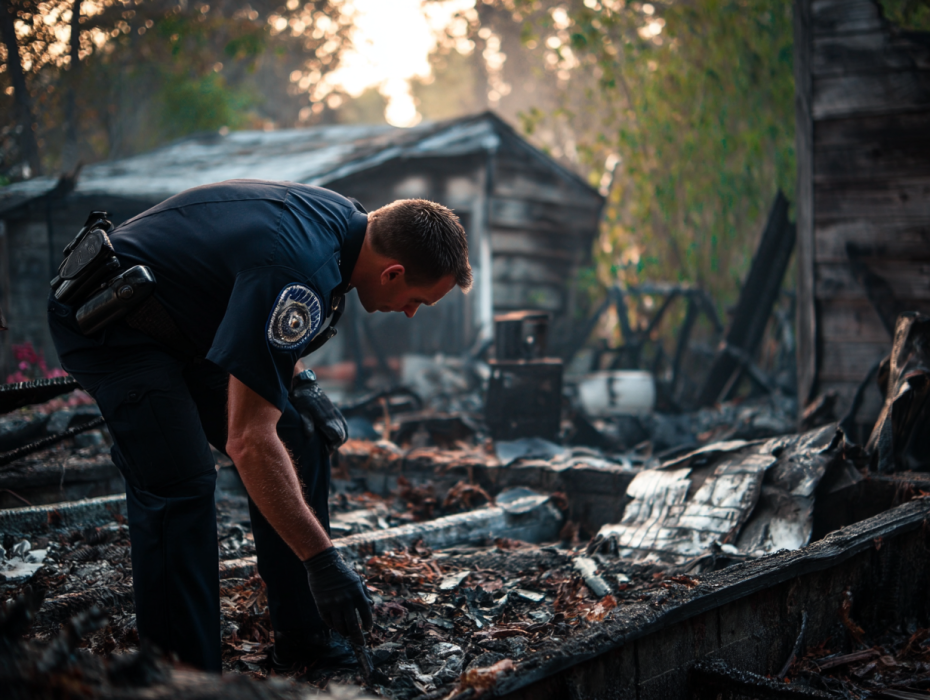
He examined the charred remains of the backyard shed. The burn patterns were unmistakable—some accelerant had been used to feed the flames deliberately. Manny traced the scorch marks with gloved fingers, reconstructing the scene in his mind. This was intentional destruction of evidence. Vale hadn’t simply snapped; he was covering his tracks.
Neighbors, initially reluctant to cooperate, shared hushed comments through cracked doors, saying they’d heard “a boy scream” the night the fire erupted. After that, no child was seen entering or leaving the home again. Their fear-filled eyes told Manny everything. They suspected something terrible had happened, but fear of Vale had kept them silent.
Manny’s stomach twisted. Max could still be out there—injured, hiding, and terrified. Or the alternative, the darker possibility Manny refused to articulate aloud, pressed against his thoughts. Either way, the boy hadn’t simply disappeared. Something had happened, and Vale was desperate to ensure no one ever discovered what it was.
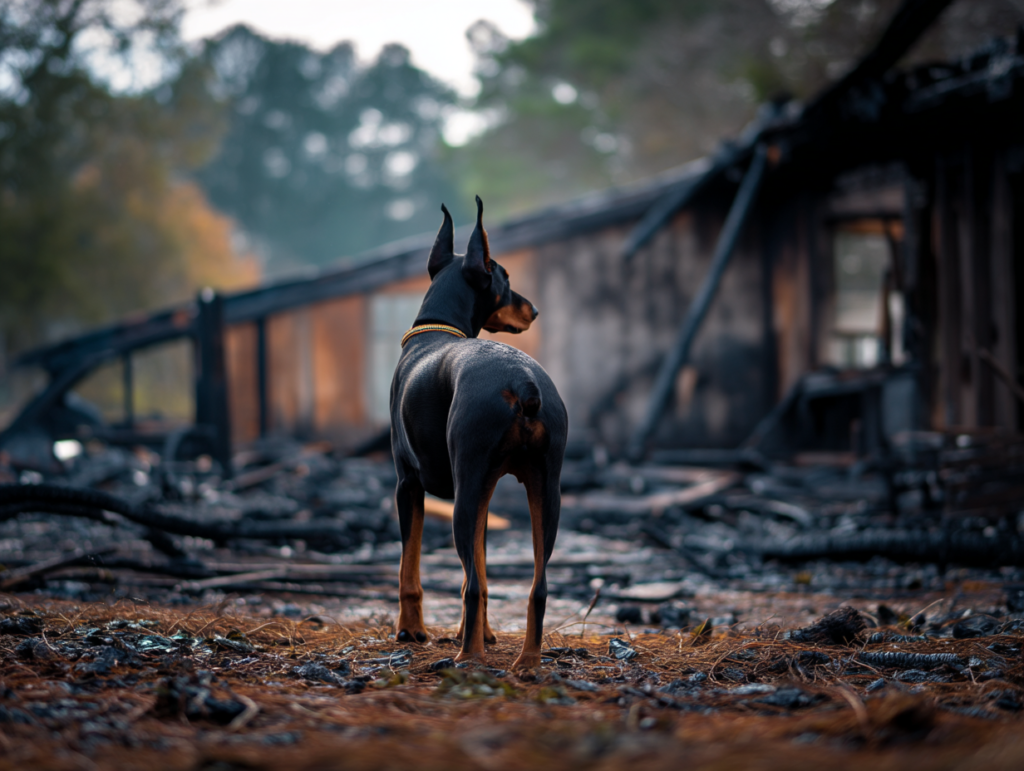
The dog, brought quietly along for this unofficial search, sniffed the ground and tugged insistently toward the woods behind the property. Its urgency was unmistakable. Manny’s pulse quickened. The animal had caught a familiar scent, one that could lead them to the missing boy.
Manny followed the dog into the dark woods, branches cracking beneath his boots as winter air burned in his lungs. His breath rose in pale clouds, vanishing into the night. The dog moved quickly but purposefully, nose low, tail stiff. It was a creature on a mission, chasing a trail Manny desperately hoped still existed.

They stopped when the dog barked sharply. A torn jacket hung snagged on a protruding root, fabric stiff with frost. Manny lifted it carefully. It was small, too small for an adult. His stomach tightened. This wasn’t discarded clothing. It was a breadcrumb left unintentionally by a child trying to survive.
Fresh snowfall dusted the ground, but beneath it, Manny spotted faint footprints leading deeper into the forest. They were lighter, uneven strides that suggested exhaustion or injury. He crouched, tracing them with gloved fingers, imagining a boy stumbling through freezing darkness alone.
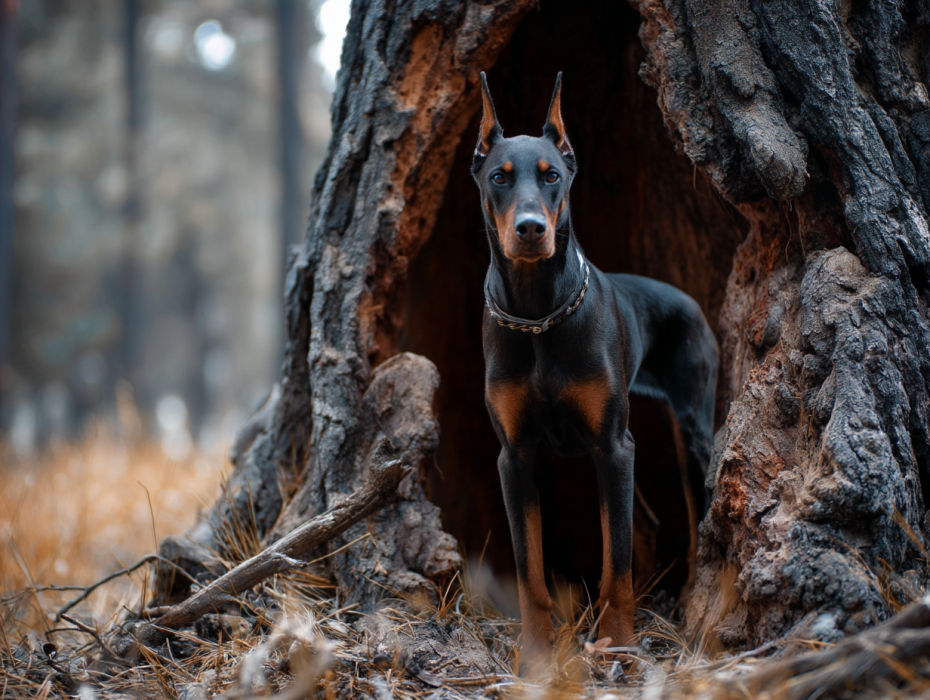
The dog whimpered softly and nudged a hollow tree trunk. Manny knelt to look inside. There, half-hidden among dead leaves, lay an old shoelace and a small folded piece of paper. His heartbeat thudded in his ears as he reached in, fingers brushing the cold bark surrounding the precious clue.
Manny unfolded the note with careful hands. The handwriting inside was uneven, jagged, but unmistakably legible: “Help! My sister, Mia, and I are being hunted. Max” The simple message hit him harder than any accusation or threat. Max hadn’t named his pursuer, unfortunately. Yet he had been trying to guide rescuers toward the truth.
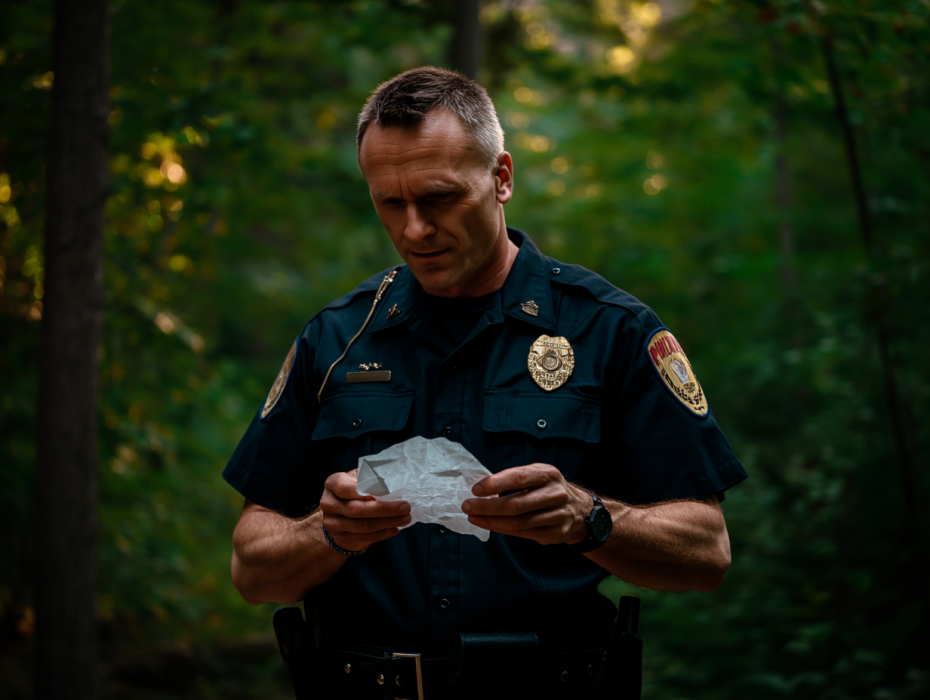
Manny swallowed against a tightness in his throat. Max had left a trail not for himself, but for the little girl waiting in a hospital bed. Every sign, every footprint, every scrap of fabric was a desperate attempt to save her. Manny realized Max had fought with every ounce of courage he had.
When Manny backed out of the hollow, the dog stiffened. Manny followed its gaze and froze. Vale stood several yards away, half-shrouded by trees, watching silently. His expression was blank and chilling—a mask stripped of humanity. The moment Manny blinked, Vale’s face disappeared back into the darkness.
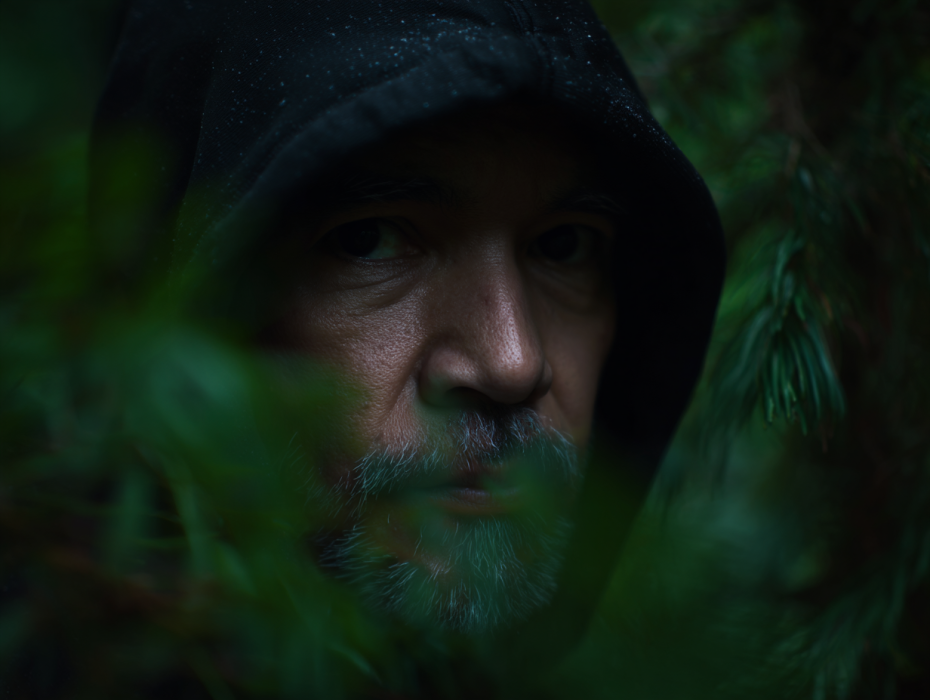
Manny sprinted forward, crashing through branches, but Vale was already gone, swallowed by the forest. Only silence remained, loud and unforgiving. Manny stood still, trying to steady his breathing. Vale hadn’t come here by accident. He’d been tracking them, ensuring he stayed one step ahead, ready to strike when unguarded.
Manny returned to the hospital with a clarity that rattled him. Vale wasn’t searching for the girl to reclaim her; he was hunting her to silence the only witness to his crimes. The realization bore into Manny’s chest like ice. He knew now that protecting her was urgent.

Manny requested extra security for the girl, but without formal charges, protocol tied everyone’s hands. Guards could watch entrances, nothing more. The limitations gnawed at him. He knew Vale wasn’t finished. Rules felt painfully thin compared to the threat stalking the hospital halls, waiting for the smallest opportunity to strike.
Later that night, Manny saw a maintenance worker roaming about the hospital corridors. His uniform was convincing, but his rigid posture looked odd. He passed the nurses’ station unnoticed. Manny was about to step forward and question him when one presence sensed him immediately, long before he reached the girl’s room.
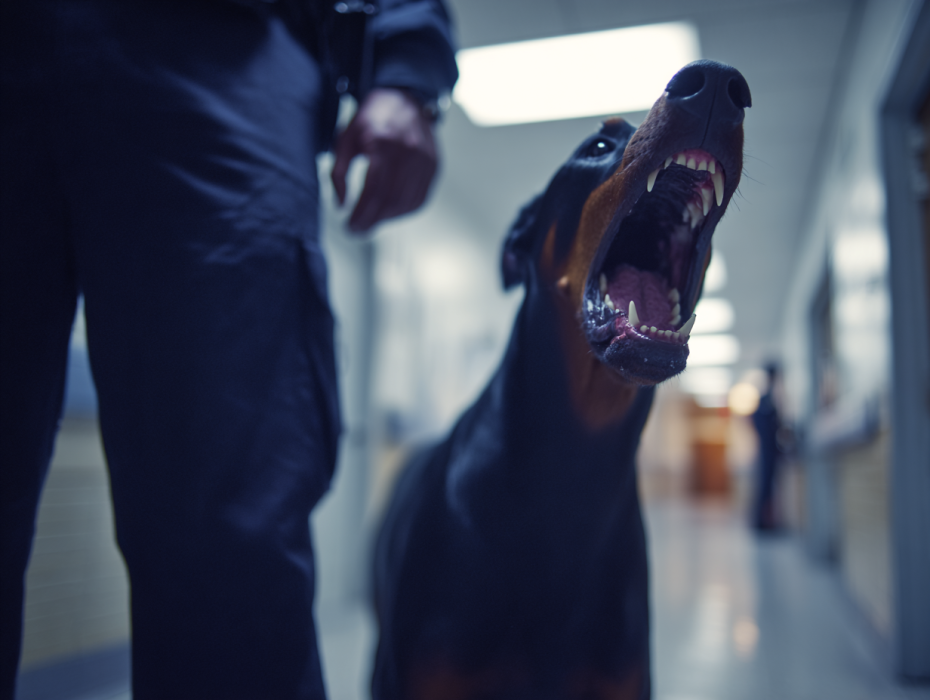
The dog’s growl erupted like an alarm, low and vibrating with fury. Manny sprinted into the hallway and caught Vale mid-stride. For a heartbeat, their eyes locked—predator and protector. Then Vale bolted, slipping into a stairwell before Manny or security could react, leaving only frantic footsteps echoing behind him.
When Manny reached the stairwell landing, Vale was gone, but a chilling phrase lingered on the wall in marker: “She comes home with me, or nobody sees her again.” The words tightened something inside Manny, crystallizing into resolve. Vale wasn’t bluffing, and Manny had run out of time.

Manny realized he needed proof—undeniable evidence that would end Vale’s access to any child permanently. Without it, procedures and paperwork would keep looping endlessly. He couldn’t rely on instinct anymore. He needed something concrete enough to crush Vale’s lies and expose everything hidden beneath that controlled, manipulative exterior.
He returned to Vale’s backyard under the cover of night, scanning the fire-scarred ground. Near the ashes of the shed, soil looked freshly disturbed, darker than the surrounding dirt. Kneeling, he brushed aside dead leaves. His pulse quickened. Someone had buried something recently—something Vale had probably not had the time to destroy.
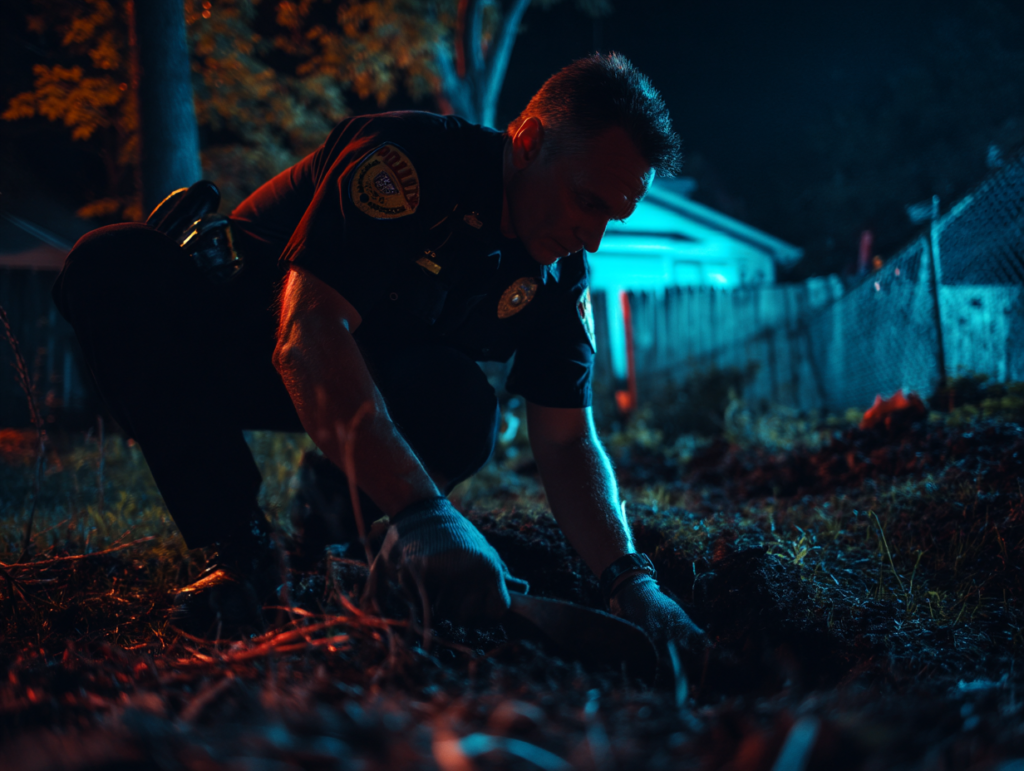
Manny dug with his bare hands, mud freezing against his skin. Minutes passed before his fingers struck something solid. It was metallic, cold and rusted. Heart pounding, he cleared away the earth until a small box emerged, half-charred. He lifted it carefully, knowing whatever lay inside could finally expose Vale’s hidden crimes.
Inside the box lay gasoline-soaked rags, incomplete insurance documents, and charred children’s drawings—evidence of intent and cover-up. Beneath them, Manny found a broken collar tag engraved with Max’s dog’s name. His breath caught. Vale had tried erasing everything that could implicate him.
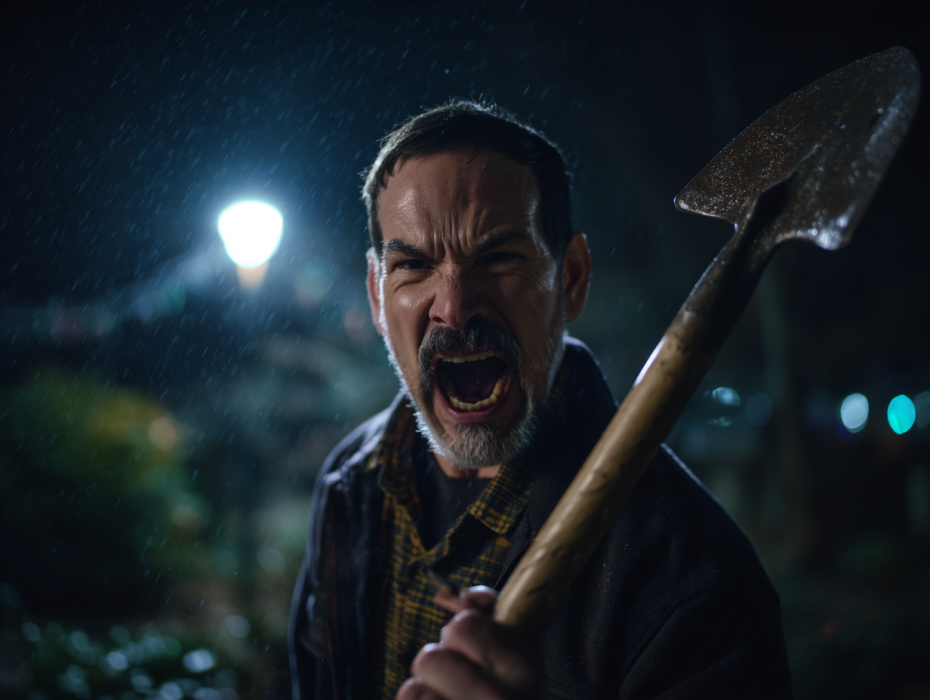
A harsh voice split the silence. Vale stood at the edge of the yard, shovel gripped tightly, fury twisting his features. “You have no right to be here,” he shouted, stepping forward. His presence radiated raw desperation. Manny realized Vale had come to reclaim the box, or eliminate the witness who found it.
The struggle erupted instantly. Vale swung the shovel with vicious force, metal whistling past Manny’s face. Manny stumbled, boots sliding through mud as he dodged each strike. The cold ground offered no traction. It became a fight for survival, each second narrowing the gap between danger and rescue.
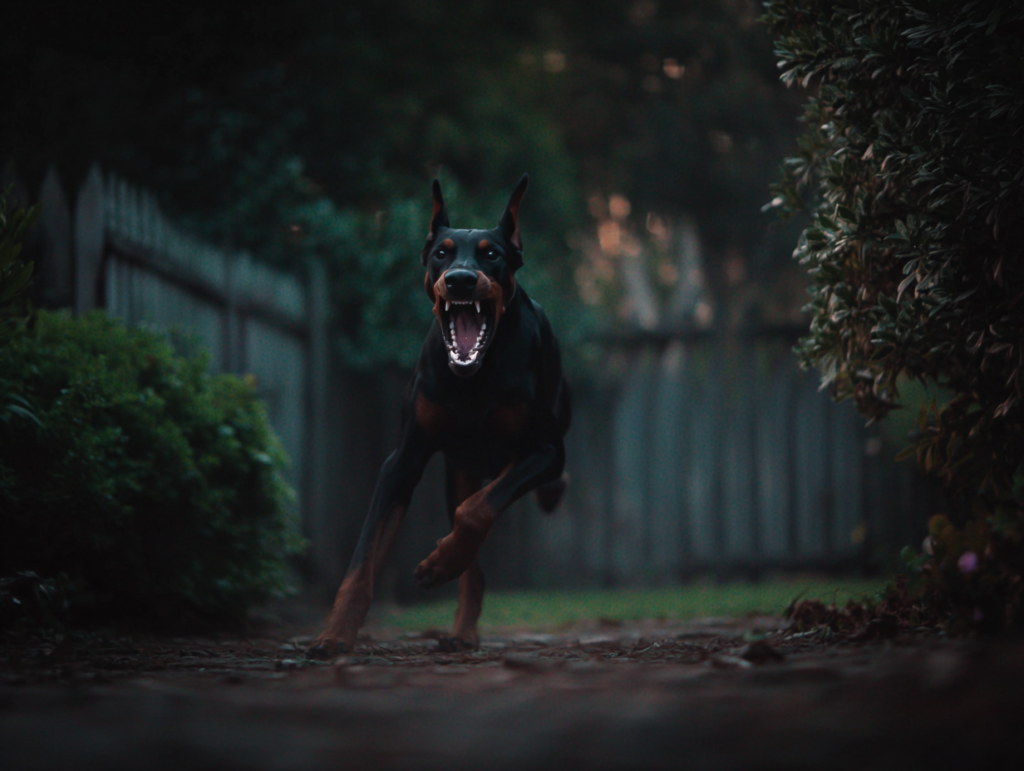
Just as Vale raised the shovel again, the dog burst from the trees, slamming into his legs with fierce momentum. Vale toppled backwards, crashing into the mud. Manny seized the opening, wrenching the shovel away and snapping handcuffs over Vale’s wrists before he could regain his footing.
Seconds later, police backup arrived, red and blue lights washing across the ruined yard. Sirens pierced the night as officers secured Vale and collected evidence. Manny stood catching his breath, mud-covered and shaking, the dog leaning against his leg as though ensuring he truly was all right. Now Manny had one more thing to do—find Max.
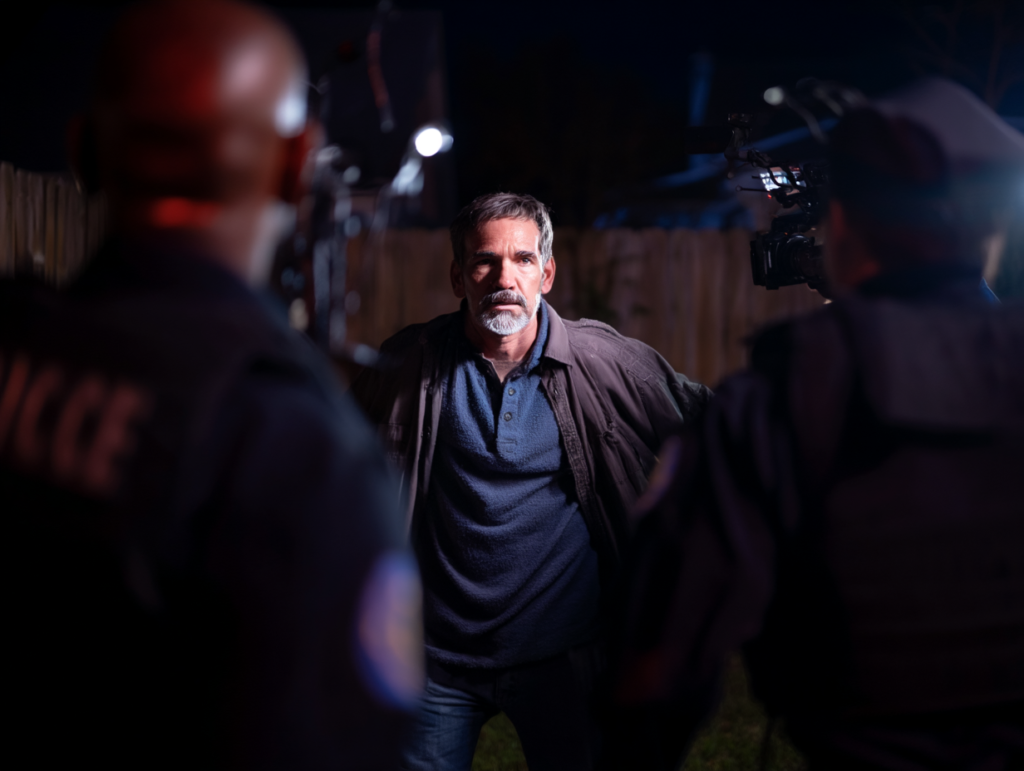
Soon search teams swept through the woods, their voices echoing between bare branches. The dog pulled ahead with renewed urgency, weaving through undergrowth until it stopped at an old drainage pipe. Inside, huddled against the cold, Max stared out—bruised, starving, and exhausted, yet unmistakably alive. Relief crashed over the entire team.
When rescuers lifted Max from the pipe, he barely noticed their hands. His gaze darted past every adult until he found Max next to Manny. Clutching Manny’s sleeve, he whispered the only question that mattered: “Is my sister safe?” The boy’s trembling voice carried every fear he had endured alone in the dark.
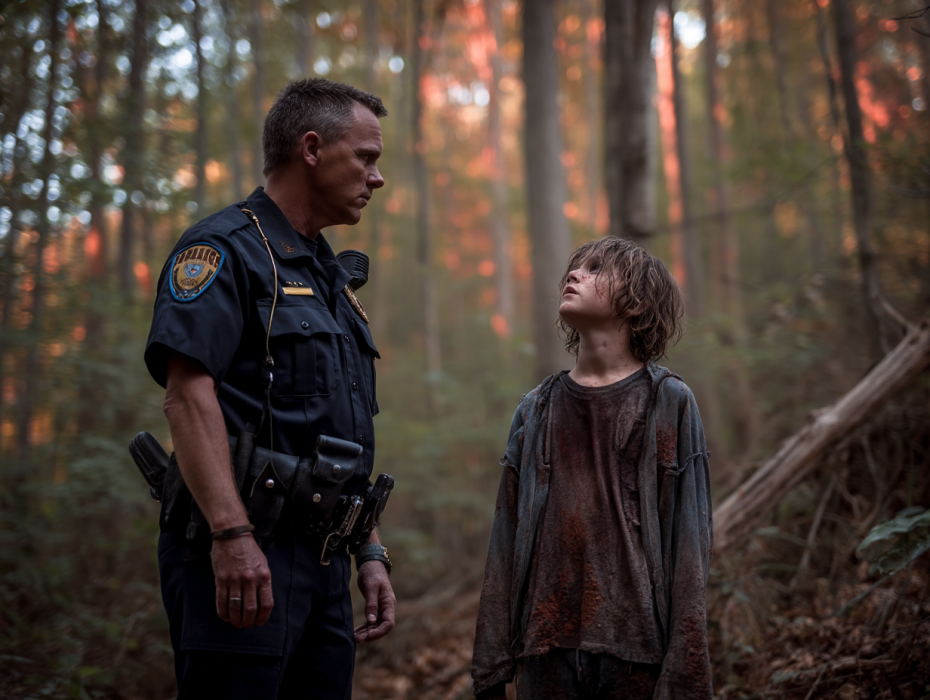
With the evidence uncovered, Vale was charged with arson for the sake of collecting insurance, child endangerment, and assault. Once the story reached the news, more complaints surfaced from former placements—families who had been too afraid to speak earlier. Prosecutors built a formidable case, ensuring Vale’s incarceration.
When social services prepared to reassign the girl to a new foster home, she panicked, clinging to Manny with desperate strength. Her cries filled the small hospital room; the dog growled at anyone who stepped near. The officials hesitated, shaken by her terror. It was clear that moving her would cause more harm.

Manny stepped forward, requesting emergency foster rights on the spot. His voice held no hesitation, only conviction. Administrators exchanged glances, then agreed, recognizing he had already become the safest place she knew. The girl sagged in relief, gripping Manny’s hand tightly, the dog settling protectively at her feet.
Months passed in careful evaluations, interviews, and hearings, each one reinforcing what had already become obvious: she belonged with Manny. When the adoption was finalized, the courtroom felt brighter. The dog, an unwavering guardian, was formally registered as her emotional support animal.

On a quiet evening, Manny returned to his old route, but this time he didn’t walk alone. The girl held his hand, her steps matching his, while the dog trotted faithfully beside them. The night air felt gentler. For the first time in years, Manny felt whole. He was finally able to breathe again.