Marcus Hale made the bet on a Tuesday, three whiskeys deep, bored in the way only billionaires get bored. He raised his glass and spoke to the room like a man daring the world to surprise him. Nobody there understood yet what the bet would cost.
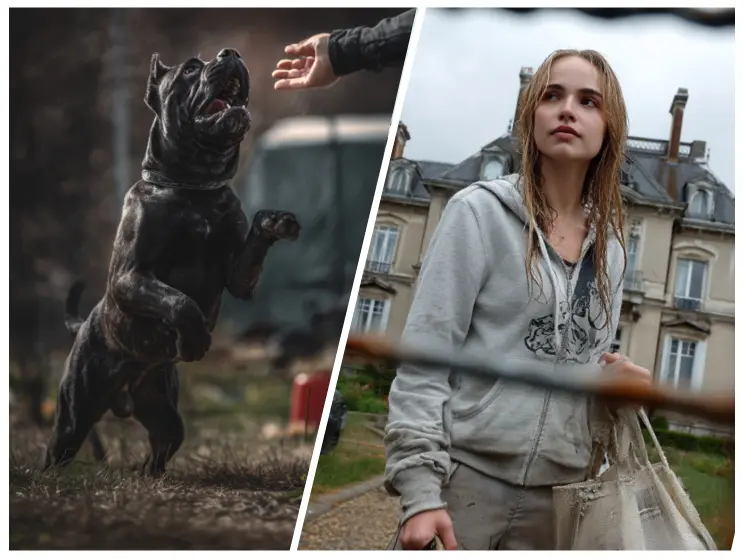
“One million dollars to anyone who can calm Titan.” The dog—a 180-pound Cane Corso —was destroying a mahogany table in the east wing. Nobody moved. Nobody breathed loudly. They had all heard about Titan. Even the bravest guests kept very deliberate distances.
Titan had hospitalised two professional trainers in three years. He’d sent a veterinarian through a fire exit and reduced a television dog whisperer to genuine, documented tears. He was Marcus’s dog by possession. By every other measure, Titan belonged to no one.
Catherine Hale had chosen Titan six months before her death, naming him after the ancient forces that predated the gods—vast, pre-rational, impossible to domesticate. Marcus had kept him after she died because giving him away felt like erasing the last warm thing she’d left.
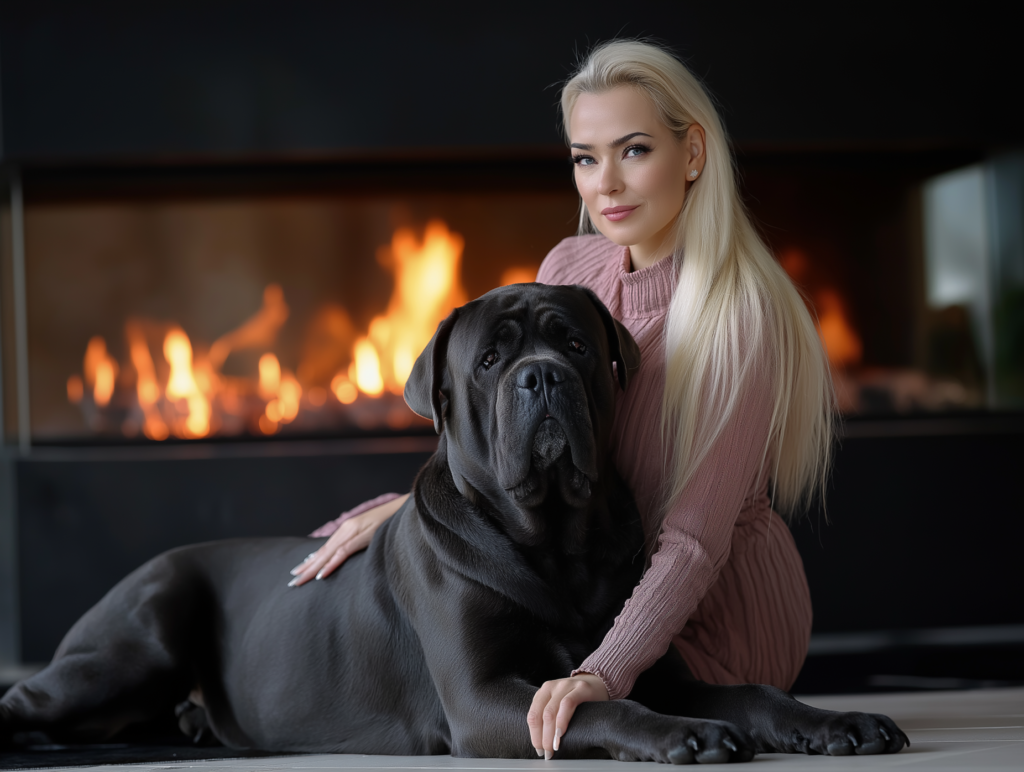
For months after the funeral, Titan had been difficult but manageable. Then the rages deepened. Calm intervals between the episodes were short. By month eight, two wings of the estate had become no-go zones. Marcus had assumed grief did that to animals, too. He had assumed incorrectly.
The dog had been termed “unpredictable” for over a year. The worst part was that nobody could seem to suggest a cure for the problem. And Marcus did not have the heart to rehome the dog— it seemed too great a disservice to Catherine’s memory.
Gerald Marsh, Marcus’s personal advisor and wingman, had recommended the facilities manager. Only a week after the funeral, he had sat in Marcus’s study saying, “You’ve been consumed by grief. Let me handle the practical things for now.” Marcus, hollowed out, had been grateful.
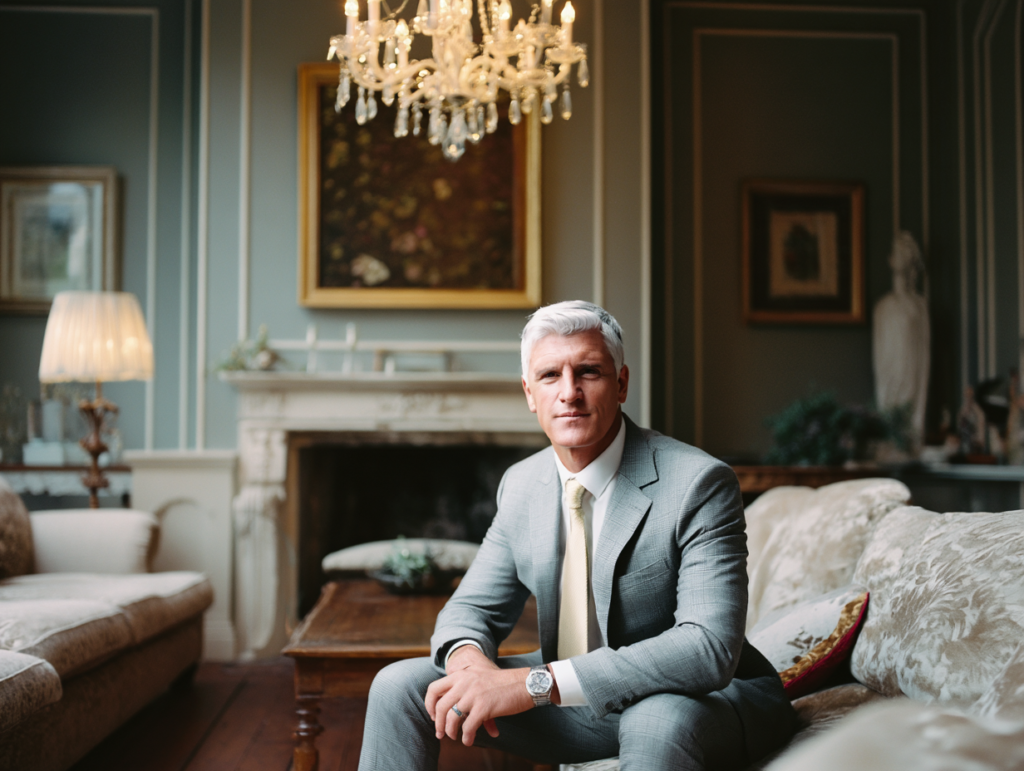
Marsh was sixty-one, silver-haired, possessed of the authority that accumulates in men trusted by powerful people long enough that trust becomes a credential. He had known Catherine since she was seven. He had wept at her funeral.
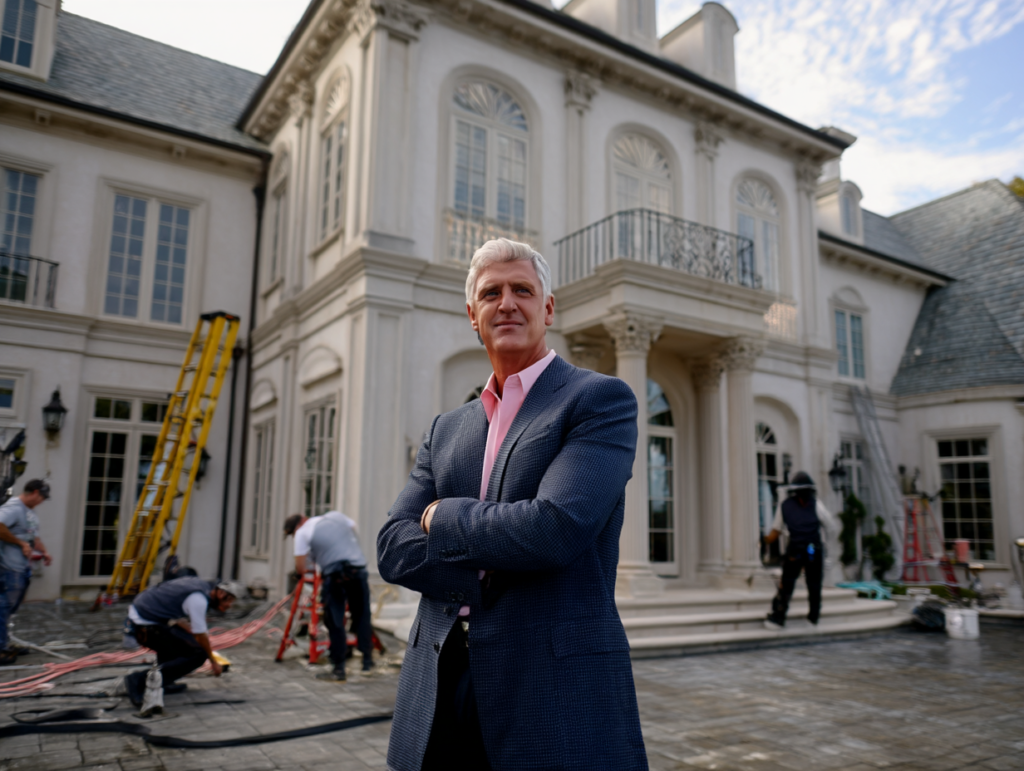
Marsh made most of the decisions and even had the authority to hire and fire staff. He, too, agreed that Titan could not be rehomed. He said he would handle the problem personally. However, a solution to the problem seemed difficult. Nothing seemed to work, or so it appeared.
The business damage accrued quietly. Marcus missed a board meeting in month three —Titan had cornered two catering staff, and the estate was in chaos. He attended the next one by video link, which Marsh told him “projected uncertainty” to institutional shareholders. Marcus accepted this. He trusted Marsh’s reading.

By month six, Marcus had cancelled three visits to his Singapore development. His project manager, Reyes, sent a careful email: “We need you here, Marcus. Not on screen. Here.” He did not go. Two days before the rescheduled trip, Titan broke through a reinforced door and mauled a guard’s forearm.
The guard required surgery. Marcus’s lawyers advised against travel during the liability assessment. Marsh had recommended those lawyers. The Singapore delay cost eleven million dollars. Marcus, still overtaken by grief, could not yet see the pattern building around him.
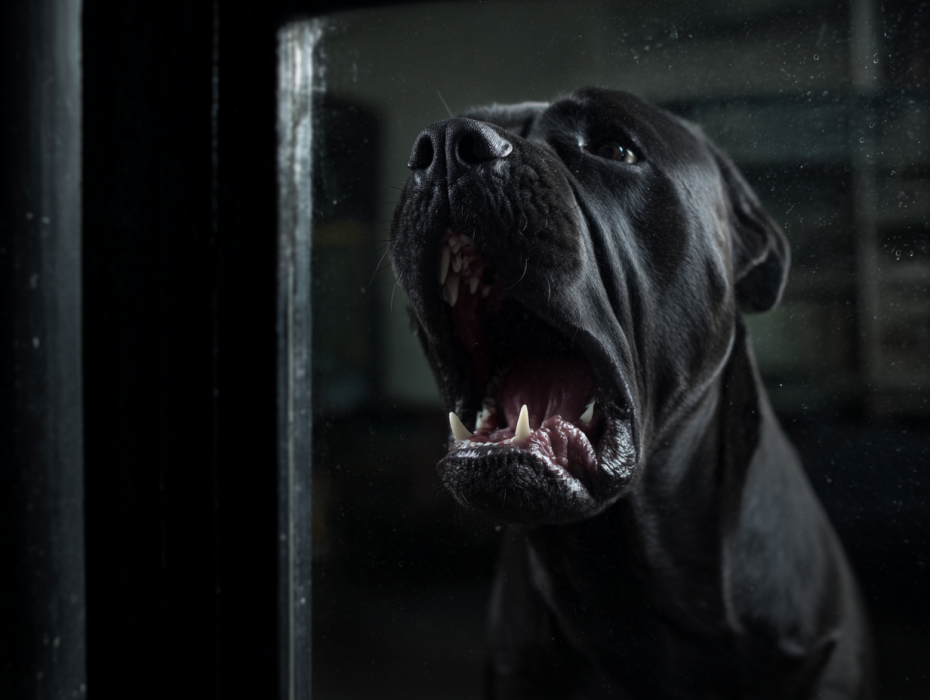
Whenever Marcus moved toward re-engaging—planning a trip, scheduling meetings, entertaining guests who might restore his visibility—something involving Titan intervened. A new incident. A new liability. A new reason to stay contained, stay quiet, stay home. Each incident was managed by Marsh.
Marcus did attempt solutions. He hired Dr Renn, a canine behaviourist with twenty years of experience. Renn lasted three sessions. On the fourth visit, he arrived to find Marsh already in the study, raising concerns. “I’ve heard troubling things about his methodology,” Marsh said. “From whom?” Marcus asked.
Marcus eventually dismissed Renn. Six weeks later, Marsh steered him away from a containment proposal put forward by Priya, Marcus’s assistant—a permanent east-wing enclosure that would have made Titan a non-factor overnight. “Catherine would have hated him caged,” Marsh said softly, echoing Marcus’s thoughts. Marcus did not pursue it.
The bet, when Marcus finally made it, was from a man who had been slowly going mad over the problem of his dog. He threw the problem open to the world. He didn’t know at the time what it would cost him. He only knew that it was a last ditch attempt at regaining his sanity.

Marcus posted the bet online that night. His publicist called seven times by morning. His lawyer called twice. His assistant Priya forwarded 340 emails from trainers, behaviourists, and one man from Nebraska who communicated with dogs via focused thought. Marcus deleted them all.
Marsh called that evening. He’d seen the post. “It’s not a good look, Marcus. It undermines the authority you must exude right now.” He said it with the measured concern of a man looking out for a friend. Marcus almost agreed to take it down, but on a whim, didn’t.

Eight people tried over three weeks. Two quit before entering Titan’s wing. One lasted forty-five seconds. One threw a steak through the doorway and sprinted. Marcus watched each attempt on the security feed and felt something dark and satisfied settle in his chest.
And then, she came along. She was young—nineteen, maybe twenty—standing at the iron gate in soaked clothes, hair flat against her face, a worn canvas backpack over one shoulder. She looked directly into the camera lens. Not nervously, neither with hope.

Her name was Wren. Just Wren. She offered no surname. Her green eyes moved too quickly, cataloguing the guards, the gate architecture, the ivy along the eastern wall. She wasn’t afraid. She was the kind of person who assessed everything before deciding whether fear was the appropriate response.
Marcus had her brought to the terrace. She sat across from him in a damp jacket and said nothing. Most people filled every silence with reassurance. She offered neither. “Where are you staying?” he asked. “Nowhere permanent.” “What are you?” “Observant,” she said cryptically. He gave her twenty-four hours.

He ran her through every database Priya had access to that night. No criminal record. No social media. No property, no vehicle, no employment beyond eighteen months ago. Before that: a single academic record from the Whitmore Institute in Vermont, a private facility in animal cognition. Two years in.
One name in the Whitmore faculty records made Marcus go still: Dr Elena Vasquez, a generation-defining researcher in animal trauma behaviour, who vanished from public record four years ago. Priya’s research note read: Vasquez had one graduate student in her final year. Her name is redacted.
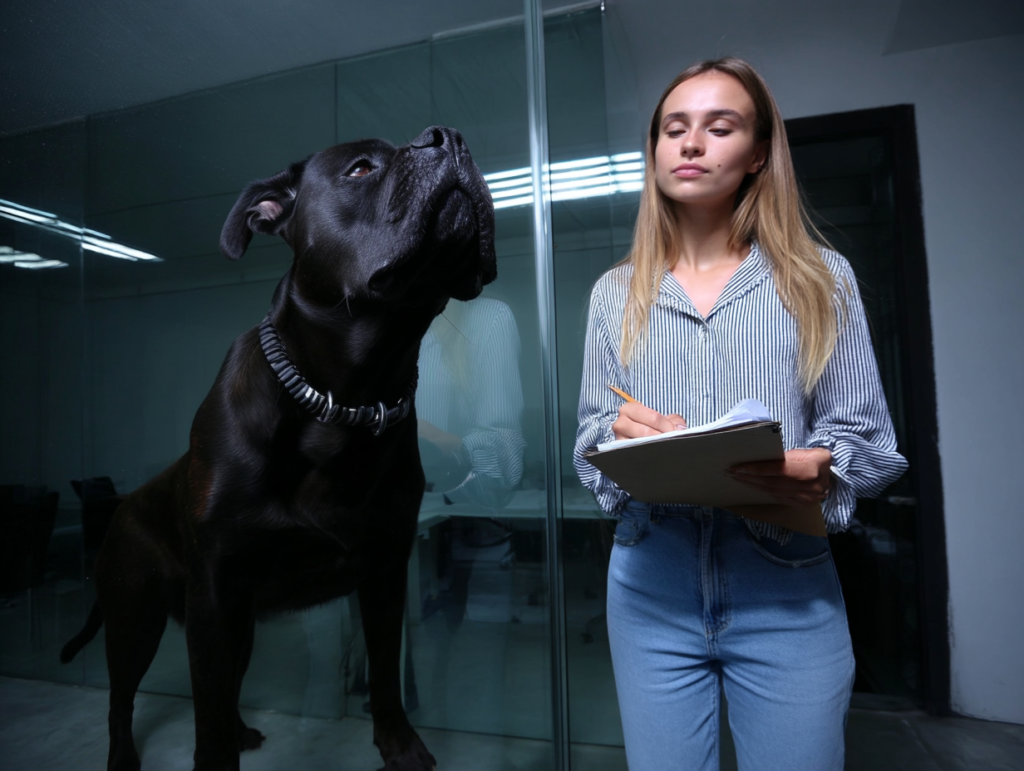
In the morning, Wren was already in the corridor before Marcus arrived. Three new pages filled her notepad. She had spent two hours questioning the chef about feeding schedules and container types. “The bowl,” she said when Marcus appeared. “It needs to change today. Before anything else.”
“It’s stainless steel. Your heating, ventilation and air conditioning system creates a high-frequency resonance in that bowl when it cycles. Inaudible to humans. Dogs with acute auditory sensitivity register it as a threat signal. Every time the heating activates, Titan’s food bowl tells him: danger. He’s been eating in terror for years.”
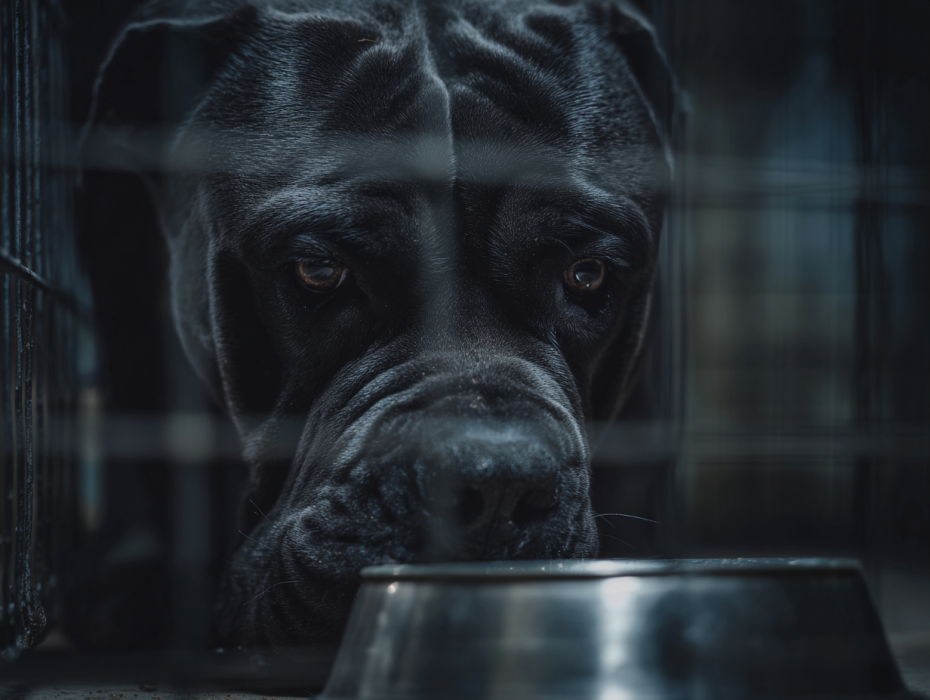
Four experts in three years had used words like “dominant” and “territorial.” Not one had used the word “terror.” Marcus sat with that—the weight of having the correct word handed to him by a girl who had walked four miles in rain while the experts had all arrived at the wrong conclusions.
“After the bowl change, I go in.” Marcus asked, “Without equipment?” “Equipment signals a threat to a trauma-response animal. Just proximity and stillness.” “That’s insane,” Marcus said. Wren looked at the door. Beyond it, Titan paced, breath fogging the glass. “Probably,” she agreed, and began deliberately slowing her breathing.
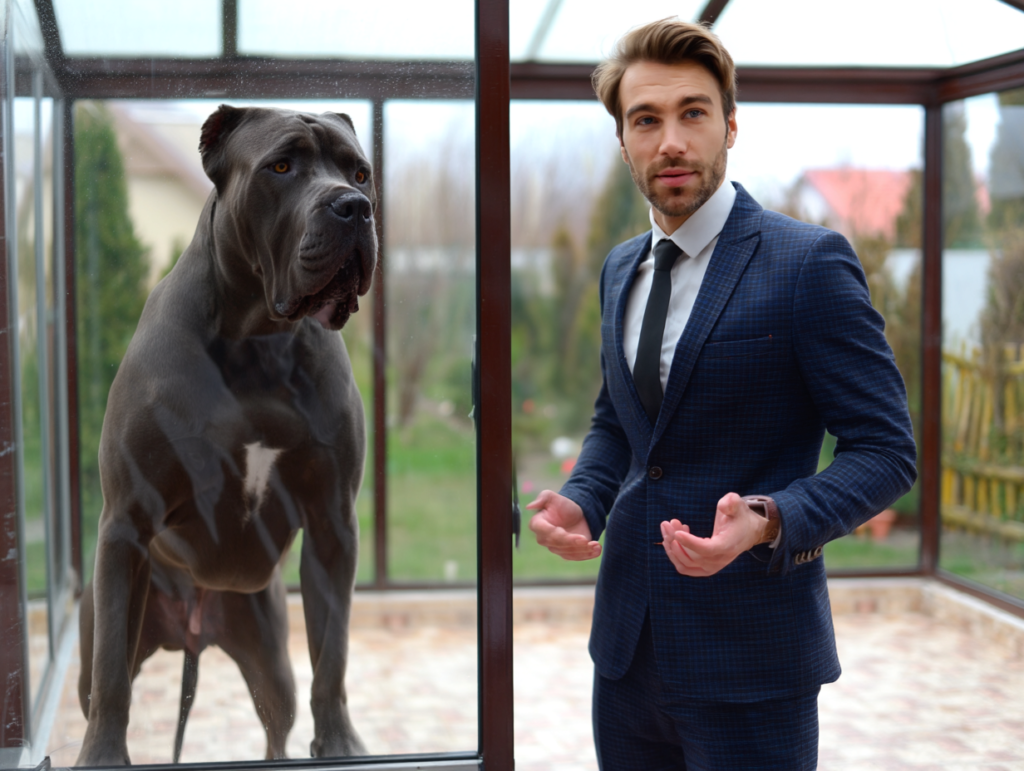
She stood outside the door for six minutes, settling into absolute stillness. Then she opened it. Titan charged. Marcus’s hand went to the emergency seal. Wren didn’t move. She stood in the threshold as 180 pounds of dog hurtled toward her and stopped. Three feet away.
Five minutes. Then ten. The sound in Titan’s chest faded. His posture shifted—one shoulder dropped, then the other. His ears tilted fractionally outward. Wren hadn’t moved, spoken, or reached out. She was simply present in the dog’s space like a fact he had to accept.
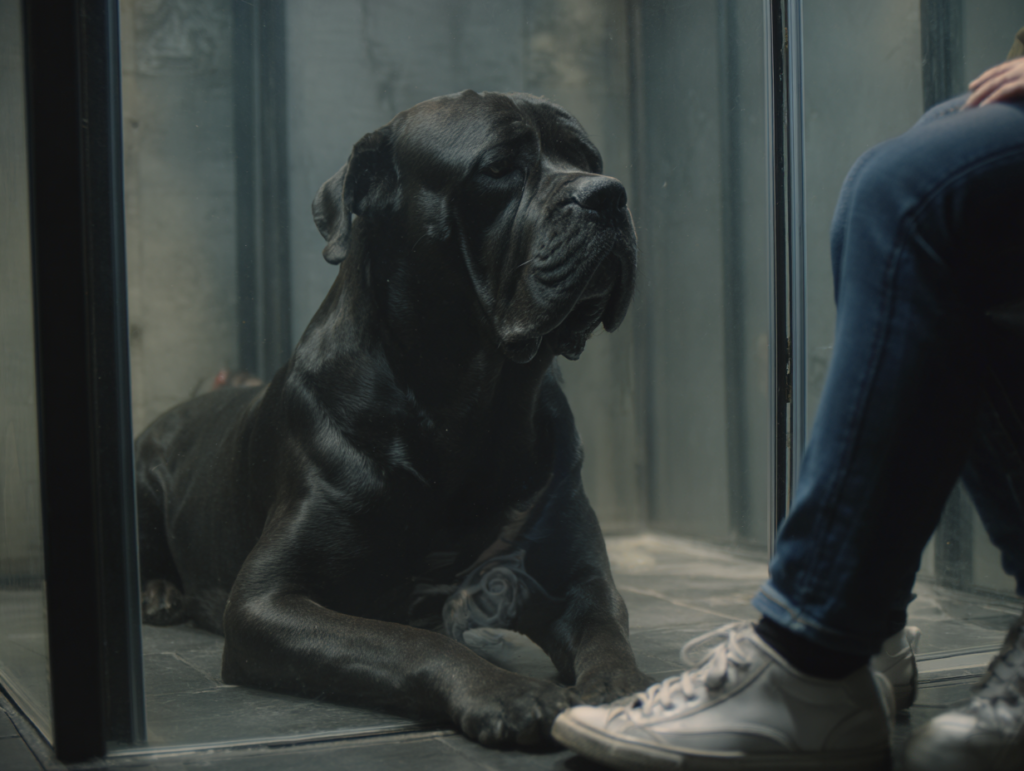
At fourteen minutes, Titan sat down. In three years, the dog had never sat voluntarily near a stranger. He looked at Wren and released a long breath through his nose— something almost like a sigh. Titan was a dog arriving, with great caution, at the possibility that stillness might be safe.
Marsh called while Wren was still inside with Titan. He had been calling intermittently since the bowl change. “I’d feel better if we had her properly vetted,” he said carefully. “I have a contact—a private investigator. Thorough, discreet. Let me have him look before this goes further.”

The offer was reasonable. The kind of thing a careful advisor says. Marcus almost agreed. Something in Marsh’s tone—the slight over-precision of it, arriving only hours after the bowl change—registered in the back of his mind as wrong, like a note played flat.
“I’ll handle this,” Marcus said. He didn’t fully know why. He filed the feeling and said nothing more. Marsh appeared at the estate the following morning, uninvited, with a folder of printed articles about unverified animal behaviourists who had caused harm. He spread them on the kitchen table.

Priya brought the folder to Marcus that evening. He promised he would look through it. The articles were real but generic—none related to Wren specifically. It was the kind of dossier assembled to create ambient doubt rather than to prove something specific.
That night, Marcus asked Priya to pull up the full heating, ventilation, and air conditioning system documentation—not the summary. It took until two in the morning. What she found was that the retrofit had not been scheduled for maintenance. It had been initiated by a work order signed by the facilities manager weeks after the funeral.

The timing was uncanny. It was just months before Titan’s behaviour first dramatically worsened. He thought about the Singapore trip, the dismissed specialist, the containment plan abandoned because of a dead woman’s imagined preferences. He thought about how a maze looks from above versus from inside.
In the morning, Wren found him waiting. “The bet. You’ve won,” he said. “Yes,” is all she said. He waited for her to ask about the money. Instead, she continued, “Do you know about the heating, ventilation, and air conditioning system?” Something shifted in Marcus’s face—not surprise, but recognition. “Tell me what you know,” he said quietly.

They sat at the kitchen table for two hours, comparing documents. Wren had found the retrofit invoice in the east-wing filing room while observing Titan’s routine. Marcus had the full work order from Priya. Together, the documents mapped something neither had seen separately: a targeted modification, designed around specific knowledge.
“This wasn’t guesswork,” Wren said. “Whoever specified this frequency had read the literature. There are exactly three published papers documenting the range at which electrical system resonance triggers a threat stimulus in dogs with acute auditory sensitivity. This seems deliberately done.”
“The consultant who signed the specification,” Marcus said. “Who does he work for?” Wren slid a corporate registration across the table—attached to the invoice, a Delaware consulting firm. Marcus typed a search that should have taken thirty seconds. It took three.
Marcus closed the laptop. He looked out the window at Titan—pacing still, but slower now, the jagged circles of over two years beginning incrementally to widen. The dog didn’t know his food bowl had been weaponised. He just knew something had stopped hurting. That was enough for the dog.
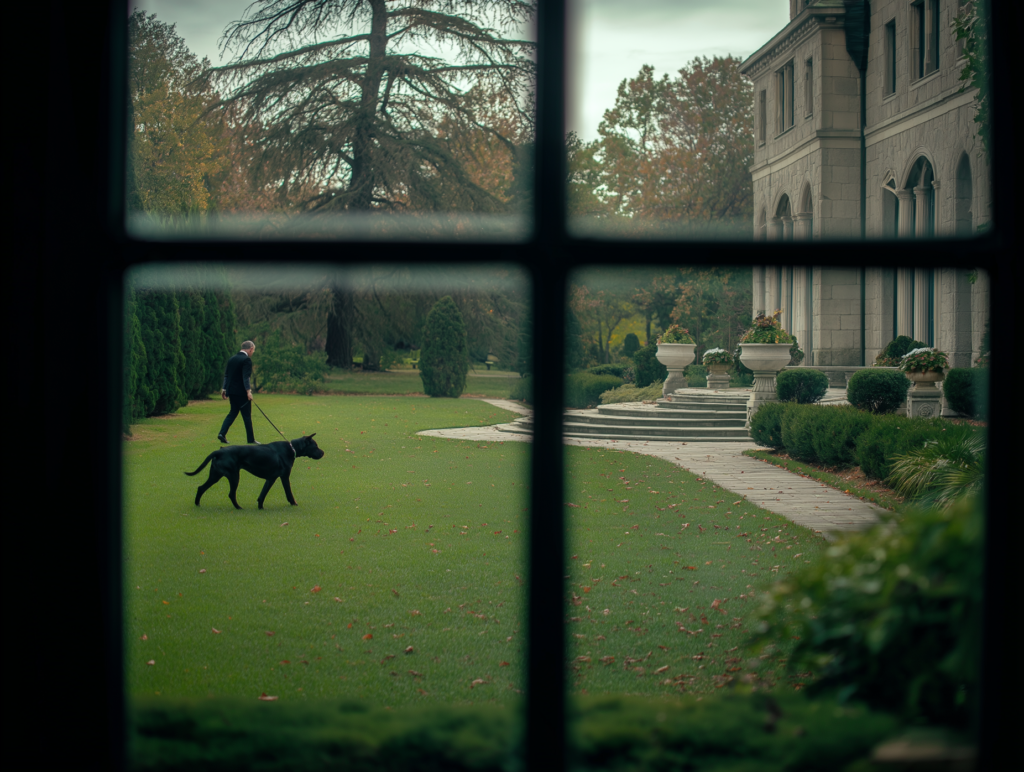
“Someone was here yesterday with a folder of articles trying to discredit you,” Marcus said. Wren absorbed this. “Because the bowl change worked,” she said. “Titan’s baseline anxiety has been dropping since the frequency stopped. They would have noticed. Which means someone has been monitoring the dog.” She paused.
Priya found them in an hour. Three additional cameras—east-wing corridor, kitchen, and main stairwell—routing to an external IP address Marcus didn’t recognise. Marsh had not just engineered the problem. He had been watching Titan and Marcus live inside it. Watching every failed solution, recording every private conversation.
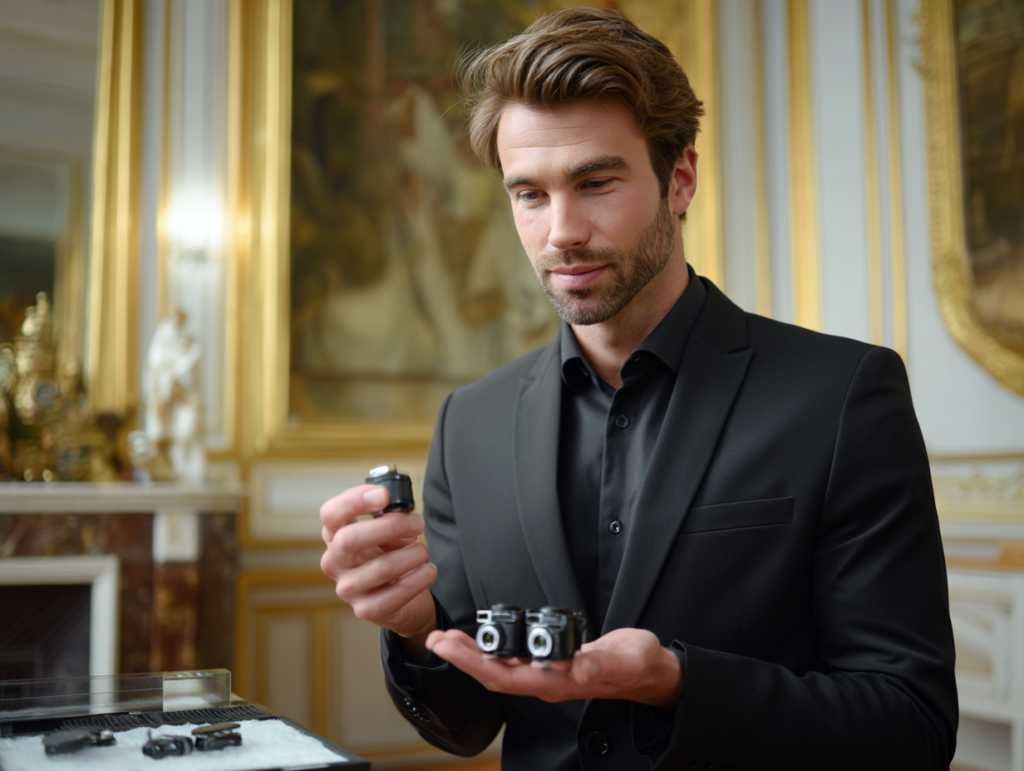
Marcus stood in the corridor, turning a camera over in his hand—no larger than a thumb, pulled from behind a pillar. He thought about every conversation that had happened here. Every time he’d been close to solving the problem and turned back. Marsh had heard every word.
Marcus’s attorney, Fletcher and his team traced the proxy business structure through forty-six hours of forensic accounting. Shell entities in Delaware, Cayman, and Singapore had accumulated money and power, always just below mandatory disclosure levels. At the current trajectory, Marsh was only six months from voting control. Had Marcus stayed isolated, he would never have seen it coming.

The business damage was considerable. The Singapore delay alone: eleven million. Two other projects had stalled due to Marcus’s reduced engagement, with a combined exposure of nearly forty million dollars. Three board votes had passed without his active lobbying, each shifting the company’s direction away from him, without his knowledge.
Every loss had been anticipated. Every delay had been watched. The cameras in the corridor, the kitchen, the stairwell—Marsh had been running a continuous operational picture of Marcus’s household for two years. Not a conspiracy of passion or impulsive greed. A conspiracy of patience—meticulous, cold, and long-planned.
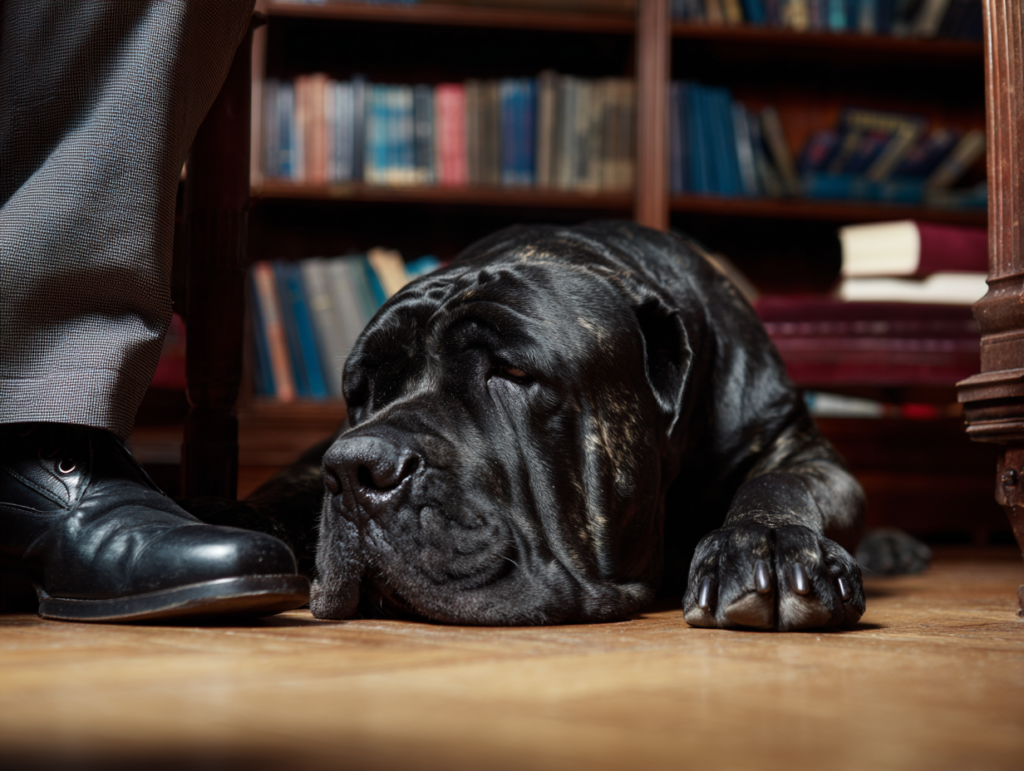
“Catherine loved that dog,” Marcus said quietly, alone in his study that night. Titan lay beside the desk. Wren had brought him there on a loose lead, a careful reintroduction to the house. The dog lay with his great head on Marcus’s foot, breathing slowly.
Marsh made his mistake on a Thursday. Priya had quietly rerouted the hidden camera feeds back through the estate’s own system. At eleven in the morning, a man Marcus didn’t recognise entered the east wing on a service code that should have been deactivated.
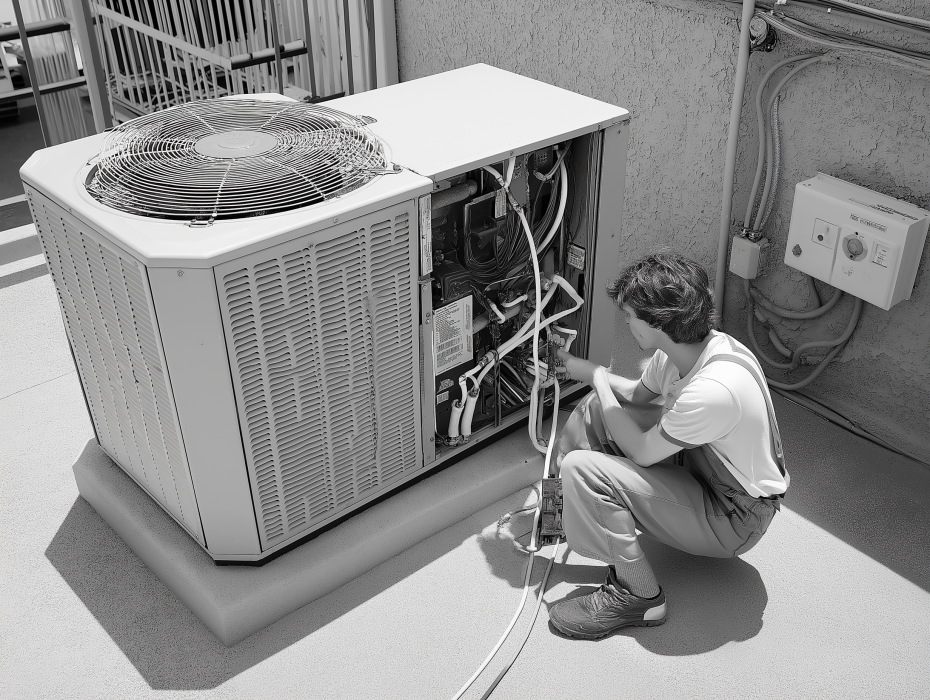
Marcus watched it in real time from his study. The man was recalibrating the system—tuning the frequency back toward the range that had been tormenting Titan for two years. The ceramic bowl had reduced the dog’s terror. The quieter system had begun to heal him.
Marcus called Stephanie Cho, head of security. Two guards were in the east wing in ninety seconds. The technician—contracted through the same consulting firm that had done the original retrofit—was detained with his laptop open, the recalibration half-complete. Marsh’s number was in his recent calls.
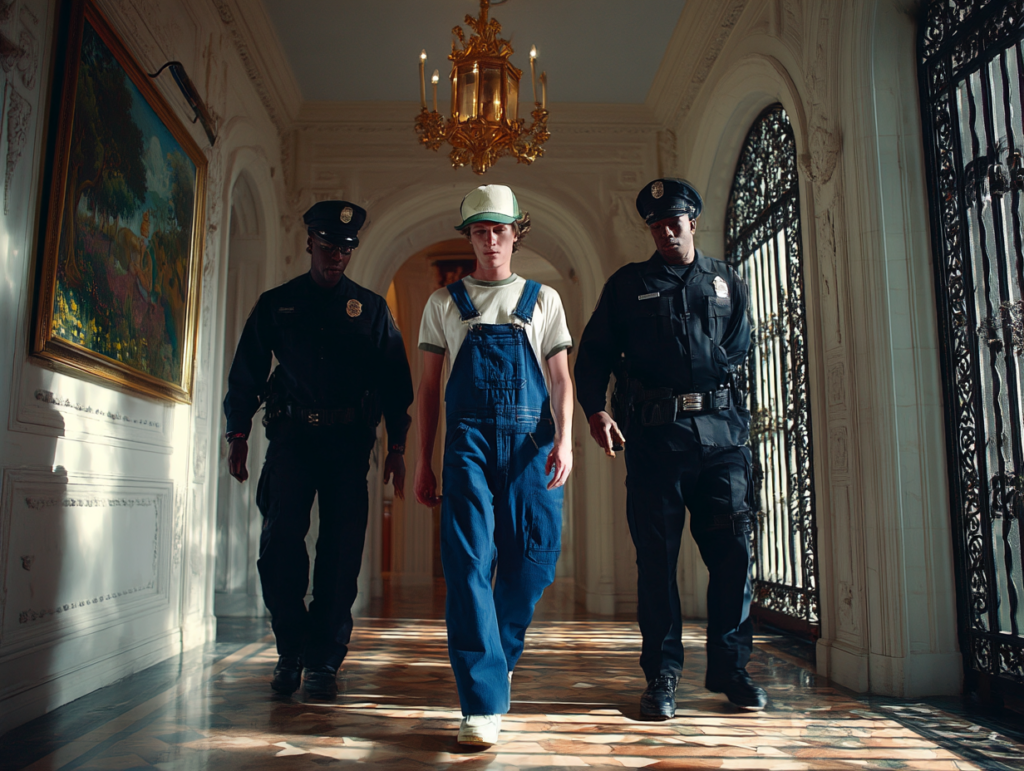
Marsh called Marcus at noon, not knowing about the technician, not knowing the cameras had been rerouted. He called to ask, with his practised warmth, how Titan was getting on. “Better,” Marcus said. A pause. “Really,” Marsh said. “That’s wonderful.”
“Come in tomorrow,” Marcus said. “I’d like your thoughts on a few things.” “Of course. Anytime.” After he hung up, Marcus sat for a long time. Outside, through the window, he could see Wren in the garden with Titan beside her, the dog leaning his enormous weight against her knee.
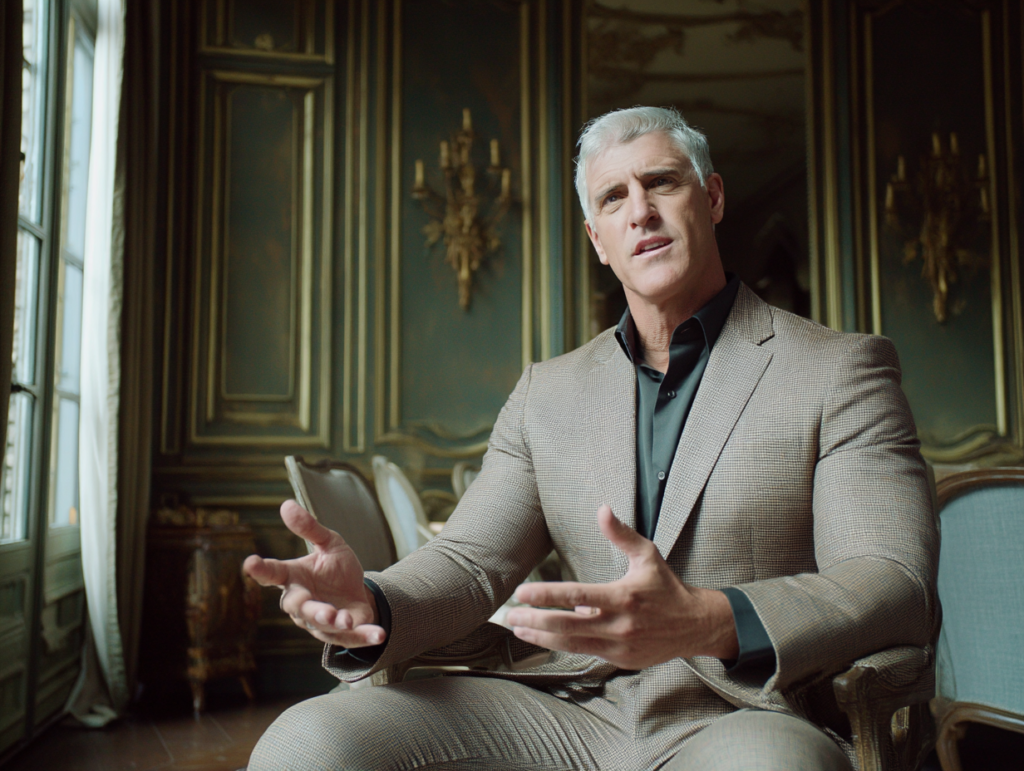
Marsh arrived the next morning without lawyers, which told Marcus everything about how safe the man still believed himself to be. He took the usual chair. His practised warmth arrived on cue. Marcus watched it and felt himself go very cold. He had no sympathy left for the man.
He laid the documents in sequence. The invoice, the work order signed eleven weeks after the funeral, the camera installation records, the technician’s statement, and Thursday’s payment, timestamped. One at a time, without speaking. Marsh looked at each one as it arrived.

“This is circumstantial,” Marsh said at last. “Yes,” Marcus agreed pleasantly. “The rest isn’t.” He turned the laptop to face Marsh. The email chain from the backup server showed Marsh and the contractor’s communication. The subject line itself would’ve given the game away.
“She trusted you,” Marcus said. Marsh said nothing. “At the funeral. You wept. I believed every second of it.” Something genuinely fractured moved across Marsh’s face before he contained it. “I did grieve her. That can be true at the same—” “Get out of my house. My lawyers will be getting in touch with yours,” Marcus said.

After Marsh left, the house was very quiet. Titan was asleep in the corner. It was the deep, unguarded sleep begun three days after the bowl change. The silence that had been denied him for two and a half years had finally reached him, and he was sleeping inside it.
Fletcher called three weeks into the legal reconstruction. He was hesitant, which was unlike him. “In the founding shell entity, the original signatory, before the layering began—” Marcus waited. “I’m sorry. It’s Catherine,” Fletcher said. The name landed in the quiet study like something dropped from a considerable height.

Catherine Hale, dead at forty-four, grieved by everyone, had not been Marsh’s victim. She had been his original partner. The proxy structure was her design. It dated back six years, two years before her death, begun while she was alive and sleeping in the same bed as Marcus.
Fletcher had correspondence, legal declarations, and entity filings in her name. The cardiac event had been classified as natural. Fletcher had engaged a private medical investigator who confirmed that. Marcus listened without speaking. When Fletcher finished, Marcus looked at Catherine’s photograph on the desk and felt something cold enter his chest.
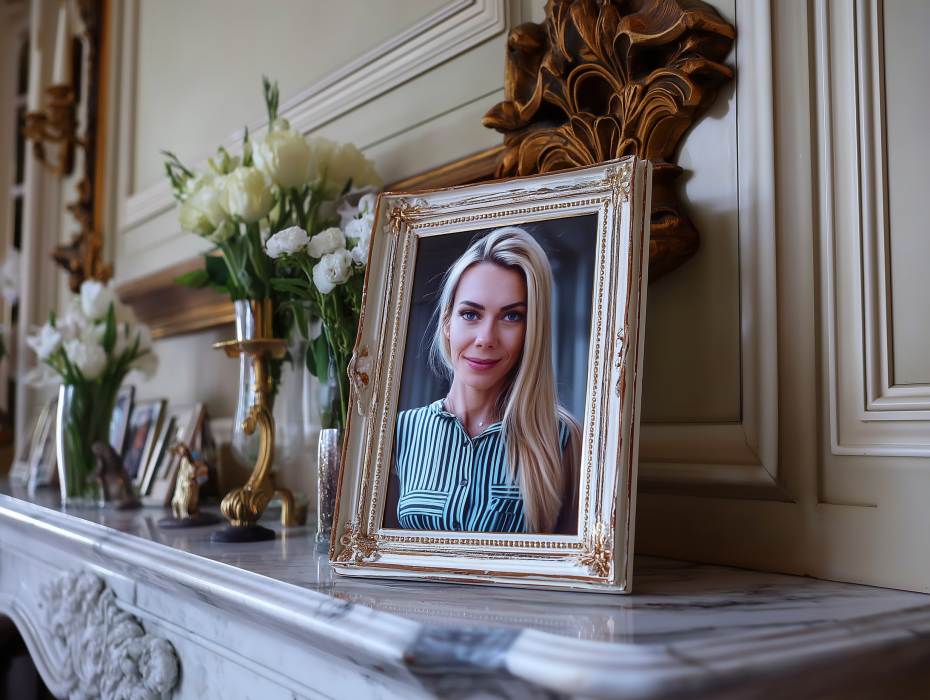
He looked at Titan, still sleeping the deep sleep of an animal finally free of the frequency that had tortured him for years. Wren had said, “His panic always spiked near her photographs.” He was legitimately grieving her. Of everything in this house, the dog’s grief had been the most genuine.
Later, he told Wren. She was quiet for a long time. Then: “Animals can’t perform grief. They can’t be deceived by someone they’ve imprinted on. Titan loved her because she was real to him. Whatever she was to you, she was something true to that dog.”
He moved Catherine’s photograph from the desk to the bookshelf—not face-down, but not centre-front either. Between two books she’d loved. It felt honest in a way the desk placement hadn’t. She had been complex. Most people are. The photograph didn’t need to be a shrine or an accusation.
“The Whitmore Institute shut down Vasquez’s program,” Marcus said. “Yes.” “Buried your contributions.” “Yes.” “I sit on the foundation board that funds Whitmore. I’ve been largely absent since Catherine died.” He paused and then said, “They were using the dog to distract me as they stole from me.”

He told her of his vision for the future. He wanted to be more present and do things that would save his businesses, but also contribute something back to the world. And he had just the right plan for it. He wanted Wren’s opinion on it.
He explained the program—properly funded, institutionally protected, academically independent. Wren would share co-directorship with Vasquez. She listened without interrupting. When he finished, she said, “I don’t have credentials anymore. They were removed.” “I know. Fletcher is building the legal case for restoration. Your work exists in pre-publication archives. It’s recoverable.”

She reached into her backpack and set her notepad on the desk. Every page was filled with notations, diagrams, behavioural charts, and fourteen case studies from shelters across three states. Animals labelled dangerous whose behaviour, in her framework, was indistinguishable from panic. “I’ve been building this anyway,” she said.
“You built this while living under overpasses,” he said. “I didn’t know how to stop working,” she said simply. He set the notepad down carefully and thought about what it costs to keep finding things when the world has decided your knowledge doesn’t count.
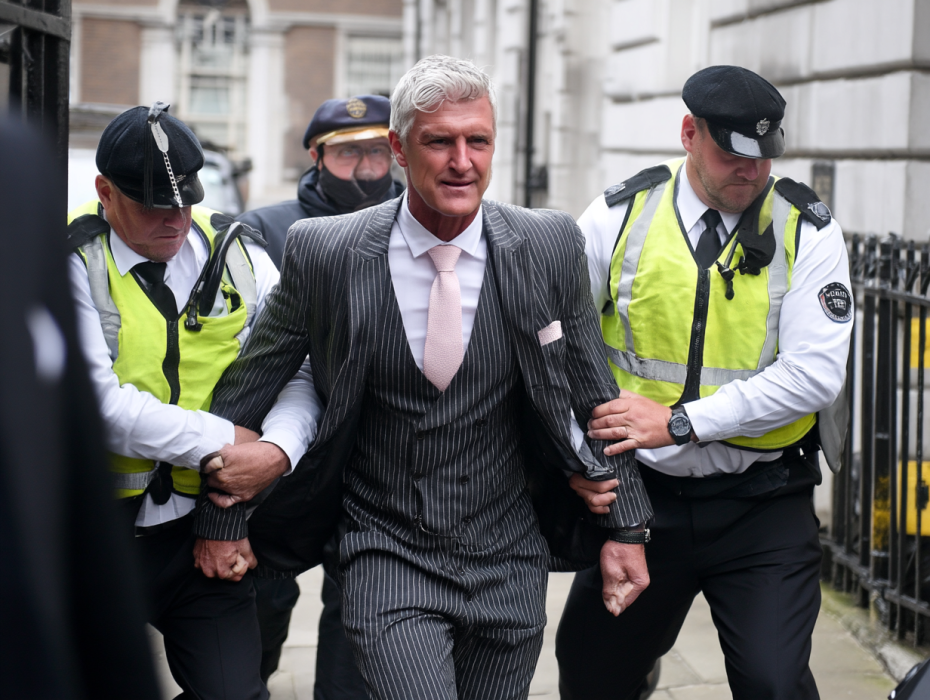
Marsh was charged in October with securities fraud, breach of financial duty, and criminal conspiracy. Several board members resigned before the investigation reached them. Marcus, after three months of legal reconstruction, thinner and quieter, stood in his kitchen watching Titan eat from a ceramic bowl in absolute silence.
The Singapore project relaunched in November. Reyes said on their first call in fourteen months, “I knew something was wrong. I should have pushed harder.” “So should I,” Marcus said. It was the first time in two years he had admitted a failure without constructing a justification around it.
The hardest revision for him was Catherine. Not because she had betrayed him—he could eventually hold that—but because the betrayal had been folded so completely into the ordinary fabric of their life that he could not now separate the genuine from the performed.
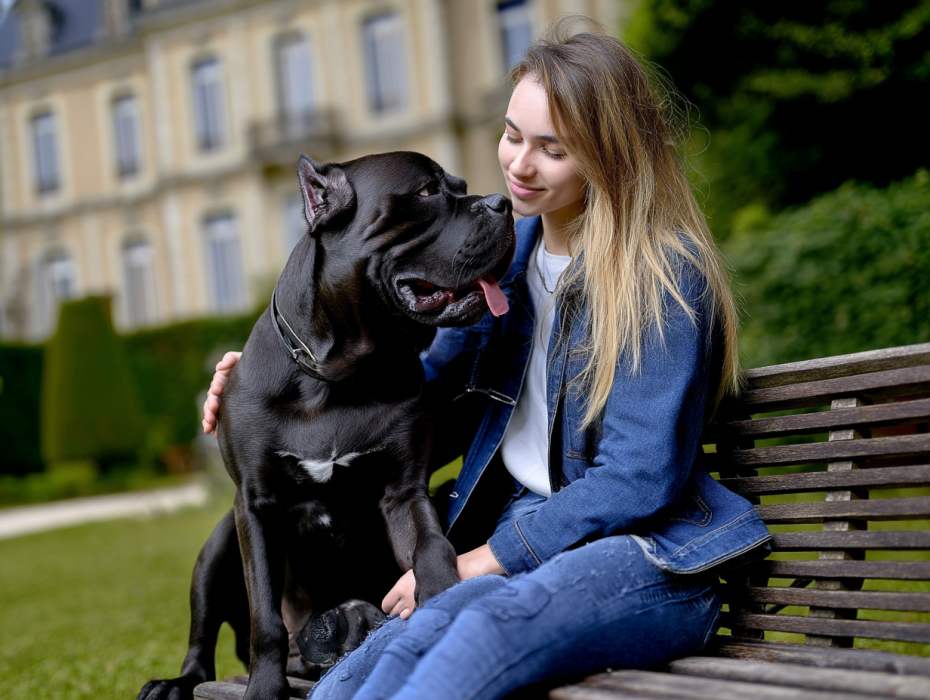
He found Wren one afternoon in the east wing—the wing that had been a no-go zone for over two years, that had cost him two board votes and millions of dollars. She was with Titan, the dog’s head in her lap, afternoon light across them both.
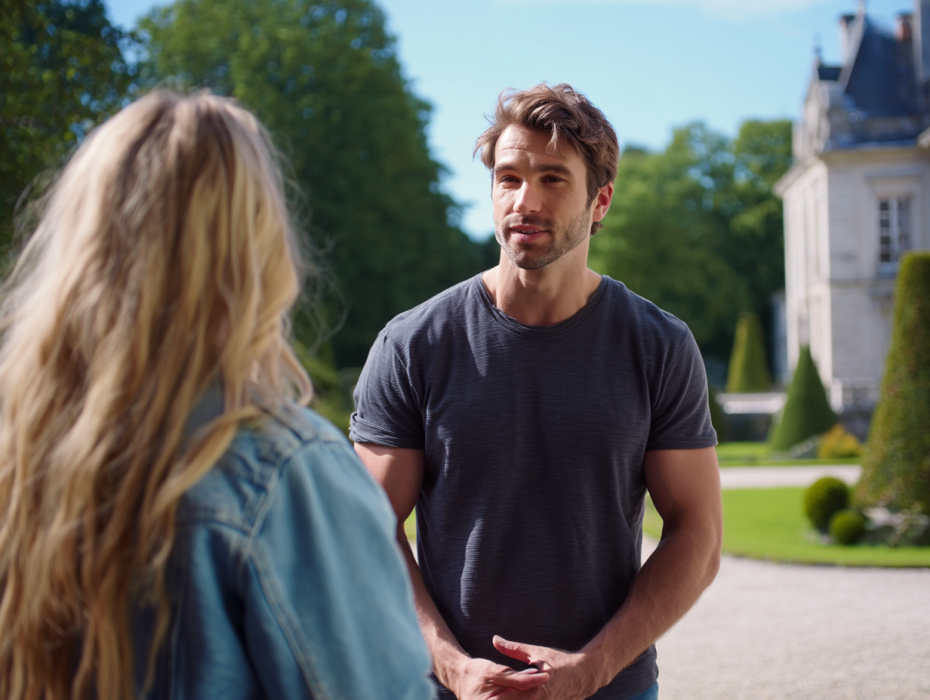
“He trusts you,” Marcus said from the doorway. “He trusts the quiet,” Wren said. “I’m just associated with it now.” Marcus looked at Titan and the complete absence of tension that had lived in every muscle of the dog for two and a half years.
Marcus thought about Marsh’s practised warmth—decades of it. He thought about Catherine’s grief-shaped manipulation. He thought about a dog who had seen through all of it and simply loved anyway. He thought about what it cost the dog.

The program launched in March. Vasquez’s name was on the building. Wren’s framework was the research foundation. Marcus attended the opening quietly, standing at the back. He watched Wren at the podium—dressed as always, too plain for the occasion, cataloguing the room with those quick green eyes.
Marsh received a seven-year sentence in April. The proxy position was fully unwound. Marcus’s company closed its best quarter in four years. He did not celebrate. He stood in his study, reading the judgment and thought about twenty-plus years of deceit and a dog that had been used as a pawn.

On Titan’s fourth birthday, Marcus found Wren in the garden, the dog stretched full length beside her, head in her lap, asleep in the sun. The estate was full of people again —staff, guests, and sound—and Titan didn’t react to any of it.
Marcus sat down on the grass beside them. Titan opened one eye, regarded him with the dark unhurried certainty of an animal who has made a decision and is no longer reviewing it, then closed it again. The dog exhaled long, slow, entirely at rest.
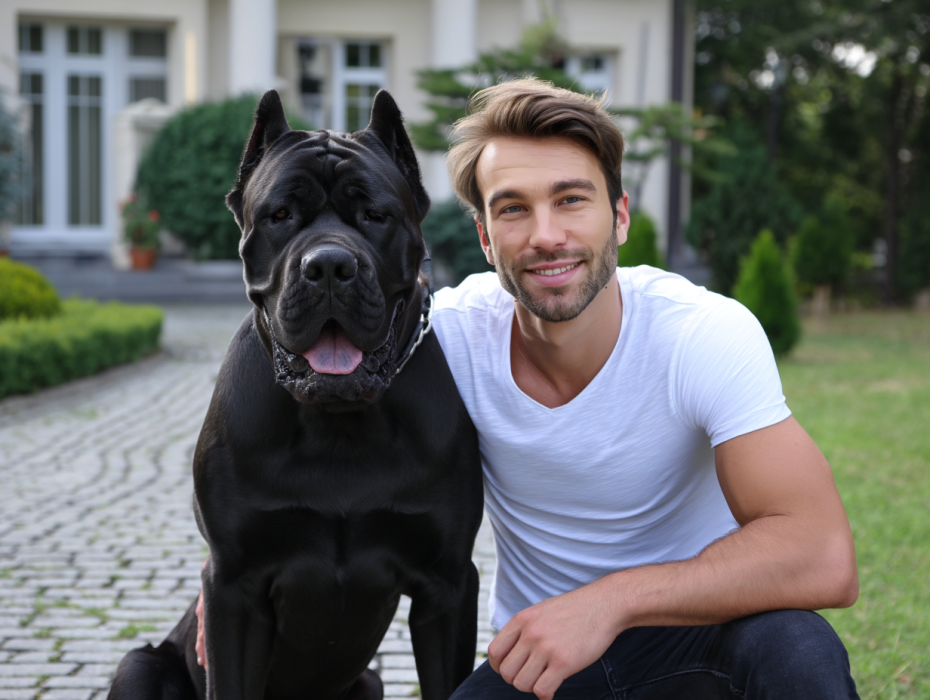
He had lost years, many millions of dollars, and every assumption he had held about his wife and his closest friend. What remained was this: a garden in the afternoon, a dog finally sleeping without fear, and the quiet, sober knowledge that the most dangerous thing in his house had never been the animal.