
He didn’t know what he’d expected walking into Hargrove Savings Bank that morning. Something simple. Something Margaret would have handled in twenty minutes. Instead he’d been sitting in the same chair for two hours while the lobby moved around him like he wasn’t part of it.
He’d tried everything the right way. Waited. Been polite. Apologized for things that weren’t his fault. The man he’d been called in to meet hadn’t opened his door once. Elias thought he’d known what patience meant. He was beginning to think he’d been wrong about that.
Then he heard it. His wife’s name. His farm’s name. Spoken low across the lobby by someone with no reason to say either. He looked up and caught two people looking quickly away, their faces carrying something he couldn’t name but could feel the weight of from across the room.
Elias Boone didn’t own much that qualified as smart clothing. He had his church shirt — a pale blue button-down he kept pressed and hanging separate from everything else — and his good dark trousers that Margaret had picked out for him at the hardware store’s clothing section back in 2011 because she said he needed at least one pair of pants that didn’t have a history.
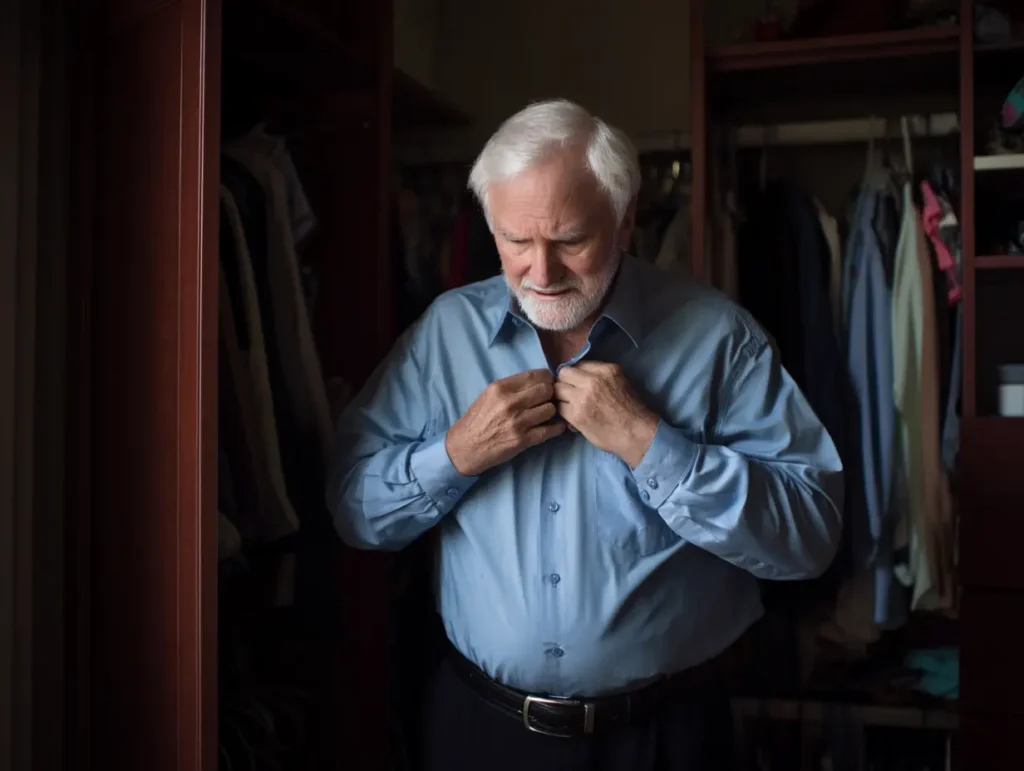
He put both on that morning and stood in the bathroom mirror for a moment deciding if it was enough. It would have to be. Margaret had always been the one who knew how to present herself for occasions like this.
The idea of Elias Boone handling a bank visit on his own had always struck them both as mildly absurd — and she’d have been the first to say so, not unkindly, just truthfully, the way she said everything that mattered.

The accounts, the paperwork, the phone calls with people who used words like liquidity and portfolio as casually as Elias used words like topsoil and rainfall. She had a mind for it, sharp and organized, and Elias had trusted her completely with every number that didn’t relate to seed costs or acreage.
That had been their arrangement for forty one years, and it had worked because they were a team. Two people, one life, divided sensibly down the middle. That was before March. He finished his coffee standing at the kitchen window, looking out at the east field where the light was just starting to come up gold across the rows.
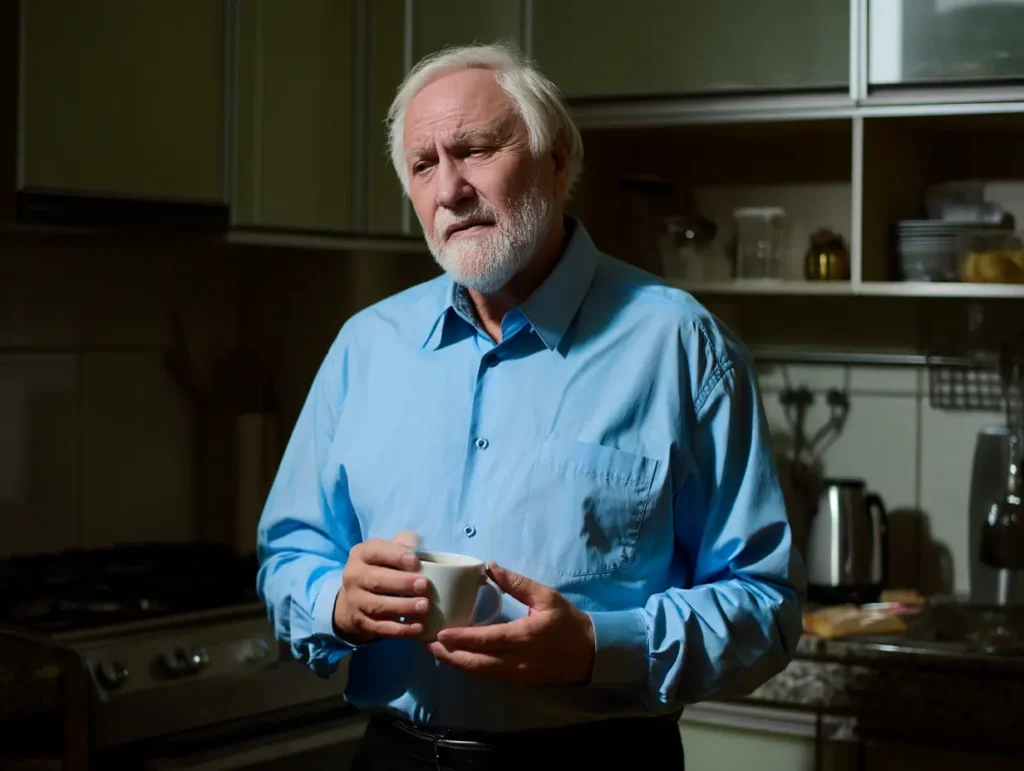
He’d put the kettle on twice that morning without thinking — old habit, the second cup always hers. The first time he’d caught himself he’d stood there for a moment with the empty mug in his hand before setting it back on the hook. The second time he’d just let the kettle boil and poured the cup and left it on the counter going cold because it seemed worse somehow to put it away.
The note he’d scrawled on the back of an envelope during the phone call three weeks ago was already on the kitchen table where he’d been keeping it. He picked it up and read it again even though he had the details memorized by now. Hargrove Savings Bank. 10am. Mr. Gerald Fitch. The woman on the phone had been pleasant enough.

Something about Margaret’s account, a small administrative matter that needed to be resolved in person. Routine, she’d called it. He’d written down the name and the time and thanked her twice before hanging up and standing in his kitchen for a long moment not quite sure what to do with himself. He wasn’t a nervous man by nature.
Forty years of farming had a way of burning anxiety out of a person — when your livelihood depended on weather and soil and things entirely beyond your control, you learned early that worry was a tax on time you couldn’t afford. But this was different. This was Margaret’s world, and he was walking into it alone for the first time, without her at his elbow to translate.

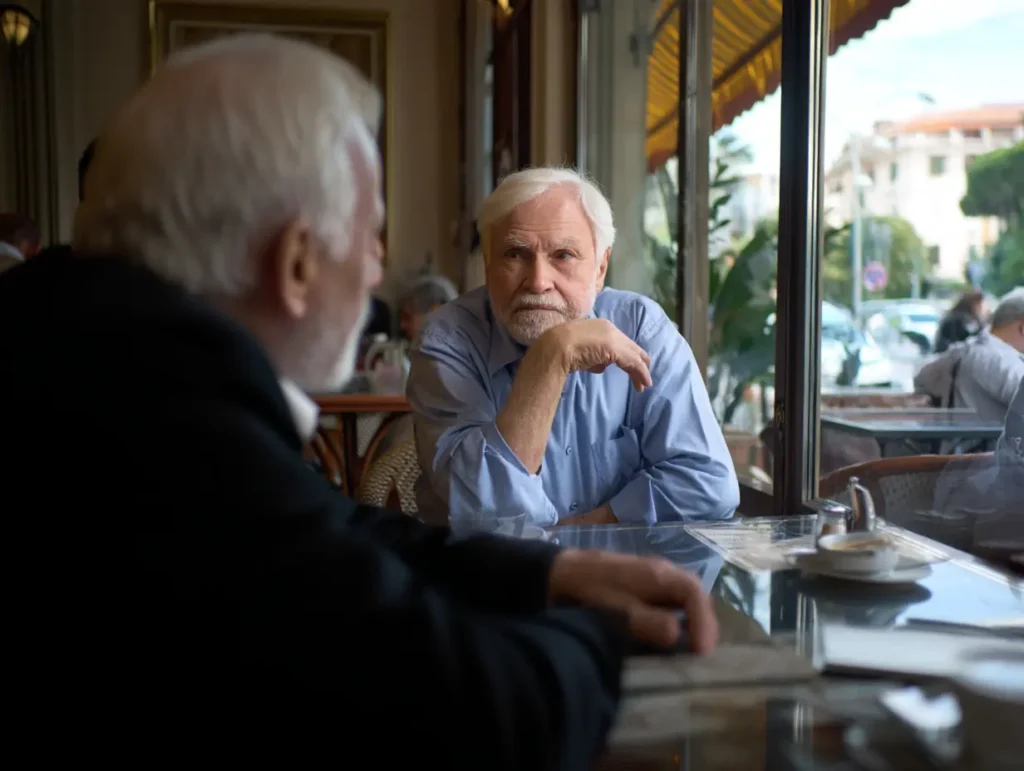
He’d mentioned the visit to his friend Dale two weeks back over coffee at the diner on Route 9. “Just dress decent and don’t let them rush you,” Dale had said, wrapping both hands around his mug. “They see a farmer walk in and they look right through you. Happened to me twice at that place. Third time I wore my good boots and they at least made eye contact.”
Elias had nodded and said nothing, but the words had stayed with him longer than he’d expected. He went to get dressed. The suit fit well enough across the shoulders, a little loose around the middle now — he’d lost weight since March and hadn’t quite found it again.
He knotted his tie carefully in the bathroom mirror, the same way Margaret had shown him years ago, and adjusted it twice before deciding it was good enough. Then he reached for the hat on the hook by the door. His good one, the tan felt hat he kept for occasions. It felt right. It felt like him.
He gathered the folder from the sideboard — a worn leather thing Margaret had kept in her desk drawer for years, the kind with the elastic band around it. She had organized it sometime before she got sick, labeling everything in her careful handwriting.

He’d gone through it after she passed, slowly, page by page, not understanding most of what he was looking at but not wanting to put it down either because her handwriting was in the margins and her handwriting was something of hers he still had. He assumed it was account paperwork. Something the woman on the phone had said he might need to bring.
He locked the front door, walked to his truck, and drove the forty minutes into town. Hargrove Savings Bank sat on the corner of Millfield and Court Street, a broad stone building with glass doors that slid open automatically and a row of small square hedges out front that looked like they’d been trimmed with a ruler.

Elias had driven past it hundreds of times but had rarely been inside. Margaret had handled the in-person visits too. He sat in his truck for a few minutes after parking, watching people move in and out through the glass doors.
Most of them dressed the way he imagined bank people dressed — smooth fabrics, clean shoes, the kind of quiet confidence that came from knowing exactly where you were going and why. He looked down at his shirt, ran a hand over the front of it, picked up the folder from the passenger seat, and got out.

It was nine thirty in the morning. His appointment was at ten. Inside, the lobby was larger than he’d expected. Cool air, pale marble floors, the low hum of something financial happening in every direction.
The place was busy in the way banks were busy — not loud, not chaotic, but densely occupied, every desk attended to, every teller window with a line, people moving between stations with the purposeful efficiency of those who knew exactly where they were going. Elias stood just inside the entrance for a moment, hat in hand, and looked at his note.

He found the reception desk to his left and joined the short queue in front of it. Two people ahead of him, both of whom seemed to know what they wanted and got it quickly — a form handed over, a phone number confirmed, done. When he reached the desk the young woman behind it looked up at him with the alert, professional expression of someone mid-morning and still keeping pace.
Her name badge said Cindy. “Good morning,” she said. “How can I help?” “I have an appointment,” Elias said. “Ten o’clock. With a Mr. Gerald Fitch.” Cindy nodded and reached for her keyboard. “Account number?” He reached for his notepad — a small spiral bound one he kept for farm notes, the cover soft with use.

He’d written his account number on the inside cover the way Margaret had always told him to keep important numbers somewhere he wouldn’t lose them. He fumbled with it briefly. It slipped from his fingers and fell to the marble floor with a flat sound, pages splaying open. “Sorry,” he said, bending down to pick it up. Behind him he heard it — a short, barely there sound.
The kind a person made when they were in a hurry and the person in front of them wasn’t. Tch. Small and sharp and not quite under the breath enough. Elias gathered his notepad and his hat and straightened up without turning around, his ears warm. He read out the account number carefully. Cindy typed. Looked at the screen.

Her brow shifted — just slightly, a small furrow of something that might have been confusion or recalibration. “Mr. Boone, it looks like agricultural accounts are typically handled by Mr. Peters — he’s just down the hall, second door on the left. He’d be better placed to —” “I’m here to see Mr. Fitch,” Elias said. “The manager. I have an appointment.”
Cindy looked at the screen again briefly, then back at him. “Of course,” she said, in the tone of someone setting something aside. “Mr. Fitch hasn’t come in yet. You’re welcome to take a seat and I’ll let him know you’re here when he arrives.” “Thank you,” Elias said. She was already looking past him at the next person in line.

He moved to the seating area and sat down, folder on his knee, hat on top of it. The lobby continued around him at its busy, indifferent pace. After a few minutes a man in a gray suit came through the front doors and Cindy was on her feet before he’d fully reached the desk, her whole manner shifting into something warmer and more immediate than anything she’d offered Elias.
“Mr. Calloway, good morning. They’re ready for you upstairs.” She walked him to the corridor herself. When she came back she passed Elias without looking at him and sat back down at her desk. Elias turned his hat slowly in his hands and looked at the door at the end of the corridor. He wondered how long when he arrives was going to be.

About twenty minutes later the front doors slid open and a man walked in who changed the temperature of the room without appearing to try. He was somewhere in his fifties, broad shouldered, in a charcoal suit that fit the way expensive suits fit — like it had been made with him specifically in mind.
He moved through the lobby with the unhurried ease of someone who had never once had to wonder where they were going in a room like this. As he passed, heads turned. A teller looked up and nodded. A colleague crossing the lobby gave a small tilt of the chin. The man returned each acknowledgment with the relaxed confidence of someone accustomed to receiving them.

He turned down the corridor toward the offices. Elias watched the nameplate catch the light as the man pushed through the door at the end of the hall. Gerald Fitch. Branch Manager. Elias sat up slightly. So that was him. He was late — it was nearly half past ten now — but Elias supposed not everyone could be as punctual as him.
The important thing was that he was here, settled in, and any minute now Cindy would get up from her desk and go let him know that Elias Boone was waiting with his folder and his hat and had been since half past nine. He watched Cindy’s desk. She was typing something. Then she answered a call. Then she was typing again. She did not get up.

Elias waited. Five minutes. Then ten. He told himself there was a process to these things, that he didn’t understand how banks worked and probably shouldn’t assume. Margaret would have known. Margaret would have known exactly how long was reasonable and exactly what to do when it wasn’t. Twenty minutes passed. Cindy had not moved from her desk.
The lobby around him had not slowed. If anything it had gotten busier — more people through the doors, more conversations at the teller windows, more purposeful movement between desks. Everyone with something to do and somewhere to be.

Elias sat in his chair with his folder and felt the particular invisibility of a person whom a busy room has decided isn’t part of its business. The lobby around him had not slowed. If anything it had gotten busier — more people through the doors, more conversations at the teller windows, more purposeful movement between desks.
Everyone with something to do and somewhere to be. Elias sat in his chair with his folder and felt the particular invisibility of a person whom a busy room has decided isn’t part of its business. He got up. Cindy’s desk had a small queue in front of it — three people, maybe four — but he didn’t have it in him to go to the back of it.

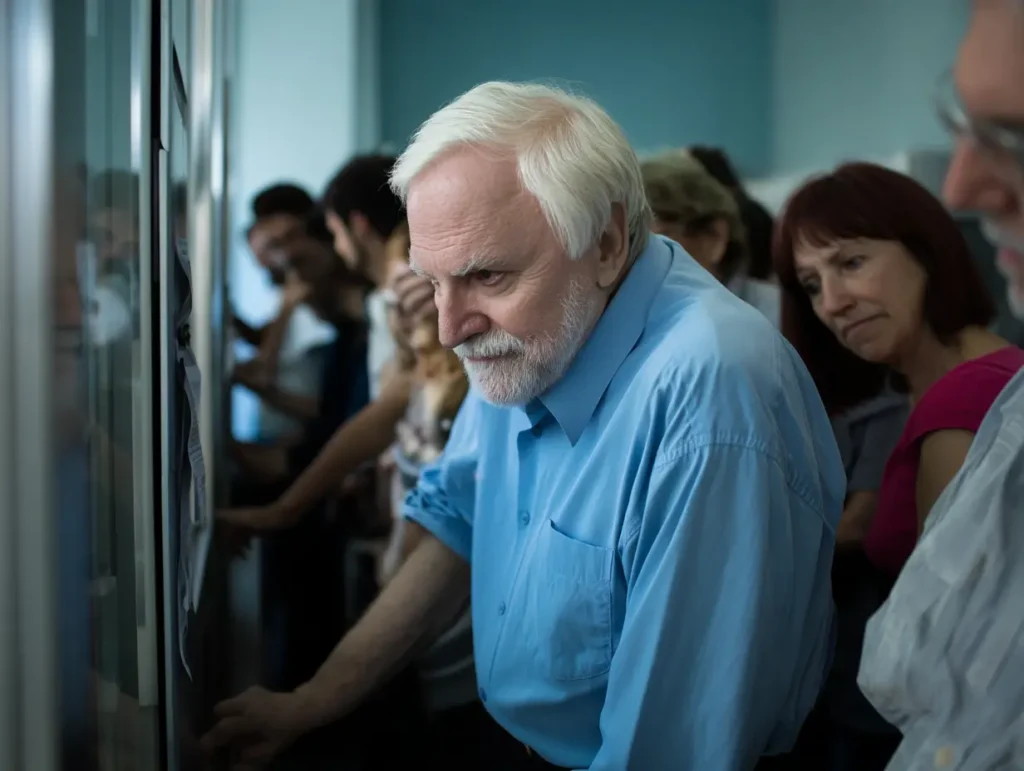
He’d been waiting long enough. He stepped in at the front, hat in hand, and the woman he’d stepped ahead of made a sound low in her throat and shifted her weight pointedly. The man behind her looked at Elias the way people looked at someone who had just broken an unspoken rule that everyone else had been following without complaint.
Elias felt the stares but kept going. “I’m sorry,” he said to the woman he’d cut in front of, meaning it. Then he turned to Cindy. “I just wanted to check — has Mr. Fitch been told I’m here? I saw him come in a little while ago.” The woman behind him said something quiet to the man beside her. He didn’t catch the words but he caught the tone.
Something crossed Cindy’s face — there and gone, too quick to name. “I’ll go let him know right now,” she said. “I apologize for the wait, it’s been a busy morning.” She got up and went down the corridor. Elias turned to go back to his seat. The woman he’d cut in front of had already moved to the desk and wasn’t looking at him.
The man beside her was. Elias nodded once, walked back to his chair, sat down and looked at his hands without saying anything. He sat forward slightly, the way you did when you expected to be called any moment, folder on his knee, hat in his hand. He watched the corridor door. From somewhere behind it, just barely audible over the lobby noise, he heard voices.

The distance blurred most of it into tone rather than words. But one word came through clearly enough. Farmer. Then Fitch’s voice, lower, unhurried. A few words Elias couldn’t catch. Then something that sounded very much like waiting and something that sounded very much like busy.
And then, just before the door swung shut, a sound that might have been a groan or might have been nothing at all. Then silence. Then Cindy’s footsteps returning. She came back across the lobby with the practiced expression of someone delivering news they’d delivered before. “Mr. Fitch just has a few things to get through first. He’ll call you in shortly.”

“Alright,” Elias said. “Thank you.” She went back to her desk. He sat and waited. The minutes stretched. He thought about the east field. He thought about the fence post on the south boundary that had been leaning since the last wind. He thought about the drive back and whether he’d stop at the diner or just go straight home.
He thought about anything other than the fact that it was now well past eleven and he had been sitting in this chair for nearly two hours and no one had called his name. Then the front doors opened and a man walked in. He was well dressed in the way that didn’t require effort — dark jacket, no tie, the kind of easy put-together that came from not having to think about it.

He walked to Cindy’s desk without hesitating, the way people walked to desks when they’d never once been unsure of their welcome. Cindy looked up and smiled. The full version. The one she hadn’t used on Elias all morning. “Good morning. Could I get your name?” “Whitmore,” the man said. “Daniel Whitmore.”
No account number. No fumbled notepad. No colleague called over to look at a screen. “Of course, Mr. Whitmore.” Cindy was already standing. “Right this way.” She walked him down the corridor herself. The door at the end opened and closed. Elias watched the whole thing from his chair. He sat with it for a moment. Then he picked up the folder and opened it.

Margaret’s handwriting in the margins, neat and small the way she wrote everything. Notes he still couldn’t make sense of, figures and names and references to things he didn’t have the context to understand. He’d meant to ask someone about it. He’d meant to do a lot of things. He closed it again. He looked at the teller windows.
One of them had just finished with a customer, a brief gap before the next person stepped up. He got up and walked over. The teller was young, already reaching for the next customer’s paperwork. He looked up when Elias approached. “Sir, if you’re making a transaction you’ll need to join the —”

“I’m not here for a transaction.” Elias kept his voice low but he could hear something fraying at the edges of it. “I have an appointment with Mr. Fitch. I’ve been waiting since half past nine. It’s about my late wife’s account — she passed in March, someone from the bank called and asked me to come in.” He glanced toward the corridor. “I just watched a man walk in off the street and get taken straight through. I’ve been here two hours.”
A few heads turned. He was aware of it without looking — the particular quality of attention a room gave when someone was saying something they weren’t supposed to say out loud. The teller’s expression was carefully neutral. “Estate matters go through the branch manager, sir. Mr. Fitch.” Elias sighed, “I know that. I’ve been trying to see Mr. Fitch since ten o’clock.”

“I understand, but I’m really not able to —” He glanced past Elias briefly. “You’ll need to speak to reception. I’m sorry I can’t be more help.” Elias turned and looked at the room. Some people were watching with the flat irritation of those who felt a queue had been disrupted. A woman near the window had the careful expression of someone trying not to stare.
A man by the far wall was looking at him with something that wasn’t quite a smirk but was close enough. One older woman near the back met his eyes with what might have been sympathy before looking away. He went back to his chair and sat down. He looked at his hands. He looked at the folder.

He thought about Margaret at the kitchen window with her coffee and told himself to breathe. He didn’t notice Cindy at first. She wasn’t on the phone. She was leaning slightly toward her screen, typing slowly, the way people typed when they were reading rather than entering. She stopped. Started again. Her jaw tightened in a way he could see even from across the lobby.
She picked up her phone and spoke quietly into it. A minute later another teller came over and leaned in toward the screen. Cindy said something low. She said the name of his farm. Then she said Margaret’s name. The younger teller’s face changed — a slight draining, a stillness that settled over her expression like something had just become real that hadn’t been real a moment ago.

She said something back. Cindy nodded, her jaw tight. They both glanced toward Elias at the same moment and found him already looking at them. They looked away. Elias sat very still. He didn’t know what he’d just seen. He didn’t know why his wife’s name would put that look on two people’s faces.
But his heart was beating faster now and the folder on his knee felt heavier than it had a moment ago, more significant, in a way he couldn’t explain and couldn’t shake. Something was wrong. He didn’t know what. But it had Margaret’s name on it and he was done sitting in this chair. He stood up.

Cindy saw him and was on her feet immediately, moving toward him with the quick stride of someone trying to get ahead of something. “Mr. Boone, if you’ll just give me a moment —” But Elias was already at the corridor door. He pushed through it, walked to the end of the hall, and opened Fitch’s door without knocking.
Fitch was behind his desk. Whitmore — the well dressed man who had walked straight through forty minutes ago — was sitting across from him. Both of them looked up. “Mr. Boone.” Fitch’s voice was measured, the voice of a man who had defused situations like this before and found it mildly tedious. “This is not a good time —”

“I’ve been waiting two hours.” No heat. Just fact. “I was called in after my wife passed. I had a ten o’clock appointment. It is nearly noon.” Whitmore shifted in his chair. He looked at Elias, then at Fitch, then back at Elias. “It’s alright,” he said, with the easy grace of someone who could afford to be generous. “I don’t mind waiting. Please, go ahead.”
“That’s quite alright, Daniel —” Fitch began. Cindy appeared breathless in the doorway behind Elias. “Mr. Fitch, I need to speak with you. It’s important —” He smiled at her, “In a moment, Cindy.” She tried again, “Sir, it really can’t —” “I said in a moment.” He looked back at Elias, folding his hands on the desk.

“Mr. Boone. There is a process here and —” “Mr. Fitch —” Cindy tried again. “Cindy.” Final. The same tone he’d used in the corridor. A door closing. “I’ll handle it.” She stood in the doorway a moment longer, something urgent and unspoken sitting visibly on her face. Then she stepped back. Fitch turned back to Elias.
“I appreciate this is a difficult time. But I have a branch to run and I can’t allow impatie—” Elias cut in, “Don’t say impatience.” Fitch stopped. “I’ve sat in that chair for two hours without a word. I’ve watched people who came in after me get seen before me. I haven’t said a word about it until now. Don’t call that impatience.”

Something flickered across Fitch’s face. Not remorse. Something closer to recalculation. Then it was gone. They moved into the corridor without deciding to — Elias holding his ground, Fitch pressing forward, Cindy trying to insert herself between them.
“Mr. Fitch, if we could just —” “Cindy, I’ve got this.” “Mr. Boone, please —” “I’m not asking for anything unreasonable —” “Mr. Fitch.” Cindy’s voice came out louder than she’d intended, her composure finally showing its edges. “I really think we need to slow down —”

Fitch turned and looked at her. Just looked. The kind of look that didn’t need words. “Thank you, Cindy.” She stopped. They were in the lobby now. Elias wasn’t sure when that had happened. The room had gone quiet in the particular way rooms went quiet when something worth watching was happening.
He could feel the turned heads without seeing them, the stillness that had replaced the morning’s busy hum. Fitch straightened his jacket and dropped his voice low, which was worse somehow than if he’d raised it. “Mr. Boone. Take a seat and wait until I’m available, or come back another day. Those are your options.” A pause, precise and deliberate. “I’d choose one.”

Elias looked at him for a long moment. He thought about his grandfather breaking that soil by hand. His father’s twenty acres. Every drought, every loss, every morning before sunrise because the land didn’t care how tired you were. He thought about Margaret at the kitchen window with her coffee, watching the east field like it was something worth watching.
Don’t let them make you feel small. The fight went out of him all at once. Not because Fitch had won. Just because he was tired in a way that had nothing to do with today, and he had nothing left for this particular battle on this particular morning. His shoulders dropped. He looked down at the folder. Margaret’s handwriting on the tab.

Her careful elastic band. Her whole organized way of moving through a world she’d always understood better than him. He turned toward the door. He got three steps. The front doors slid open. Three men walked in.
They were well dressed, unhurried, carrying the quiet authority of people who didn’t need to announce themselves in rooms like this because rooms like this already knew who they were. One of them — silver haired, the kind of face that had been making considered decisions for a long time — slowed when he took in the lobby.

His eyes moved across it and landed on the security guard, on the older man in the pale blue button down, and on the branch manager standing a few feet away with his jacket straightened and his expression arranged. He stopped walking. “Gerald.” Pleasant. Heavy. Fitch turned. Something happened to his face. “Mr. Hargrove. I wasn’t expecting you quite so early —”
“In a moment.” Hargrove looked past him at Elias. “Who is this gentleman?”, he asked Fitch. “A customer. There was a small misunderstanding —” Hargrove cut him off, “I’d like to hear from him.” He looked at Elias directly, the way people looked at other people when they actually wanted to know something. “What brought you in today, sir?”

“I was called in after my wife passed away,” Elias said. “Something about her account. I had a ten o’clock appointment with Mr. Fitch.” He glanced at the clock without meaning to. “It’s nearly noon.” There was a pause. “What was your wife’s name?”
“Margaret Boone.” The lobby was very quiet. Hargrove looked at the two men beside him. Something passed between the three of them — a recognition, a realignment. Then he turned to Fitch. “What do you know about the Boone estate, Gerald?” Fitch shifted. “Not much, sir. The matter wasn’t brought to my attention. No one informed me —”

“No one informed you.” Hargrove let that sit for a moment. “Margaret Boone held a significant share position in this bank. On her passing it transferred to her husband. This was known at board level. This branch was responsible for facilitating the estate process.” He held Fitch’s gaze. “And you’re telling me you weren’t aware.” Fitch looked dumbfounded, “I wasn’t —”
“A good manager doesn’t wait to be handed every piece of information that matters. He looks. That’s the position. That’s why we gave it to you.” He glanced toward the security guard, then back at Fitch. “And that was before I walked into my own lobby to find one of our shareholders being escorted toward the door.”

Fitch’s eyes moved to Cindy. It was a small movement, barely a second, but it carried everything in it — the search for somewhere to place the blame, the instinct of a man looking for an exit. Cindy met his gaze from behind her desk. Her voice was quiet, almost inaudible. “I tried to tell you.” The silence that followed was a different kind than the one before it.
Fitch said nothing. There was nothing left to say. Hargrove turned to Elias and when he did his expression shifted — the professional gravity giving way to something genuine. “Mr. Boone. I owe you an apology on behalf of this bank. What you experienced today was unacceptable.” He gestured toward the corridor.

“I’d like you to come with us. We’ll go through everything in Margaret’s file and make sure you leave with a clear understanding of everything she left you. It should have been done hours ago.” Elias stood in the middle of the lobby with the worn leather folder under his arm and his hat in his hand.
He didn’t fully understand the shares or the estate or the significance of whatever Margaret had quietly been building all those years while he was busy with the soil and the seasons. He’d need someone to explain all of it slowly. What he understood was simpler. His wife had taken care of him even after she was gone.

He put his hat on, straightened the brim, and followed them toward the corridor — the same corridor Gerald Fitch had spent two hours making sure he never reached. As he passed Cindy’s desk he slowed for just a moment. She was sitting very still, eyes not quite meeting his. “Thank you for your help this morning,” he said. Because it wasn’t in him to do otherwise.
Behind him he heard Hargrove’s voice, quiet and final. “Gerald. Wait in your office. We’ll need to speak with you after.” Elias didn’t look back. He followed the men into the conference room, set the folder on the table, and sat down.

He took off his hat and placed it on the chair beside him — the way he always did, the way Margaret had always teased him for — and looked at the people across from him who were finally, after everything, ready to talk. He thought it was going to be alright. He thought Margaret had made sure of that a long time ago.